
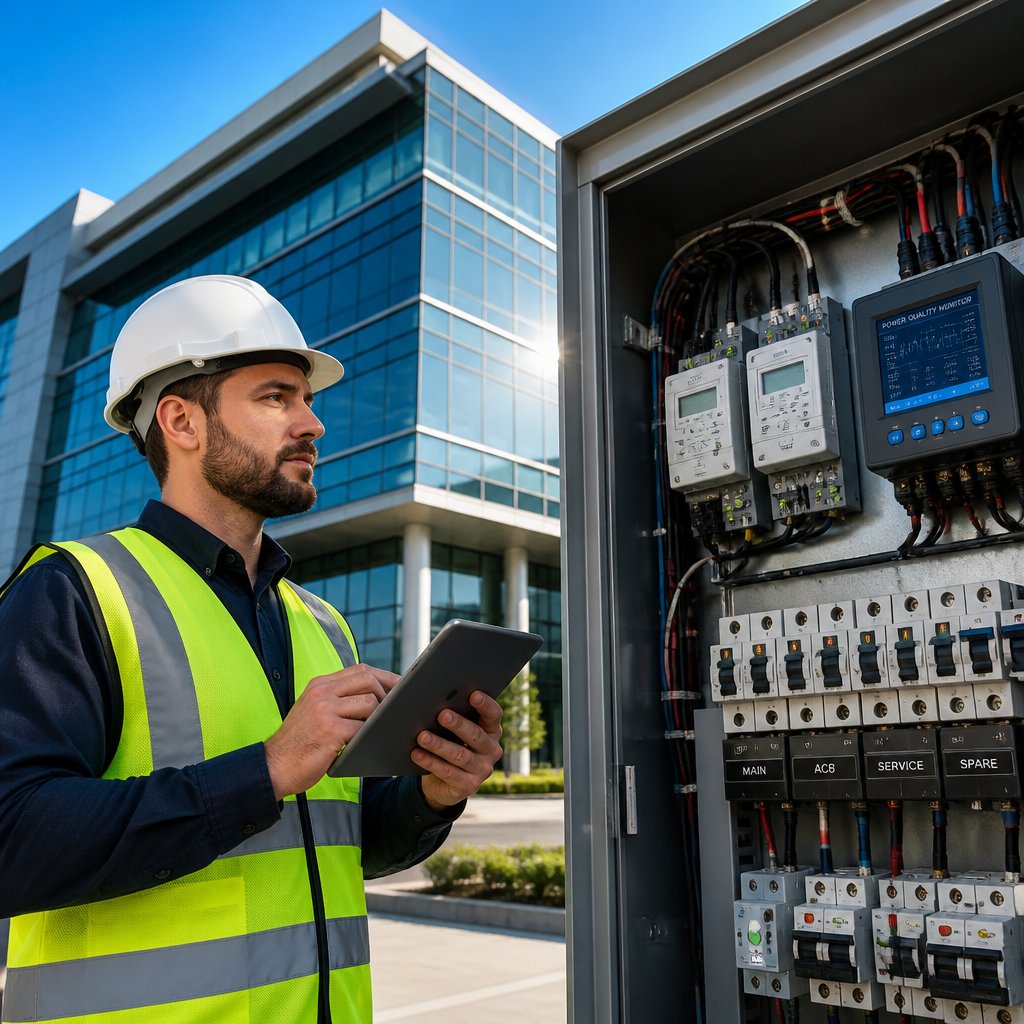
Commercial buildings run on much more than just lights and outlets. Your HVAC, elevators, access control, computers, networking gear, and tenant equipment all rely on steady, clean electricity. When power gets unstable, you’ll see flickering lights, nuisance trips, hot equipment, weird system resets, or tenant complaints that seem to pop up out of nowhere.
Why power quality matters in commercial buildings? Stable electrical power protects equipment, reduces downtime, and keeps daily operations running smoothly. If you’re managing a building in Austin, Round Rock, Cedar Park, or anywhere in Central Texas, paying attention to power quality can save you a lot of headaches—not to mention money—and keeps people comfortable and safe.
For a lot of owners and facility teams, the first clue isn’t a meter reading. It’s a call from a frustrated tenant, a warm panel, or a piece of gear that keeps failing way before it should. Want answers that actually fit your building? Ask a qualified electrical pro to help you spot the source before it turns into a bigger, pricier repair.
What Power Quality Means In Real-World Building Operations
Power quality is all about how well the electricity your building gets matches what your equipment actually needs. If the voltage, waveform, or frequency is off—even just a little—systems can start acting up. In the day-to-day, that might look like lights flickering, or control boards glitching right when you need them most.
Common Disturbances Building Owners Encounter
You’ll run into voltage sags, surges, transients, harmonics, and unbalance. Sometimes you see these as quick light dips, repeated breaker trips, or gear that keeps losing its settings after a brief interruption. Other times, you don’t notice until a motor, drive, or control panel fails way too soon.
How Clean Power Supports Daily Business Continuity
Clean power lets your systems start, run, and shut down the way they’re supposed to. That’s huge for HVAC units, elevators, security systems, and all that office gear that can’t handle constant resets. When power stays steady, your building’s just easier to deal with—less drama, fewer surprises, and usually cheaper to keep up.
How Poor Electrical Performance Affects Equipment And Tenants
When electrical performance tanks, it usually hits the systems people rely on most. Sensitive stuff doesn’t always fail outright; sometimes it acts weird, runs hot, or just wears out way too fast. Tenants will notice the symptoms long before anyone finds the real cause.
Sensitive Systems Most Likely To Be Impacted
HVAC controls, variable speed drives, elevators, servers, security panels, and LED lighting are often the first to feel poor power quality. Computers and network gear might reboot or freeze, motors might run hotter than normal. With modern controls, even small disturbances can throw everything off.
Hidden Costs Behind Downtime And Premature Failures
It’s not just about the repair bill. You lose time, comfort, tenant trust, and staff hours chasing down recurring issues. Sometimes a failed drive or control board is just a symptom of a deeper electrical problem that’ll keep eating new parts unless you fix the real issue.
Safety, Compliance, And Liability Considerations
Electrical problems don’t just mess with reliability—they can become safety issues too. Heat, loose connections, and repeated interruptions put a lot of stress on equipment and raise risks inside the building. Owners and managers really should take warning signs seriously, not just wait for something to break big.
Overheating, Nuisance Tripping, And Fire Risk
Bad power quality can cook wires, panels, and equipment. Nuisance tripping might seem minor, but if it keeps happening, it could mean overloaded circuits, grounding problems, or sketchy connections that need fixing. Worst case, these issues can add up to a serious fire risk.
Why Documentation And Inspections Matter
Regular inspections give you a record of what’s been found, fixed, or still needs work. That’s useful for safety planning, insurance, and long-term maintenance calls. For big commercial properties, documented testing can help you make smarter choices about upgrades, repairs, and future loads.
The Main Causes Inside Commercial Facilities
A lot of power quality problems actually start inside the building—not at the utility. Aging panels, loose wiring, lousy grounding, and newer equipment all play their part. In Central Texas, we see a mix of old infrastructure and modern loads causing trouble.
Panel Capacity, Wiring, And Grounding Problems
If your panel’s too small for the load, or circuits aren’t balanced, voltage issues follow. Loose terminations, damaged conductors, and weak grounding can cause random-seeming problems that only get worse if ignored.
Variable Speed Drives, LED Lighting, And Harmonic Distortion
Variable speed drives, LED lighting, computers, and other electronics can dump harmonic distortion into your system. That means extra heat, noisy gear, and lower efficiency. The more you add, the more you need to check if your electrical setup still fits the building.
Utility Events And External Power Disturbances
Sometimes, the trouble starts outside. Utility switching, storms, nearby faults, and other grid events can send sags or transients into your building. In places like Lakeway, Dripping Springs, Georgetown, and Westlake, weather can make these issues pop up more during certain seasons.
How To Identify Problems Before They Become Expensive
Spot warning signs early and you’ll save yourself a lot of hassle. Good facility teams watch for patterns, not just one-off problems. If the same complaint keeps coming back, there’s probably a reason.
Warning Signs Facility Teams Should Not Ignore
Watch out for:
- Repeated breaker trips
- Flickering or dimming lights
- Hot panels or warm outlets
- Motors or fans running louder than usual
- Controls that reset or lose programming
- Frequent equipment replacement
- Burn marks, odd smells, or discolored devices
These usually point to deeper issues—wiring, load balance, harmonics, or voltage stability.
When Electrical Troubleshooting And Monitoring Are Worth It
If a problem keeps coming back, troubleshooting and monitoring can save you time and money. Short-term power quality logging shows if the trouble happens at startup, during peak demand, or after utility events. That data helps a qualified electrician find the real cause, not just guess.
Practical Ways To Improve Reliability And Efficiency
A few smart upgrades can make a big difference in your building’s day-to-day performance. The best fix depends on what’s causing the trouble, how old your system is, and what kind of load you’re running. Usually, a mix of protection, maintenance, and upgrades works best.
Surge Protection, Panel Upgrades, And Wiring Improvements
Whole-building surge protection helps cut down on damage from transients and outside events. Upgrading panels, tightening connections, and fixing grounding can boost stability and give your system more breathing room. Better wiring helps with heat, voltage drop, and those annoying recurring issues.
Preventive Maintenance For Central Texas Commercial Properties
Preventive maintenance matters around here—heat, storms, and heavy cooling loads all push electrical systems hard. Regular checks on panels, breakers, lighting, and connections catch problems early. In Bee Cave, Hutto, Kyle, Liberty Hill, and nearby spots, a scheduled maintenance plan keeps small faults from turning into big, expensive ones.
When To Bring In A Qualified Electrical Professional
Call a pro if you see repeated trips, unexplained failures, or overheating. You’ll also want help before adding major new loads like EV chargers, HVAC upgrades, lighting retrofits, or generators. A licensed expert can test your system, review capacity, and recommend safe next steps.
Frequently Asked Questions
What does “power quality” mean in a commercial building?
Power quality is about how well your electrical supply matches what your equipment needs. If voltage, frequency, or waveform changes too much, systems can overheat, trip, or fail sooner. In a commercial building, that hits comfort, safety, and daily operations.
How can poor power quality impact HVAC, elevators, and other critical building systems?
Unstable power can make HVAC units short cycle, shut down, or wear out faster. Elevators and control systems might reset or show fault codes—disrupting service for tenants and visitors. Critical equipment reacts quickly to even brief voltage sags or surges.
What are the most common signs of power quality problems in a facility?
You’ll probably see flickering lights, repeated breaker trips, hot panels, buzzing equipment, or electronics that reboot for no clear reason. Motors might run harder than normal, or parts might just fail faster than they should. If several of these pop up together, get the system checked.
Why is power quality monitoring important for commercial operations?
Monitoring tells you when and what kind of disturbance is happening. That speeds up troubleshooting and helps you avoid swapping out equipment without fixing the real issue. It also helps with maintenance planning and upgrade decisions.
What typically causes voltage sags, surges, or electrical harmonics in buildings?
Big motor starts, utility events, or sudden load changes can cause voltage sags. Surges often come from switching or outside disturbances. Harmonics are usually tied to electronic loads like drives, LED lighting, and computers. Old wiring, weak grounding, and overloaded panels just make all these worse.
How do you determine the electrical power requirements for a commercial building?
First off, look at what’s plugged in—your connected loads—and think about how much more you might add later. But it’s not just about numbers on paper; how the building actually runs every day matters a lot. Usually, a good electrician will come in, measure real demand, poke around the panels, and figure out if your setup can handle what you’re throwing at it. This kind of check-up gets even more crucial before you start big upgrades, build out new spaces for tenants, or toss in new gear like EV chargers.