
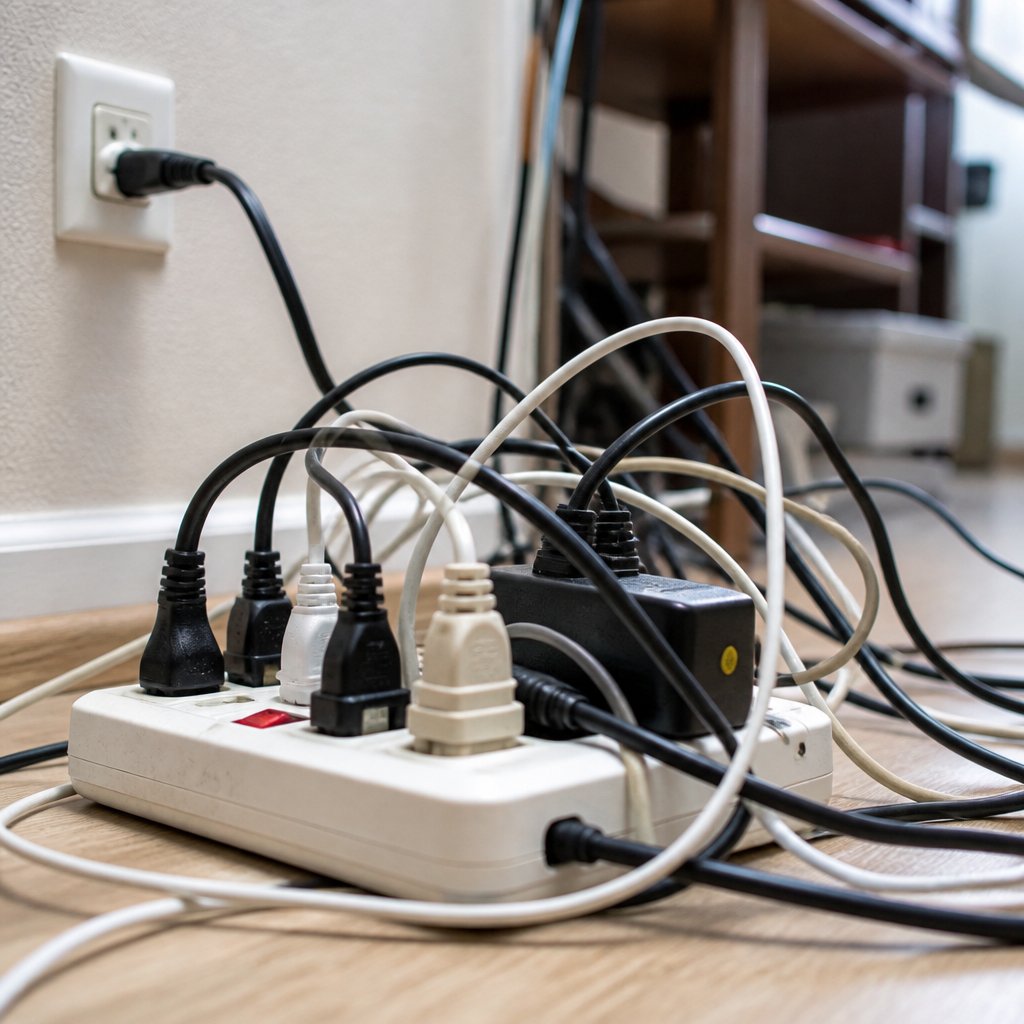
Extension cords are built to help you power something temporarily, not to stand in for the wiring in your walls. If you’re relying on a cord day after day, the real issue isn’t the cord itself—it’s that your space needs a proper outlet or wiring update.
The reason is pretty straightforward: extension cords just aren’t made for long-term use, constant wear, or the heat that builds up when they’re covered, pinched, or run through busy spots. That’s a big deal in homes, offices, shops, and garages, where a quick fix can quietly become a fire risk or a shock hazard.
If you’ve started depending on cords for regular power, it’s time to take a closer look. You might need a safer outlet placement, a dedicated circuit, or a full wiring upgrade from a licensed electrician in Central Texas.
What Extension Cords Are Actually Designed For
Extension cords are meant to bridge a short gap—maybe you need power for a tool, lamp, or some temporary setup. They’re not supposed to replace the fixed wiring in your home or business.
Used as intended, they’re handy. But once you start treating them like permanent wiring, you’re inviting heat, wear, and unsafe conditions.
Temporary Use Versus Fixed Wiring
Temporary use means you pull out the cord for a quick job, then put it away. Fixed wiring stays put, protected by the building, and gets installed to meet electrical code.
Permanent wiring is built for constant use. Extension cords just aren’t. If you find yourself leaving a cord in place for weeks or months, that’s a red flag—you probably need a better electrical setup.
How Flexible Cords Differ From Building Wiring
Flexible cords bend and move, which makes them great for short-term power. Building wiring, on the other hand, stays put inside walls, ceilings, or protected raceways.
The insulation, connectors, and jacket on an extension cord just don’t hold up like house or commercial wiring. On real jobsites, you’ll notice cords start showing wear fast if they get used every day.
The Main Safety Risks Inside Walls And Rooms
Problems start when a cord gets used like it belongs in the room or inside a wall. Heat, physical damage, and broken insulation all become more likely when a cord does a job it wasn’t meant for.
A cord that seems harmless at first can turn into a real hazard when it’s covered, stepped on, or overloaded.
Overheating And Fire Hazards
Extension cords heat up during normal use, especially if they’re too small for the load. If you bundle them, cover them with rugs, or run them through tight spaces, heat can’t escape.
That trapped heat damages the cord and whatever’s nearby. It’s one of the main reasons extension cords shouldn’t be permanent wiring, and why electricians warn against using them long-term.
Damage From Foot Traffic, Furniture, And Doors
Cords across floors get stepped on, rolled over, and caught under chairs. Furniture legs pinch them, and doors can crush them over time.
That wear breaks the jacket or damages the wires inside. In busy spaces, I’ve seen cords fail just from people walking the same path every day.
Shock Risks From Worn Or Improperly Used Cords
A damaged cord can expose live parts and create a shock risk. If the plug, jacket, or prongs are worn out, it gets even worse.
Using a cord outdoors when it’s not rated for it, daisy-chaining cords, or running one through a doorway all make things less safe. If your cord feels hot, looks cracked, or has a loose connection, stop using it right away.
Why Electrical Codes Restrict Long-Term Cord Use
Electrical code exists to keep people and property safe. That’s why extension cords count as temporary tools—not fixed wiring.
If your building keeps relying on cords for daily power, code compliance, insurance, and liability can all turn into headaches.
How Code Treats Extension Cords In Homes And Businesses
In homes and businesses, extension cords are generally only allowed for temporary use. They’re not meant to run through walls, ceilings, floors, or hidden spaces.
That’s why codes require properly placed outlets and permanent wiring where you need regular power. If your layout keeps forcing you to use cords, the right fix is usually to add outlets or wiring—not to keep stretching cords farther.
Insurance And Liability Concerns
A long-term cord setup can cause issues if there’s a fire, injury, or property damage. Insurance might ask if the wiring was safe and up to code.
For business owners, liability risk can be even higher. If someone trips on a cord, or an overloaded cord causes a problem, the costs can go way beyond just fixing the damage.
Common Situations That Signal A Wiring Problem
If you keep reaching for extension cords, your building is probably trying to tell you something. Usually, the problem isn’t the device you’re plugging in—it’s the lack of proper power where you need it.
These patterns usually mean you need outlet upgrades, circuit changes, or a smarter electrical layout.
Not Enough Receptacles In Key Areas
When one outlet has to serve a whole room, cords show up fast. It happens in kitchens, home offices, garages, workshops, and older commercial spaces.
Heavy reliance on cords is usually a sign you do not have enough outlets for how you use the space now. A few well-placed outlets can make a room safer and way more practical.
Frequent Use With Space Heaters, Appliances, Or Office Equipment
Space heaters, microwaves, printers, and similar devices pull a lot of power. Using an extension cord with these loads is a common mistake.
If you’re using a cord every day with high-demand equipment, get the setup checked. Usually, you need a dedicated outlet or circuit—not another cord.
Workarounds Around Old Layouts Or Renovation Gaps
Older homes and buildings often have awkward outlet locations. Renovations can leave a room short on power until the final electrical work gets done.
It’s easy to use cords as a bridge, then forget to fix the layout. If the same cord keeps moving from room to room, it’s time to plan a real wiring solution.
Safer Long-Term Solutions For Homes And Commercial Spaces
The safest move is usually to bring power where you need it—not drag it there with a cord. A licensed electrician can help make the space actually fit how you live and work.
That might mean more outlets, a stronger panel, or a plan for new equipment and future electrical needs.
Adding Dedicated Circuits And New Outlets
A dedicated circuit gives one device or area the power it needs without overloading everything else. New outlets can clear up the clutter and get cords off the floor.
This is one of the most practical upgrades for kitchens, offices, garages, and workspaces. It also helps with outlet and switch upgrades, lighting installs, and safer use of ceiling fans or other fixtures.
Upgrading Panels For Modern Electrical Demand
Older panels weren’t built for today’s homes and businesses. Once you add EV chargers, smart home systems, more lighting, or generator hookups, demand can spike fast.
A panel upgrade supports your current load and leaves room for future improvements. It also helps cut down on breaker trips and gives your system a stronger foundation.
Planning For EV Chargers, Smart Devices, And Generator Connections
EV charger installs, backup power, and smart devices all need more planning than a simple cord. These loads often need dedicated wiring, the right protection, and the correct breaker size.
If you’re adding modern tech to an older property in Austin, Bee Cave, Lakeway, Dripping Springs, Georgetown, Leander, Round Rock, Cedar Park, Kyle, Liberty Hill, Westlake, Hutto, or anywhere in Central Texas, it pays to plan ahead. Good wiring now can save you a lot of headaches later.
When To Call A Licensed Electrician In Central Texas
If cords are multiplying, breakers are tripping, or outlets are never in the right place, it’s probably time to call a pro. A licensed electrician can track down what’s really going on and give you a code-compliant fix.
That’s often the safer, longer-lasting choice for homes and businesses alike.
Warning Signs That Need Professional Electrical Troubleshooting
Get help if you notice hot outlets, buzzing, flickering lights, repeated breaker trips, or cords that feel warm. Those aren’t just annoyances—they can mean overloaded circuits or loose connections.
If a cord is damaged, frayed, or has been run under a rug or through a doorway, replace it and get the setup checked. The cord might just be a symptom.
Projects That Benefit From Inspection And Code-Compliant Installation
Outlet additions, panel upgrades, lighting changes, surge protection, generator hookups, and EV charger installs all benefit from a proper inspection first. That way, you avoid hidden problems and make sure the new work fits your system.
For commercial spaces, this also helps with safety, insurance, and daily reliability. A good install should make the space easier to use—not just look tidier.
How Local Service Helps Properties In Austin And Surrounding Communities
Local service matters because every building has its own quirks, age, and power needs. A home in Westlake might need something different than a shop in Round Rock or a garage in Cedar Park.
In Central Texas, heat, aging wiring, and growing demand all play a role. When you work with a local, licensed electrician, you get recommendations that fit your property, the code, and the way you actually use the space.
Frequently Asked Questions
What safety risks come with using an extension cord as a long-term power solution?
The biggest risks are overheating, fire, shock, and physical damage from daily wear. A cord that stays in place for too long is more likely to get covered, crushed, or overloaded.
How long is it acceptable to leave an extension cord in use before it should be replaced with a proper outlet?
There’s no safe long-term timeline for using an extension cord as permanent wiring. If you need the cord regularly, it’s better to add a proper outlet or wiring solution as soon as possible.
What do OSHA and electrical codes say about relying on extension cords for ongoing power?
OSHA and electrical codes treat extension cords as temporary tools—not permanent wiring. They shouldn’t run through walls, ceilings, floors, or other hidden spaces, and they can’t replace fixed outlets.
What are safer alternatives to extension cords when an outlet isn’t in the right place?
Safer options include adding a new receptacle, installing a dedicated circuit, upgrading the panel, or reworking the wiring layout. For bigger loads, a licensed electrician can help with generator connections, EV charger installation, or outlet upgrades.
Can an extension cord overheat or cause a fire if it’s used continuously for months?
Yes, it can. Continuous use adds wear and traps heat, especially if the cord is under a rug, behind furniture, or powering equipment that draws a lot of current.
Do extension cords draw electricity or pose any risk when plugged in but nothing is turned on?
An extension cord on its own barely uses any power—honestly, it’s almost negligible. But let’s be real: there’s still a bit of risk if the cord’s frayed, overloaded, or just tossed somewhere unsafe. It’s not only about whether you’ve got something switched on; the whole setup matters.