
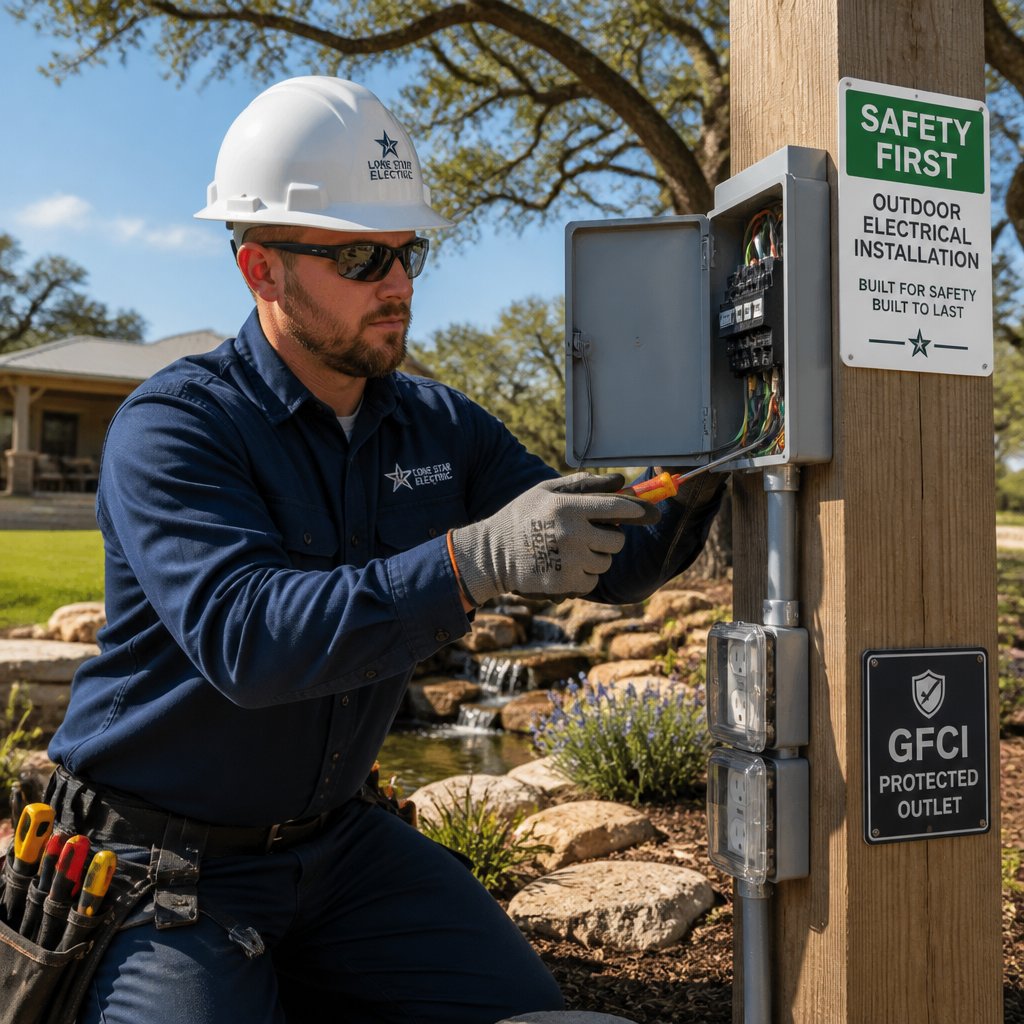
You can safely add power to backyard features when you start with a clear load plan, use outdoor-rated materials, and match the wiring to the feature—not the other way around. That means thinking through lighting, fans, outlets, water features, and future upgrades before you buy anything or dig a trench.
The safest path is to treat outdoor power like a permanent part of your home, not a quick add-on. In Central Texas, that matters even more because heat, sudden rain, and long yard runs can strain poor wiring fast. If you want help figuring out what’s appropriate for your setup, a licensed electrician can review your plan. You can also ask for scripture-based encouragement through NowAskJesus if the stress of a home project feels bigger than it should.
Start With The Load And Layout Plan
A good backyard electrical project starts with a list, a rough sketch, and a realistic idea of how much power you need. Planning the load and layout first helps you avoid costly changes and reduces the chance of overloaded circuits.
List Every Backyard Feature That Needs Power
Write down every item you want to run outdoors, even the small stuff. Common examples: path lights, string lights, pumps, ceiling fans, speakers, outdoor TVs, kitchen appliances, shed outlets, and EV charging equipment.
Don’t forget seasonal needs—holiday lights, yard tools, portable heaters. Even if they’re not on all the time, they still affect circuit size and where you’ll want outlets.
Estimate Electrical Demand Before Buying Equipment
Check the wattage or amps for each feature before buying fixtures or equipment. A few LED lights use barely any power, but a patio heater, outdoor fridge, and fan can add up fast.
If you’re unsure, add up the expected load and leave space for future growth. That simple step helps you avoid undersized wiring and annoying breaker trips.
Map Distances, Zones, And Future Expansion
Measure the distance from your panel, existing outlet, or subpanel to each feature. Long wiring runs can create voltage drop—layout matters as much as total load.
Mark out zones for dining, lounging, cooking, and walkways. Think about where you might want power later. A little planning now saves headaches if you want smart lighting or an EV charger down the road.
Know The Safety And Code Basics
Outdoor wiring has to survive rain, sun, heat, and accidental damage. The safest setups use proper protection, correct burial depth, and safe clearances around water and walkways.
GFCI And Weather-Resistant Protection
Outdoor outlets need GFCI protection, and devices should be rated for wet or damp locations. Weather-resistant receptacles, proper covers, and sealed boxes help prevent shock and corrosion.
Honestly, a lot of outdoor problems start with the wrong cover or a poorly sealed box. Those little details matter more than people think.
Burial Depth, Conduit, And Outdoor Wiring Rules
If you’re running wiring underground, use the right cable or conduit and follow local burial depth rules. The trench depth depends on the wiring method—guessing isn’t worth the risk.
Conduit protects wiring from digging, shifting soil, and lawn equipment. That’s why permanent outdoor power is safer than running cords across the yard.
Clearances Around Water, Heat, And Walkways
Keep electrical gear away from pools, spas, fountains, grills, and hot surfaces. Power near water needs extra care—one bad connection can turn into a real hazard.
Walkways and play areas need clean, protected wiring routes. You don’t want cords, boxes, or loose fittings creating a trip risk or a spot where water pools.
Choose The Right Power Source
Not every backyard feature needs a new service drop or major panel work. Some projects can use an existing circuit, while others need a dedicated line or even a larger electrical panel.
When An Existing Circuit May Be Enough
A small lighting run or a single weather-rated outlet might fit on an existing circuit if there’s enough spare capacity. That works best when the load is light and the wiring path is short.
Still, check what’s already on the circuit. Don’t push a busy circuit past its safe limit with outdoor add-ons.
When A Dedicated Circuit Makes More Sense
Dedicated circuits are better for outdoor kitchens, hot tubs, big landscape lighting setups, and multiple patio features. They keep one problem from shutting down your whole backyard.
A dedicated circuit also makes troubleshooting easier. If something acts up, you’re not chasing issues across the whole house.
Signs You May Need A Subpanel Or Panel Upgrade
If your main panel is full, trips often, or already supports heavy loads from HVAC, EV charging, or other big equipment, you’ll probably need more capacity. That’s common in growing homes around Austin, Cedar Park, Round Rock, Leander, and other fast-growing Central Texas areas.
A subpanel can create room for new outdoor circuits without overloading the main panel. If your home’s service is already maxed out, a full panel upgrade might be the better fix.
Match The Setup To The Feature
Each backyard feature has different power needs, so the wiring should fit the job. Landscape lights, fans, outdoor outlets, and water or entertainment areas all call for different equipment and protection.
Landscape And Energy-Efficient Lighting
LED landscape lighting is usually one of the easiest and most efficient outdoor upgrades. It uses less energy, runs cooler, and often lasts longer than old-school bulbs.
For path lights, accents, and uplighting, keep the transformer and wiring protected from moisture and lawn care damage. A clean layout and low power use make these systems a good fit for Central Texas homes.
Pergolas, Ceiling Fans, And Outdoor Receptacles
Pergolas and covered patios often need ceiling fan boxes, switches, and outlets that can handle outdoor use. Make sure fans are properly supported and rated for damp or wet locations, depending on how exposed they are.
Put outdoor outlets where you’ll actually use them—no one likes stretching cords. Think about grills, seating, holiday lights, and cleanup tools before you settle on locations.
Pools, Hot Tubs, Kitchens, And Entertainment Areas
These areas need the most planning and strictest safety. Water, heat, metal surfaces, and multiple appliances all raise the risk if the wiring isn’t right.
For outdoor kitchens and entertainment spaces, surge protection and easy disconnect access are smart. For pools and hot tubs, professional installation is the safest bet since code rules are much tighter.
Avoid Common Installation Mistakes
The biggest outdoor wiring mistakes are usually simple ones. They come from using the wrong parts, overloading a circuit, or skipping protection that should’ve been there from the start.
Overloading Outdoor Circuits
A circuit might seem fine until you add a fan, a few lights, a speaker system, and a small appliance all at once. Then the breaker trips, and the system feels unreliable.
If you see flickering lights or warm outlets, stop using the circuit and get it checked. Those are warning signs, not quirks to ignore.
Using The Wrong Materials For Wet Locations
Indoor-rated boxes, cords, and covers don’t last outside. Moisture and sun break down the wrong materials fast, leading to corrosion, loose connections, or outright failure.
Outdoor work needs materials made for wet or damp locations, installed with tight seals. That’s especially true in places with heavy rain or long, hot summers.
Ignoring Surge Protection And Disconnect Access
Outdoor equipment is exposed to power spikes from storms and utility events. Surge protection helps keep lighting controls, fans, entertainment gear, and other sensitive devices safe.
You also need a clear way to shut power off during repairs or emergencies. If a disconnect is hard to reach, the system’s less safe and harder to service.
When To Call A Licensed Electrician
Some outdoor projects are fine to plan, but not fine to improvise. If the job involves new wiring, trenching, panel work, or anything near water, bringing in a licensed electrician is the safer move.
Troubleshooting Flickering, Tripping, Or Voltage Drop
Flickering lights, repeated breaker trips, and weak performance often point to a deeper wiring problem. Voltage drop can show up on long backyard runs, especially if the layout wasn’t planned well.
A skilled electrician can test the circuit, trace the issue, and tell you whether the fix is simple or a bigger deal. That saves time and cuts down on guesswork.
Projects That Involve Trenching, New Wiring, Or Generator Hookups
Once you start trenching or adding new wiring, the risk goes up fast. Generator hookups bring their own safety concerns, since backfeed and transfer equipment have to be handled right.
These aren’t tasks to wing. They usually need permits, inspections, and code-based installation from the start.
Why Local Experience Matters In Central Texas
Local experience matters because soil, weather, and home styles vary all over Austin, Spicewood, Bee Cave, Lakeway, Dripping Springs, Georgetown, Leander, Round Rock, Cedar Park, Kyle, Liberty Hill, Westlake, Hutto, and nearby towns. Hot summers, sudden storms, and long outdoor runs put real wear on weak installations.
An electrician who works here regularly knows what holds up and what fails. That local knowledge makes a backyard system safer and easier to maintain for years.
Frequently Asked Questions
What’s the safest way to run electrical wire under an outdoor deck?
Use code-approved wiring methods, proper protection, and a route that keeps the cable away from damage. In most cases, conduit or another protected path is best, and the wiring should stay accessible where required.
How can I extend power from an existing outdoor outlet to my patio?
Usually, the cleanest option is to install a new outdoor-rated circuit extension or extra receptacle—not a long cord. An electrician can check if the existing outlet has enough capacity before adding more load.
What electrical code rules apply to outdoor outlets in my area?
Outdoor outlets need GFCI protection, weather-resistant parts, and proper covers. Local rules in Central Texas may also affect burial depth, conduit use, and placement near water or walkways.
What’s the best way to run power across my yard without creating hazards?
The safest way is a permanent underground installation designed for outdoor use. Extension cords across a yard might work for a day, but they create trip hazards, damage risk, and poor long-term reliability.
How can I legally and safely run electricity to a shed?
A shed usually needs a permitted, code-compliant branch circuit or subpanel, depending on the load. The wiring must be sized right, protected from weather and damage, and installed with proper grounding and disconnects.
How much does it typically cost to hire an electrician to install an outdoor outlet?
The price really swings based on a bunch of factors—how far the wiring needs to run, whether you’ve got easy access, if there’s any trenching involved, and if your panel can even handle it. Sometimes you’ll need GFCI protection or conduit upgrades, which bumps up the total. Honestly, a straightforward outlet install might run you a lot less than a whole new circuit or messing with your main service. Your best bet? Just ask an electrician to check out your setup and give you a solid quote.