
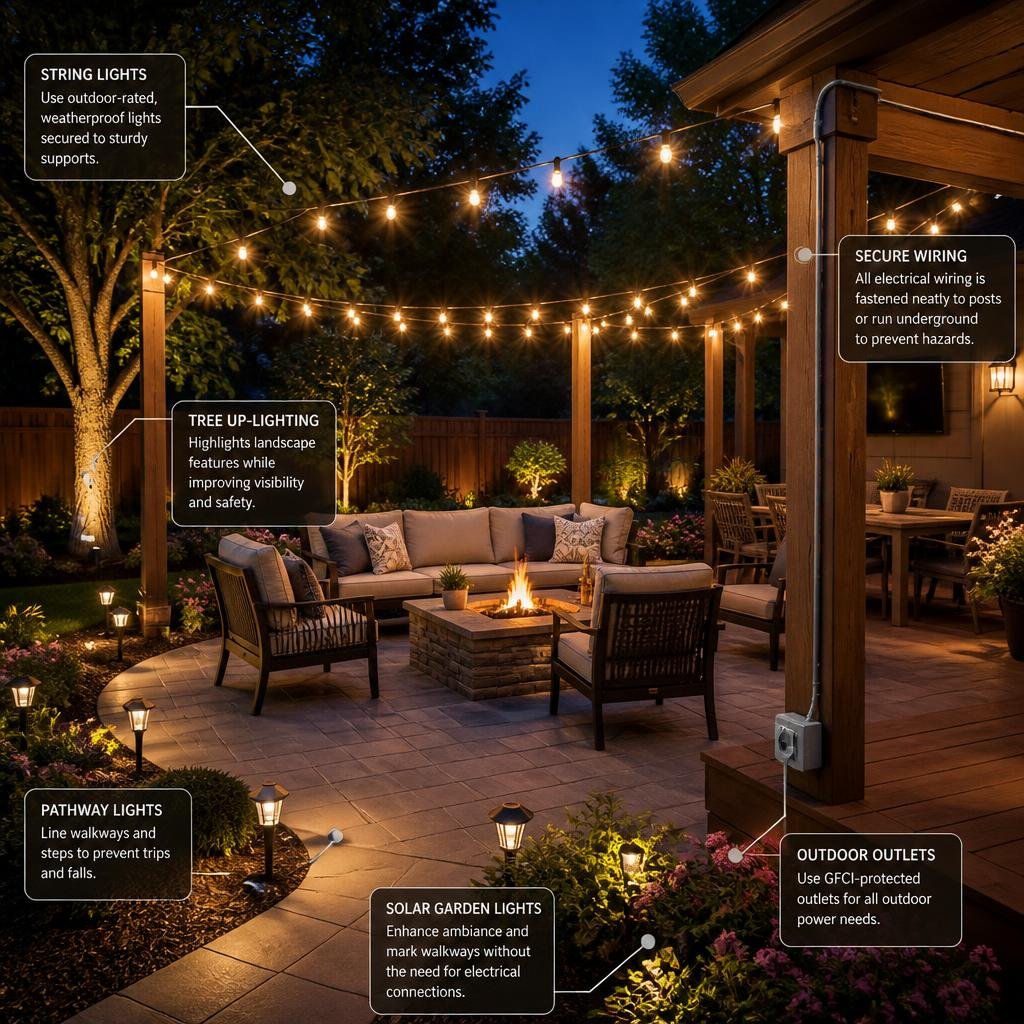
When you figure out how to add lighting to outdoor entertainment areas, you make the space safer, easier to use, and a lot more comfortable after dark. The best setups start with planning each zone, then picking fixtures, controls, and placements that really suit how you use the space.
Good outdoor lighting should help you see where you’re going, see what you’re doing, and enjoy the setting without harsh glare or pitch-black corners. So you’ll need more than just a few bright fixtures. You want a layered plan that covers dining, seating, walking, and those little visual accents that make a big difference.
A thoughtful setup protects your home and guests too. Outdoor lighting has to stand up to rain, heat, humidity, and it has to meet electrical safety rules. If you plan smart now, you can avoid rewiring headaches, flickering, or unsafe installs down the line.
Define the Purpose of Each Outdoor Zone
Before you buy anything, look at how each part of your yard actually works at night. A dining table needs brighter, focused light. A lounge area calls for something softer. Paths? You want clear visibility so nobody trips.
Dining Spaces
Dining spaces should feel bright enough for food, drinks, and conversation. A pendant, string lights, or a focused overhead fixture can work if the light lands on the table—not in people’s eyes.
I always try for even light across the whole table. If you spot strong shadows on plates or faces, your fixture is probably too high, too dim, or just too exposed.
Patio Seating Areas
Seating zones work best with soft, warm light that lets people unwind. Sconces, bistro lights, or small accent fixtures can create a calm glow around chairs and sofas.
Keep the light low enough that it doesn’t feel like an office. You want folks to stick around outside, not feel like they’re on display under a spotlight.
Poolside and Spa Perimeters
Pool and spa areas need clear, safe light around edges, steps, and any changes in elevation. The goal is visibility—without glare bouncing off the water.
Put fixtures where they guide movement and mark boundaries. Don’t aim bright light right at the water or at people coming in.
Walkways and Entry Points
Walkways and entry points should be easy to follow after dark. Path lights, step lights, and small wall lights help prevent trips and make guests feel welcome.
Transitions matter—like where a patio ends and a walkway begins. That’s where people miss a step most often.
Choose Fixtures That Match the Setting
The right fixture depends on your style and how much light you need. Mixing decorative fixtures with practical ones usually works best outdoors.
String Lights and Bistro Lighting
String lights and bistro strands bring a relaxed vibe to patios and pergolas. They’re great for ambience and can soften the whole space with a warm look.
Go for weather-rated strands and secure them well so they don’t sag or rub against anything sharp. If you want a polished look, keep the spacing even and lines straight.
Wall Sconces and Post Lights
Wall sconces and post lights work well near doors, fences, and seating areas. They add structure and help define your outdoor space.
Pick fixtures that suit your home’s style and give off a downward or shielded glow. That keeps things useful without making the area harsh.
Step Lights and Path Illumination
Step lights and path lights are all about safety. They show changes in level and help you move through the space without guessing where to step.
Set them up to guide the route, not to shine in your eyes. Small, well-placed lights usually beat a few glaringly bright ones.
Accent Fixtures for Landscaping
Accent lights can highlight trees, stone walls, planters, and architectural details. They add depth and make the yard feel finished at night.
Don’t go overboard. A few targeted accents almost always look better than flooding the whole yard with light.
Plan for Power, Controls, and Smart Features
Even the best lighting design falls flat if the power setup can’t support it. You’ll want controls that make things easy to use, too.
Dedicated Circuits and Outdoor-Rated Wiring
Outdoor lights should be on a circuit that can handle the load. If you’re adding several fixtures, check if your existing wiring and transformer can keep up.
Use outdoor-rated wiring, boxes, and connectors anywhere moisture or temperature swings are an issue. It’s a small detail, but it matters more than most homeowners expect.
Timers, Dimmers, and Motion Sensors
Timers and dimmers let you set the mood without wasting energy. Motion sensors work well near side yards, garages, and less-used paths.
Dimmers are great for entertainment spaces because your needs change through the night. You might want things bright for setup, then dial it down once guests are settled.
Lutron Smart Home Integration
If you want more control, Lutron smart home integration can make outdoor lighting a breeze. You can create scenes, set schedules, and tweak zones from your phone or a wall control.
It’s especially handy when you want patio lights, path lights, and accent lights working together. You can fine-tune everything instead of flipping one big switch.
Prioritize Safety, Weather Resistance, and Code Compliance
Outdoor lighting has to survive the weather and stay safe around people, water, and foot traffic. You’ll also need to follow local electrical rules so everything works as it should.
GFCI Protection and Wet-Location Ratings
GFCI protection lowers shock risk outdoors. It’s a basic safety step for any outlet or circuit that might get wet.
Check fixture ratings, too. Wet-location fixtures go in fully exposed spots, while damp-location ones are for covered areas with less moisture.
Glare Reduction and Proper Fixture Placement
Glare can ruin a good outdoor space. A fixture might be bright but still uncomfortable if it shines in your eyes or bounces off shiny surfaces.
Aim lights down, shield them when you can, and keep bright sources away from direct sightlines. Honestly, a slightly lower light level placed well usually looks better than a strong light in the wrong spot.
When to Call a Licensed Electrician
Call a licensed electrician if you need new wiring, circuit changes, panel work, or code checks outside. Same goes if you’re not sure your current system can handle more fixtures.
For bigger jobs, professional help saves time and keeps things safer. At Magnify Electric, you can get licensed support for outdoor lighting installation, smart home systems, panel upgrades, troubleshooting, and all sorts of residential or commercial work across Central Texas.
Layer Light for Comfort, Visibility, and Atmosphere
Layered lighting gives you options. You get enough light to move around safely, enough brightness for tasks, and enough warmth to keep the space inviting.
Ambient Illumination for Gatherings
Ambient light is your base layer—it helps the whole area feel usable. String lights, soft sconces, and indirect fixtures work well here.
Keep things even and gentle. If the space feels flat or too bright, turn it down before adding more lights.
Task Lighting for Cooking and Serving
Task lighting should focus on where people prep or serve food. That might be an outdoor kitchen, grill, buffet, or bar.
Pick brighter lights with clear coverage in those spots. You want to see counters, tools, and food without weird shadows from overhead stuff.
Accent Effects for Architectural Features
Accent lighting draws attention to features you want people to notice—stone columns, pergolas, trees, textured walls. A little directed light goes a long way.
Guide the eye with accent lights, don’t let them compete with your main lighting. A few well-placed accents can really finish off the space.
Professional Installation and Long-Term Upgrades
Some lighting changes are simple. Others turn into bigger projects once you check the wiring, control options, and safety needs.
When Basic Replacements Turn Into System Upgrades
A single fixture swap can turn into a bigger job if the wiring is old, the load’s too high, or the layout just doesn’t fit anymore. That happens a lot as you add more entertaining zones over time.
If you’re already opening walls, upgrading a panel, or adding smart controls, it often makes sense to upgrade the whole system. It’ll run cleaner and save you headaches later.
Residential and Commercial Project Support
Whether it’s a backyard patio, restaurant terrace, community space, or retail area, the planning is different but the goals are the same: safe access, useful light, and a clean finish.
Magnify Electric handles simple fixture swaps, full electrical upgrades, commercial lighting, safety inspections, smart home setups, emergency support, and more for homes and businesses.
Service Areas Across Central Texas
You can get service across Spicewood, Austin, Bee Cave, Lakeway, Dripping Springs, Georgetown, Leander, Round Rock, Kyle, Cedar Park, Liberty Hill, Westlake, The Hills, Briarcliff, Horseshoe Bay, Sunset Valley, Hutto, and other Central Texas areas.
That local reach really matters when you want quick help, consistent service, and a team that gets regional outdoor living needs.
Frequently Asked Questions
What types of outdoor lights work best for patios, decks, and backyard seating areas?
For patios and decks, string lights, wall sconces, post lights, and low-glare accent fixtures usually work best. You want a warm, even glow that supports conversation without being overpowering.
How bright should outdoor entertaining lights be to feel welcoming without being harsh?
For entertaining areas, go for soft to moderate brightness with warm color temps—usually around 2700K to 3000K. Bright enough to see faces, steps, and tables, but still relaxed.
What is the 5’7″ lighting rule and how do I use it in my yard?
The 5’7″ rule is a common guideline for outdoor path lighting—spacing and height help light the ground without causing glare. Basically, keep lights low enough for safety, high enough to spread light across walkways.
What’s a good rule of thumb for spacing and layering outdoor lights?
Start with three layers—ambient, task, and accent—then space fixtures based on the zone size. I usually light the main activity areas first, then fill in paths and accents only where they help safety or balance.
How much does it typically cost to hire an electrician to install outdoor lighting?
Cost depends on fixture count, wiring changes, type of fixtures, and whether you need new circuits or controls. A simple swap costs less than a full upgrade with smart controls or panel work.
What weatherproof and safety ratings should I look for in outdoor light fixtures and wiring?
Go for wet-location ratings if the area’s exposed, and damp-location ratings if it’s covered but still gets humidity. Honestly, you’ll want GFCI protection too, plus wiring and fixtures labeled for outdoor use—otherwise, you’re risking both safety and longevity. It’s not worth skipping these details just to save a buck.