
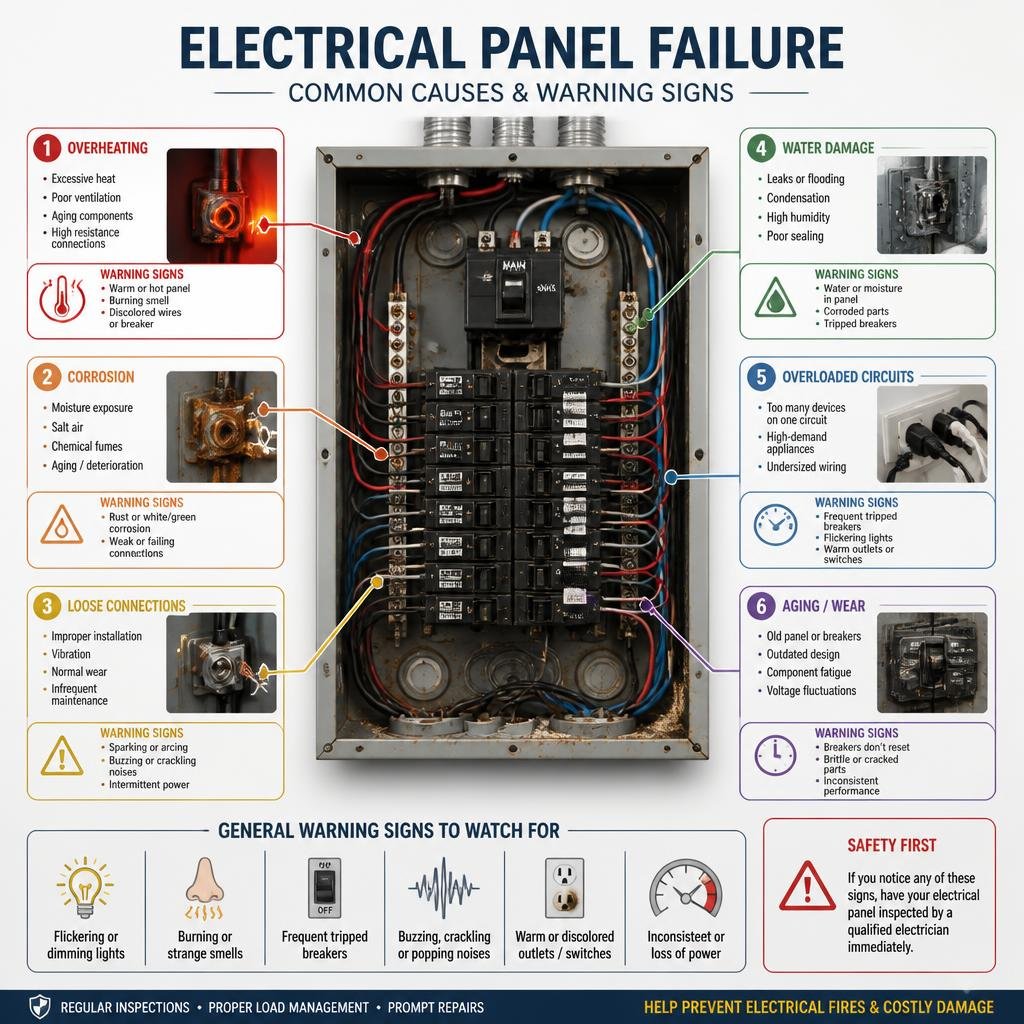
Electrical panel trouble usually starts small—maybe a breaker trips more than it should, a light flickers, or the panel itself feels a bit too warm. These early hints can turn into bigger headaches if you ignore them.
If you catch the warning signs early, you can avoid outages, overheating, and costly damage to your electrical system. The panel is there to manage power for your whole property, so when it starts slipping, outlets, appliances, lighting, and electronics might all feel the effects.
What an Electrical Panel Does
The electrical panel acts as the main hub for power in your home or business. It takes incoming electricity and sends it out through separate circuits, each serving different areas.
How Power Is Distributed Throughout a Property
The panel splits electricity into smaller branches so every room or area gets what it needs. Breakers inside the panel protect these circuits—they’ll shut off power if there’s too much demand or a fault.
That setup keeps lights, outlets, and big appliances running safely. If the panel struggles to distribute power, you might notice repeated tripping, dimming lights, or things just not working right.
Why Panel Reliability Matters for Safety and Performance
A reliable panel keeps overheating, arcing, and sudden outages at bay. It also helps electronics and equipment get steady voltage.
When a panel starts to weaken, you’ll probably see more repairs, more interruptions, and more wear on everything plugged in. From what I’ve seen, those little warning signs almost always show up before a big failure—so it’s best not to brush them off.
Overloading and Circuit Demand Problems
Panels often fail when the system’s demand outpaces what the panel can handle. This pops up a lot in older homes, places with lots of devices, or commercial spaces that keep adding equipment.
Too Many High-Draw Devices on Existing Circuits
Space heaters, microwaves, hair dryers, portable AC units—these can all push a circuit past its safe limit. When you stack too many high-draw items on one circuit, breakers trip to protect the wiring.
If this keeps happening, the panel’s doing its job, but it’s also telling you the load is too heavy. Resetting the breaker isn’t the answer. You need to rethink your setup.
Added Appliances and Equipment Without Capacity Planning
People add new appliances or outlets without checking if the panel can actually support them. That leads to hot spots, nuisance trips, and breakers working overtime.
A load calculation will show if you need dedicated circuits or a panel upgrade. For a lot of properties, that’s what keeps things from getting overloaded as you add more stuff.
Age, Wear, and Component Breakdown
Panels don’t last forever. Over time, age, heat, and daily use wear down the parts that carry and control power.
Insulation Deterioration and Loose Internal Connections
As panels get older, insulation can crack and connections can loosen from heat and vibration. Loose connections cause overheating, buzzing, and sometimes arcing.
I’ve seen plenty of damage that started with a connection that was never tight enough, or just got loose after years of use. This kind of wear is tough to spot unless you open the panel and look closely.
Breaker Fatigue and Bus Bar Damage Over Time
Breakers wear out after years of heating and cooling cycles. When they get tired, they might trip too easily, not trip when they should, or feel warm even when nothing’s wrong.
The bus bar inside the panel can show pitting, corrosion, or heat damage. If that metal’s damaged, you might need a repair—or sometimes a full replacement, depending on how bad it is.
Moisture, Corrosion, and Environmental Exposure
Water and electricity? Bad mix. Even a little moisture can cut a panel’s life short. Humid spaces, leaks, and outdoor exposure all make things worse.
Humidity Leaks and Outdoor Conditions
Panels in garages, basements, on exterior walls, or outside can get hit with damp air, condensation, or leaks. Over time, moisture sneaks into the box or collects on metal parts.
If you spot a panel near plumbing, a roof leak, or a wet outside wall, pay close attention. Even a little exposure can kick off the damage.
Rust Oxidation and Contamination Inside the Enclosure
Rust and oxidation mess with electrical flow and weaken parts inside. Dust, bugs, and debris add to the problem by trapping moisture or blocking airflow.
You might notice a metallic smell, visible rust, discoloration, or white residue inside the panel. Those are your cues to get it checked out.
Poor Installation, Unsafe Repairs, and Code Issues
A panel can fail early if someone installed it poorly or made bad changes. Shoddy work often hides problems that show up later as overheating, tripping, or just unreliable service.
Incorrect Wiring Methods and Improper Breaker Pairing
Wrong wire sizes, double-lugged breakers, loose neutral connections, mismatched breakers—all of these cause trouble. The worst part? You might not see the issue until it’s serious.
Bad breaker pairing can leave a circuit underprotected, which means more heat and possible damage to the panel or wiring.
Unpermitted Modifications and Missed Safety Upgrades
Unpermitted changes can leave your panel out of step with safety standards. In older places, missing GFCI or AFCI protection, outdated equipment, or skipped grounding upgrades all add extra risk.
A panel might seem fine even while these hidden code issues get worse. Inspectors often spot these problems as safety concerns before a total failure happens.
When to Repair, Upgrade, or Call a Professional
The right fix depends on the panel’s age, what’s damaged, and how often you see problems. Some things can be repaired, but sometimes you need a full replacement or an upgrade.
Warning Indicators Property Owners Should Not Ignore
Don’t wait if you notice:
- Breakers that trip a lot
- Buzzing, crackling, or popping sounds
- Burning smells near the panel
- Warm or hot panel covers
- Flickering or dimming lights
- Rust, corrosion, or moisture inside the box
- Breakers that won’t reset
- Scorch marks or visible damage
If you spot any of these, don’t keep resetting breakers—get the system checked. Waiting just makes things worse (and pricier).
Why Licensed Electricians Are the Best Option for Residential and Commercial Work
Electrical panel work isn’t the place to wing it. A licensed electrician can test the load, check the wiring, spot code issues, and tell you if you need repair or replacement.
If you want a team that handles panel upgrades, repairs, troubleshooting, smart home systems, EV charging, lighting, generators, and more, Magnify Electric is a solid pick for homes and businesses in Spicewood, Austin, Bee Cave, Lakeway, Dripping Springs, Georgetown, Leander, Round Rock, Kyle, Cedar Park, Liberty Hill, Westlake, The Hills, Briarcliff, Horseshoe Bay, Sunset Valley, Hutto, and nearby parts of Central Texas. Their electricians handle simple fixture swaps, full upgrades, safety checks, and emergencies with the same careful touch.
Frequently Asked Questions
What are the most common signs that an electrical panel is starting to fail?
You’ll usually see frequent breaker trips, buzzing noises, flickering lights, a burning smell, or visible rust or scorch marks. If the panel cover feels warm, that’s another red flag.
How can overloaded circuits or too many breakers contribute to panel problems?
Overloaded circuits make the panel and breakers work way too hard, which means more heat and more tripping. Too many breakers or too much demand usually means your panel just isn’t up to the job anymore.
Can moisture, corrosion, or rust inside the panel lead to breakdowns over time?
Absolutely. Moisture and rust weaken metal parts and connections, making power flow less reliable. Over time, that can lead to overheating, breaker failure, or even bigger electrical problems.
How does loose wiring or poor connections in a panel cause overheating or arcing?
Loose wires create resistance, which turns into heat. If it gets bad enough, electricity can jump across the gap—arcing—which is a real fire risk.
When does an outdated or recalled panel brand become a safety risk worth replacing?
If a panel’s past its expected life, keeps acting up, or is known for being unsafe, it’s time to think about replacing it. If you’re already seeing age, damage, or unreliable breakers, swapping it out is usually the safer bet.
How does the 80% rule affect panel capacity and the risk of overheating?
Basically, the 80% rule says you shouldn’t load up a panel or circuit past 80% of what it’s rated for if you’re running things continuously. It’s not just a random number—keeping it under that helps keep heat in check and makes it way less likely you’ll deal with tripped breakers or a stressed-out panel.