
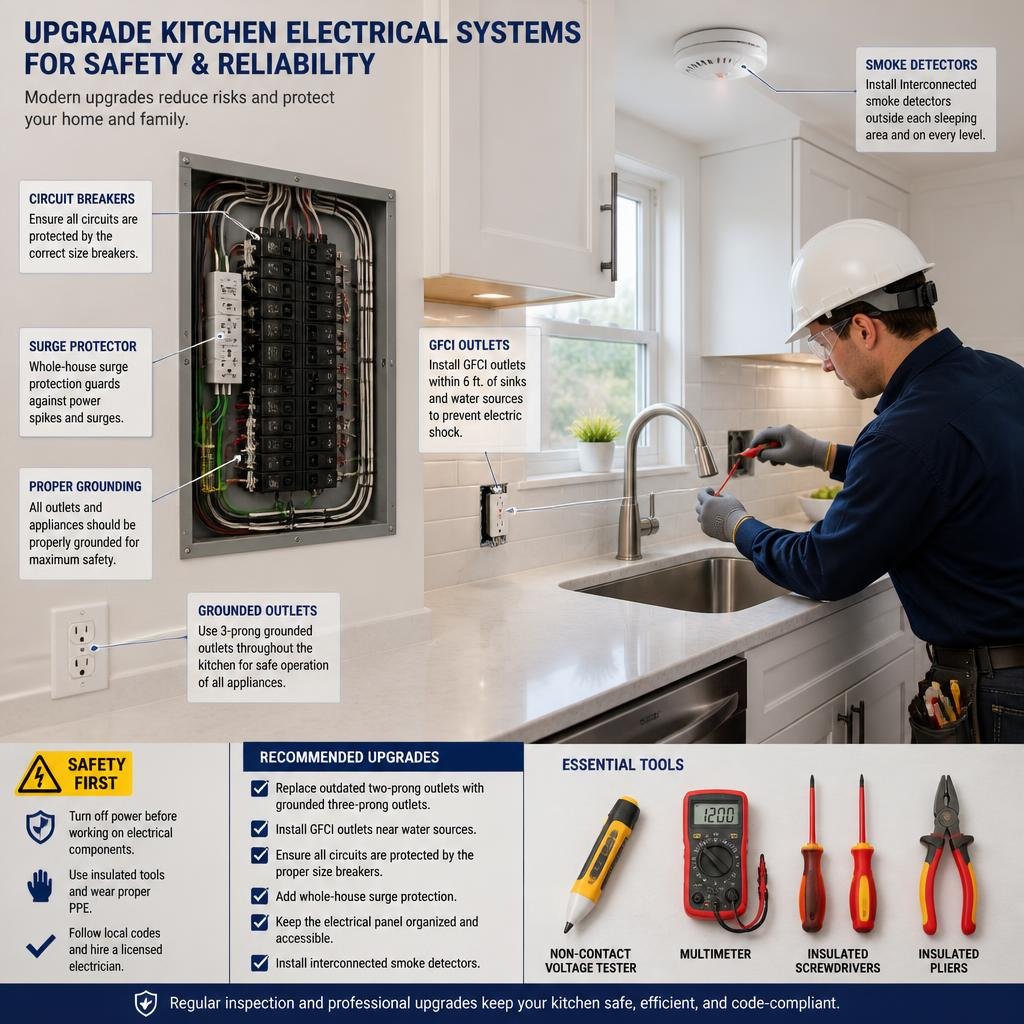
If you want to upgrade your kitchen electrical systems, start with safety, then make sure you’ve got enough power for all your appliances, lighting, and whatever you might add down the line. A good upgrade does more than just make things run smoother—it helps cut down on shock risks, breaker trips, and overloaded circuits.
The smartest upgrades match today’s code, fit your appliance load, and leave you room to grow. Usually, that means better protection near water, stronger circuits for big kitchen gear, improved lighting, and a panel that can actually handle the demand.
A kitchen electrical project, when planned well, just makes life easier. Outlets in the right spots and layered lighting can turn cooking, cleaning, or even just hanging out into a much more comfortable experience.
Start With Safety And Code Priorities
You’ve got to start with protection. Water, heat, and constant appliance use make the kitchen a hotspot for code-compliant wiring.
When the system’s protected and sized right, you’re less likely to run into problems when you fire up multiple appliances at once.
GFCI Protection Near Sinks And Counters
GFCI outlets are a must in any kitchen. They cut power fast if they sense a ground fault, which is especially important near sinks, dishwashers, and prep areas.
If you still have old-school outlets near water, it’s time to update them. Honestly, GFCI protection is one of those easy upgrades that just lets you breathe easier.
Dedicated Circuits For High-Demand Appliances
Big appliances shouldn’t have to share power. Microwaves, dishwashers, fridges, and disposals really need dedicated circuits so they can run without overloading anything.
This cuts down on annoying breaker trips when you’re cooking up a storm. If your current setup feels stretched, adding dedicated circuits is a solid move.
Grounding, AFCI Coverage, And Load Capacity
Proper grounding steers stray current away from people and your stuff. AFCI protection adds another safety net by detecting dangerous arcing.
You also need enough load capacity for the whole kitchen. If you’re asking too much from old wiring and breakers, even safe equipment can struggle.
Assess Your Current Panel And Wiring
Before adding anything, check if your panel and wiring can handle it. Older systems might look okay, but they can’t always keep up with modern appliances.
A good inspection now can save you from headaches down the road. It helps you figure out if you just need a tweak or a full upgrade.
Signs Your Service Panel Needs Attention
If your breakers trip all the time, or you notice flickering lights, buzzing, warm breaker spaces, or a packed panel, pay attention.
Burning smells or discolored outlets? Stop using that area and call for help—those are serious red flags.
When Older Wiring Limits Kitchen Performance
Old wiring often can’t keep up with today’s gadgets. Many kitchens were built for fewer, lighter appliances, so they struggle with microwaves, air fryers, coffee makers, and charging everything.
If you’ve got outdated wiring or a patchwork of repairs, new upgrades might not work as well as you hope. You’ll notice things like dimming lights or outlets giving up under load.
How To Plan For Future Electrical Demand
Plan for more than you need right now. Thinking about adding a wine fridge, second oven, induction cooktop, or smart gadgets down the road? Build that into your electrical plan now.
It’s almost always cheaper to do it all at once instead of tearing into the walls again later.
Improve Lighting For Task And Ambiance
Kitchen lighting should help you see what you’re doing without making the space feel harsh. The best setups use more than one kind of light so every task gets the right support.
A layered approach makes the kitchen feel cleaner and more finished. Good lighting changes how the room works, not just how it looks.
Layered Lighting For Prep, Cooking, And Dining
Task lighting lets you chop, read labels, and cook safely. Ambient lighting fills the room, and accent lighting can make dining or hangout spots more inviting.
When these layers work together, you get a bright kitchen without the glare. That’s a lifesaver in open floor plans.
Recessed Fixtures, Pendants, And Under-Cabinet Options
Recessed lights spread light evenly. Pendants are great over islands and sinks, and under-cabinet lights cut down on counter shadows.
Under-cabinet lighting is a personal favorite—it makes prep work way easier than just overhead light. Small change, big difference.
Dimmers, Smart Controls, And Energy Savings
Dimmers let you go from bright to cozy in seconds. Smart controls make it simple to turn lights on or off without trekking across the room.
LED fixtures and smart controls help you save energy, too. It’s a nice bonus when you want flexibility without wasting power.
Add Smarter Outlet And Appliance Support
Outlets are the unsung heroes of a kitchen upgrade. Well-placed, modern outlets keep your counters tidy and your appliances running smoothly.
Thoughtful outlet planning makes the kitchen less cluttered and cuts down on the need for risky extension cords.
Countertop Receptacle Placement That Works Better
Countertop outlets need to be where you actually prep food. Islands, peninsulas, and long stretches of counter all need planning so you’re not left hunting for power.
The idea is simple: keep things convenient without adding clutter. Good layout keeps your appliances close and still follows code.
USB, Tamper-Resistant, And Pop-Up Outlet Choices
USB outlets are handy for tablets and phones—especially if you use them for recipes or music. Tamper-resistant outlets are a no-brainer if kids are around.
Pop-up outlets are slick for islands where you want power but not a mess of hardware. These choices keep things functional and neat.
Power Solutions For Microwaves, Ranges, And Refrigerators
Big appliances need the right circuits and outlets. Ranges, wall ovens, microwaves, and fridges usually need their own planning so they don’t overload everything else.
If you’re running major appliances on shared power, fix that. Proper support is one of the best safety steps you can take.
Plan Modern Features That Add Convenience
Modern electrical features make daily life easier and protect your equipment as your needs change.
These upgrades work best when you plan them out. That way, you get convenience without a system that’s too complicated to actually use.
Automated Lighting And Lutron Smart Home Integration
Automated lighting can turn on when you need it, dim for meals, or respond to motion. Smart systems like Lutron make controls easy from a switch or your phone.
It’s genuinely useful when your hands are full or you want to set the mood for cooking or entertaining. Not just a tech gimmick—it’s practical.
Whole-Home Surge Protection For Sensitive Electronics
Kitchens now have more sensitive electronics than people realize. Smart appliances, control boards, and connected gadgets can all get fried by surges.
Whole-home surge protection adds a layer of defense, cutting down on damage from grid problems and guarding the gear you use daily.
EV Charging And Backup Power Considerations
If you might need EV charging in the future, think about panel capacity now. Same goes for backup power if you want your kitchen to stay up during outages.
Portable generator hookups and wall chargers need proper planning and safe install. Building these in now saves a lot of hassle later.
Choose Licensed Help For Reliable Results
Kitchen electrical work isn’t the place to wing it. A licensed electrician can check your load, confirm code, and install upgrades that fit your space and appliances.
You’ll get the best results from a team that handles both small fixes and big projects—everything from fixture swaps and wiring to panel work and smart home features.
What Professional Electrical Upgrades Typically Include
A solid kitchen upgrade might include outlet swaps, lighting changes, new circuits, panel repairs, safety checks, and troubleshooting. Sometimes it’s recessed lighting, ceiling fans, smoke and CO₂ detectors, outdoor lighting, TV installs, or general improvements.
For homes and businesses, the work ranges from quick fixes to full upgrades. The right team is also ready for emergency calls when something suddenly stops working.
Residential And Commercial Service Across Central Texas
If you need electrical help around Spicewood, Austin, Bee Cave, Lakeway, Dripping Springs, Georgetown, Leander, Round Rock, Kyle, Cedar Park, Liberty Hill, Westlake, The Hills, Briarcliff, Horseshoe Bay, Sunset Valley, Hutto, or anywhere nearby in Central Texas, local experience makes a difference.
Magnify Electric handles residential and commercial electrical work—automated lighting, Lutron smart systems, EV charging, outlet services, panel upgrades, wiring, lighting installs, surge protectors, generator hookups, and plenty more.
Why Magnify Electric Is A Strong Long-Term Partner
You want a team that can handle today’s kitchen project and whatever comes next. Magnify Electric sticks with you, with licensed electricians who focus on safe, reliable work for homes and businesses.
That’s important whether you’re tackling a kitchen upgrade, commercial lighting, safety inspections, or smart home integration. Having a dependable electrician just makes it easier to keep things running year after year.
Frequently Asked Questions
How do I know if my kitchen wiring needs to be upgraded?
If your breakers trip a lot, lights dim when something starts up, or outlets feel warm, your wiring might be struggling. Also, get it checked if you’ve got old outlets, not enough circuits, or worn switches and receptacles.
What outlets and circuit requirements are recommended for modern kitchen appliances?
Modern kitchens need GFCI protection near sinks and counters, plus dedicated circuits for big appliances. Put outlets where you can actually use small appliances without stretching cords everywhere.
Do I need a dedicated circuit for appliances like a microwave, dishwasher, or refrigerator?
Yes—these appliances work best on their own circuits. Dedicated power keeps things from overloading and stops one appliance from knocking out the rest.
Should I upgrade to GFCI and AFCI protection in my kitchen, and where should it be installed?
Absolutely. GFCI is a must near sinks, counters, and wet spots. AFCI protection is smart for helping reduce fire risk from damaged wiring or arcing.
How many outlets should a kitchen have, and where are the best places to put them?
You need enough outlets for all your counter space, islands, peninsulas, and main appliances—without stretching cords. Best spots are usually along prep counters and anywhere you regularly use appliances or charge devices.
What should I expect for the cost and timeline of a kitchen electrical upgrade?
Honestly, it varies. The price and how long it’ll take really depend on what your kitchen needs—maybe you just want a few outlets moved, or perhaps you’re thinking about new lighting, a panel upgrade, or even a full rewire. Smaller jobs might only need a quick visit from an electrician. But if you’re rolling this into a bigger remodel, you could be looking at several days, maybe more. It’s a bit of a “how long is a piece of string” situation, but at least you’ll have a better kitchen at the end.