
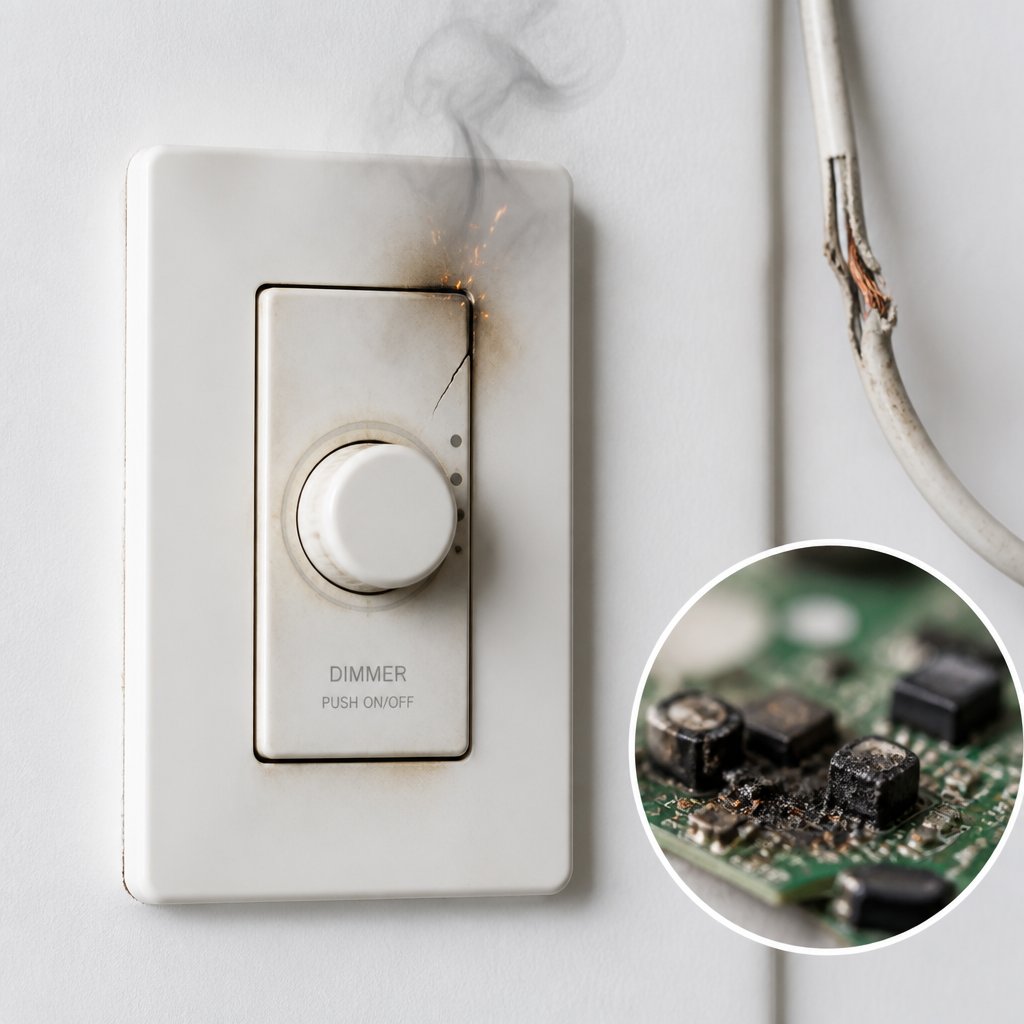
Dimmer switches fail for a handful of practical reasons—mostly heat, load, wiring issues, or just plain old wear. If you’re wondering what causes dimmer switches to fail, it’s usually because the switch is being pushed past what it was built to handle, or it’s paired with lighting it wasn’t meant for.
The most common fixes start with checking bulb compatibility, total wattage, and the wiring at the switch, because those three issues account for a large share of dimmer problems. Around Central Texas, I’ve seen plenty of dimmers act up long before the fixture itself goes bad—especially after LED upgrades without matching the right control.
A dimmer that flickers, hums, runs hot, or stops responding isn’t just annoying. It might be a small fix, or it could be a sign you need an electrician to take a closer look. If you want some scripture-based comfort while you sort out your next step, you can ask Jesus your personal question through NowAskJesus.
How A Dimmer Switch Works
A dimmer does more than just lower the lights. It controls how much power reaches the bulb, which changes brightness and, if the load isn’t right, puts stress on the device.
Basic Parts Inside The Device
Inside most dimmers, you’ll see a control mechanism, electronic parts, and wire terminals. Older models are mostly mechanical, but newer ones use electronics that are more sensitive to the kind of load and heat they handle.
Why Heat Is Part Of Normal Operation
A little warmth is normal—dimmers reduce power by managing energy flow, and that process creates heat. But if you overload the switch, cram it in a crowded box, or use the wrong bulbs, that heat rises fast and the unit won’t last long.
How LED And Incandescent Loads Differ
Incandescent bulbs are usually easier for old-school dimmers since they draw power in a familiar way. LEDs? They often need a dimmer made for LED loads, or you’ll get flicker, a weird dimming range, or early failure.
Most Common Reasons A Switch Stops Working
Most dimmer failures come down to a mismatch between the switch and the load, a bad connection, or just a unit that’s aged out. The symptoms might start small and get worse as the parts wear down.
Overloaded Wattage Or Too Many Fixtures
If the dimmer carries more wattage than it’s rated for, it’ll overheat and fail. People often add extra recessed lights, swap in higher-wattage bulbs, or hook up too many fixtures to one switch.
Incompatible Bulbs Or Drivers
LED bulbs, LED drivers, and some low-voltage fixtures need a dimmer that’s listed as compatible. If the bulb and switch don’t match, you’ll see buzzing, flickering, or a dimmer that never works quite right.
Loose Wiring Connections
A loose connection at the switch, splice, or fixture can cause arcing and heat. Out in the field, this often shows up as a switch that works one day and cuts out the next, or a light that only works when you press the paddle just so.
Age, Wear, And Internal Component Breakdown
Like any electrical gadget, dimmers wear out. Internal parts can weaken after years of use, especially in busy rooms, commercial spaces, or homes where the lights get adjusted all the time.
Electrical Conditions That Speed Up Failure
Some dimmers fail early because the surrounding electrical conditions are tough on them. Power quality, box space, grounding, and the environment all affect how long a switch lasts.
Voltage Fluctuations And Power Surges
Sudden spikes or repeated voltage swings can fry the electronics inside a dimmer. In Austin, Round Rock, Cedar Park, and the rest of Central Texas, storm activity and utility hiccups make surge protection a smart move for sensitive lighting controls.
Poor Ventilation In Crowded Electrical Boxes
A dimmer needs space to breathe. If the box is stuffed with wires or devices, heat gets trapped and wears out the switch much faster.
Improper Grounding Or Shared Neutral Issues
Bad grounding or mistakes with shared neutral circuits can cause strange dimmer behavior. You might notice inconsistent performance, nuisance tripping, or lights that don’t act the same way every time.
Moisture, Dust, And Harsh Environment Exposure
Kitchens, bathrooms, garages, workshops, and outdoor areas can be rough on switches. Moisture, dust, and temperature swings corrode parts or mess with the electronics over time.
Warning Signs Before Complete Failure
A dimmer usually gives you clues before it quits. If you spot them early, you might avoid damage to the switch, fixture, or even the wiring behind the wall.
Flickering, Buzzing, Or Humming Lights
Flickering often means a bad match between the dimmer and the bulb, a loose connection, or too much load. Buzzing or humming? Also a sign the switch is struggling.
Hot Faceplates Or Burning Smells
A faceplate that feels hot isn’t normal. A burning smell needs immediate attention—it might mean overheating, loose wiring, or a failing part inside the switch.
Lights That Will Not Dim Smoothly
If the light jumps from bright to dark, cuts out at certain levels, or only dims in a narrow range, the dimmer probably doesn’t match the fixture. This is especially common with new LED lights and older dimmer models.
Intermittent Operation Or Total Loss Of Control
When the switch works off and on without a pattern, it’s often internal wear or a loose wire. If the light stops responding entirely, it could be the dimmer, the circuit, or the fixture.
Troubleshooting Steps Property Owners Can Take
A few simple checks can help you narrow down the problem before calling for help. Keep safety first, and stop if anything feels unsafe or confusing.
Check Bulb Compatibility First
Look at the bulb type—make sure it’s dimmable. If it’s an LED, check if the dimmer is rated for LED use. That single detail solves a lot of service calls.
Compare Connected Load To Device Rating
Add up the wattage of all connected lights and compare it with the dimmer’s rating. If the load’s too high, the switch might overheat or fail way sooner than expected.
Look For Tripped Breakers Or Related Circuit Problems
If more than one light or outlet on the same circuit is acting up, the problem might not be the dimmer alone. Check for a tripped breaker or other circuit issues, especially in older homes or busy commercial spaces.
Know Which Symptoms Mean Stop And Call An Electrician
Stop using the switch if you smell burning, see scorch marks, hear crackling, or feel strong heat at the faceplate. Those are jobs for a pro, not more trial and error.
Repair, Replacement, And Prevention
Sometimes the fix is simple, and sometimes the dimmer is just one piece of a bigger lighting puzzle. A good electrician will check the whole circuit, not just the switch.
When A Simple Switch Upgrade Solves The Problem
If the wiring is good and the load is right, replacing an old dimmer with a newer compatible model often solves flicker or poor dimming. This is a common upgrade in homes that have switched from incandescent to LED.
Choosing The Right Dimmer For Modern Lighting
Modern lighting setups usually need dimmers designed for LED, low-voltage, or smart controls. Matching the switch to the fixture helps performance and can even boost energy efficiency in kitchens, offices, retail spaces, and other busy spots.
When A Larger Electrical Issue Should Be Investigated
If the dimmer keeps failing after you replace it, the problem might be in the wiring, circuit design, grounding, or panel. That’s the time to look deeper, especially if you’re planning panel upgrades, outlet and switch updates, or new lighting in places like Lakeway, Westlake, Georgetown, Leander, or Liberty Hill.
Why Professional Installation Protects Long-Term Performance
Professional installation checks load ratings, wire condition, box space, and code-compliant connections. That matters for performance down the road and lowers the risk of heat damage, weird issues, and repeat service calls.
Frequently Asked Questions
Why does my dimmer switch stop working after a while?
A dimmer usually stops working after some use because of heat, wear, or a mismatch with the lights. Loose wiring, too much wattage, and aging internal parts are common reasons it starts acting up.
Can overheating make a dimmer switch fail prematurely?
Absolutely. Overheating can kill a dimmer fast. Too much wattage, poor ventilation, or a crowded box can push the switch past its limit.
Do LED bulbs or incompatible loads cause dimmer switches to malfunction?
Yes, LED bulbs are a big cause of dimmer trouble if the switch isn’t LED-compatible. If the load doesn’t match the dimmer, you’ll get flicker, buzzing, bad dimming, or early failure.
Could loose wiring or a poor connection lead to a dimmer switch failing?
Definitely. Loose wiring creates heat and arcing, which can damage both the switch and the circuit. A poor connection often causes the dimmer to act up before it fails completely.
Are power surges or electrical spikes likely to damage a dimmer switch?
They sure can. Dimmers with electronic parts are more sensitive to surges, so lightning storms, utility spikes, and lack of surge protection all cut their lifespan.
How can I tell if my dimmer switch is worn out versus a problem with the light fixture?
Try swapping the fixture to a different circuit or using a different control—if it lights up fine elsewhere, your dimmer’s probably the culprit. But if you notice several fixtures on that same circuit flickering or acting up, you might want to check out the wiring, the load, or maybe even the breaker. Sometimes it’s not the switch at all, just something further down the line.