
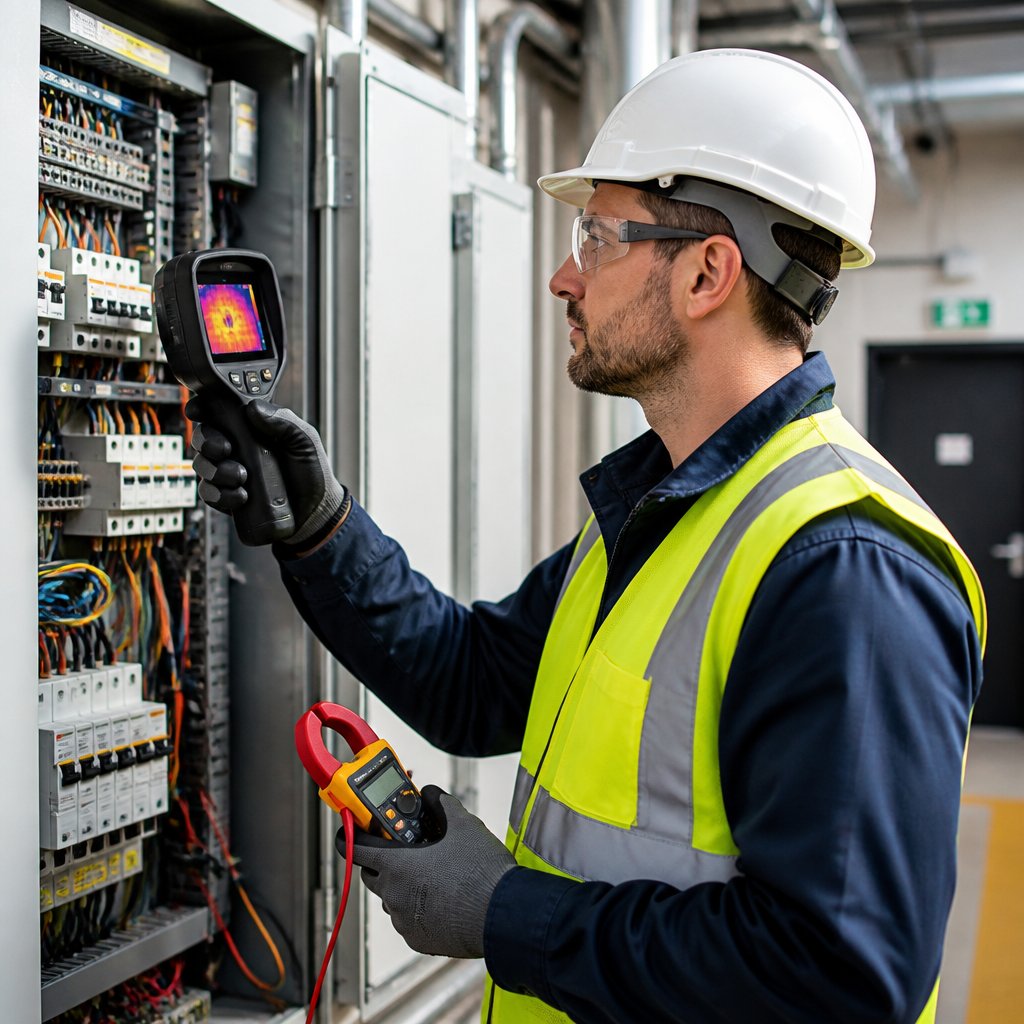
Commercial properties pull a heavy electrical load—way more than most places. That means small issues can snowball into real safety problems before you know it. Routine inspections let you spot worn parts, loose connections, and overloaded circuits before they cause outages, damage equipment, or put people at risk.
If you manage a commercial building, regular electrical inspections are one of the simplest ways to protect your property, your tenants, and your bottom line. No matter if it’s an Austin office, a Round Rock retail shop, or a growing facility in Georgetown or Cedar Park, the basics are the same. Not sure what your building needs? A licensed electrician can help you figure out a plan that keeps everything running safely.
Safety Risks That Build Up Over Time
Commercial systems work hard, day in and day out. But wear doesn’t always show where you’d expect. Heat, vibration, moisture, and heavy use all chip away at the system. Sometimes, you don’t even notice until something fails at the worst possible moment.
Hidden Wiring Wear And Aging Components
Inside the walls, ceilings, and panels, wiring can loosen, insulation dries out, and old parts just start to give up. I’ve seen buildings that looked fine on the outside, but a loose connection or tired breaker was cooking up trouble behind the scenes.
Routine inspections catch these hidden problems early. That’s even more important in older buildings or spaces with lots of tenant changes, added equipment, or quick-fix repairs.
Fire Hazards From Overloaded Circuits
Plug too many things into one circuit, and wires and breakers run hotter than they should. That heat can damage insulation and push the risk of electrical fire way up.
This pops up a lot where people add office gear, kitchen appliances, or new machines that weren’t in the original plans. A routine inspection helps you find circuits that are doing too much—and gives you a chance to fix it before it gets worse.
Shock Risks In High-Use Areas
Break rooms, restrooms, lobbies, warehouses, and work areas get a ton of use. Outlets and switches wear out faster there. Damaged receptacles, loose covers, and bad grounding can turn into shock hazards for anyone using the space.
A thorough inspection checks the spots folks touch every day. That simple step can prevent injuries and keeps your property safer for everyone.
Code Compliance And Liability Exposure
Electrical codes change over time, and commercial properties are expected to keep up. Staying current helps you avoid violations, reduce liability, and show that you take safety seriously.
Keeping Up With Electrical Code Changes
The National Electrical Code sets the bar across the country, and local rules sometimes add even more. So, a system that passed years ago might not make the cut now.
Routine inspections help you spot code gaps before you get notices or fail a review. This is especially handy after remodels, new tenants, or equipment upgrades.
Reducing Risk During Insurance Claims
If an electrical issue causes damage, your insurance company will probably ask what maintenance you’ve done and when. Good inspection records show you’ve taken reasonable steps to keep things safe.
That kind of paper trail can help support your claim and cut down on headaches later. It also shows tenants and stakeholders you’re managing risk responsibly.
Documenting Maintenance For Property Owners
Solid records matter when you own or manage commercial real estate. Inspection reports track repairs, upgrades, and safety checks.
That history makes planning easier. It’s also handy when you’re explaining property condition during sales, lease talks, or tenant improvement projects.
Business Continuity And Downtime Prevention
Electrical problems don’t wait for a good time. A routine inspection lets you catch trouble early, plan repairs, and keep the building humming with less disruption.
Finding Small Problems Before They Cause Outages
A loose breaker, weak connection, or failing outlet usually starts small. Ignore it, and it can shut down lighting, HVAC, computers, or production gear.
Regular checks let you fix minor issues before they interrupt business. That’s a practical way to protect revenue and avoid last-minute emergencies.
Protecting Critical Equipment And Operations
Most commercial spaces depend on servers, POS systems, security equipment, refrigeration, or specialized tools. Power problems can wreck that equipment or bring work to a halt.
Inspections help you find weak spots in the electrical system before they become a problem for your most important equipment. In my experience, that’s one of the main reasons commercial property owners stay on top of maintenance.
Planning Repairs Without Interrupting Tenants Or Staff
When you know what needs attention before it fails, you can schedule work during slower hours or between tenant needs. That keeps repairs organized and cuts down on stress for everyone in the building.
It also helps you avoid surprise outages that create complaints. A planned repair is almost always easier than an emergency call at the worst possible moment.
Energy Performance And System Efficiency
Electrical inspections aren’t just about safety. They can show you where your building’s wasting energy and where simple upgrades could lower operating costs.
Identifying Waste From Outdated Lighting And Controls
Old lighting systems often use more power than they should, especially in spaces that run long hours. Controls that are poorly set or not working right can waste even more energy.
An inspection can point out where LED retrofits, occupancy sensors, or better lighting controls may help. That is useful for offices, retail buildings, warehouses, and multi-tenant spaces across Central Texas.
Spotting Panels And Circuits That Are Working Too Hard
If a panel or circuit runs near its limit, it may waste energy through heat and strain. It may also shorten the life of connected equipment.
Routine testing helps you see where the system is under stress. That gives you a clear path to balance loads or upgrade parts before they wear out too soon.
Supporting Upgrades Like LED Retrofits And Smart Systems
If you’re planning LED lighting, smart controls, or other efficiency upgrades, an inspection gives you a better starting point. You’ll see what your system can handle and what needs improvement first.
That saves you time during installation and lowers the risk of rework. It also helps you make choices that fit the building, not just guesses.
Property Changes That Increase Electrical Demand
Buildings rarely stay the same for long. New tenants, new equipment, and new tech can push an older system past its limits.
Tenant Build-Outs And Equipment Additions
Office changes, kitchen equipment, salon tools, medical devices, and workshop machines can all bump up power needs. Even a simple tenant build-out might stress a circuit or panel.
Before flipping the switch on new stuff, it’s smart to inspect the system and make sure it can handle the load. Saves a lot of headaches after move-in.
EV Chargers Generators And New Power Loads
Adding EV chargers, generator hookups, or new power-hungry gear is getting more common in commercial buildings. Each one adds demand and usually needs careful planning.
If you’re adding these, an inspection confirms the wiring, panels, and service can handle the upgrade. It also helps you avoid unsafe shortcuts that cause problems down the road.
When Panel Upgrades Become Necessary
Sometimes, the system just isn’t big enough for what the building needs now. Frequent breaker trips, dimming lights, warm panels, and not enough spare capacity all point to trouble.
A licensed electrician can tell you if a panel upgrade is the right move. That’s often the safest bet when a building’s outgrown its original setup.
What A Professional Inspection Typically Reviews
A pro inspection should focus on the riskiest parts and the ones that keep the building running day to day. In Central Texas, that usually means older panels, busy tenant areas, and systems that have been expanded over time.
Panels Breakers And Grounding
The panel is the heart of the electrical system, so it gets a careful review. That includes breaker condition, signs of overheating, labeling, and grounding quality.
If a panel shows heat damage, corrosion, or loose parts, it can point to deeper issues. Catching those signs early can save you from bigger repairs later.
Outlets Switches Lighting And Emergency Systems
Inspectors also check outlets, switches, light fixtures, exit lights, and emergency systems. These parts are easy to overlook, yet they affect daily use and safety.
It’s common to find worn receptacles, loose switches, or failing fixtures in high-traffic spaces. A solid inspection gives you a clear list of what needs repair or replacement.
When To Schedule Service In Central Texas
For most commercial properties in Austin, Spicewood, Bee Cave, Lakeway, Dripping Springs, Georgetown, Leander, Round Rock, Cedar Park, Kyle, Liberty Hill, Westlake, Hutto, and nearby areas, annual service is a good baseline. Buildings with heavier use, older wiring, or lots of tenant changes might need checks more often.
If you notice tripping breakers, flickering lights, warm outlets, or buzzing panels, don’t wait. Getting service early can keep a small issue from turning into a costly shutdown.
Frequently Asked Questions
Why are regular electrical inspections important for commercial buildings?
Regular inspections help you catch hidden hazards, reduce fire risk, and keep the building safe for employees and tenants. They also help you stay ahead of repairs that could interrupt business.
How often should a commercial property schedule an electrical inspection?
Many commercial properties benefit from annual inspections, while some need them every six months or more often. The right schedule depends on building age, equipment load, and how hard the system works each day.
What safety risks can routine electrical inspections help prevent in a workplace?
Routine inspections can help prevent electrical fires, shocks, damaged equipment, and outages caused by worn wiring or overloaded circuits. They also help you find loose connections and failing parts before they become dangerous.
How can electrical inspections reduce downtime and unexpected equipment failures?
Inspections let you catch small problems before they grow into power loss or equipment damage. That gives you time to plan repairs during slower hours instead of dealing with an emergency shutdown.
What signs in a commercial space suggest it’s time for an electrical inspection?
Frequent breaker trips, flickering lights, buzzing sounds, warm outlets, burning smells, and repeated equipment issues are all warning signs. If you’re adding new tenants or major equipment, that’s another good time to schedule a check.
Can routine electrical inspections help with code compliance and insurance requirements?
Absolutely, routine electrical inspections can keep you in line with the latest electrical codes and give you a solid paper trail of your maintenance. That kind of documentation might come in handy if your insurance company ever wants proof that you’ve actually looked after your system.