
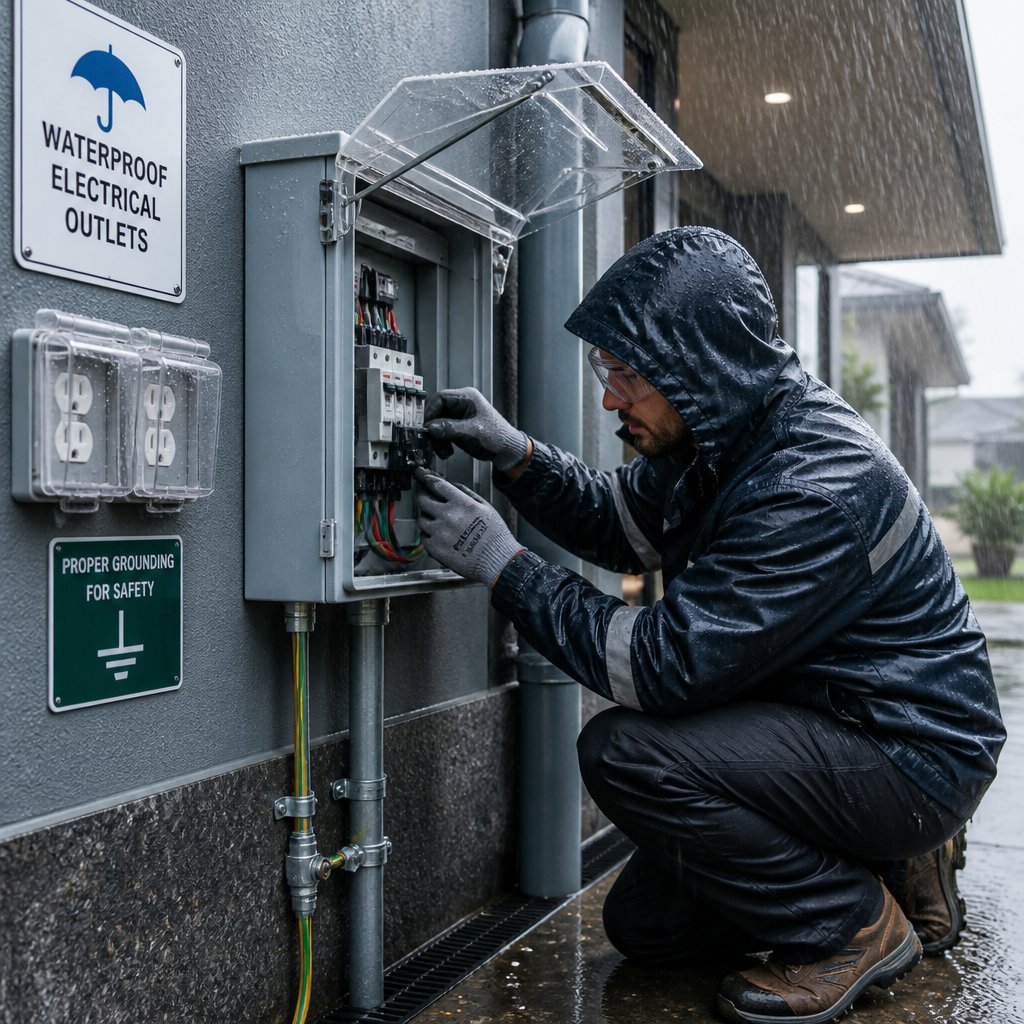
Heavy rain can turn small electrical issues into urgent safety problems fast. You don’t need a flooded room—just a damp outlet, a leaky fixture, or moisture sneaking near a panel can spark shorts, shocks, and equipment headaches. The best way to prevent electrical damage during heavy rain? Keep water away from electrical parts, shut down risky devices early, and get vulnerable areas inspected before storm season kicks off.
If you own a home or business in Austin, Round Rock, Cedar Park, Lakeway, Dripping Springs, or anywhere in Central Texas, a little prep now can save you some serious cash later. Rain, wind, and lightning put extra strain on wiring, breakers, lighting, and outdoor gear—sometimes in ways you barely notice until it’s too late. Need a quick answer about your own situation? NowAskJesus offers private, scripture-based guidance 24/7.
Why Rain Creates Electrical Risk
Heavy rain changes the environment around your electrical system. Extra moisture travels into places you’d never expect. Once water gets to wiring, outlets, panels, or fixtures, it can cause short circuits, corrosion, nuisance tripping, and even fire risk.
How Water Intrusion Affects Electrical Systems
Water conducts electricity, so even a little bit can create a path for current where it doesn’t belong. That’s when you start seeing flickering lights, tripped breakers, damaged appliances, or a shock hazard around damp surfaces. Honestly, I’ve seen a tiny roof leak or a loose outdoor cover turn into a much bigger repair more than once.
Why Older Equipment Is More Vulnerable
Old panels, worn insulation, cracked outlet covers, and tired seals just don’t hold up in long wet stretches. If your wiring or panel hasn’t seen an inspection in years, rain-related issues can show up fast and with a vengeance. Older setups also miss out on modern surge and moisture protection.
Common Trouble Spots Around Homes And Businesses
I always check outdoor outlets, service panels, meter bases, disconnects, low-mounted fixtures, attic wiring near roof leaks, and anywhere that gets splashback from sprinklers or runoff. In commercial spaces, don’t forget loading docks, exterior signs, utility rooms, and equipment pads. These spots are usually the first to act up when rain-related electrical trouble hits.
Immediate Safety Steps During A Storm
When a storm’s raging, your main job is to keep away from water and electricity at the same time. If you spot moisture near electrical parts, back off, limit device use, and only shut down circuits that pose the biggest risk.
What To Do If You Notice Water Near Electrical Components
If you see water near outlets, panels, ceiling fixtures, or appliance hookups, don’t touch anything. Keep everyone—including pets—clear. If you can reach the breaker from a dry spot, turn off the affected circuit. Smell burning or hear crackling? Get out and call a licensed electrician, no hesitation. Here’s a guide on electrical fire smells if you’re unsure.
When To Shut Off Power And When Not To
Shut off power if there’s water inside a room, near a panel, or touching outlets and equipment you might need to reach. Don’t walk through standing water to get to the breaker. Never open a wet panel. If flooding’s on the table, keep the main power off only if you can reach the shutoff safely and a pro has told you it’s the right call.
Devices And Appliances To Unplug First
Unplug the most sensitive stuff first—computers, TVs, routers, gaming consoles, kitchen gadgets, and anything tied to your home office or smart system. In a business, protect point-of-sale gear, servers, printers, and network equipment before worrying about less sensitive loads. If you’ve got a few minutes before the storm, unplug anything you won’t need until things settle down.
Areas To Check Before Problems Start
A pre-storm walk-through catches small issues before rain makes them a big deal. Focus on spots where moisture, age, or outdoor exposure slowly chips away at protection.
Outdoor Outlets, Switches, And Covers
Every outdoor outlet needs a cover that closes tight. Check for cracks, loose plates, rust, or water inside the box. Make sure weather-resistant covers actually seal the opening. Treat outdoor switches for lights, pumps, and signs the same way.
Service Panels, Meters, And Disconnects
Scan for rust, stains, loose conduit, or gaps around the panel or meter base. Water marks near the top? Usually a roof leak, wall leak, or failed seal—get it fixed fast. Commercial properties should check disconnects and equipment pads too; those spots take the brunt of wind-driven rain.
Exterior Lighting, Ceiling Fans, And Wiring Runs
Make sure exterior lights are sealed and secure. Ceiling fans under covered patios or porches should be rated for damp locations. Check attic, crawl space, and exterior wall wiring for wear and moisture. If a light’s been acting up before a storm, repair it before the next one hits.
Upgrades That Reduce Storm-Related Damage
Some upgrades really do lower your risk before heavy rain arrives. They help protect appliances, cut down on nuisance outages, and keep your electrical system healthier for longer.
Whole-Home Surge Protection
A whole-home surge protector shields your system from voltage spikes caused by lightning or grid issues. It’s not foolproof, but it’s a solid defense for appliances, HVAC, smart gear, and office electronics. In stormy areas, I’d say it’s one of the best investments out there.
Panel Upgrades And Circuit Protection
If your panel’s old, crowded, or showing wear, upgrading boosts safety and reliability. Modern GFCI and AFCI protection helps cut shock and fire risk in wet-prone spots. For older homes and busy businesses, a better panel also makes future fixes easier.
Generator Hookups And Backup Power Planning
A safe generator hookup keeps backup power from becoming its own hazard. If you want to run critical stuff during outages, make sure you’ve got a proper transfer switch and a pro-installed connection. This matters for fridges, sump pumps, medical gear, security, and business equipment that can’t be offline long.
Smart Monitoring And Safety Devices
Smart monitors can alert you to weird power use, outages, or equipment acting up during storms. Leak sensors near panels, utility rooms, and water heaters help you catch moisture early. These work best when you pair them with good wiring, regular maintenance, and routine inspections.
Warning Signs After Heavy Rain
Some problems show up right away; others take a day or two. If you notice anything odd after a storm, treat it as a warning and check before flipping the circuit back on.
Tripped Breakers And Flickering Lights
A breaker that trips once might just be an overload, but if it keeps tripping after heavy rain, there’s probably moisture somewhere it shouldn’t be. Flickering or dim lights can also mean water’s messing with a connection, fixture, or circuit. Don’t just keep resetting breakers—find the cause.
Burning Smells, Buzzing Sounds, Or Warm Outlets
Burnt smells, buzzing, or warm outlets are serious red flags. That usually means something’s overheating. Shut off the circuit if you can, and get it checked before using it again.
Water-Damaged Fixtures And Corrosion
Rust, green corrosion, stained plates, and cloudy lenses all point to water exposure. Even if a light still works, moisture damage weakens parts and sets you up for future failures. Honestly, I’d rather replace damaged fixtures than try to nurse them through another storm.
When Professional Service Is The Safer Choice
Some electrical problems just aren’t safe DIY projects, especially with water involved. Licensed electricians can track down the source, test for hidden damage, and recommend repairs that protect everything—not just the problem you spotted.
Situations That Need A Licensed Electrician
Call a pro if water hit a panel, outlet, or fixture; if breakers keep tripping; if you hear buzzing; or if any outlet or switch feels warm. Also call if a generator hookup went sideways, lightning struck nearby, or floodwater touched electrical gear. These aren’t things you want to experiment with.
Residential And Commercial Inspection Priorities
Home inspections should focus on panels, exterior outlets, attic wiring, kitchens, bathrooms, garages, and any room with past leaks. For businesses, add emergency lights, sign circuits, server rooms, production gear, and any area where downtime really hurts. Preventive troubleshooting almost always beats waiting for a storm to reveal hidden damage.
Prevention Planning For Central Texas Properties
Central Texas weather swings from dry heat to sudden downpours, so storm prep has to be local and realistic. Homes and businesses in Austin, Spicewood, Bee Cave, Westlake, Leander, Hutto, Liberty Hill, Kyle, and nearby areas usually benefit from a seasonal safety check before the heavy rains start. A good plan might include surge protection, outlet upgrades, panel reviews, lighting repairs, and backup power planning that fits your property.
Frequently Asked Questions
Can heavy rain cause electrical problems in a home?
Absolutely. Heavy rain can cause shorts, breaker trips, outlet and fixture damage, and corrosion if water gets into any part of your electrical system. Even a tiny leak near wiring or a panel can cause trouble later. That’s why a quick post-storm check is so helpful.
What steps should I take to protect my electronics during a severe storm?
Unplug sensitive electronics before the storm if you’ve got time. Use a good surge protector, and keep important devices—like computers and network gear—away from windows and wet spots. A whole-home surge protector gives the rest of your system an extra layer of defense.
Do surge protectors actually prevent damage from lightning or power surges?
They help with many common surges and are definitely worth it. Surge protectors block extra voltage, but they can’t stop every lightning hit or huge utility surge. For best results, use point-of-use strips plus a whole-home surge protector.
How can I reduce the risk of electric shock during the rainy season?
Keep wet hands away from switches, cords, and appliances. Stay away from outlets or fixtures near leaks. Use GFCI protection in damp areas and fix damaged covers, cords, and fixtures fast. If water’s near electrical equipment, don’t touch it.
What should I avoid doing indoors when there’s lightning nearby?
Don’t use corded phones, touch plugged-in devices, or stand near windows and wet spots. It’s also smart to skip showers, dishwashing, or using outdoor-connected equipment during active lightning if your setup’s vulnerable. The less you touch electrical stuff, the safer you’ll be.
When should I turn off the main power during flooding or water leaks?
Only try to shut off the main power if you can get to it safely—don’t risk it if you’re standing in water or if the equipment’s wet. If there’s water anywhere near the panel, or if you’re just not sure, it’s better to step back and call a licensed electrician or emergency services. Honestly, safety matters way more than acting fast. If you can’t reach the shutoff without getting wet, don’t push your luck.