
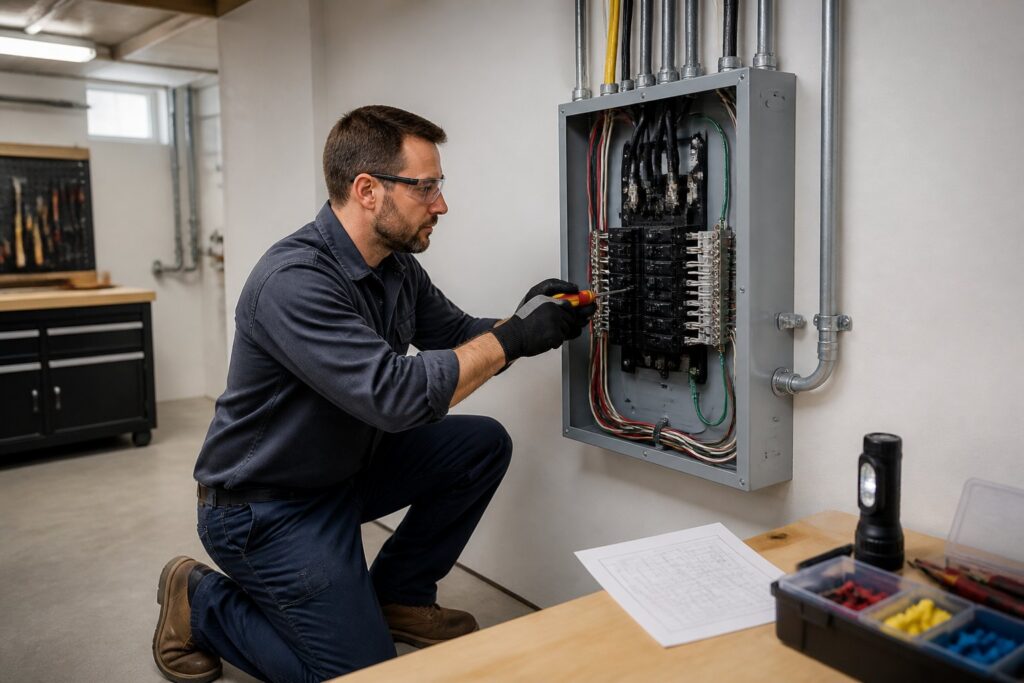
You might need a subpanel if your main panel is full, you’re adding a new area, or you just want your electrical setup to be less of a mess (better organization helps). If you’re figuring out how to install a subpanel, it’s safest to plan your loads, size the feeder properly, and keep neutrals and grounds separate.
A subpanel acts as a second breaker box, fed from your main service panel. It makes life a lot easier when you’re dealing with additions, garages, workshops, basements, or anywhere you need a cluster of circuits.
This isn’t a simple job, and some parts can stay live even when you shut off the main breaker. That’s why permits, inspections, and safe shutdowns are such a big deal.
When a Subpanel Makes Sense
A subpanel comes in handy if your main panel’s out of breaker spaces or you want to group circuits by area. It can also shorten wire runs and make future upgrades less of a headache.
Common Reasons to Add Extra Circuit Capacity
People add subpanels for things like finished basements, detached garages, workshops, home additions, or anywhere you’ve got a bunch of high-demand loads. It’s also a good call if you need room for EV charging, HVAC, or extra kitchen and laundry circuits.
Honestly, a subpanel’s often cleaner than swapping out the whole main panel. For a lot of homes, it’s just the practical way to add circuits without tearing everything apart.
Best Locations for Secondary Distribution
Pick a spot that’s dry, easy to reach, and close to the circuits it’ll serve. Garages, utility rooms, and finished basements work well.
Make sure there’s enough space in front of the panel. Don’t put it near plumbing leaks, storage piles, or anything that could block you during service work.
Safety Rules and Code Considerations
You’ve got to follow local code, and most subpanel installs need a permit. These rules are there to reduce shock risk, protect conductors, and help you pass inspection.
Permit and Inspection Expectations
Most places require a permit before you start and an inspection after you’re done. Inspectors check things like conductor sizes, breaker ratings, grounding, labeling, and the panel’s working clearance.
If you’re adding new circuits or working on a detached building, expect a closer look. Plan ahead so you’re not tearing open walls or redoing connections later.
Grounding and Bonding Basics
Keep neutrals and equipment grounds separate in a subpanel. The neutral bar needs to be isolated from the metal case, while the ground bar bonds to the enclosure.
Detached buildings usually need a grounding electrode system, too. That’s important—subpanels aren’t the same as main service equipment.
Planning Load and Panel Capacity
Before you buy anything, figure out how much load the subpanel will carry—both now and in the future.
Sizing the Feeder Breaker and Conductors
Start with the amps you’ll need, then match the feeder breaker and wire size. For example, a 100-amp subpanel needs wire rated for that load, and you’ll have to pick the right type for your install and distance.
Longer runs might need bigger wire to keep voltage drop in check. It’s easy to overlook if you’re just matching breaker sizes.
Allowing Room for Future Circuits
Get a panel with extra breaker spaces—not just enough for today. That way, you’re ready for a future bathroom, shop outlet, mini-split, or outdoor lighting.
A little extra room now can save you from another panel project later. Plus, it keeps things from getting cramped and hard to work on.
Core Installation Sequence
The steps look simple on paper, but each one needs some care. Main goals: shut down power safely, mount solidly, route the feeder right, and set up neutral and ground bars properly.
Shutting Off Power and Verifying De-Energization
Turn off the main power before you start, then double-check that it’s really dead with a meter or tester. Don’t just trust the breaker’s position.
Feeder lugs and service conductors can stay live in parts of the system. That’s a big reason many folks call a licensed electrician for any live-panel work.
Mounting the Enclosure and Routing Feeder Cable
Mount the subpanel level and secure, using the right fasteners. Run the feeder cable or conduit neatly, protecting it where it passes through framing or is exposed.
Keep bends gentle and support the cable well. Sloppy routing can damage insulation and make future work a pain.
Separating Neutral and Equipment Ground Bars
Wire the feeder and branch circuits only after you’ve set up the bars correctly. In a subpanel, keep the neutral bar isolated from the box, and bond the ground bar to the box.
Mixing up neutrals and grounds in the wrong spot can cause shock risks and weird problems.
Typical Mistakes to Avoid
Most subpanel problems happen because of bad planning or rushed wiring. Careful layout and neat work save a ton of trouble.
Overcrowded Circuits and Undersized Wiring
Don’t cram too many loads on one breaker, and never guess at wire size. Undersized wires can overheat, and overloaded circuits can trip or even start a fire.
If you’ve got a heavy load area, split up the circuits. A little extra planning here really pays off.
Improper Terminations and Labeling
Loose terminals, nicked wires, and bad labels make troubleshooting a nightmare. Tight, correct terminations keep your panel reliable.
Label every breaker. It’s so much easier when you can tell what’s what at a glance.
Professional Help and Upgrade Opportunities
Some electrical jobs are just better left to the pros—especially anything touching service equipment, grounding, or new feeders. Experience and the right tools make a huge difference.
Magnify Electric is a solid pick for residential and commercial work. Our licensed electricians handle panel upgrades and repairs, wiring, lighting installs, troubleshooting, electrical repairs, smart home systems, EV charging outlets, wall chargers, and more. We serve Spicewood, Austin, Bee Cave, Lakeway, Dripping Springs, Georgetown, Leander, Round Rock, Kyle, Cedar Park, Liberty Hill, Westlake, The Hills, Briarcliff, Horseshoe Bay, Sunset Valley, Hutto, and most of Central Texas.
Projects Best Left to Licensed Electricians
Call a pro if you’re dealing with live service conductors, service upgrades, detached buildings, complex load calculations, or if you’re not sure about code. Same goes for emergency support or safety inspections.
Related Improvements for Homes and Businesses
Adding a subpanel is a great time to tackle other upgrades. People often add automated lighting, ceiling fans, smart switches, Lutron systems, outdoor lighting, recessed lights, TV installs, surge protectors, smoke and CO₂ detectors, generator hookups, and general electrical improvements.
Frequently Asked Questions
What size subpanel should I choose for my home’s needs?
Pick a size based on what you’ll run now and what you might add later. Lots of homes use 60-amp or 100-amp subpanels, sometimes bigger, depending on what’s going in.
If you expect to add more later, a bigger panel can be smarter—as long as your feeder and main service can handle it.
How do I feed a subpanel from the main service panel safely?
Use a properly sized feeder breaker and wires, routed to meet code and your installation method. Land the feeder correctly in both panels, and always work with the power off—double-check it’s dead.
Don’t guess on wire or breaker sizes. They’ve got to match.
Should a home subpanel have a main breaker or can it be main-lug only?
You can go with a main-breaker or main-lug-only subpanel, depending on your setup. If it’s not in the same building as the service disconnect, you’ll usually need a disconnect at or near the subpanel.
It really depends on code, distance, and how you’ll use the panel.
When do I need 3-wire vs 4-wire feeder wiring for a subpanel?
Most new subpanels use 4-wire feeders—two hots, one neutral, one ground. That keeps neutral and ground separate, which is standard now.
Older setups might have 3-wire, but for new work, 4-wire is the norm.
How do I properly separate neutrals and grounds in a subpanel?
Isolate the neutral bar from the panel cabinet, and bond the ground bar to the cabinet. Neutrals go to the neutral bar, equipment grounds go to the ground bar.
This setup keeps return current off metal parts that shouldn’t carry it.
What wire gauge and breaker size should I use for a 100-amp subpanel feeder?
For a 100-amp feeder, you’ll want conductors that can actually handle that load—and it matters what kind of cable, insulation, and conduit you’re working with. The usual choices really depend on whether you’re using copper or aluminum, what the insulation rating is, and how you’re planning to run the wires.
Honestly, distance and how you install everything can change the answer. It’s smarter to size the wire based on the actual load calculation, not just the breaker size. If you’re not sure, it’s worth asking a licensed electrician to double-check your setup.