Preparing your Austin home for a winter freeze means more than wrapping pipes and stocking blankets. When temperatures drop into the teens and twenties, your home's electrical system carries a heavier load than it does any other time of year, and that load shows up fast in the form of tripped breakers, overworked space heaters, and homes that lose power right when they need it most.
Central Texas does not see winter weather often, but when it arrives, it tends to arrive hard. Grid strain, rolling outages, and sudden swings between no power and full power all put real stress on the wiring, panels, and outlets inside an ordinary house. A home that sailed through the last freeze without issue is not automatically ready for the next one.
The good news is that most of this is preventable with a short list of checks and a few backup power decisions made before the forecast turns cold. None of it requires tearing into walls or overhauling your whole system, just making sure the parts that matter most are ready to carry the extra weight, done once and done right rather than patched together the night a cold front rolls in.
The sections below work through why freezes strain a home's electrical system, which backup power options are worth having ready, the safety checks worth running ahead of time, and how to manage power and heat once a freeze actually hits.
In this article, you will learn about:
- Why winter freezes put extra strain on home electrical systems
- Backup power options worth having in place before the next freeze
- Electrical safety checks worth doing before the cold arrives
- Smart ways to manage heat and power once the freeze hits
Keep reading to find out which of these steps your home is still missing before the next cold snap rolls in.
Why winter freezes put extra strain on home electrical systems
A Texas freeze is not just a weather event, it is a demand event. Every furnace, space heater, and backup heat source in the region switches on at roughly the same time, and the electrical grid and the wiring inside individual homes both feel that spike at once.
A state economic review from the Texas Comptroller of Public Accounts found that the February 2021 freeze drove statewide agricultural losses alone above 600 million dollars, on top of days of rolling outages across nearly every region of the state. That kind of event does not need to repeat at the same scale to cause real problems for an individual household.
Grid demand spikes when temperatures drop
Electric heating draws far more power than air conditioning does on an average summer day, and most Austin-area homes were built with summer cooling loads in mind, not sustained winter heating loads. When demand climbs across the whole grid at once, utilities sometimes respond with rotating outages to protect the system from a larger failure.
That means even a well-maintained home can lose power for reasons that have nothing to do with its own wiring. Planning around that reality, rather than assuming the lights will simply stay on, is the first step in real freeze preparation.
Space heaters and backup heat sources overload circuits
Portable space heaters are the most common way Austin homeowners supplement heat during a freeze, and they are also the most common way a circuit gets pushed past its limit. A single heater can draw close to the maximum a standard 15-amp circuit can handle, especially when it shares that circuit with lights, a phone charger, or a space heater in another room on the same loop.
- Running two space heaters on the same circuit
- Plugging a heater into an extension cord instead of a wall outlet
- Using a heater in a room with older or aluminum wiring
- Leaving a heater running unattended overnight
Any one of these habits can trip a breaker on a mild night and overheat a cord on a colder one. Older or aluminum wiring carries extra risk under this kind of load, and that risk is a major driver behind electrical fires in older homes. Knowing which rooms share a circuit makes it much easier to spread heaters out safely instead of guessing.
What happens to your wiring when the power snaps back on
The moment utility power returns after an outage, voltage does not always come back smoothly. Equipment across the neighborhood switches on at once, and that surge can spike through a home's panel and into anything still plugged in, from a refrigerator to a router to a space heater left on standby.
This is exactly the scenario whole-home surge protection is built for, since it sits at the panel rather than on a single outlet strip and absorbs the spike before it reaches individual circuits. A surge protector reduces that risk meaningfully, though no device can promise to stop every possible spike, so pairing it with simply unplugging sensitive electronics before a known outage is still worth doing.
Backup power options worth having in place before the next freeze
Once a home loses utility power during a freeze, the question becomes how long it can stay warm and functional without it. That answer depends almost entirely on decisions made before the cold arrives, not during it.
Backup power is not an all-or-nothing choice. Some households only need enough to keep a furnace blower and a few lights running, while others want enough capacity to keep a full kitchen and home office operational through a multi-day outage. Matching the equipment to the actual need keeps the project affordable and the setup manageable.
Portable generators and safe setup
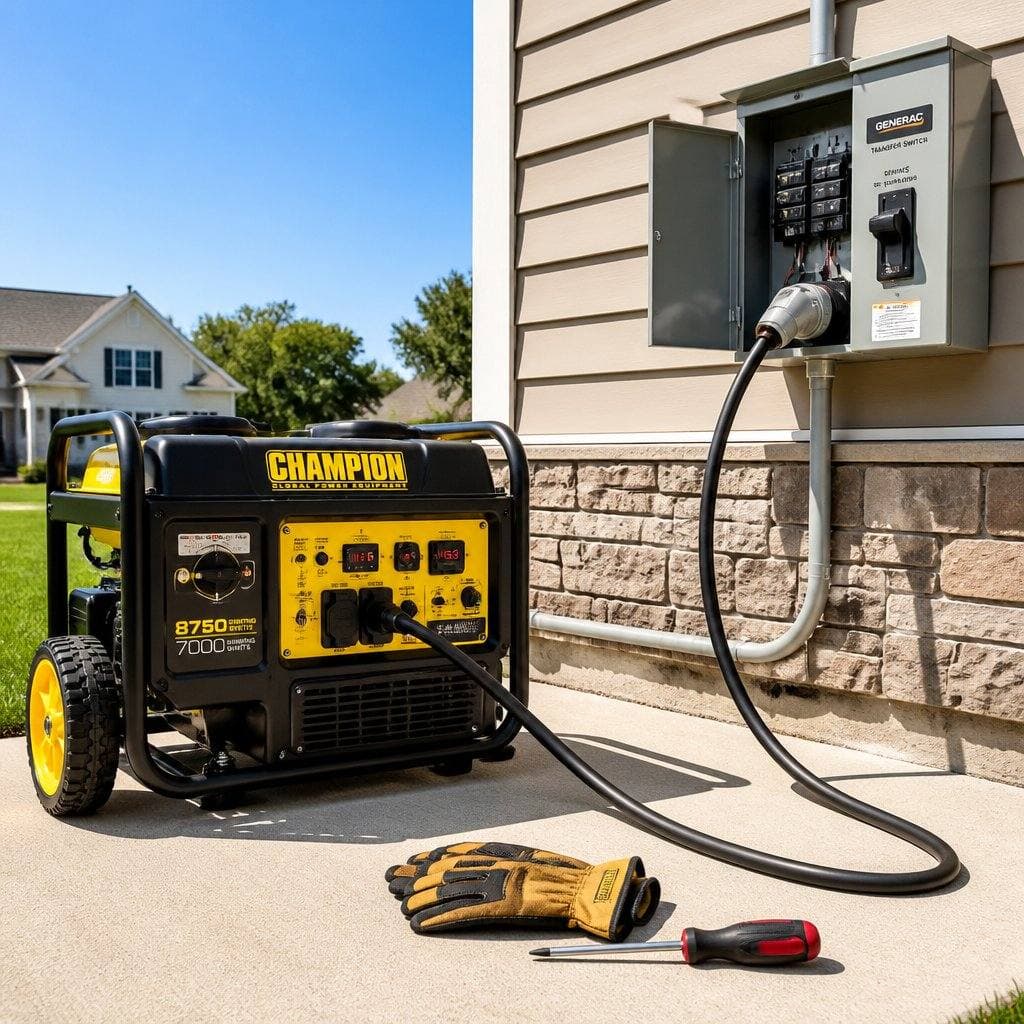
A portable generator sized correctly for your home can keep critical circuits, a furnace blower, a refrigerator, and a few outlets running through an outage. The sizing conversation matters more than the brand, since an undersized unit will struggle and an oversized one wastes money.
- Calculate the actual wattage of what you need to run, not a rough guess
- Have a transfer switch installed rather than running extension cords through a window
- Keep the generator outdoors and well away from windows and vents
- Test the unit before the season starts, not during the first cold snap
Carbon monoxide risk is the single biggest reason generator setup should go through a licensed electrician rather than a weekend project. A transfer switch also protects utility workers by keeping generator power from backfeeding into the grid, which is a real safety issue during neighborhood-wide outages. A properly installed transfer switch is a permanent solution, not a temporary fix held together with extension cords and good intentions until the next freeze exposes the gaps.
Whole-home surge protection
Surge protection and backup generators solve different problems, and a well-prepared home usually has both. While a generator keeps the lights on, surge protection keeps the equipment plugged into those circuits from being damaged when power cycles on and off during a storm or a grid event.
A unit installed at the panel covers every circuit in the house at once, rather than relying on individual power strips scattered through different rooms. It reduces risk meaningfully across appliances, electronics, and HVAC equipment, though it works best as one layer of protection alongside sensible habits like unplugging high-value electronics ahead of a known weather event.
Matching your panel to what you actually plan to run
Adding a generator or extra circuits for space heaters only works if the panel underneath has the capacity to support it. Older panels in some Austin-area homes, particularly in neighborhoods built decades ago, were sized for a lighter electrical load than modern households actually draw.
- A panel that already trips during normal winter use
- A home with window units and space heaters but no dedicated circuits for them
- Visible rust, scorch marks, or a panel that feels warm to the touch
- A fuse box instead of a modern breaker panel
A panel already serving an overloaded set of extra circuits is one of the clearest signs a home needs additional circuits rather than just a bigger main panel. In some cases, the right fix is adding a dedicated circuit by installing a subpanel rather than replacing the whole system.
Any of these signs point to a panel upgrade being worth a conversation before freeze season, not after a breaker starts tripping nightly. Getting the sizing right the first time, with no guesswork about amperage or future load, is what keeps a panel from becoming next winter's problem too.
Electrical safety checks worth doing before the cold arrives
Most freeze-related electrical problems trace back to something that was already marginal before the cold weather exposed it. A loose connection, an aging breaker, or a smoke detector with a dying battery rarely causes a problem on a mild day, but a freeze pushes every system harder and finds the weak point.
A short pre-winter check covers the handful of things most likely to fail under extra load. None of it takes more than a few hours, and most of it only needs to happen once a year.
Have your panel and wiring inspected
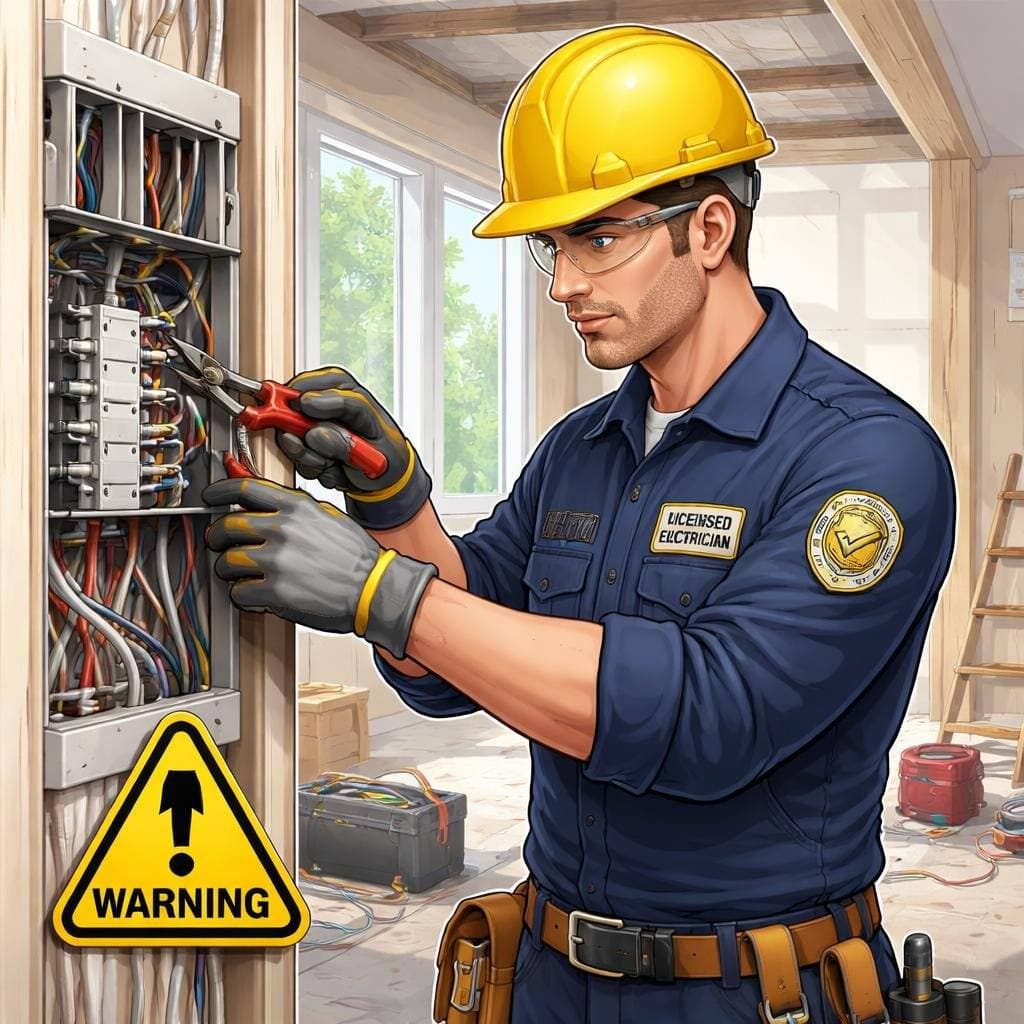
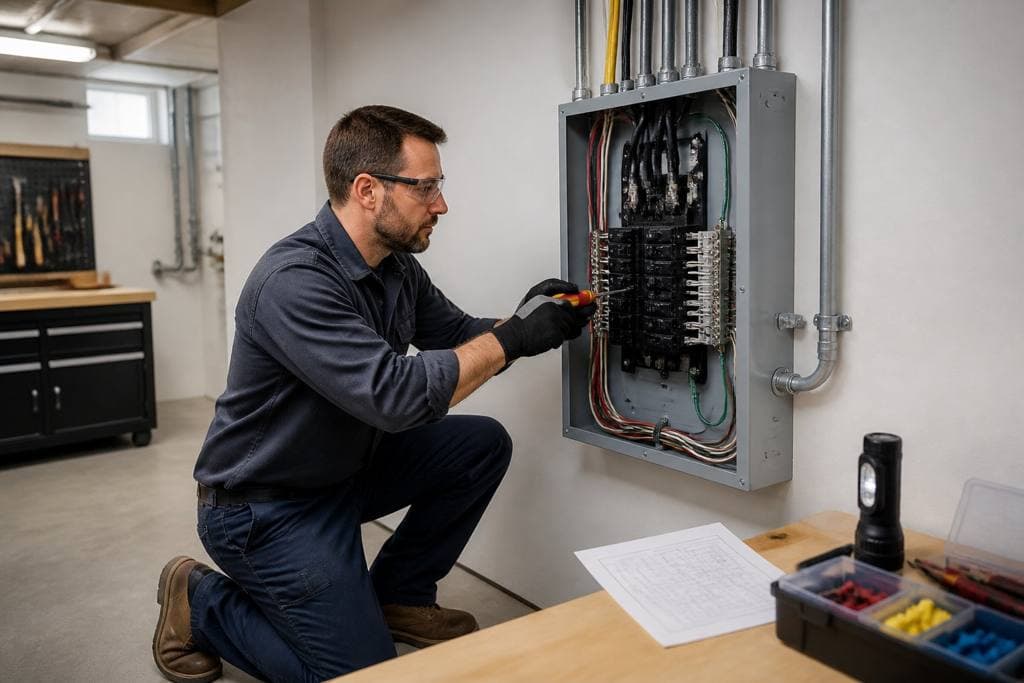
A licensed electrician can check panel connections, breaker condition, and overall wiring health in a single visit, catching loose connections or aging components before they become a problem during a cold snap. This is also the right time to confirm your home's amperage is adequate for what you actually plan to run this winter.
Routine panel maintenance done in the fall is almost always less disruptive and less urgent than the same repair done in the middle of a freeze, when parts and scheduling both tighten up across the whole region. The same logic applies to any troubleshooting and repair work a home is already overdue for, since waiting until the coldest week of the year rarely makes the job easier.
Test your outlets and extension cords
Outlets that already feel loose, warm, or make a faint buzzing sound are telling you something before a space heater ever gets plugged in. The same goes for extension cords with cracked insulation or cords that have been run under a rug for months.
- Check every outlet that will carry a space heater this winter
- Replace any extension cord rated below what the heater actually draws
- Confirm outlets near sinks and exterior doors have working GFCI protection
- Avoid daisy-chaining power strips into a single outlet
An outlet that already runs warm is often an early sign of the same wear that eventually causes electrical outlets to stop working altogether once a heater pushes it past its limit. A licensed electrician can flag and replace those outlets as part of routine outlet service, which costs far less than waiting for a heater to run on a bad one for a week straight during a freeze.
Confirm your smoke and CO2 detectors are working
Winter is the season when homes burn more candles, run more space heaters, and occasionally bring a generator closer to the house than they should. All three raise the stakes on working smoke and CO2 detectors in every bedroom and hallway.
Battery-powered units should get fresh batteries before the season starts, not after a low-battery chirp wakes someone up at 2 a.m. during the coldest week of the year. Homes using a generator for the first time this winter, in particular, should treat detector placement as part of the setup rather than an afterthought.
Smart ways to manage heat and power once the freeze hits
Preparation covers what happens before the cold arrives. Once a freeze is actually underway, a few habits make the difference between a comfortable few days and a house full of tripped breakers and cold rooms.
None of this requires new equipment. It mostly comes down to spreading load intentionally instead of running everything at once and hoping the panel keeps up.
Smart thermostats and lighting controls
A smart home system lets you schedule heat and lighting instead of running everything at full output around the clock. Lowering the temperature a few degrees overnight, or in rooms that stay closed off, takes real pressure off the heating system during the coldest stretch of a freeze.
Automated lighting controls can also help by keeping exterior and hallway lights on timers instead of leaving them running continuously, which matters when every circuit in the house is already working harder than usual.
Spacing out high-draw appliances
Running a space heater, the dryer, and the oven at the same time on an older panel is a common way to trip a breaker on the coldest night of the year, right when resetting it is the least convenient. Spacing these out, even by an hour, keeps the total draw on any one circuit well under its limit.
- Run the dryer and the oven at different times rather than back to back
- Avoid starting the dishwasher during peak heater use
- Unplug secondary appliances in rooms that are not currently occupied
- Check the breaker panel if anything feels unusually warm to the touch
This kind of load spacing costs nothing and takes a few minutes of awareness. It is often the single easiest way to get through a multi-day freeze without a single tripped breaker.
When it's time to stop troubleshooting and call an electrician
A breaker that trips once and resets cleanly is usually nothing to worry about. A breaker that trips repeatedly, a burning smell near an outlet, or a panel that feels warm are different signals entirely, and they call for a licensed electrician rather than another reset.
A single room losing power while the rest of the house stays on often points to a different problem than a full panel overload, and troubleshooting power loss in one room usually finds the actual cause faster than resetting the same breaker over and over.
Conclusion
A winter freeze in Central Texas is unpredictable in its timing but not in what it does to a home's electrical system. Panels get pushed harder, space heaters get plugged in without much thought about which circuit they share, and the grid itself occasionally buckles under statewide demand.
Getting ahead of it does not require a major renovation. A panel that can actually handle the load, a generator sized and installed correctly, working surge protection, and a quick check of outlets and detectors cover most of what goes wrong during a hard freeze.
Magnify Electric is a family-owned company that has spent years helping Austin-area homeowners get their systems ready before the forecast turns cold, with no shortcuts, no guesswork, and no surprises along the way. If your home has not had a real electrical check before this winter, Magnify Electric can help you get it done once and done right.