
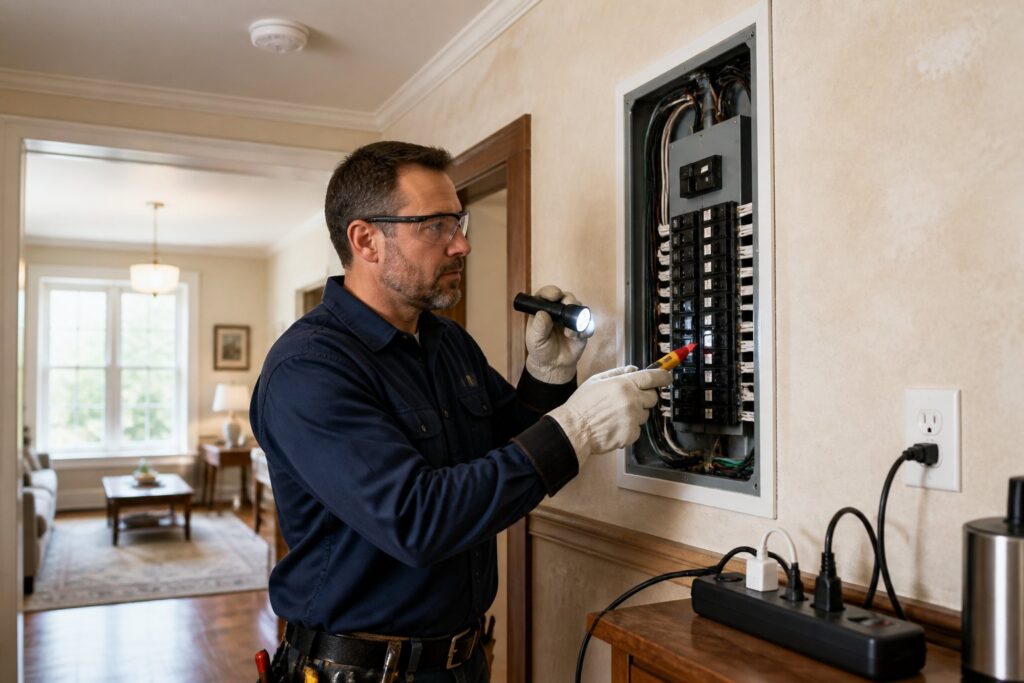
Electrical fires in older homes—yeah, they’re a real risk if you’re dealing with outdated wiring, panels, and outlets. If your place was built decades ago, the best thing you can do is keep an eye out for warning signs, tweak a few habits, and update the parts of your system that are clearly struggling.
Older homes can absolutely be safe, but they need more attention than newer ones. A quick check around your panel, outlets, and busy rooms might save you a lot of trouble—and give you a clearer idea of what to fix next.
Why Aging Electrical Systems Become Hazardous
Back in the day, electrical systems were built for much lighter use. These days, we’re running giant TVs, computers, chargers, kitchen gadgets, and HVAC units—so the weak spots in an old system heat up fast.
Outdated Wiring Materials
Some houses still have wiring that’s just past its prime, especially if the insulation is brittle or cracked. Wires take a beating from moisture, rodents, or shoddy repairs over the years.
When insulation breaks down or wires get loose, you’re way more likely to get arcing and overheating. Sometimes, that heat just builds up behind the walls, and you won’t notice until there’s real damage.
Overloaded Circuits and Modern Power Demands
A lot of older circuits were never meant for all the stuff we plug in now. Plug in too many things at once, and the circuit can get hot—even if the breaker doesn’t trip right away.
This is especially true in kitchens, laundry rooms, and home offices. A panel that worked fine years ago might now be totally overwhelmed by modern appliances and charging habits.
Warning Signs Homeowners Should Not Ignore
Your house usually drops hints before anything serious happens. Little changes in light, sound, smell, or breaker behavior can point to loose connections, failing wiring, or an overloaded circuit.
Flickering Lights and Warm Wall Plates
Lights that dim when an appliance kicks on, or flicker for no reason, can mean a weak connection or overloaded line. If your switch plates, outlets, or cords feel warm, pay attention—electricity shouldn’t make those spots hot.
If you’re noticing this in more than one room, don’t just brush it off. Stop using the outlet or circuit until someone checks it out.
Burning Odors, Buzzing Sounds, and Tripped Breakers
A burning smell near an outlet or panel? That’s urgent. Buzzing, crackling, or popping noises? Not good—could be arcing.
Breakers that trip are actually trying to protect you. If a breaker keeps tripping after you reset it, don’t keep flipping it back on.
Essential Upgrades That Reduce Fire Risk
You don’t have to gut your house to make it safer. The biggest safety gains usually come from improving your panel, adding modern protection, and shielding the whole house from power surges.
Service Panel Improvements
If your panel is ancient, packed full, or struggling with new gear, an upgrade can help it handle demand more safely. A bigger panel also gives you space for dedicated circuits where you need them.
This really matters in homes over 25 years old or houses with new stuff like EV chargers, hot tubs, or serious kitchen equipment. A panel that matches your real power use helps prevent heat buildup and annoying breaker trips.
Arc Fault and Ground Fault Protection
Arc fault protection catches dangerous wiring issues that can start fires inside your walls. Ground fault protection helps reduce shock risk in places like kitchens, baths, garages, and outside.
A lot of fire risks start with stuff you can’t see, so adding these at the breaker or outlet gives your house another safety net.
Whole-Home Surge Defense
Surges can wreck sensitive equipment and wear out electrical parts over time. A whole-home surge protector helps guard against utility spikes and big appliance startups.
That’s especially useful if you’ve got smart devices, computers, or fancy entertainment gear. It also helps your wiring and electronics last longer by taking the hit from those little surges.
Safer Everyday Habits Inside Older Houses
What you do every day matters just as much as upgrades. Even the best wiring can get overloaded if you use cords, heaters, or appliances the wrong way.
Extension Cord and Power Strip Limits
Extension cords are for short-term fixes—not permanent setups. Power strips are fine for low-power stuff, but don’t daisy-chain them or plug in heavy-duty appliances like heaters or microwaves.
Best bet? One big appliance per outlet. If you’re always reaching for more outlets, it’s probably time to add circuits—not more strips.
Appliance Use and Space Heater Precautions
Big appliances should have their own outlet and proper circuit. If something makes your lights dim or trips the breaker, that circuit’s already working too hard.
Space heaters? They need extra caution. They pull a lot of power and can overheat stuff nearby. Keep them away from anything flammable and plug them straight into a wall outlet.
When to Schedule a Professional Inspection
It’s smart to schedule an inspection before you buy, remodel, or if you’re seeing the same electrical problems over and over. In older homes, a licensed electrician can spot hidden risks you’d never notice.
Pre-Purchase and Renovation Checkpoints
Buying an old house? Try to get the electrical system checked before closing. That way, you’ll know about old wiring, panel limits, missing grounding, and other safety gaps.
Book an inspection before any big renovation, too. New kitchens, baths, offices, or EV chargers can push an old system way past its limit.
Repairs Best Left to Licensed Electricians
Anything involving the panel, inside-the-wall wiring, breaker swaps, or hidden connections—leave that to the pros. Older homes can have a mix of wiring types, old boxes, or code issues that make DIY really risky.
If you smell burning, see smoke, or have breakers tripping over and over, call an electrician. Waiting just makes things worse (and more expensive).
Choosing Expert Help for Long-Term Safety
For long-term peace of mind, you want an electrician who can handle small fixes and big upgrades. Magnify Electric is a solid pick for residential and commercial work. They’ve got licensed electricians for everything from fixture swaps to panel upgrades, safety checks, smart home setups, and emergencies.
They handle automated lighting, ceiling fans, smart switches, Lutron systems, EV charging outlets, outdoor lighting, outlets, recessed lights, TV installs, whole-home surge protectors, wiring, panel repairs, troubleshooting, portable generator hookups, smoke and CO₂ detectors, and all sorts of general electrical work for homes and businesses.
What Sets Magnify Electric Apart
You want a team that can actually figure out the problem, explain it in plain English, and fix it right the first time. That’s huge in older homes, where fixing one thing can reveal something else lurking behind the walls.
Magnify Electric covers Spicewood, Austin, Bee Cave, Lakeway, Dripping Springs, Georgetown, Leander, Round Rock, Kyle, Cedar Park, Liberty Hill, Westlake, The Hills, Briarcliff, Horseshoe Bay, Sunset Valley, Hutto, and the rest of Central Texas.
Residential and Commercial Services Across Central Texas
Whether you own a home, manage a property, or run a business, you need electrical work that keeps life moving. A team that does both residential and commercial jobs can help with lighting, repairs, safety checks, and new installs—no need to juggle a bunch of contractors.
That’s especially handy if you’re planning a big update, like a new panel, EV charger, or a total lighting upgrade.
Frequently Asked Questions
What are the early warning signs that my home’s wiring might be unsafe?
Look for flickering lights, warm outlets or switches, burning smells, buzzing noises, and breakers that trip a lot. If you spot any of these, stop using the area and get it checked soon.
How often should I have an electrician inspect the electrical system in an older house?
Every 3 to 5 years is a good rule, or sooner if your home’s over 25 years old or showing problems. Also, schedule an inspection before buying, remodeling, or adding big new appliances.
Which electrical upgrades make the biggest difference for safety in a historic or aging home?
Panel upgrades, arc fault protection, ground fault protection, and whole-home surge protection are your best bets. Together, they cut the risk of overheating, shocks, and damage from power spikes.
How can I tell if my circuit breaker panel or fuse box needs to be replaced?
If your panel’s old, packed, can’t keep up, or trips often, it might be time for a new one. A licensed electrician can also tell you if it’s missing modern safety features or can’t handle new loads.
What’s the safest way to use extension cords and power strips in a house with limited outlets?
Only use them for short-term needs. Never chain them together or plug in high-powered stuff like heaters. If you’re using them all the time, it’s time for more outlets or a new circuit.
Which everyday appliances and habits most commonly lead to electrical fires at home?
Space heaters, overloaded outlet strips, damaged cords, and those old or loose appliance connections—yeah, they’re troublemakers. People sometimes run cords under rugs or keep using cracked plugs, not thinking twice. And if your breaker keeps tripping and you just ignore it, well, that’s basically inviting problems.