
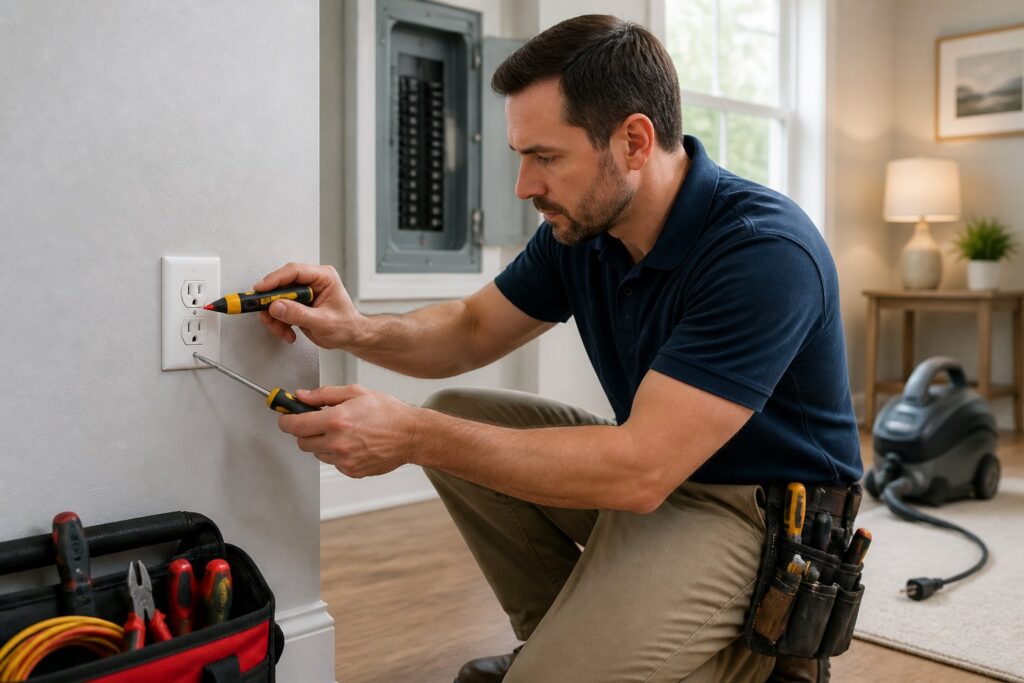
What causes electrical outlets to stop working is usually a problem with power flow, protection devices, wiring, or outlet wear. In a lot of homes, it’s something simple, like a tripped breaker or a GFCI that’s shut off power to keep you safe.
The tricky part is figuring out if it’s a quick fix or a real electrical fault, because a dead outlet might mean loose wiring, heat damage, or a bigger issue somewhere in the circuit. Knowing the usual suspects helps you zero in on the problem and decide if it’s time to call a pro.
If just one outlet dies, it doesn’t always spell disaster for your home’s wiring. But if outlets stop working after a storm, after plugging in a big appliance, or if lights and other stuff go out too, you might have a deeper problem.
How a Dead Outlet Usually Happens
A dead outlet often shows up as a loss of power in one spot—maybe just one device, one wall, or part of a circuit. The pattern tells you if it’s just that outlet or something in the wiring feeding it.
Single Outlet Failure
If one outlet stops working but others nearby are fine, the outlet itself is usually the culprit. It could be worn out, have a loose wire, or something inside just gave up.
Sometimes, if you wiggle a plug and power flickers, that’s almost always a weak connection inside the outlet.
Multiple Outlets on One Circuit
When a bunch of outlets quit at the same time, it’s often the circuit that’s at fault. Maybe a breaker tripped, or an upstream outlet failed and cut power to the rest.
This pops up a lot in bedrooms, living rooms, garages, and older houses where one circuit feeds several outlets. If they all went dead together, the problem probably isn’t just in one box.
Partial Power and Intermittent Operation
Ever have an outlet work, then not, then work again? That’s usually a loose connection, a bad breaker, or heat building up at the outlet.
If you see lights dimming or plugs feel loose, take it seriously—those are real electrical problems.
Tripped Protection Devices and Lost Power
Protection devices exist to shut power off before wires overheat or shock risk gets high. In most homes, these are the first things to check when an outlet dies.
Tripped Circuit Breakers
A tripped breaker is probably the most common reason an outlet stops working. Usually, it happens when you overload the circuit—too many devices or one big appliance pulling a heavy load.
After a trip, the breaker handle might look stuck in the middle. Flip it fully off and then back on; that can bring power back if nothing else is wrong.
Reset GFCI Receptacles
GFCI outlets protect you from shocks in places like kitchens, bathrooms, garages, laundry rooms, and outside. If a GFCI trips, it can kill power to several outlets—even ones in another room.
Find a receptacle with test and reset buttons. If you reset it and power comes back, moisture, a ground fault, or a surge probably caused the trip.
AFCI Interruption Issues
AFCI breakers catch unsafe arcing. If one trips, you might lose power to one or more outlets even if the outlets themselves look fine.
This happens when a cord is failing, a plug is damaged, or a connection is loose. If the breaker keeps tripping when you reset it, it’s time to look closer at the circuit.
Wiring Defects Behind the Receptacle
Hidden wiring problems behind the outlet are a big reason power stops getting there. That’s why a dead outlet can seem random at first.
Loose Terminal Connections
Loose screws or wires that aren’t tightened down can interrupt electricity. Sometimes, a loose connection works for months, then suddenly fails when you bump the outlet, things heat up, or you plug in something heavy.
You might notice flickering, a warm wall plate, or a plug that just doesn’t feel right. Any of those mean you should call in a pro.
Backstab Connection Failures
Some outlets use spring-loaded backstab holes instead of screws. These can get loose over time, especially in older homes or outlets that see a lot of use.
When a backstab connection loosens up, the outlet might die—or even take down other outlets on the same circuit. Swapping the outlet for one with screw terminals is usually safer.
Damaged Conductors and Burned Contacts
Wires can get damaged by heat, age, or bad installation. Once a wire is burned, broken, or corroded, power just won’t make it to the outlet.
Burned contacts inside the outlet can block power too. If you see dark spots, melting, or smell something burnt, stop using the outlet immediately.
Outlet Damage, Wear, and Overload Stress
Outlets aren’t built to last forever. Normal use, big appliances, and lots of plugging/unplugging can wear out the parts inside and make them unreliable.
Aging Receptacle Components
The metal contacts inside an outlet lose tension as they age. When that happens, plugs fit loosely and power gets sketchy.
Older outlets might look fine on the outside but be shot inside. If your house still has the original outlets from decades ago, replacing them could solve a lot of problems.
Heat Damage From Heavy Appliance Use
Stuff like heaters, hair dryers, and kitchen gadgets can really heat up a circuit and the outlet itself. Too much heat can fry the outlet and the wires behind it.
If you’re always running power strips or plugging a bunch of things into one outlet, the stress adds up fast. It’ll wear out the outlet and make failure more likely.
Signs of Arcing or Melting
Arcing is when electricity jumps across a weak or broken connection. It creates heat, noise, and can leave visible damage.
Look for scorch marks, melted plastic, crackling sounds, or a hot wall plate. If you see any of that, the outlet isn’t safe.
When the Problem Points to a Bigger Electrical Issue
Sometimes a dead outlet is just the tip of the iceberg. If you keep seeing outlets fail, notice bigger outages, or things seem unstable around the house, you might have a bigger problem than just one bad outlet.
Shared Circuit Problems
One circuit can feed several rooms, so a single failure can knock out a bunch of outlets. If a device, outlet, or splice fails on that branch, everything downstream can lose power.
If you notice the same outlets going out together, odds are the trouble is somewhere upstream.
Panel and Neutral Fault Concerns
Panel problems, loose neutrals, and other service-side issues can cause weird symptoms. You might see some outlets dead, some working, others acting strangely.
These are more serious than a single outlet failure. If you notice uneven power, odd voltage, or breakers tripping repeatedly, it’s time for a real inspection.
Surge Damage After Storms or Equipment Events
Surges from storms, utility problems, or big equipment starting up can damage outlet circuits. Sometimes the outlet fails right away, other times it just gets weaker until it finally quits.
Surges can hit breakers, outlets, and devices all at once. If stuff stopped working after lightning or a big power event, check everything.
Safe Next Steps and Professional Repair Options
You can check a few basics before calling for help, as long as you stay away from exposed wires or damaged outlets. If you see heat, burning, or the outlet keeps failing, stop right there.
What Homeowners Can Check First
Take a look at the breaker—did it trip? Check for any GFCI outlets nearby and hit reset if you find one.
Try plugging in another device or lamp to see if the outlet is really dead. If a bunch of outlets are out, make a note of which rooms are affected.
When To Stop Troubleshooting
If you smell burning, see scorch marks, hear buzzing, or feel heat at the wall plate, stop right away. Those are signs of arcing or damaged wiring.
Also, if the breaker keeps tripping after you reset it, don’t keep trying. That usually means there’s a fault that needs a professional.
Why Licensed Electricians Are the Right Choice
A licensed electrician can track down the circuit, find hidden wiring problems, and fix things safely. That really matters when you’re dealing with loose connections, burned wires, panel issues, or need to swap out outlets.
If you want electrical work you can trust, Magnify Electric handles outlet repairs, panel upgrades, wiring, lighting installs, EV charging, smart home systems, surge protection, troubleshooting, and emergency help. Our electricians serve Spicewood, Austin, Bee Cave, Lakeway, Dripping Springs, Georgetown, Leander, Round Rock, Kyle, Cedar Park, Liberty Hill, Westlake, The Hills, Briarcliff, Horseshoe Bay, Sunset Valley, Hutto, and nearby Central Texas spots.
Frequently Asked Questions
Why did one wall outlet suddenly stop working even though the breaker didn’t trip?
A tripped GFCI somewhere else on the circuit is a common cause. You could also have a loose wire, failed outlet, or a bad connection behind the outlet that cuts power without flipping the breaker.
What should I check if several outlets in the same room stop working at once?
Check the breaker first, then hunt for a GFCI outlet that might’ve tripped. If the whole room is on one circuit, a single upstream problem or loose connection can kill every outlet in that group.
Why do the lights work but the outlets in the room don’t?
Lights and outlets usually run on separate circuits. So, a dead outlet can happen even if the room lights stay on.
Why would an outlet stop working while other outlets in the house still have power?
That outlet might be on a circuit with a local problem, like a failed receptacle or loose wire. It could also be controlled by a GFCI upstream or be part of a branch circuit that lost power.
How do I tell if a GFCI outlet needs to be reset when an outlet won’t work?
Look for a receptacle with test and reset buttons in places like bathrooms, kitchens, garages, basements, laundry rooms, or outside. If the reset button is popped or the outlet’s dead, pressing reset might bring it back.
What could cause an outlet to stop working right after I reset it?
When you reset an outlet and it immediately fails again, something’s still wrong in the circuit. Maybe there’s moisture around, a frayed cord, or even a stubborn old appliance causing issues. Sometimes, it’s just sketchy wiring hiding behind the outlet that trips the protection device all over again.