
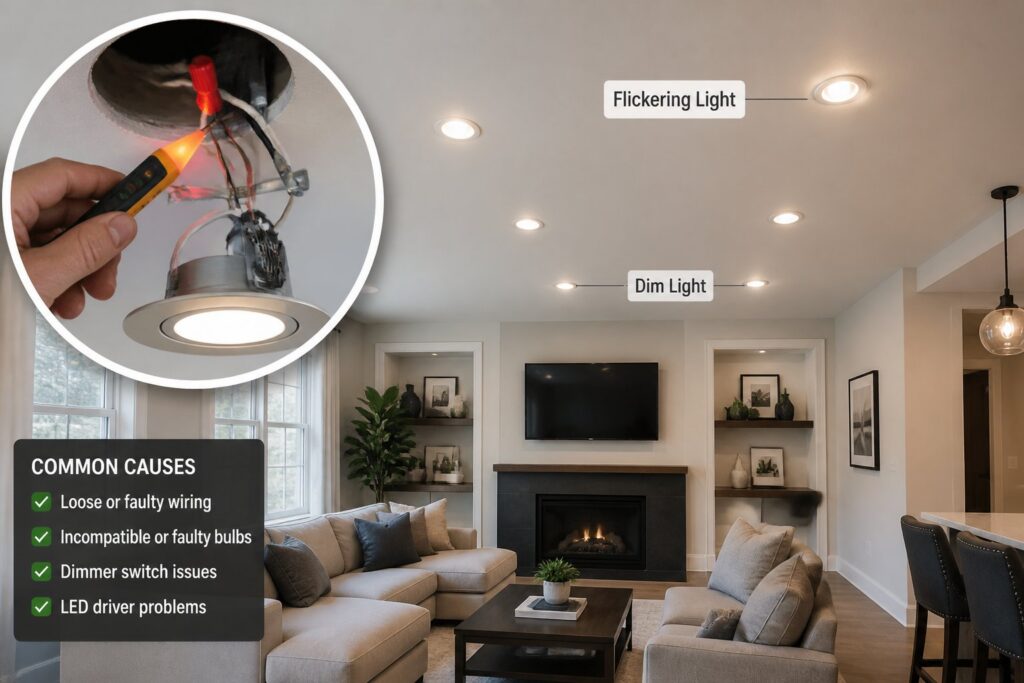
Flickering recessed lights usually point to something simple—maybe a loose bulb, a dimmer mismatch, or a tired LED driver. Sometimes, though, the flicker means loose wiring, voltage swings, or an overheating fixture that shouldn’t be ignored.
If you’re trying to figure out what causes flickering recessed lights, start with the basics. If the flicker keeps coming back, pay attention. Steady lights should stay steady. When they don’t, your home’s trying to get your attention. If you’re stuck, a licensed electrician in Central Texas can check the fixture, switch, and circuit before a small annoyance turns into a real headache.
What Flickering Usually Means
Not all flicker is created equal. Some lights blink once at startup, others dim or pulse while you’re in the room.
Normal Behavior Vs. A Real Electrical Problem
A quick flash when you flip the switch? Pretty normal for some LED recessed lights, especially right as they power up. But if the light keeps changing brightness, you might have a loose connection, a bad bulb, or a circuit issue. If it gets worse, don’t ignore it.
Why Recessed Fixtures Can Be More Sensitive Than Other Lights
Recessed lights hide inside the ceiling, so heat can build up faster than with open fixtures. That extra heat messes with bulbs, drivers, and internal parts.
They’re also often paired with dimmers, insulation, and cramped wiring. Around Austin, Lakeway, Bee Cave, and nearby, that setup means small electrical problems can show up as flicker before you notice anything else.
Most Common Trouble Sources
Most flickering starts with something basic—something loose, mismatched, or just worn out. I always check these first on service calls since they’re so common.
Loose Bulbs Or Poor Socket Contact
If a bulb isn’t seated well, it can flicker every time the air moves or the fixture heats up. A weak socket does the same thing, even if the bulb’s fine.
Try gently tightening the bulb. If that solves it, great. If not, you might need to fix the socket or the whole fixture.
Incompatible LED Bulbs And Dimmer Switches
LED recessed lights and old dimmers? They don’t always get along. That mismatch causes a lot of flickering after people upgrade to LEDs.
Sometimes you’ll hear a faint buzz or see the light pulse at low settings. Swapping to a compatible dimmer usually sorts it out.
Overheating Inside The Housing
When the housing gets too hot, the fixture might dim, blink, or just shut off for a while. It’s more common in older cans or spots with bad ventilation.
I see this a lot in kitchens, hallways, and bathrooms where lights stay on for hours. If things get better after the fixture cools, heat’s probably part of the story.
Aging Drivers, Trims, Or Internal Components
LED recessed lights rely on drivers and other parts that just wear out. Once they start to fail, you’ll get flicker—even with a new bulb.
A worn trim or loose internal connection can do the same thing. If one fixture flickers but the others are fine, odds are it’s aging parts inside that can.
Wiring And Power Supply Issues
If swapping bulbs doesn’t help, the wiring or power supply might be to blame. These problems matter more since they can mess with the whole circuit.
Loose Connections In The Fixture Or Junction Box
A loose wire nut, weak splice, or shaky connection can cut power for a split second and make a recessed light flicker. This can happen inside the can, at the junction box, or behind the switch.
Problems like this get worse with vibration, heat, or age. It’s worth having a pro check it out before it turns into a bigger repair.
Voltage Fluctuations From The Circuit
If your voltage bounces up and down, the lights might flicker too. You’ll notice it more when big appliances kick on—microwaves, HVAC, fridges.
It’s common in busy homes and commercial spaces with lots of electrical load. Sometimes it points to a utility, service, or wiring issue that needs checking.
Overloaded Circuits And Shared Loads
Too many lights or devices on one circuit? That can make things unstable. Recessed lights might flicker when the circuit’s strained, especially if other stuff shares the same line.
In homes and small businesses, this shows up during busy times. Adding outlets, lighting, or smart gadgets without checking the system’s limits just makes it worse.
Panel Problems That Can Affect Lighting Performance
A weak breaker, loose bus, or other panel glitch can mess with your lights. Sometimes, the panel itself is the root of the problem.
If several fixtures flicker in different rooms, get the panel checked. In larger homes, shops, and offices around Round Rock, Cedar Park, Georgetown, and Central Texas, a panel inspection can catch issues that bulb swaps never will.
Safety Risks You Should Not Ignore
Some flickering is just annoying. Some is a warning. Knowing the difference protects your home, business, and everyone inside.
Signs The Problem May Be A Fire Hazard
Smell something burning? Feel heat around the trim? Hear buzzing, see scorch marks, or notice a fixture turning itself off and on? That’s serious. Those signs point to a loose connection or overheating.
If the light flickers and the ceiling feels warm, don’t keep using it. Shut it off and get it checked.
When Flickering Points To A Larger Electrical Fault
If multiple lights on the same circuit flicker, the problem’s probably bigger than one fixture. It could mean wiring damage, a failing breaker, or a service issue.
You might also spot other clues—outlets acting weird, appliances dimming when they start up. That’s a sign your electrical system needs a closer look.
Why Commercial Spaces Should Act Quickly
In commercial spaces, flickering lights hurt safety, work quality, and customer comfort. They can also mean load problems that interrupt business.
Retail, offices, restaurants, shops—if the flicker keeps coming back, don’t wait. Calling an electrician fast keeps downtime low and the space safer.
What You Can Check Before Calling An Electrician
A few quick checks might save you time and maybe even fix the problem. Keep it simple, and if anything seems sketchy, stop.
Simple Bulb And Switch Checks
Turn the light off, let it cool. Make sure the bulb’s tight, the type matches, and the switch is all the way on.
If there’s more than one bulb, compare them. Sometimes one bad bulb throws off the whole group.
How To Tell If The Dimmer Is The Culprit
If flicker only happens at certain dimmer settings, the switch might not play nice with the bulbs. Try turning the dimmer higher and see if that helps.
If the light steadies with a regular switch or a different setting, the dimmer’s probably the issue. Swapping to a matching dimmer usually does the trick.
Mistakes To Avoid During DIY Troubleshooting
Don’t mess with the fixture while the power’s on. Don’t touch exposed wires. Don’t keep swapping parts if it’s hot, buzzing, or scorched.
It’s easy to miss the real problem by just replacing bulbs over and over. If the same light keeps flickering after the basics, it’s time to stop guessing.
When Professional Diagnosis Makes Sense
Some flicker problems are simple. Others need real troubleshooting and a look at the whole circuit.
Situations That Need Electrical Troubleshooting
Call a licensed electrician if the flicker hits several lights, happens randomly, or comes with breaker trips, buzzing, or heat. Same goes if the problem starts after a remodel, lighting upgrade, or dimmer swap.
If you’re in Central Texas and it keeps coming back, an electrician can test the fixture, wiring, switch, and panel as a system. That saves time and helps prevent repeat headaches.
Related Upgrades That May Solve The Root Cause
Sometimes you need more than a repair. A compatible dimmer, new LED driver, better wiring, surge protection, or a panel upgrade can fix the root cause and make things more reliable.
That’s also a good time to think about other work—outlet and switch upgrades, ceiling fans, lights, or even EV chargers if you’re due for electrical updates. Small changes can make the whole system more stable.
Why Local Code Knowledge Matters In Central Texas
Electrical work needs to follow code and local rules, especially for repairs or upgrades. That’s important in Austin, Spicewood, Dripping Springs, Leander, Hutto, Westlake, and nearby, where older homes and new builds have very different wiring.
A local electrician knows how to spot code issues, fixture limits, and load problems you might not see right away. That experience protects both safety and long-term value.
Frequently Asked Questions
Why do recessed lights in the kitchen flicker even when the switch is on?
Kitchen lights often share circuits with appliances, so voltage swings can cause flicker. Heat, loose connections, or a dimmer that doesn’t match the bulbs can also be to blame.
What does it mean if only one recessed light is flickering while the others are fine?
Usually, it means a bad bulb, loose socket, or something worn inside that fixture. If you swap the bulb and it still flickers, the fixture probably needs service.
How can I troubleshoot flickering LED recessed lights at home?
Start with the bulb. Check the switch and dimmer. If it still flickers, it’s probably incompatibility, loose wiring, or an aging LED driver.
Why do LED can lights flicker when used with a dimmer switch?
Most LED bulbs need a dimmer designed for LEDs. Old dimmers can send messy power, which causes pulsing, buzzing, or uneven light.
Could a loose connection in the fixture or wiring cause recessed lights to flicker?
Absolutely. Loose connections are one of the top reasons. They can interrupt power for a split second and make the light blink, dim, or cut out.
Is flickering in recessed lights a potential electrical fire risk?
Yeah, it can be—particularly if you spot things like heat, weird burning smells, buzzing, or even scorch marks nearby. If that flickering keeps happening or seems to be getting worse, don’t wait around; it’s a good idea to get it checked out as soon as possible.