
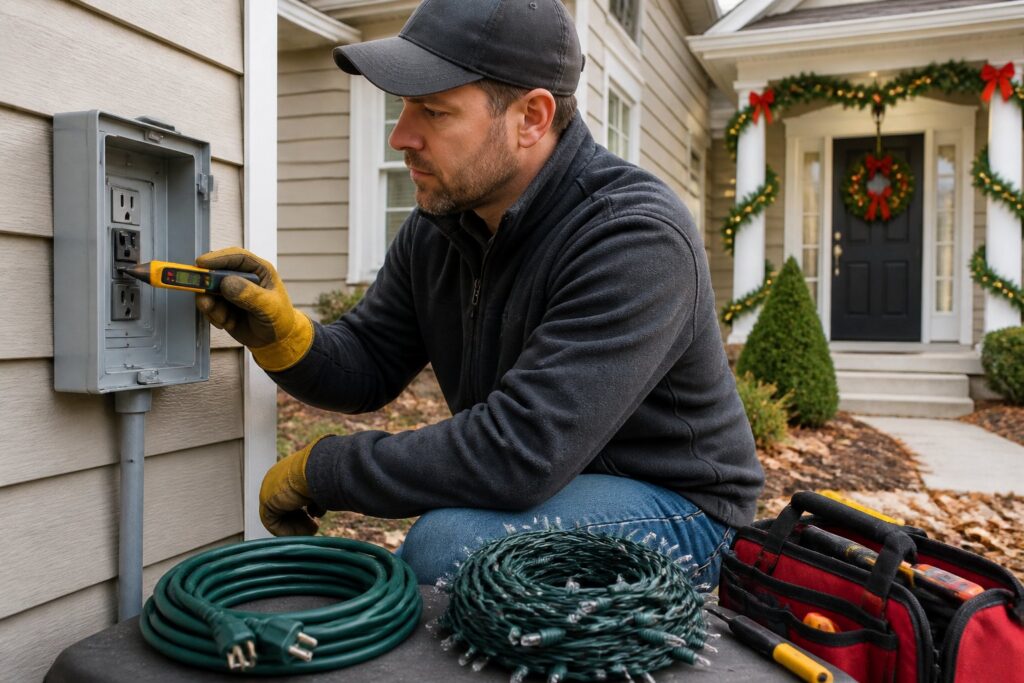
Holiday lighting brings a lot of cheer, but let’s be honest—your home or business wiring takes a beating. If you plan ahead, you can enjoy a bright display without tripping breakers, overheating cords, or hidden fire hazards. The safest way to get ready for holiday lighting? Check your system’s capacity, use outdoor-rated gear, and spread the load over the right circuits.
A bit of prep makes a difference, especially around Central Texas where the weather, older wiring, and the holiday rush can all pile on stress. Whether you’re decorating a Lakeway house or a Round Rock storefront, a careful setup keeps things safer and the season a little less chaotic. If you want peace of mind before plugging everything in, a licensed electrician can help spot weak points and suggest smart upgrades before you go all-in on the lights.
Assess Your Existing Electrical Capacity
Before you hang a single strand, check what your electrical system can really handle. Holiday lights might seem low-impact, but they often share power with kitchen appliances, heaters, and other seasonal energy hogs.
How To Tell If Your Panel Can Handle Seasonal Demand
Start at your panel and look at the breaker sizes for the circuits you plan to use—most homes have 15-amp or 20-amp breakers, and every circuit has its limits. If your display is ambitious or you already run several high-use devices, you might be close to maxed out before the lights even go on.
If a breaker trips when you add decorations, that’s a clear sign of strain. Watch for flickering lights, warm outlets, or buzzing noises—those mean your system’s working too hard. Not sure what your panel can safely handle? An electrician in Austin, Cedar Park, or Georgetown can walk you through it.
Circuits Most Likely To Be Overloaded During The Holidays
Kitchen, living room, garage, and exterior circuits usually get pushed hardest. People often overload a single outdoor outlet with strings of lights, inflatables, timers, and extension cords. That’s a recipe for trouble.
Shared circuits with fridges, freezers, or entertainment systems need extra care. In commercial spaces, storefront and lobby decorations can overload circuits never designed for heavy seasonal use. Mapping out your load before you decorate really helps.
Why Older Homes And Buildings Need Extra Caution
Older wiring, worn outlets, and outdated panels aren’t always up for modern holiday demands. Many Central Texas homes were built before outdoor lighting was common, so sometimes you need more than just a quick fix.
If you’ve got an older place in Westlake, Spicewood, or Dripping Springs, pay close attention to frayed insulation, loose outlets, and panels that already seem maxed out. Older buildings often hide wear that only shows up when you add more load. A pre-season check is just smart.
Inspect The Components You Plan To Use
What you plug in matters just as much as the panel behind it. Old cords, weak bulbs, and indoor-only products can turn a cheerful setup into a safety headache fast.
Checking Light Strings, Extension Cords, And Timers
Lay out every strand before you start and look for cracked insulation, bent prongs, frayed wires, and missing bulbs. Test each strand on the ground before you hang it up. That extra step saves time and catches problems before they’re out of reach.
Pick timers that match the wattage and load of your display. Cheap timers and worn connectors often burn out with constant use, especially if the lights run for hours every night. If something feels hot during testing, don’t use it.
Choosing Outdoor-Rated Products For Central Texas Weather
Outdoor-rated lights, cords, and connectors stand up to moisture, temperature swings, and UV better than indoor stuff. Central Texas weather can flip fast, and that mix of cool nights, rain, and blazing sun can wear down weak materials.
Look for labels that clearly say outdoor use. It’s especially important in places like Bee Cave, Kyle, Leander, and anywhere displays stay up for weeks. Outdoor-rated gear gives you a better shot at a safe, reliable setup.
When Worn Out Outlets And Switches Create A Safety Risk
Loose outlets, cracked faceplates, and worn switches can cause bad connections and heat buildup. If a plug falls out easily or feels warm, fix that outlet before using it for decorations.
GFCI protection is crucial outdoors and in damp spots. If you have to wiggle a plug or the outlet trips a lot, don’t brush it off. Those are warning signs that deserve a pro’s attention.
Plan A Safer Lighting Layout
A good layout isn’t just about looks—it keeps the load balanced, avoids cord damage, and makes your display easier to live with.
Before you start clipping up lights, think about where power comes from, how cords will run, and where water might collect. That little bit of planning can save you a headache later.
Balancing Decorative Loads Across Multiple Circuits
Don’t plug your whole display into one outlet if you can help it. Spread lights over multiple circuits so one breaker isn’t doing all the work. This matters most for big homes, office fronts, and retail displays.
Group decorations by area—roofline, yard, windows, indoor spots. That way, if one section goes out, you can troubleshoot faster. Plus, you avoid the “all lights out” problem from a single overload.
Avoiding Trip Hazards, Pinched Cords, And Wet Locations
Keep cords out of walkways, driveways, and doorways. Use clips, cord covers, or other supports so nothing gets crushed or tripped over. Pinched cords are a common cause of insulation damage.
Don’t put plugs where water can pool or drip directly on them. If a cord has to cross a path, cover it properly. This matters for homes and businesses where people might walk through the area.
Smart Controls And Energy-Efficient Lighting Options
LED holiday lights use way less energy than old-school incandescents and usually run cooler too. They’re a solid pick if you want a bright display without stressing your system. Smart plugs and app-based controls can help you schedule lights efficiently.
Timed controls mean you don’t have to remember to unplug everything. They also help cut down on wasted energy overnight. For a lot of Central Texas property owners, the mix of convenience and efficiency is worth it.
Protect Your Home Or Business From Common Electrical Problems
Holiday lighting tends to reveal weak spots that hide the rest of the year. Protection devices and early warning signs can help you catch issues before they get expensive.
Ground Fault Protection For Exterior Displays
Outdoor displays should always use GFCI-protected outlets. GFCIs shut off power fast if moisture or a fault creates a shock risk. Never treat exterior outlets like indoor ones.
If a GFCI keeps tripping, don’t just reset it and move on. Repeated trips mean something’s wrong—find the cause before you leave the lights on all season. This gets even more important during wet or windy spells.
Surge Protection For Sensitive Electronics And Lighting Systems
Holiday displays aren’t the only things at risk during a surge. TVs, smart home gear, network devices, and control systems can all get hit when the power spikes. Whole-home surge protection or plug-in protectors can help.
If you’ve got smart lighting, entertainment centers, or EV chargers, a surge might not fry everything, but it can shorten equipment life and cause annoying issues later.
Warning Signs That Point To Hidden Wiring Issues
Watch for lights that dim when other appliances kick on, outlets that spark, or breakers that trip for no clear reason. A burning smell, discoloration around outlets, or scorch marks mean you should stop using the circuit—those are urgent red flags.
Hidden wiring problems sometimes stay quiet until holiday demand brings them out. If you see repeated issues, get the system checked before adding more decorations. It’s a smart move for homes and businesses all over Central Texas.
Know When An Upgrade Makes Sense
Sometimes, the safest answer isn’t more extension cords—it’s actually improving your system so it can handle the load and look cleaner all year.
A few upgrades can make holiday setup easier now and more reliable later. They also add value when done right.
Panel Improvements For Larger Seasonal Displays
If your panel is full, outdated, or struggling, a panel upgrade might be the fix. More breaker space and better capacity can support bigger holiday displays, kitchens, workshops, or offices without constant tripping.
Consider this if you want to expand your lighting each year or if you’re seeing frequent breaker problems. An electrician can help you decide if a small fix or a major upgrade fits best.
Adding Exterior Receptacles For Cleaner Installations
Adding outdoor outlets makes holiday lighting way safer and tidier. You won’t need long extension cords snaking from inside, and it’s easier to put lights where you want them.
Exterior receptacles help with patios, eaves, driveways, and landscape lights. They’re also handy for outdoor speakers, security gear, and seasonal décor. The setup looks cleaner and has fewer hazards.
Commercial Considerations For Storefronts, Offices, And Shared Spaces
Commercial holiday lighting takes more planning—staff, customers, and code requirements all come into play. Storefronts and offices often do better with dedicated circuits, more outlets, and tougher controls.
Shared spaces need clear walkways and safe access to power. If your business in Austin, Hutto, or Cedar Park wants a polished holiday look, an electrical upgrade can support the display without disrupting daily work. It’s a solid investment for safety and style.
When To Call A Licensed Electrician
Some holiday lighting tasks are DIY-friendly, but others really need a pro. If you’re dealing with panel issues, frequent breaker trips, or outdoor wiring changes, call in an expert.
A good electrician can also save you time by spotting problems you’d probably miss. That can keep your season running smoothly—not scrambling for fixes at the last minute.
Situations That Need Professional Electrical Troubleshooting
Call a licensed electrician if outlets run hot, breakers trip a lot, lights flicker across several circuits, or you notice a burning smell near a plug or panel. You’ll also want help for new exterior outlets, GFCI protection, or planning a big display.
Leave any work on the panel, wiring, or hidden faults to a pro. That goes for homes and businesses.
Benefits Of A Pre-Season Safety Inspection
A pre-season inspection can catch loose connections, worn outlets, damaged cords, and weak panel spots before they create real problems. You’ll get a clear sense of what your system can handle, making planning easier and reducing emergency calls mid-holiday.
For a lot of property owners, it’s the most efficient way to get ready. One simple step can save money, time, and headaches.
What Central Texas Property Owners Should Ask Before Scheduling Service
Ask if the electrician handles residential and commercial lighting, panel upgrades, surge protection, outlet and switch improvements, and exterior receptacle installs. If you’re in Round Rock, Liberty Hill, or anywhere nearby, make sure they know local homes and weather quirks.
It’s also smart to ask about EV charger installs, generator hookups, smart home systems, or long-term wiring upgrades if you’re planning ahead. That way, you might solve more than one problem in one visit.
Frequently Asked Questions
How many strands of holiday lights can I safely plug into one outlet or circuit?
It depends on the type of lights, their wattage, and the breaker size on that circuit. LED strands usually use much less power than older incandescent lights, yet you still should not load one outlet with too many connections.
What’s the best way to run power safely to outdoor holiday lights?
Use extension cords rated for outdoor use, weather-resistant connections, and plug everything into a GFCI-protected outlet. Try to keep cords off the ground and steer clear of puddles, doors, and busy walkways.
Do I need a dedicated circuit or GFCI outlet for outdoor lighting displays?
If you’re setting up a big display or plugging in other hefty devices, a dedicated circuit makes sense. Outdoor lighting really should have GFCI protection—it’s just safer when things get wet.
How can I tell if my extension cords and light strings are rated for outdoor use?
Check the packaging or the cord itself for labels like “outdoor use” or “wet-location.” If you don’t see any rating, assume it’s for indoor use only—don’t risk it outside.
What are the warning signs of an overloaded circuit when holiday lights are on?
Watch for breakers tripping a lot, lights flickering or dimming, outlets feeling warm, or any weird buzzing. If you smell something burning or spot scorch marks near a plug, turn off the circuit right away and call an electrician.
How much does it typically cost to install permanent holiday lighting on a home?
Prices jump around a lot depending on your roof’s size, the kind of lights you pick, fancy control systems, and whether you need extra wiring or outlets. Honestly, it’s tough to pin down a number until an electrician checks out your place and hears what you’re hoping for.