
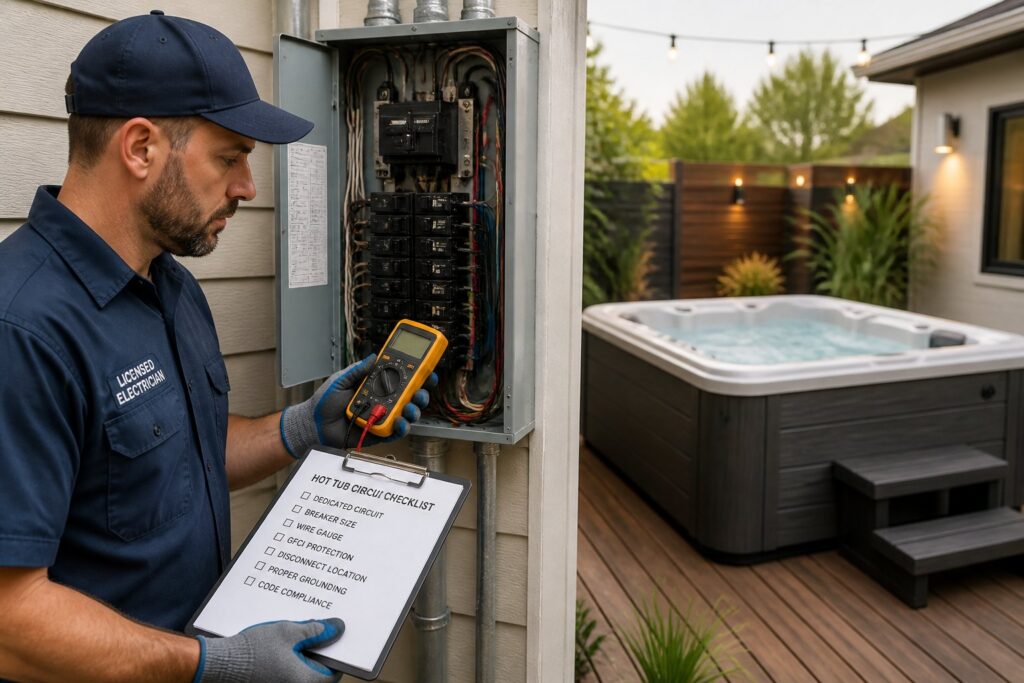
When you’re planning a hot tub, don’t overlook the electrical side—it’s just as important as picking out the spa itself. You need a dedicated circuit, the right breaker, solid grounding, and a GFCI-protected disconnect. All those pieces work together to keep your setup safe and dependable.
Wondering what to know before adding a hot tub circuit? Start with the spa’s exact electrical specs, then check your panel’s capacity so you don’t overload anything. Skipping this step can mean surprise breaker trips, headaches, or even safety hazards down the line.
If you live in Austin, Bee Cave, Lakeway, Dripping Springs, Georgetown, Leander, Round Rock, Cedar Park, Kyle, Liberty Hill, Westlake, Hutto, or anywhere nearby, it’s usually smartest to get a licensed electrician to look at your site before you start digging or buying equipment. Thinking about other upgrades like panel work, surge protection, lighting, or an EV charger? Plan them together if you can.
Why A Dedicated Circuit Matters
Hot tubs draw a steady, heavy load—way more than a lamp or a typical outlet. That’s why they need their own circuit, so both the spa and the rest of your electrical system stay safe and happy.
How Hot Tub Loads Differ From Standard Outdoor Equipment
Most outdoor stuff only sips power here and there. A hot tub, though, will run its heater, pumps, and controls all at once, which adds up fast. Many models use 240 volts, so the circuit has to match the spa’s needs—not just whatever’s handy.
What Can Go Wrong On An Undersized Or Shared Circuit
If you try to share a circuit, you’ll probably run into tripped breakers, weak heating, or even melted wires. I’ve seen it—breakers pop when the tub heats up, or components fry because voltage drops too low. Worst case? Bad wiring can turn into a shock or fire risk.
Power Requirements To Confirm First
Before you even think about running wire, grab the spa’s electrical label or manual. Breaker size, wire gauge, disconnect, and GFCI—all of it depends on the exact model.
Voltage And Amperage Differences Between Models
Some smaller tubs run on 120 volts, but most full-size ones need 240 volts. Amperage can be all over the place, so two tubs that look alike might have totally different needs. Always go by the spa’s actual requirements—not just a guess.
Breaker Size, Wire Size, And Manufacturer Specifications
The breaker and wire size must follow the manufacturer’s instructions and actual load. For example, a 50-amp spa needs heavier wire than a 30-amp one. Don’t try to guess or fudge it. If you’re comparing 6/3 to 6/4, it comes down to whether the spa needs a neutral in addition to the hots and ground.
Disconnect Placement And GFCI Protection Basics
You’ll need a disconnect near the spa and GFCI protection. That can be a GFCI breaker in the main panel or a GFCI-protected disconnect box nearby. The idea is simple: you want to cut power quickly for service and keep things safe around water.
Site Conditions That Affect The Installation
Your yard’s layout matters almost as much as the electrical specs. Distance, weather, and access all affect how the wiring runs and what it’ll cost.
Distance From The Main Panel To The Spa Location
Longer wire runs mean more material, more work, and sometimes even thicker wire to avoid voltage drop. If your panel is on the far side of the house, expect things to get complicated. Shorter, straighter runs are just easier.
Outdoor Exposure, Conduit Routing, And Weather Protection
Outdoor wiring needs conduit and weather-rated protection from sun, rain, and sprinkler systems. I always try to find a route that keeps wires safe and makes future repairs less of a pain. Bad conduit planning? That’s how you end up fixing things after a freeze or a big storm.
Clearance Rules Around Water, Walkways, And Access Points
You need enough space around the disconnect, equipment, and walkways to keep things safe and easy to service. Don’t stick a panel or shutoff box somewhere it’ll get splashed or blocked by a fence. Good placement just makes life easier for everyone.
Panel Capacity And Electrical System Readiness
Your main panel has to handle the new spa load without straining the system. This is where a lot of projects hit a snag, since the hot tub is just one piece of the whole electrical puzzle.
When An Existing Panel Can Handle The Added Load
A newer panel with some breathing room can usually take a hot tub without too much fuss. If your service size is decent and the load calculation checks out, you might just need a dedicated breaker and the right wiring. An electrician can check if there’s enough space for a new breaker.
Signs A Panel Upgrade May Be Needed
If your panel trips a lot, is totally full, has old equipment, or your service is on the small side, you might need an upgrade. A 100-amp service that’s already running HVAC, a busy kitchen, and other big stuff could struggle with a spa added in. Sometimes, bumping up to a 150-amp or 200-amp service is just safer.
How Other Major Loads Influence Planning
Hot tubs aren’t the only big power users. Think EV chargers, electric dryers, ovens, tankless water heaters, pool pumps, or shop tools. If you’re planning multiple upgrades in Central Texas, consider bundling them so you’re not tearing into the panel again and again.
Code, Permits, And Safety Considerations
Hot tub wiring is one of those jobs where code and safety really matter. Permits and proper installation protect your home, your family, and anyone who works on the spa later.
Local Inspection Requirements In Central Texas
Permits and inspections in Central Texas can vary a lot by city or county, so always check the electrical permit rules before you start. Austin, Cedar Park, Round Rock, Georgetown, Leander—they all have their own steps. A licensed electrician who knows the local process can save you headaches and failed inspections.
Bonding, Grounding, And Shock Risk Prevention
Since hot tubs live in wet environments, bonding and grounding are huge. They keep metal parts at the same electrical potential and give any stray current a safe way out. Skip these steps and you risk dangerous voltage where water and people meet.
Why DIY Spa Wiring Often Creates Expensive Problems
DIY spa wiring can look straightforward, but it gets pricey fast if you make a mistake. I’ve seen folks buy the wrong wire, put the disconnect too far away, or miss GFCI requirements—then have to pay double to fix it. If you want to pass inspection and avoid headaches, hire a pro.
Cost, Timeline, And Hiring The Right Electrician
Cost depends on distance, panel condition, and what your site needs before you power up the spa. A simple setup costs less than a job with trenching or panel upgrades.
What Typically Affects Project Cost
Biggest cost factors? Wire length, conduit type, trenching, panel access, and whether your panel needs an upgrade. Routing across a big yard or around patios tacks on time. If you want extras like outlet upgrades, lighting, or surge protection, it often makes sense to bundle them.
Questions To Ask Before Work Begins
Ask if your electrician will handle permits, schedule inspections, and follow the manufacturer’s instructions. Find out what breaker, wire, conduit, and disconnect they plan to use, and how they’ll check panel capacity. Don’t be shy—ask if they’ve wired hot tubs in homes like yours. Experience matters.
When To Bundle The Job With Other Electrical Improvements
If you’ve already got the panel open for a spa circuit, it might be the perfect time for other upgrades. Lots of homeowners combine this work with panel upgrades, smart home systems, ceiling fans, generator hookups, or just a few outlet and switch fixes. Bundling can cut down on labor and help your system run smoother overall.
Frequently Asked Questions
What electrical permit and inspections are typically required for a new hot tub circuit?
Most places want you to pull an electrical permit before you start, plus one or more inspections during or after the work. The process depends on your local building department, so have a licensed electrician check the requirements before wiring begins.
What breaker size and GFCI protection does a hot tub circuit usually need?
Breaker size comes straight from the spa’s label and manual. Many hot tubs use a dedicated 240-volt circuit and need GFCI protection—either from a breaker in the main panel or a GFCI disconnect near the spa.
Which wire size and cable type should I use (like 6/3 vs 6/4) for the run to the hot tub?
Wire size depends on the spa’s amperage, the length of the run, and whether you need a neutral. Some 50-amp tubs use 6 AWG copper, but you really have to match the manufacturer’s specs and the installation method.
How far should the disconnect switch be from the hot tub, and what kind of disconnect is required?
The disconnect should be close enough for a quick shutoff, but not so close it’s in the splash zone. Exact distance and type depend on local code, but usually you’re looking at a GFCI-protected disconnect or breaker you can reach easily.
What are the most common hot tub wiring mistakes that cause nuisance trips or safety issues?
Common mistakes include using wire that’s too small, missing GFCI protection, sharing circuits, skipping bonding, and running long wires without thinking about voltage drop. I also see problems when the disconnect is in the wrong spot or the installer ignores the spa manufacturer’s instructions.
How do I confirm whether my panel and service can handle the added load of a hot tub circuit?
You’ll want a licensed electrician to take a look at your panel—see if there’s enough breaker space and check how much power your other appliances are already pulling. Got big stuff like HVAC, an EV charger, or electric cooking? Sometimes the hot tub still fits, but sometimes you might need to think about a panel upgrade. It’s not always obvious, so getting a pro’s opinion is really the way to go.