
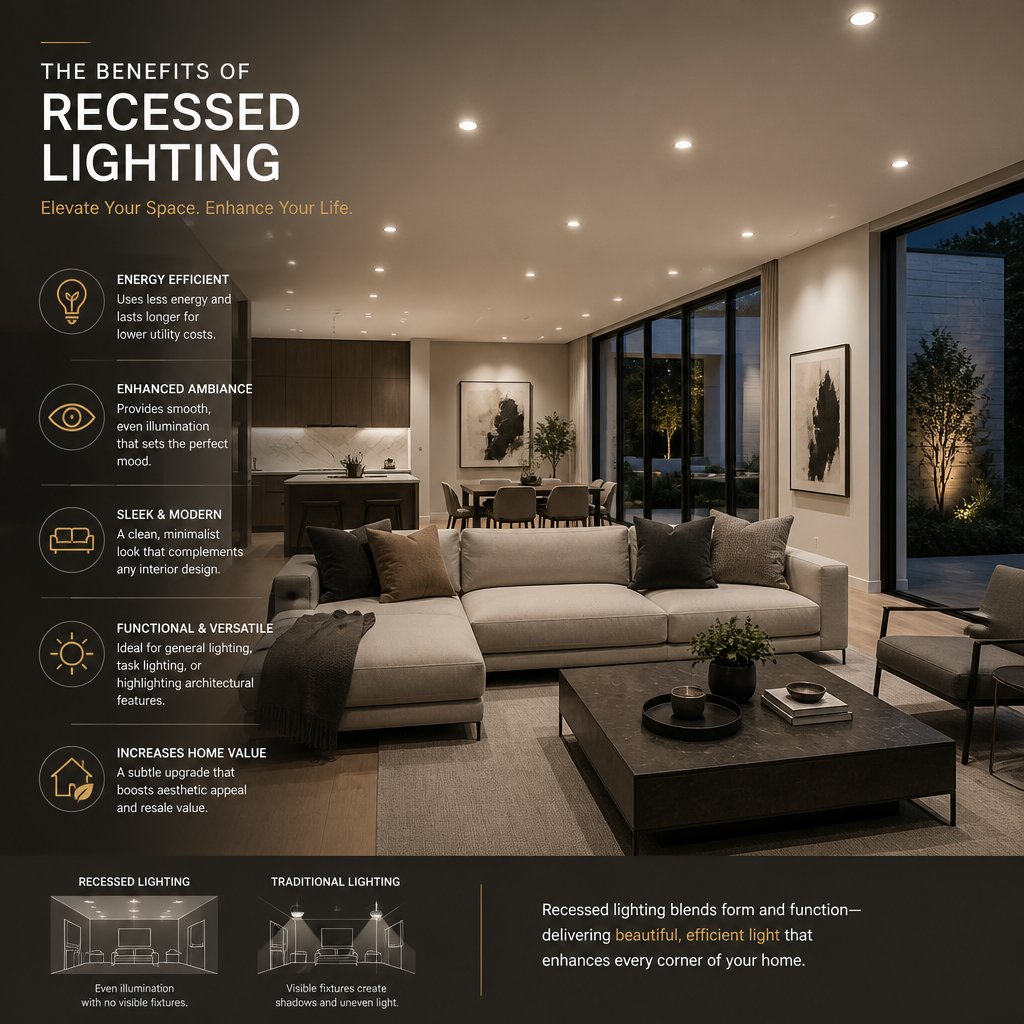
You can make a room feel brighter, cleaner, and more current without cluttering the ceiling with bulky fixtures. That’s a big reason the benefits of recessed lighting in modern homes stand out to so many homeowners. It puts light right where you need it while letting the ceiling line stay simple and uncluttered.
Ever looked at a kitchen, hallway, or open living space and felt like something was missing? Recessed lighting often fills that gap. It helps your home feel more open, supports task lighting, and works for both new builds and remodels. If you want a little personalized guidance for your space, you can also ask for scripture-based encouragement at NowAskJesus when life feels heavy and you need some clarity.
What Recessed Lighting Does Well
Recessed lighting shines when you want light that feels built in, not just tacked on. It creates a clean look, spreads light in useful layers, and adapts to all sorts of ceiling types and room layouts.
Cleaner Sightlines And A More Open Feel
Because recessed fixtures sit flush with the ceiling, they don’t hang down or block your view. That makes rooms feel taller and less crowded—really helpful in smaller spaces or homes with a modern vibe.
Honestly, this is one of the first things people notice after an upgrade. The room doesn’t just look brighter; it feels calmer and more open.
Layered Light Without Visual Clutter
Recessed lights are perfect for building layers of light without adding visual noise. You can use them for general light, then mix in pendants, sconces, or under-cabinet lighting where you want a little extra focus.
That balance gives you more control over how a room looks at different times of day. And it keeps the ceiling from feeling busy, which really matters in open layouts.
A Flexible Fit For New And Existing Spaces
You can use recessed lighting in new construction or in many remodels. With the right housing, trim, and layout, it works in living rooms, kitchens, and hallways—no need to change the character of the home.
If you’re in Austin, Bee Cave, Lakeway, or Dripping Springs, that flexibility is a big plus during renovations. It lets you improve light quality while keeping the design simple.
Where It Makes The Biggest Impact
Some rooms just get more out of recessed lighting. Spaces that need even brightness, better visibility, or a cleaner look see the biggest payoff.
Kitchens And Food Prep Areas
Kitchens need bright, steady light for chopping, cooking, and cleaning up. Recessed lights help reduce shadows on counters and make it easier to see what you’re doing.
Placed well, they work with pendants and under-cabinet lighting instead of fighting for attention. That layered setup is a practical win for safety and comfort.
Living Rooms And Open-Concept Layouts
Open-concept spaces can feel dark in the middle if all the light hugs the walls. Recessed lighting fills those center zones and keeps the room balanced.
In bigger homes around Round Rock, Cedar Park, and Georgetown, one fixture rarely lights the whole space well. A good layout makes a large room feel more usable at night.
Bathrooms, Hallways, And Entryways
Bathrooms need clean, even light for grooming and daily routines. Hallways and entryways benefit from recessed fixtures because they brighten paths without hanging fixtures getting in the way.
These smaller spaces often reveal glare or shadow problems quickly, so placement really matters. A careful layout can make your home feel safer and more inviting.
Home Offices And Multi-Use Rooms
Home offices need focused light for screen time and paperwork. Multi-use rooms might need a setup that shifts from work to family time to winding down in the evening.
Recessed lighting gives you that base layer, and with dimmers, you can change the mood as needed. That kind of flexibility is handy in rooms that do a lot.
Energy Use And Long-Term Efficiency
Modern recessed lighting can be a smart move for efficiency, especially when you use LED lamps and controls. The savings might not wow you in one month, but they definitely add up over time.
LED Performance And Lower Operating Costs
LED recessed lights use much less energy than old-school incandescent or halogen bulbs. They run cooler, too, which can reduce heat buildup and cut down on how often you need to replace them.
That matters for both homes and small businesses. Fewer bulb changes mean less hassle and lower ongoing costs.
Dimming And Smart Control Advantages
Dimmers let you use just as much light as you need, helping save energy and improve comfort. Smart controls add scheduling, remote access, and scene settings that fit your routines.
For a lot of homeowners, this is where recessed lighting really starts to feel modern. You get better control without adding more fixtures.
Reduced Maintenance Over Time
Hard-to-reach fixtures can be a pain to service, especially on tall ceilings. Recessed lighting with long-life LED components means less maintenance and a more consistent look.
That’s one reason property owners like it for busy homes, rental spaces, and offices. Less upkeep means fewer interruptions.
Design Value Beyond Basic Illumination
Recessed lighting does more than just light a room. It helps shape how the space feels, draws attention to the right details, and supports a cleaner overall design.
Highlighting Architectural Features And Decor
When you place them carefully, recessed lights can bring out texture, wall art, shelving, beams, or archways. They’re great when you want to guide the eye without using a bulky fixture.
I’ve seen a simple row of lights make a plain room feel way more intentional. The trick is to use light to frame the space, not overwhelm it.
Supporting Modern Minimalist Interiors
Minimalist interiors rely on clean lines and less clutter. Recessed lighting fits that vibe because the fixture itself stays out of sight.
It’s a strong match for homes that lean modern, transitional, or updated traditional. The room keeps its simple look but still feels bright and useful.
Balancing Ambient, Task, And Accent Lighting
A good lighting plan usually needs all three: ambient, task, and accent light. Recessed fixtures can handle the ambient layer while other lights take care of focused jobs or highlights.
This balance gives you more comfort at different times of day. It also helps your lighting avoid feeling flat or harsh.
Installation Factors Homeowners Should Know
It takes more than picking the right fixture to get good results. Placement, ceiling conditions, and fixture type all shape how the finished lighting looks and works.
Spacing, Placement, And Beam Spread
Spacing affects whether the room feels evenly lit or patchy. Beam spread matters too—a narrow beam creates a tighter pool of light, while a wider one covers more area.
A common rule is to space lights based on ceiling height and room size, then adjust for furniture and task areas. Careful planning usually matters more than just adding more fixtures.
Ceiling Height, Insulation, And Housing Type
Ceiling height changes how light reaches the room. Taller ceilings may need different trim choices or more careful spacing to avoid dark spots.
Insulation matters because certain recessed fixtures are rated for insulated ceilings. The wrong housing type can cause heat problems or code issues, so it’s not something to guess on.
Remodel Cans Versus New Construction Fixtures
New construction fixtures work for open ceilings and exposed framing. Remodel cans are made for finished ceilings where access is limited.
Using the wrong type can make installation harder and less secure. If you’re upgrading a home in Kyle, Leander, or Hutto, matching the fixture to your ceiling can save a lot of hassle.
Safety, Code Compliance, And When To Call A Pro
Recessed lighting involves wiring, heat management, and ceiling structure, so safe installation really matters. A neat finish is only part of the job.
Avoiding Overloaded Circuits And Heat Issues
Too many fixtures on one circuit can create problems and safety concerns. Heat management is important, especially with insulated ceilings and older homes.
That’s why LED fixtures and properly rated housings matter so much. Safe installation should always come first.
Common Planning Mistakes That Hurt Results
Some of the most common mistakes are poor spacing, the wrong trim, and putting lights too close to walls or vents. These can cause glare, shadows, or awkward light patterns.
I’ve seen homeowners realize the room is brighter, but it still doesn’t feel right. Usually, that’s a planning issue—not the fixture itself.
When Recessed Lighting Should Be Paired With Electrical Upgrades
If your panel is near capacity, wiring is outdated, or you’re adding several fixtures at once, a bigger electrical review may be needed. The same goes if you’re planning outlet upgrades, smart home systems, ceiling fans, EV charger installation, or surge protection.
In those cases, a licensed electrician can check load needs, wiring, and code requirements before you start. That keeps the project safer and helps the finished result last.
Frequently Asked Questions
What are the main advantages of recessed lights compared with traditional ceiling fixtures?
Recessed lights stay close to the ceiling, so they keep the room looking cleaner and more open. They also make it easier to layer light for tasks, mood, and general brightness without adding visual clutter.
Are canless recessed lights a good choice for newer homes and renovations?
Yes, canless recessed lights can be a strong choice when ceiling space is tight or you want a simpler install. They work especially well in remodels, as long as the fixture is rated for the ceiling type and installed correctly.
How do recessed lights compare to downlights, and which works better in different rooms?
People often use the terms interchangeably, since recessed lights are a type of downlighting. The better choice depends on the room—kitchens, halls, and offices may need different beam spreads and spacing.
What are the most common drawbacks of recessed lighting, and how can they be minimized?
The most common issues are glare, uneven coverage, and too many fixtures in the wrong places. Careful planning, the right trim, and proper spacing help reduce those problems.
Are recessed lights considered outdated in 2026, or still a modern design choice?
Recessed lights are still a modern choice in 2026 when used well. The style works especially well with LED technology, dimmers, and clean interior design.
What’s the best way to space recessed lights using the 5’–7’ rule for even illumination?
Most people start by putting recessed lights roughly 5 to 7 feet apart. From there, you tweak the spacing depending on your ceiling height, the size of the room, and, honestly, what you actually do in the space. That 5–7 foot rule? It’s a good baseline for spreading light around, but honestly, if you want to skip weird shadows or harsh glare, nothing beats a pro’s layout.