
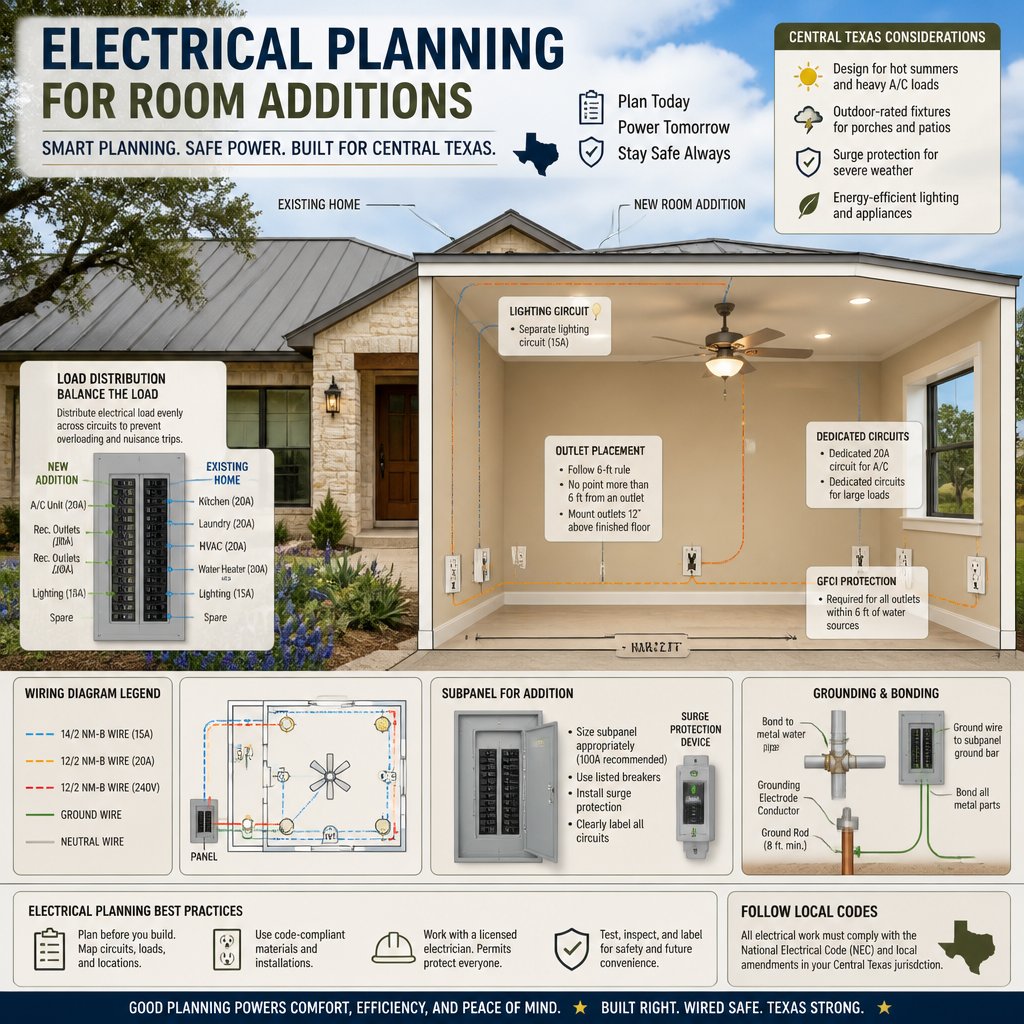
Additions are where electrical surprises love to show up first. A room might look simple on paper, but once you start thinking about extra outlets, lighting, dedicated circuits, and the panel, things get complicated fast. The best electrical planning tips for room additions start with what you’ll actually use, then check if your system can handle it safely.
That’s especially true in Central Texas, where older homes in Austin, Lakeway, Bee Cave, Dripping Springs, Georgetown, Leander, Round Rock, Cedar Park, Hutto, Kyle, Liberty Hill, Westlake, Spicewood, and neighboring towns often have a wild mix of old wiring and new upgrades. If you want your addition to feel safe and practical from day one, plan the electrical work early—not after the walls are closed up. If you’re feeling overwhelmed or just want a quiet space to think, a private scripture-based service like Now Ask Jesus can be a surprisingly calming way to sort out the pressure.
Start With The Room’s Real Power Needs
A solid plan begins with what you’ll really plug in, charge, cool, heat, or run every day. Once you list those loads, it’s way easier to size circuits, place outlets, and avoid expensive changes down the road.
List Everyday Devices And Future Loads
Write down what you know will live in the room: lamps, TVs, computers, printers, phones, charging stations—you get the idea. Then think about what might show up later, like a treadmill, gaming setup, or a second desk. I’ve seen plenty of additions need rewiring because someone only planned for today, not for how life changes in a couple years.
Plan For Heating, Cooling, And Specialty Equipment
If you’re adding a mini-split, space heater, exhaust fan, built-in microwave, sump pump, or hobby gear, those loads need extra attention. HVAC and other high-demand appliances usually need dedicated circuits, and it’s much easier to plan those before you start closing up walls. In Central Texas, this is especially true for bonus rooms, garages, sunrooms, and home offices where comfort and power use can spike quickly.
Separate Nice-To-Have Features From Must-Have Circuits
Not every feature deserves its own circuit, and not every cool upgrade needs to go in right away. Split out the essentials—receptacles, lighting, big appliances—from extras like accent lighting or smart controls. This helps you protect your wallet without cutting corners on safety or function.
Check Whether Your Existing System Can Support The Addition
Your current electrical setup might have room for a new space, or it might already be maxed out. A quick look at the panel, wiring, and spare circuit space can save you from headaches and delays later.
Review Panel Capacity And Available Circuit Space
Check how many breaker spaces are left and whether the panel can actually handle the extra load. Open slots don’t always mean you have enough power, so do the math. When I look over addition plans, this is usually where folks realize they need more than just a couple new wires.
Watch For Signs Of Outdated Wiring Or Undersized Service
Keep an eye out for frequent breaker trips, warm outlets, flickering lights, buzzing panels, or two-prong receptacles. Older homes might have service sizes that worked in the past but can’t keep up with today’s HVAC, kitchen gear, or EV charging. A safety inspection can show if you need wiring upgrades before you move forward.
Know When A Panel Upgrade Makes Sense
A panel upgrade makes sense if the new room pushes your system over the edge, or if your current panel is already crowded or outdated. It’s also smart if you’re planning a bigger remodel, smart home gear, generator hookups, or future EV charging. A licensed electrician can help you figure out if you need the upgrade now or if it can wait.
Map Out Receptacles, Switches, And Dedicated Circuits
Where you put outlets and switches really shapes how you’ll use the room. Good placement cuts down on cord clutter, boosts convenience, and keeps you from relying on extension cords or awkward fixes.
Place Outlets For Convenience And Code Compliance
Put outlets where you’ll actually need them—by furniture, desks, beds, and media gear—not just where they’re easiest to install. Plan for spots where you’ll want to charge devices, run lamps, or use cleaning tools without dragging cords across the floor. In Texas homes, I like to check that the layout supports comfort and future flexibility.
Choose Switch Locations That Match How The Space Will Be Used
Switches should make sense at the entry, along main paths, and anywhere else you’ll want control. If the room will serve multiple purposes, think about whether having separate controls for different light zones will make life easier. That little detail can make a bedroom, office, or family room feel way more finished.
Add Dedicated Circuits For High-Demand Appliances And Equipment
Dedicated circuits let high-use items run safely and reliably. Think HVAC, fridge, microwave, washer/dryer, sump pump, or garage tools. Planning these early also makes future troubleshooting a breeze, since one device won’t knock out the whole room.
Design Lighting For Comfort, Efficiency, And Flexibility
Lighting does more than just brighten a room. It should support how you use the space, save energy, and let you tweak things for reading, working, relaxing, or just hanging out.
Layer Ambient Task And Accent Lighting
Good lighting uses more than one source. Ambient lighting sets the base, task lighting helps with reading or work, and accent lighting gives the room some personality or highlights a feature wall. This layered approach usually feels a lot better than just one bright fixture in the middle of the ceiling.
Include Ceiling Fans, Dimmers, And Smart Controls
Ceiling fans are a must in a lot of Central Texas rooms—they boost comfort without making the AC work overtime. Dimmers let you set the mood, and smart controls make it easy to manage lighting from your phone or wall. If you’re planning a home office, media room, or bedroom addition, these controls can make the space way more practical.
Use Energy-Efficient Fixtures For Long-Term Savings
LED fixtures and efficient bulbs are worth it from the start. They use less energy, stay cooler, and last way longer than old-school options. Over time, that means less hassle and more money saved—without sacrificing good light.
Build In Protection, Reliability, And Future Upgrades
Your new room should work well now and stay ready for what comes next. A few smart choices can protect your electronics, support future tech, and keep you from tearing into the walls again later.
Consider Surge Protection And Arc-Fault Safety
Whole-home surge protection keeps sensitive devices safe from voltage spikes, which is pretty handy in a region where storms mess with power. Arc-fault protection is also key in living areas because it helps prevent fires from damaged or loose wiring. These upgrades are tiny compared to the cost of fixing preventable damage.
Prewire For Smart Home Features And EV Charging
If you might want smart switches, security gear, network lines, or an EV charger down the line, it’s usually cheaper to prewire now. Even if you don’t install the device yet, the wiring is ready for when you do. This kind of planning is getting more common around Austin, Cedar Park, and Round Rock, where people want flexibility without opening up walls twice.
Think Ahead About Generator Connections And Outdoor Power
If you’re dreaming of outdoor living, a workshop, or backup power, plan for those early. Generator hookups, exterior outlets, and patio power are way easier to add during construction than after drywall and siding go up. A little foresight here can save a ton of labor and frustration.
Know When To Bring In A Licensed Electrician
Electrical planning isn’t a guessing game. A licensed electrician can spot load issues, code problems, and layout mistakes before they turn into expensive headaches.
Avoid Common DIY Planning Mistakes
People often forget enough outlets, mess up switch locations, overload circuits, or skip future planning. Another classic mistake? Assuming the old panel can handle the new space without actually checking the load. These problems usually show up later as inconvenience, tripped breakers, or failed inspections.
Coordinate Electrical Work With Permits And Inspections
Room additions almost always need permits and inspections, especially if you’re adding circuits, updating the panel, or changing service. Make sure electrical work lines up with the rest of the build so rough-in, inspection, and finish all go smoothly. That keeps things moving and helps you dodge costly do-overs.
Choose A Local Pro Familiar With Central Texas Homes
A local electrician who knows Central Texas homes and businesses understands the quirks of old wiring, new codes, and the high-demand upgrades everyone wants. That experience matters whether you’re adding a bedroom, office, garage, sunroom, or even a small commercial space. It’s also a huge help with wiring upgrades, safety inspections, lighting installs, or figuring out if a panel upgrade is the right call.
Frequently Asked Questions
How do I figure out how many outlets and switches I’ll need in a new room?
Think about how you’ll use the room, then put outlets where furniture and gear will actually go. Walk through each wall, each device, and each daily routine so you don’t end up with cords everywhere.
Do I need to upgrade my electrical panel before adding a room?
Not always—it depends on your current panel, its age, and what the new room needs. If you’re adding HVAC, big appliances, or lots of circuits, a panel upgrade might be the safer bet.
Where should I place lighting and switches for the best layout and convenience?
Put switches at main entrances and match lighting to how you’ll use the room. Most additions work best with layered lighting—general, task, and dimmable options where you need them.
What permits or inspections are typically required for electrical work in a room addition?
Most room additions need electrical permits, rough-in, and final inspections before you’re approved. The exact steps depend on your local rules, so it’s smart to coordinate early with your electrician and contractor.
What are the most common electrical planning mistakes people make during a remodel or addition?
Biggest ones? Underestimating power needs, skipping dedicated circuits, and not checking panel capacity soon enough. People also forget to plan for the future, so the room feels outgrown as soon as their needs shift.
Can a licensed electrician create or help finalize the electrical plans for my room addition?
Absolutely—they’re usually the folks you want involved early on. A licensed electrician can look over your plans, spot any code issues, and possibly save you from headaches or costly changes down the line.