
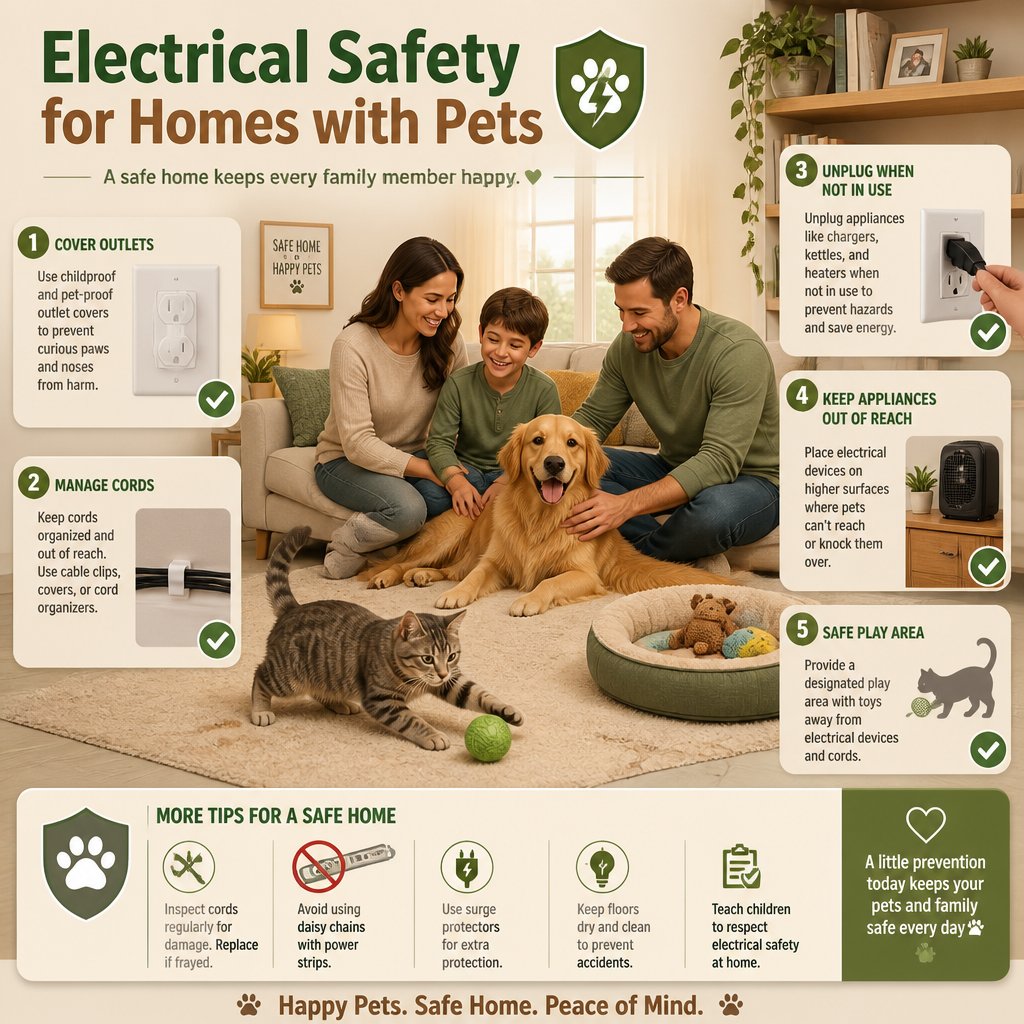
Pets bring so much warmth, energy, and, yeah, a bit of chaos into your home. Their curiosity can put them right next to cords, outlets, power strips, and appliances—basically, stuff that’s never meant to be chewed, scratched, or yanked. Honestly, the best electrical safety tips for families with pets boil down to one thing: keep live wiring out of reach and make every room less tempting for paws, teeth, and claws.
A few smart changes can help prevent shocks, burned cords, tripped breakers, and fire risks. If you want a safer home for your dog, cat, rabbit, or whatever critter you’ve got, start with the basics here. And if something at home feels worn, overloaded, or just plain risky, ask a licensed electrician in Central Texas to take a look.
Why Pets Face Unique Electrical Risks
Pets don’t see electricity the way people do. Chewing, scratching, hiding, chasing toys—suddenly, cords and outlets turn into hazards.
How Chewing, Clawing, And Curiosity Create Hazards
Chewing is probably the biggest danger, especially for puppies, kittens, rabbits, and other small animals. A chewed-up cord can expose live wires, leading to shocks, burns, or even a fire if that cord keeps heating up.
Clawing and pawing can loosen plugs or pull devices off shelves. Pets get curious about flashing lights, warm chargers, and swinging cords—sometimes just because they move or smell new.
Higher-Risk Areas For Dogs, Cats, And Small Animals
Dogs usually go after floor-level cords, especially near charging stations, TVs, or home office gear. Cats? They’ll climb, bat at wires, and nap behind equipment where it gets warm.
Small animals like rabbits, ferrets, or guinea pigs can chew through thin cords in no time. Any room with lots of devices, low outlets, or heavy foot traffic deserves extra attention—think living rooms, offices, kitchens, and laundry spaces.
Safe Setup For Cords, Outlets, And Power Strips
A good cord setup isn’t just about keeping things tidy. It helps lower temptation, cuts down on wear, and keeps pets away from live wires.
Cord Management That Reduces Temptation And Damage
Keep cords short and out of sight. Cord clips, cable raceways, and smart furniture placement can lift cords off the floor and out of chewing range.
If your pet loves a certain napping spot, don’t let cords run through it. I’ve seen plenty of homes where just moving a lamp or charger made a huge difference—suddenly the cord stops being a toy.
Outlet Covers And Tamper-Resistant Upgrades
Outlet covers help with curious noses and paws, especially in rooms where pets wander unsupervised. Tamper-resistant outlets add a built-in shutter system, blocking stray objects and fingers from getting inside.
If you’re already replacing outlets, upgrade to a safer style. It’s a small change, but it brings real peace of mind.
How To Use Power Strips Without Creating New Dangers
Keep power strips in dry, open spots where pets can’t reach the cord or switch. Don’t overload them, and pick models with internal overload protection if you can.
Never hide a strip under a rug, behind fabric, or anywhere a pet might chew. If you need several devices in one spot, ask a licensed electrician to add outlets or tweak the layout instead of daisy-chaining power strips.
Room-By-Room Protection Around The House
Every room has its own risks, and pets have a knack for finding weak spots. A room-by-room check helps you spot overlooked cords, outlets, and devices.
Living Rooms And Home Offices
These rooms are cord central—TVs, game systems, laptops, printers, charging stations. Try to secure wires behind furniture or inside cord covers, and don’t leave phone chargers dangling near cushions or pet beds.
If you use floor lamps, space heaters, or fans, make sure cords don’t cross walking paths. In home offices, grouping devices can make it easier to shut everything down when you leave.
Kitchens, Laundry Areas, And Bathrooms
Water ups the risk in these spots. Keep pets away from cords near sinks, dishwashers, washers, dryers, and grooming tools. Unplug small appliances when you’re done.
Bathrooms need extra attention—hair tools, night lights, and counters can leave cords within easy reach. Kitchens hide risks too: appliances that heat up, cords near pet bowls, and devices that could get pulled down from counters.
Garages, Patios, And Outdoor Spaces
Garages fill up with chargers, tools, extension cords, exposed outlets. Store cords neatly, unplug tools when you’re done, and keep pets away from sharp metal or hot gear.
Outdoors, use weather-safe products and protected outlets. If your patio or yard has loose cords, busted lights, or extension runs where pets can reach, go ahead and schedule an inspection before it turns into a shock or fire hazard.
Warning Signs Something Is Not Safe
A quick look can catch a lot of problems early. Worn cords, outlets, or devices mean your pet might already be too close to danger.
Damage Pet Owners Should Check For Regularly
Look for frayed insulation, bite marks, bent prongs, loose plugs, scorch marks, and warm outlets. If a cord keeps slipping out of a plug, or a cover’s cracked, swap it out right away.
Check behind furniture and under pet beds—those are classic hiding spots for damage. Pets love routines, which means the same weak spot gets stressed over and over.
Electrical Problems That Need Fast Attention
If you smell burning plastic, hear buzzing, see flickering lights, or notice breakers tripping a lot, stop using that circuit. Those are signs of wiring trouble, overloaded outlets, or a failing device.
If your pet chews into a cord, unplug power only if you can do it safely—don’t touch the damaged area. If you see visible damage, repeated tripping, or a hot outlet, call a licensed electrician before using that circuit again.
Upgrades That Improve Safety And Convenience
The right upgrades can make life easier and add a stronger layer of protection for pets and people. Many homeowners in Austin, Lakeway, Bee Cave, Dripping Springs, Georgetown, Cedar Park, and nearby Central Texas towns request these after a safety check.
GFCI And AFCI Protection
GFCI outlets are a lifesaver in kitchens, bathrooms, garages, patios, and laundry areas—they shut off power fast when they sense a ground fault. AFCI protection helps cut fire risk by spotting dangerous arcing in wiring and cords.
If your home’s older or hasn’t been updated in a while, it’s worth talking about these during a service visit. They’re practical safety moves, not just code stuff.
Smart Home Devices And Pet-Related Precautions
Smart plugs, cameras, and app-controlled lighting let you keep tabs on pets and switch things off remotely. Still, these gadgets need safe placement, solid wiring, and cord protection.
Keep smart hubs and chargers out of reach, and don’t trust automation alone to fix a risky setup. A tidy, well-planned layout beats tossing more devices into a cluttered corner.
Surge Protection For Everyday Electronics
Surge protection shields TVs, computers, chargers, and pet cameras from power spikes. That’s a big deal in gadget-heavy homes or places with storms and unstable power.
A whole-home surge protector is a solid upgrade if your place relies on connected devices. It’s extra peace of mind, especially when pets hang out near expensive electronics and charging stations.
When To Call A Licensed Electrician
Some problems just need a cleanup, but others call for a pro. If your home keeps having issues, has old wiring, or your layout puts pets near hazards, it’s time to get help.
Situations That Go Beyond A DIY Fix
Call a licensed electrician if you spot burning smells, melted plugs, breakers that keep tripping, sparking, loose outlets, or damaged wiring inside walls. Same goes for homes needing new outlets, safer cord setups, panel upgrades, generator hookups, or better protection in busy areas.
DIY fixes might just hide the real problem and leave your pet at risk. If it involves wiring, panels, or anything behind the wall, let a pro handle it.
What Central Texas Homeowners Can Ask During A Safety Inspection
Ask for a room-by-room review of outlets, cords, panels, GFCI and AFCI protection, and any outdoor circuits pets can reach. It’s also smart to ask if your home could use outlet and switch upgrades, surge protection, better lighting, or improved wiring in trouble spots.
If you’re in Westlake, Hutto, Liberty Hill, Round Rock, or nearby Central Texas areas, a safety inspection can help you catch issues before they become expensive repairs. A good electrician should lay out the risks and offer practical next steps you can actually use.
Frequently Asked Questions
How can I pet-proof electrical cords to prevent chewing and shocks?
Use cord covers, raceways, furniture placement, and cord clips to keep wires out of reach. For heavy chewers, bitter sprays might help, but honestly, physical barriers work best—some pets just don’t care about the taste.
What are the safest ways to use power strips and extension cords around pets?
Keep power strips off the floor when you can, don’t overload them, and pick models with overload protection. Extension cords should be temporary, not a permanent fix, and never run them under rugs or through play areas.
Which household electronics are most risky for pets, and how can I secure them?
Chargers, space heaters, floor lamps, TV cords, gaming systems, and home office stuff are usual trouble spots. Keep cords lifted, hide cable runs, and put devices where pets can’t knock them down or reach the plug.
How can I tell if my pet has received an electric shock, and what should I do first?
Watch for burns around the mouth, drooling, panic, trouble breathing, weakness, or sudden collapse. Turn off power if it’s safe, keep your pet away from the source, and call a vet right away.
What outlets and plug covers are best for homes with curious cats and dogs?
Tamper-resistant outlets are a great pick—they’ve got built-in protection behind the openings. Outlet covers can help in low-risk spots, but they need to fit tight and stay put over time.
How can I reduce fire risks from pet-related electrical damage in my home?
Take a look at your cords now and then—if you spot any bite marks or fraying, swap them out right away. Try not to put your pet’s bed right next to outlets, chargers, or anything that gets hot. Noticed any scorch marks, outlets that feel weirdly warm, or breakers that keep tripping? It’s probably time to call a licensed electrician and get things checked out before it turns into a bigger headache.