
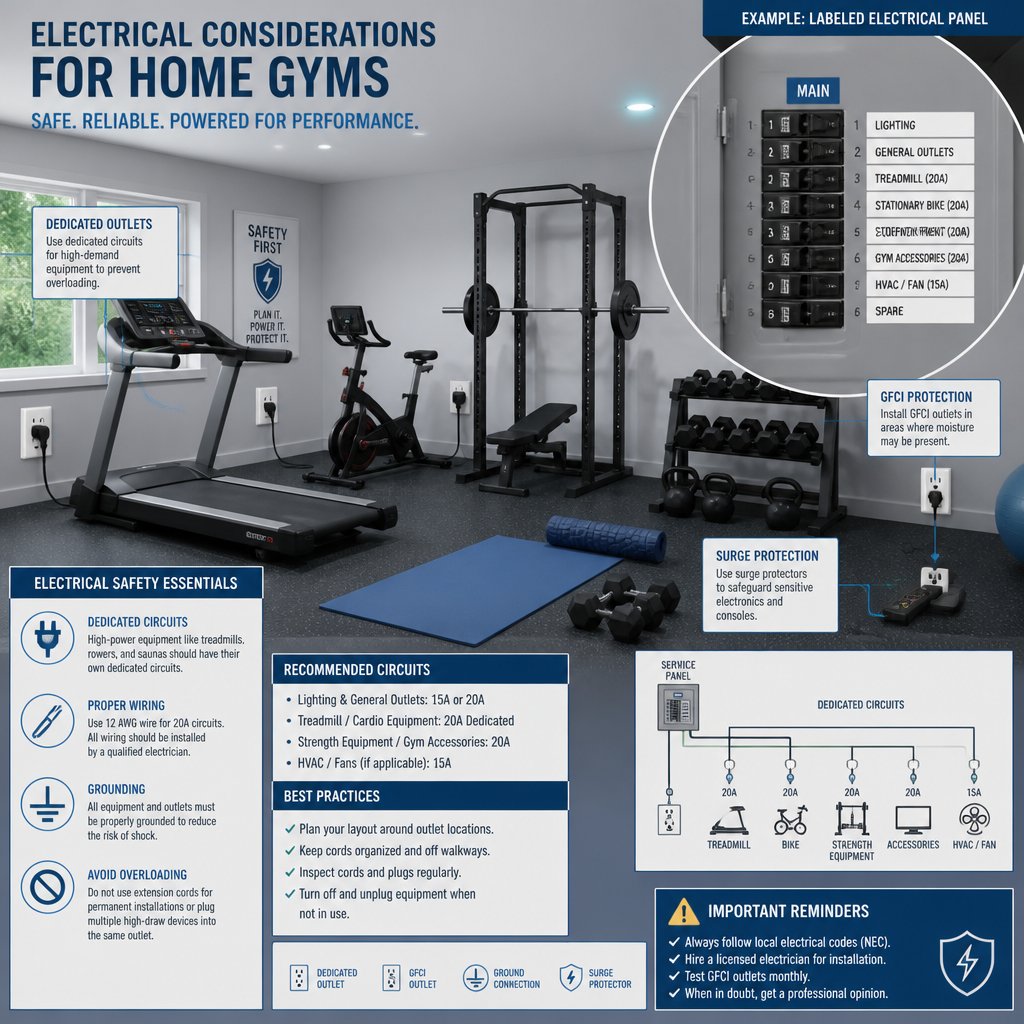
Home gyms make life easier, but honestly, it’s so easy to forget about the electrical side until you’re tripping breakers mid-workout. One treadmill, a rower, TV, fan, maybe a sound system—none of it seems like much on its own, but together? That can really push a room’s wiring harder than you’d think. The safest home gym setup starts with matching your equipment to the right circuits, outlet placement, and lighting before you even buy the machines.
This planning matters even more if your gym’s going in a garage, basement, or some bonus room. Those areas often already have other stuff running on them, and older wiring might not be ready for the constant demand. If you want a setup that doesn’t leave you cursing at the circuit breaker, it’s smart to think about power first and equipment second.
If you’re in Austin, Lakeway, Round Rock, Cedar Park, or anywhere nearby in Central Texas, a quick electrical review can save a lot of trouble. Still picking out equipment or just sketching out your gym? That’s the best time to get a licensed electrician involved.
Power Needs Before You Buy Equipment
Home gym equipment always looks simple online, but the actual power demand? It can be all over the place. Before you hit “add to cart,” check the electrical load for each machine and factor in the smaller stuff you’ll run at the same time.
Typical Wattage for Cardio and Strength Machines
Treadmills usually pull the most power, especially when starting up or using the incline. Most home models run on a standard 120V circuit, but some bigger or commercial-style ones need more. Rowers, ellipticals, and bikes tend to use less, although screens, resistance motors, and charging ports add up.
Strength machines with motors, adjustable benches, or powered racks can draw more than people expect, too. Always check the manufacturer’s electrical specs before buying—don’t just hope for the best when the delivery truck shows up.
Shared Loads From TVs, Fans, and Speakers
A gym isn’t just the big machines. TVs, fans, Bluetooth speakers, phone chargers, smart displays—they all share the same circuit. Each one seems light, but together they can push a borderline circuit over the edge.
When I plan a gym, I count every outlet I’ll use during a workout. It’s a reality check that saves headaches later.
Why Manufacturer Electrical Specs Matter
Manufacturer specs spell out the voltage, amperage, and plug type your equipment needs. They take the guesswork out of planning and help you avoid common home gym electrical headaches. If a machine wants a dedicated circuit, don’t ignore that.
Ignoring specs can mess with warranties and safety. Plugging a treadmill into the wrong outlet or forcing a rower onto an overloaded circuit can wear out the gear or even create a hazard. If the label or manual doesn’t make sense, just ask a licensed electrician—they’ll read the load right before you install anything.
Circuits, Amperage, and Panel Capacity
Your home gym should fit comfortably within your home’s electrical system—or you’ll need to upgrade. That means checking circuit size, breaker capacity, and whether your panel has room for new gear.
When a Dedicated Circuit Makes Sense
You’ll want a dedicated circuit if one machine draws a lot of power or if you’d rather not share with other stuff in the room. Treadmills, rowers, mirrors with lighting, entertainment systems—these all benefit from isolated power. Dedicated circuits also help avoid trips when someone runs a vacuum or dryer elsewhere.
If you’re using the gym daily, a dedicated circuit is usually the way to go. It’s more reliable and troubleshooting is a breeze.
Signs Your Existing Panel May Be Undersized
If your lights dim when equipment starts, breakers trip often, or your panel looks crowded, your electrical system could be maxed out. Older homes with 100-amp service or original panels weren’t built for today’s loads. Add in fitness equipment, smart TVs, upgraded lighting, or a mini-split, and you might hit the limit.
A full panel also makes future projects harder. If you’re thinking about an EV charger, hot tub, generator, or shop tools, plan ahead.
How Breaker Trips Point to Load Problems
A breaker trip means something’s not right. Maybe the circuit’s overloaded, the equipment surges at startup, or the wiring isn’t sized for the demand. Don’t ignore repeated trips, even if everything seems fine after a reset.
If that breaker trips more than once, consider it a warning. An electrician can test the circuit, check the load, and spot loose connections or worn parts before they become a bigger headache.
Outlet Placement and Wiring Upgrades
The right outlets make your gym safer and way less frustrating. Good placement keeps cords short, cuts down clutter, and means you’re not stuck with sketchy workarounds.
Best Locations for Treadmills and Bikes
Put outlets near the equipment, but don’t put them where cords get stepped on. Treadmills work best with outlets off to the side or behind, leaving enough slack for movement. Bikes and rowers usually need less space, but a nearby plug for screens or charging is still handy.
Picture how you’ll move through the room. If a cord’s across a walkway, you probably need to rethink the outlet location.
Avoiding Extension Cords in Workout Areas
Extension cords just don’t belong in home gyms. They’re trip hazards, can overheat, and usually hide the real issue—a lack of outlets. For higher-draw machines, they’re downright risky.
If you don’t have an outlet where you need it, just add one. It keeps the room cleaner and the setup safer.
When Older Wiring Should Be Evaluated
Check older wiring if you see worn outlets, two-prong receptacles, warm faceplates, or flickering lights. Garages, basements, and bonus rooms often have hidden issues that show up fast with gym equipment.
If your house is older or you’re unsure when the last electrical update happened, get it checked before you install anything. Central Texas homes with mixed-age remodels can be especially tricky.
Lighting, Airflow, and Comfort Features
A good gym needs more than just powered machines. Bright lighting, steady airflow, and simple controls make the space safer and more pleasant to use.
Choosing Bright, Glare-Controlled Lighting
You want enough light to see clearly, but not so much that you’re blinded by glare on mirrors or screens. LED fixtures are a solid pick—they’re energy efficient and don’t heat up the room. Soft, even lighting makes the space more inviting, which honestly helps with sticking to routines.
If you’re adding recessed lights or swapping fixtures, aim for coverage that reaches the whole room. Dark corners make a gym feel cramped and less safe.
Ceiling Fans and Ventilation Considerations
Ceiling fans help move air and keep workouts comfortable. In garages, basements, or closed-off rooms, ventilation matters even more—heat and humidity build up fast. A fan won’t replace real cooling, but it helps.
If the room gets stuffy, think about whether a fan, exhaust setup, or dedicated HVAC is best. In places like Georgetown, Leander, and Dripping Springs, summer heat makes this a bigger deal than you might guess.
Smart Controls for Convenience and Efficiency
Smart switches, dimmers, timers, and app controls make the gym easier to use. Turn on lights before a workout, set a fan schedule, or shut everything down from your phone. That kind of control helps cut wasted energy, too.
For a lot of people, smart controls are a small upgrade that pays off every day. They keep things simple and help you stick with your routine.
Safety Risks Homeowners Should Not Ignore
Home gyms put steady demand on a room, so small electrical issues can turn into big problems quickly. Watch for heat, moisture, and equipment stress before safety is at risk.
Overloaded Receptacles and Heat Buildup
If an outlet feels warm, looks scorched, or plugs fit loosely, stop using it. Those are signs of trouble—poor connections or too much load. Heat around outlets is a big red flag.
Don’t stack power strips or use multi-plug adapters to “fix” the room. Start with proper wiring and enough outlets in the right places.
Moisture Concerns in Garages and Basements
Garages and basements bring moisture, dust, and wild temperature swings. Those conditions can mess with outlets, cords, and electronics. Any room with water issues, high humidity, or a damp history should get checked before you set up gym gear.
If your gym shares space with laundry, a utility sink, or unfinished storage, be extra careful. Moisture and electricity just don’t mix, especially when equipment runs for hours.
Surge Protection for Sensitive Electronics
Modern gym gear often has touchscreens, Wi-Fi, and charging ports. Surge protectors help guard those parts from power spikes—especially if your area gets utility surges or lightning. It’s a simple step that can extend equipment life.
For bigger or pricier setups, whole-home surge protection might be worth it. That way, you’re protecting the gym and everything else plugged in.
When to Call a Licensed Electrician
Some gym projects sound easy but really shouldn’t be DIY. If your setup needs new wiring, panel work, or the room already looks stressed, call a licensed electrician.
Projects That Need Professional Installation
Bring in a pro for new circuits, moving outlets, panel upgrades, dedicated equipment plugs, and any wiring in unfinished or damp spaces. Same goes for ceiling fans needing new supports or switch changes for your gym layout. If you’re adding an EV charger, generator hookup, or smart controls too, it’s smart to bundle the work.
That way, the whole system works together and you’re not calling someone back in a month.
Benefits of a Safety Inspection Before Setup
A safety inspection can catch loose connections, outdated wiring, undersized circuits, and panel issues before your gear arrives. It also helps you avoid annoying breaker trips once everything’s set up. In my experience, a quick inspection is the easiest way to dodge expensive fixes.
Plus, it gives you peace of mind—you know the space is actually ready for regular use, not just “done” on the surface.
What Central Texas Homeowners Should Ask During an Estimate
Ask if the electrician knows home gym setups, panel upgrades, outlet and switch changes, surge protection, and lighting installs. If you’re in Austin, Spicewood, Bee Cave, Lakeway, Dripping Springs, Georgetown, Leander, Round Rock, Cedar Park, Kyle, Liberty Hill, Westlake, Hutto, or nearby, find someone who’s familiar with local homes and common upgrades.
Remember to ask about permits, inspection needs, and whether the quote includes future-proofing for more equipment. A clear estimate now saves a ton of stress later.
Frequently Asked Questions
How many dedicated circuits do I need for common home gym equipment?
Most home gyms get by with one dedicated circuit for a single high-draw machine, but bigger setups might need more. If you’re running a treadmill, rower, TV, fan, and charging stations all at once, separate circuits are usually safer.
Should I install 120V or 240V outlets for treadmills, rowers, or other machines?
Most residential treadmills, rowers, and bikes use 120V, but some bigger or commercial-style models need 240V. Always check the label and manual before buying—your outlet has to match the equipment.
What size breaker and wire gauge are typically needed for high-draw fitness equipment?
Most gym circuits run on a 20-amp breaker, with the wire size tailored to the equipment and outlet. The right choice really depends on your machine, how far the wiring runs, and, of course, whatever your local code says. Honestly, this is one of those times when you really want a professional to take a look.
How can I tell if my existing outlets can handle a home gym without tripping breakers?
If your outlets feel warm, breakers trip here and there, or the lights flicker when you fire up your equipment, your circuit might not be up to the task. It’s a good idea to have a licensed electrician check things out—they can measure the load and let you know if your outlets are actually safe for regular gym use.
Do I need GFCI or AFCI protection for outlets in a garage or basement gym?
A lot of garages and basements need GFCI protection for outlets, and some places require AFCI too, depending on the room and your local codes. The rules can get a bit confusing and honestly, they change from place to place. Best to double-check before you run any new wiring.
What should I consider for lighting, ventilation fans, and noise control from an electrical standpoint?
Think about lighting that actually reaches every corner—nobody wants to work out in a dim cave. Go for a fan or some kind of ventilation you can trust to keep running during those longer sessions (and that won’t overheat). Make sure you can reach the controls easily, too—nobody likes fumbling around after a tough set. If noise bugs you, maybe look at dimmers, quieter fans, or smart switches. They can make things more comfortable, and you won’t end up with a wall full of random switches.