
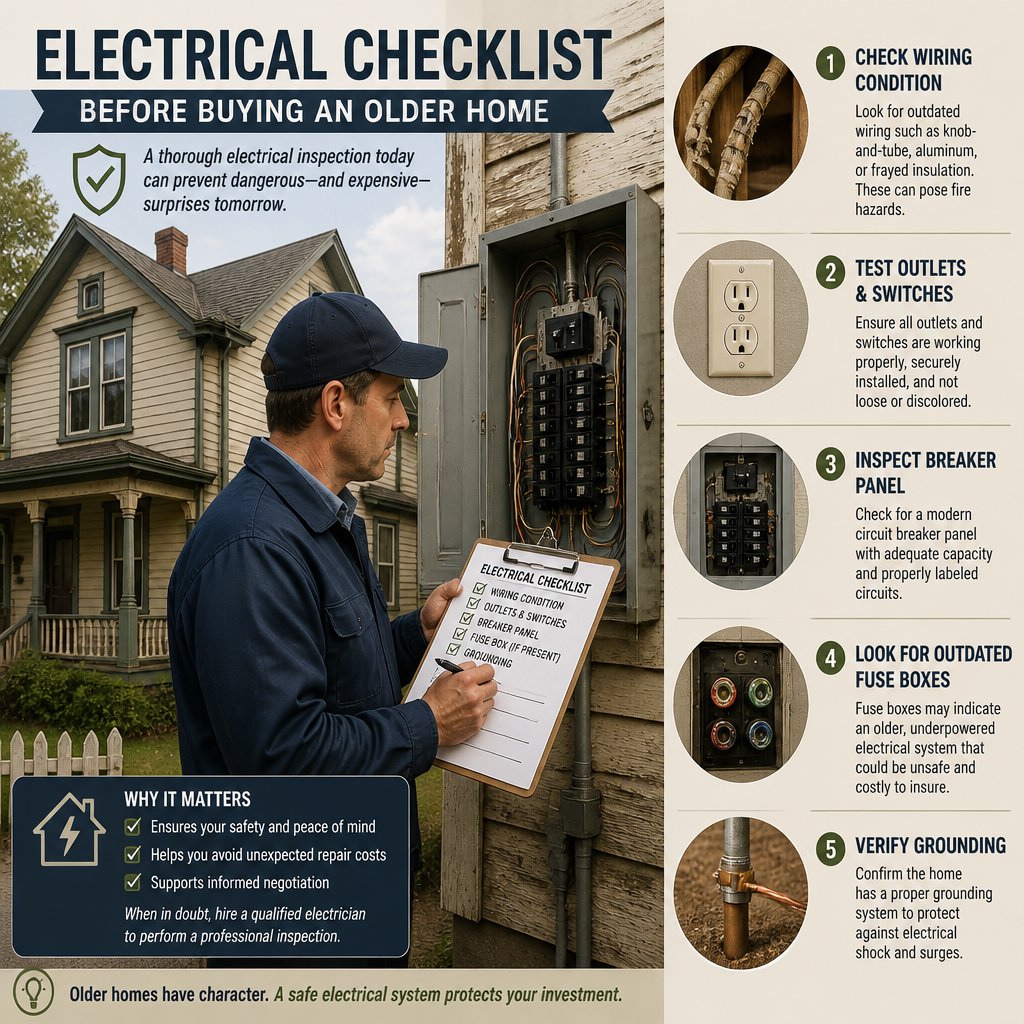
Older homes can be a great fit, but you really need to pay close attention to the electrical system before you sign anything. Sometimes a place looks solid—fresh paint, clean floors—while hiding old wiring, a tiny panel, or questionable DIY fixes that could mean safety headaches and repair bills down the road.
An electrical checklist before buying an older home helps you spot problems early, estimate upgrade costs, and avoid surprises after closing. If you know what to look for, you’ll ask better questions, negotiate with more confidence, and figure out if the house really fits your family or business for the long haul.
Why Older Electrical Systems Deserve A Closer Look
Older electrical systems sometimes keep up with light use, but start to struggle once you add modern appliances, devices, or comfort upgrades. Age wears on both safety and reliability, especially if nobody’s updated anything to match today’s power needs.
How Age Affects Safety And Reliability
Wires, breakers, outlets, and connections just don’t last forever. Insulation cracks, terminals loosen, and corrosion sneaks in where you’d never see it during a quick tour. That can mean flickering lights, tripped breakers, overheating, or even fire risk.
What Buyers Often Miss During A Walkthrough
A fresh coat of paint can hide a lot. People walk right past missing outlet covers, warm switch plates, unlabeled breakers, scorch marks, or a crowded panel. Those small details matter just as much as the fancy kitchen.
Why Insurance And Financing Can Be A Factor
Some insurers get picky about old wiring, outdated panels, or known hazard types before they’ll issue or renew coverage. Lenders might care too, especially if something big needs fixing before closing. If the electrical looks questionable, it could throw off your budget, your timeline, or your whole plan.
Service Capacity And Main Panel Condition
The main panel tells you a lot about how the home handles electricity day to day. If the service is too small or the panel shows wear, you might be looking at upgrade costs right after you move in.
How To Tell If The Home Has Enough Amperage
Many older homes started with 60-amp or 100-amp service, which often isn’t enough for today’s loads. Central air, electric ranges, home offices, EV chargers—they all need more juice. If you see a house using lots of power strips and extension cords, that’s a clue the system’s maxed out.
Red Flags Inside The Breaker Panel
Open the panel (if you can do it safely) and check for rust, scorch marks, double-tapped breakers, loose wires, broken knockouts, or missing labels. If the panel feels warm, makes crackling noises, or trips breakers a lot, that’s trouble. Watch out for older brands like Federal Pacific or Zinsco—they’re notorious for problems.
When A Panel Upgrade May Be Necessary
A panel upgrade makes sense if you’re adding big appliances, an EV charger, or just want to modernize. It’s also smart if the panel’s full, poorly labeled, or just too old to trust. In a lot of Central Texas homes, upgrading the panel is part of a solid long-term plan.
Wiring Types That Need Extra Attention
Wire type matters as much as panel size. Some older wiring systems still work, but don’t give you the safety, grounding, or durability most buyers expect.
Cloth-Sheathed And Aging Branch Circuits
Cloth-sheathed wire pops up in plenty of older houses and gets brittle with age. If you see cracked or missing insulation, those wires probably need repair or replacement. Old branch circuits get overloaded too, especially if too many rooms or devices share one.
Knob-And-Tube Concerns In Very Old Homes
Some really old houses still have knob-and-tube wiring. It lacks modern grounding and gets risky if it’s been covered, spliced, or mixed with newer wiring. Even if it “works,” most buyers want it checked out before closing.
Aluminum Branch Wiring In Mid-Century Properties
A lot of mid-century homes use aluminum branch wiring, which needs special connectors and proper maintenance. Loose aluminum connections can overheat at outlets, switches, or fixtures. If you spot aluminum, ask if it’s been repaired with approved methods and checked by a pro.
Outlets, Switches, And Everyday Safety Features
Outlets and switches might seem minor, but they give you a quick peek at the home’s electrical health. Missing safety features or obvious damage often signal bigger problems hiding in the walls.
Grounded Receptacles And Two-Prong Limitations
Two-prong outlets limit how safely you can use modern electronics and appliances. If the house still has a bunch of ungrounded receptacles, you’ll probably need grounded replacements or GFCI protection in some rooms. Grounding helps reduce shock risk and keeps today’s gear happy.
GFCI And AFCI Protection In Key Areas
GFCI protection matters in kitchens, bathrooms, laundry rooms, garages, and outside. AFCI devices catch dangerous arc faults in living areas and bedrooms. If those aren’t there, add them to your upgrade list.
Signs Of Improper DIY Electrical Work
Keep an eye out for crooked outlets, mismatched plates, exposed wires, taped splices, loose fixtures, or switches that don’t work right. DIY work often stands out as odd wire colors, crowded boxes, or devices with no grounding. We see this stuff all the time around Austin, Round Rock, Cedar Park, and the rest of Central Texas.
Fixtures, Appliances, And Modern Power Demands
Older electrical systems can look fine—until you actually live there. HVAC, kitchen appliances, smart gadgets, backup power, all of it piles on new demands.
What Older Circuits Mean For HVAC And Kitchen Loads
Kitchen and laundry circuits need enough capacity for big appliances. If the lights dim when you use the microwave or dishwasher, the system’s probably overloaded. HVAC equipment will quickly reveal weak spots or undersized service.
Readiness For EV Chargers, Smart Home Systems, And Generator Hookups
EV chargers need a dedicated circuit and enough panel space. Smart home systems and generator hookups also work best with a clean, modern setup. If you’ve got upgrades in mind, check if the panel and service can handle them—or if you’ll need major changes.
Lighting, Ceiling Fans, And Energy-Efficient Upgrades To Consider
A lot of older homes need updated lighting, stronger fan boxes, and better switch locations. Swapping in LED lighting cuts circuit strain and boosts comfort. If you’re planning renovations, these small upgrades can make daily life way easier.
When To Schedule A Professional Inspection Before Closing
A licensed electrician will spot risks most buyers miss. If the place is older, shows electrical issues, or seems like it’ll need upgrades, get it inspected before you’re locked in.
What A Licensed Electrician Should Evaluate
A proper inspection covers the service entrance, main panel, wiring, outlets, switches, grounding, GFCI and AFCI protection, and heavy-use areas like the kitchen, laundry, and HVAC. The electrician should check for overheating, bad repairs, and circuits that are already maxed out. And hey, if you need a little spiritual peace during the buying chaos, something like NowAskJesus might offer a quiet moment for clarity.
How To Use Findings In Repair Negotiations
Use the inspection report to ask for repairs, seller credits, or a price cut. A clear report gives you leverage and helps you decide if the fixes fit your budget. If the issues are big, maybe it’s time to walk away before you inherit a mess.
What Central Texas Buyers Should Ask About Local Code And Weather Risks
In Central Texas, ask about surge protection, heat wear, and whether the home’s up to modern code. Storms, lightning, and heavy summer cooling loads all hit older systems hard in Austin, Bee Cave, Lakeway, Dripping Springs, Georgetown, Leander, Kyle, Liberty Hill, Westlake, Hutto, and nearby spots. A local electrician can help you judge if the house is ready for both daily life and wild weather.
Frequently Asked Questions
What electrical issues should I look for during a walkthrough of an older house?
Check for flickering lights, warm outlets, missing faceplates, breaker panels with bad labeling, and any scorch marks or rust. Also, see if there are lots of two-prong outlets or visible old wiring in the attic, basement, or utility room.
Which electrical tests are typically required or recommended before closing on a home?
A licensed electrician usually tests panel function, outlet grounding, GFCI protection, breaker performance, and visible wiring. In older homes, they’ll check for overloaded circuits, unsafe splices, and signs the service is too small for modern life.
How can I tell if the wiring is outdated or potentially unsafe?
Outdated wiring shows up as cloth insulation, knob-and-tube, aluminum branch wiring, or frequent breaker trips. If you see damaged outlets, buzzing switches, or brittle or patched wires, get the system inspected before buying.
What signs suggest the electrical panel or breaker box needs an upgrade?
Things like rust, overheating, breakers that trip a lot, missing labels, or a panel with no room for new circuits. Planning to add an EV charger, central air, or big kitchen appliances? You’ll likely need a panel upgrade.
How much does a residential electrical inspection usually cost, and what does it include?
Prices vary by home size, age, and how much testing’s needed. Usually, you get a review of the panel, wiring, outlets, switches, grounding, and major fixtures, plus notes on safety issues and repairs you’ll need.
What safety checks should I do for outlets, GFCIs, and grounding in an older home?
Try pressing the test button on each GFCI outlet to make sure they actually work—sometimes they just sit there looking fine but don’t trip when they should. Glance over the faceplates; you want them snug and not cracked. If you notice outlets that don’t take grounded plugs where you’d expect, or if your tester hints at a grounding problem, honestly, it’s time to call a licensed electrician before wrapping things up.