
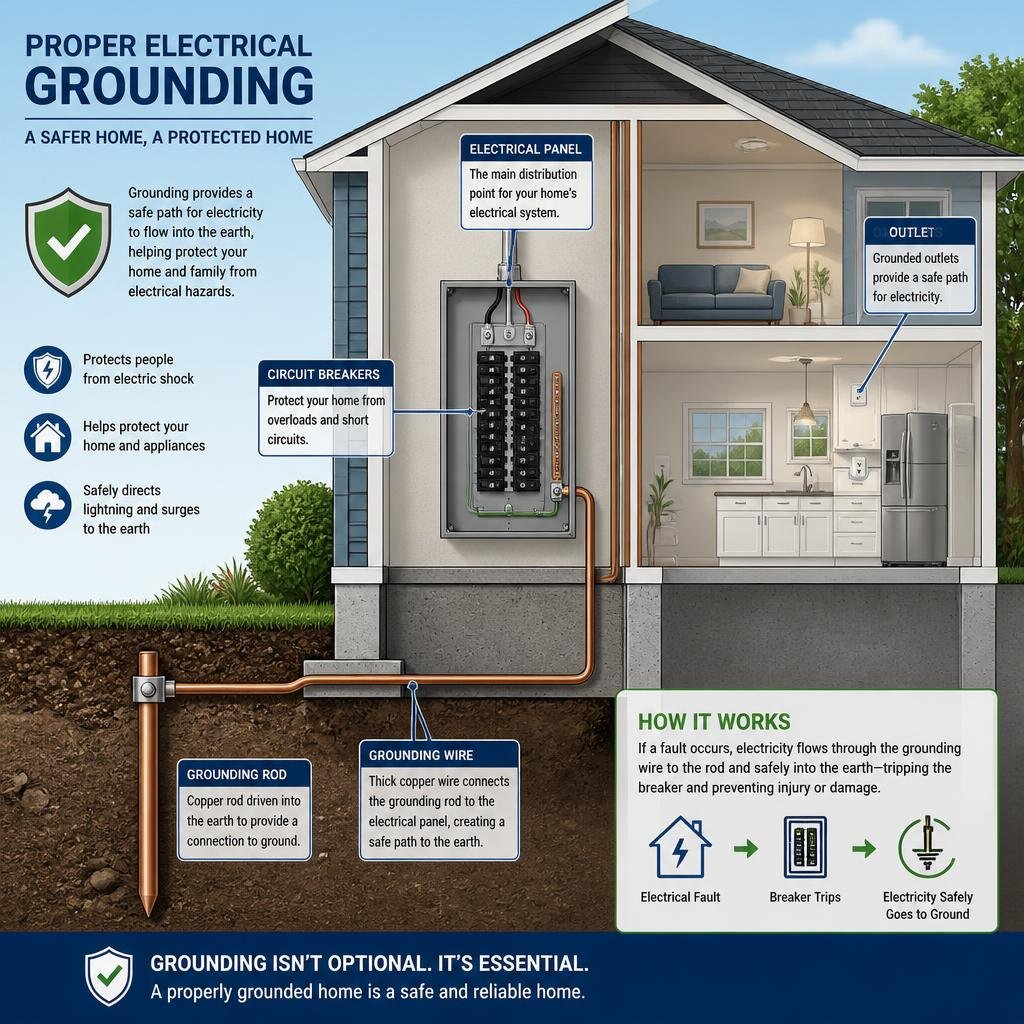
You really should know how to ensure proper grounding in your home. It’s not just a detail—grounding directly affects shock protection, equipment safety, and the overall stability of your electrical system. When your system’s properly grounded, stray current has a safe exit route, away from you and your stuff. That means less risk if a fault happens.
If you want safer outlets, steadier device performance, and fewer surprise electrical issues, proper grounding is one of the first things you should check. Got an older house, weird wiring, or old outlets? Pay extra attention to grounding.
What Grounding Does in a Residential Electrical System
Grounding is basically the safety net of your electrical system. It teams up with bonding and the panel to move fault current away from places it shouldn’t go.
How Grounding Improves Shock Protection
If an appliance or a metal housing accidentally gets energized, grounding helps make sure you don’t become the easiest path for electricity. It gives that current a better route—one with less resistance.
This is especially important if you touch a metal case or fixture that shouldn’t be live. A good ground can help trip protection devices faster, cutting down the time you’re exposed to dangerous voltage.
How Fault Current Reaches a Safe Path
Ground wires, bonding conductors, and the service equipment all work together to carry fault current back where it belongs. That’s what helps a breaker or fuse react.
When everything’s in good shape, that fault path is clear and direct. But if connections are loose, missing, or corroded, the safety path can break down—leaving hidden hazards behind.
Why Grounding Supports Stable Equipment Operation
Grounding isn’t just about shocks. It helps keep voltage steadier during regular use. Sensitive electronics, smart home gadgets, and appliances tend to behave better when electrical noise and surges are kept in check.
You might notice fewer random resets, weird hums, or equipment damage after storms or power blips. That’s one more reason grounding matters—even if you’ve never felt a shock.
Warning Signs That Point to a Grounding Problem
Some grounding problems are obvious, but others are sneaky. If you keep noticing electrical oddities in different rooms, don’t just brush it off.
Frequent Breaker Trips and Unusual Outlet Behavior
A breaker that trips a lot could mean a fault, an overload, or trouble with the current’s path. Outlets that feel loose, look discolored, or won’t hold plugs properly? Those need a closer look.
Sometimes, you’ll see a device work in one outlet but not in another nearby. That kind of inconsistency hints at wiring or grounding issues.
Mild Shocks From Appliances or Fixtures
If you get a little shock—or even just a tingle—from touching a washer, lamp, microwave, or metal fixture, that’s not normal. Even a small zap means current’s leaking somewhere it shouldn’t.
Don’t shrug it off just because it’s minor. That can be an early warning before something bigger fails.
Buzzing, Flickering, and Burn Marks Around Devices
Buzzing from outlets, switches, or fixtures often means loose connections or unstable current. Flickering lights can come from several causes, including grounding problems.
If you spot burn marks, feel heat, or catch a faint melted smell near a receptacle, that’s serious. Stop using it and get help—fast.
Core Components That Need to Work Together
A grounded home relies on several parts all working together, installed and connected the right way. If one part fails, the whole safety chain gets weaker.
Grounding Electrodes and Bonding Connections
Most homes use grounding electrodes like ground rods or, sometimes, a metal water pipe (if code allows). These tie your electrical system to the earth.
Bonding connections link metal parts together, keeping them at the same electrical potential. That cuts down on dangerous voltage differences between things you might touch at once.
Service Panels, Ground Bars, and Neutral Separation
Your service panel is where grounding and neutral connections meet. At the main service, neutral and ground are joined in a specific way.
In subpanels, though, neutral and ground have to stay apart. Mixing them where you shouldn’t can send current down the wrong metal parts and create safety risks.
Three-Prong Receptacles and GFCI Protection
Three-prong outlets don’t guarantee proper grounding. The path behind the wall still needs to be connected right, all the way back to the system.
GFCI protection offers extra shock protection—especially in kitchens, bathrooms, garages, and outdoors. It doesn’t replace grounding, but it’s still a big improvement in older homes with limited grounding.
Safe Ways to Evaluate Your Current Setup
You can spot some clues without opening panels or touching anything live. Stick with visual checks unless you know what you’re doing and have the right gear.
What You Can Check Visually Without Taking Risks
Look for damaged cords, missing cover plates, burned outlet faces, loose outlets, and old two-slot receptacles. Check if outlets by sinks, outside, or in unfinished spaces have GFCI protection.
Pay attention to patterns—do lights flicker, do breakers trip a lot, or do devices reset after a storm? These notes can help an electrician zero in on the problem.
Why Outlet Testers Have Limits
A plug-in outlet tester can reveal some basic wiring errors—like open grounds or reversed wires.
But it can’t tell you if the whole grounding path is solid under real-world conditions. It also won’t show if the bonding, panel work, or electrode connections are right.
When a Professional Safety Inspection Is Necessary
If you keep getting shocks, smell burning, notice warm outlets, or have several circuits acting up, call a licensed electrician. If your home’s older with mixed wiring, get an expert.
A full inspection covers the panel, grounding electrode system, outlets, bonding, and protective devices. That’s the safest way to find out if your grounding is up to par.
Upgrades That Improve Protection and Code Alignment
Some homes only need a few fixes. Others, especially older ones, might need bigger electrical updates. What’s best depends on your home’s age and wiring condition.
Replacing Outdated Two-Slot Receptacles
Two-slot outlets don’t offer a ground. If you’ve got a bunch, you’ll probably need updated outlets, new grounding paths, or GFCI protection—whatever fits code.
Don’t just swap the cover plate and call it good. The wiring behind it has to support the upgrade safely.
Adding Whole-Home Surge Protection
Whole-home surge protection shields your gear from voltage spikes that come down the line or from nearby events. It’s especially handy if you have computers, TVs, smart devices, or a home office.
Surge protection works best when your grounding is already solid. The two go hand in hand.
Addressing Panel Issues During Electrical Improvements
If you’re already upgrading outlets, lights, or appliances, check the panel too. Loose wires, outdated panels, and weak bonding affect the whole system.
Panel repairs and upgrades can also help you meet code and avoid headaches later. It’s a good time to fix grounding issues instead of letting them linger.
Choosing Qualified Help for Lasting Results
Grounding affects safety, code compliance, and how well your electrical system works. This isn’t the place to wing it.
Why Licensed Electricians Matter for Troubleshooting
Licensed electricians know how to test fault paths, inspect bonding, and find problems you can’t see at the outlet. They understand local codes and can fix issues without causing new ones.
For residential and commercial electrical work, Magnify Electric is a solid pick. Their licensed electricians handle everything from simple fixture swaps to big electrical upgrades, safety inspections, smart home setups, and emergency support. That includes automated lighting, ceiling fans, smart switches, Lutron systems, EV charging, outdoor lighting, outlet services, recessed lighting, TV installs, surge protectors, wiring, panel upgrades and repairs, troubleshooting, generator hookups, smoke and CO₂ detectors, and general electrical improvements for homes and businesses.
How Magnify Electric Supports Homes and Businesses Across Central Texas
You can get service across Spicewood, Austin, Bee Cave, Lakeway, Dripping Springs, Georgetown, Leander, Round Rock, Kyle, Cedar Park, Liberty Hill, Westlake, The Hills, Briarcliff, Horseshoe Bay, Sunset Valley, Hutto, and nearby Central Texas areas. That local coverage matters when you need fast help for grounding, panel issues, or bigger electrical projects.
Services That Often Connect With Grounding Corrections
Grounding issues often pop up during outlet replacements, panel upgrades, surge protection installs, lighting work, and EV charger setups. They might also show during commercial lighting projects, wiring repairs, or after a home renovation safety check.
When you handle these together, you get a safer system and fewer repeat visits. It saves time and keeps things running as they should.
Frequently Asked Questions
What are the signs that my home’s electrical system isn’t properly grounded?
Look for mild shocks, frequent breaker trips, flickering lights, buzzing outlets, and burn marks around devices. Older two-slot outlets that won’t take three-prong plugs are another clue.
Where should a grounding wire be connected if there isn’t an obvious ground point?
A grounding wire needs to tie into a proper grounding path that meets code—like the grounding bar in the right panel, an approved electrode, or another allowed spot. If you’re not sure, don’t guess; a wrong connection can be dangerous.
How can I tell whether an outlet in an older home is actually grounded?
A three-slot plate doesn’t guarantee a grounded circuit. A plug-in tester can give a basic hint, but a licensed electrician is the best way to confirm the grounding path all the way back to the panel and electrode.
What’s the difference between grounding and bonding in a home electrical system?
Grounding connects your system to earth so fault current has a safe path. Bonding links metal parts together so they stay at the same electrical potential and lower shock risk.
What are the most common mistakes people make when adding or repairing grounding?
Mistakes include using the wrong wire, leaving loose bonding clamps, mixing neutral and ground where you shouldn’t, and thinking a three-prong outlet means the circuit’s grounded. Another? Trying to fix grounding without checking the panel and electrode system.
How do I identify the grounding conductor by wire color and markings in my home wiring?
In most U.S. homes, you’ll spot the grounding conductor as either a bare copper wire or one wrapped in green insulation. Sometimes, you’ll notice green screws or green markings on outlets and panels—those usually flag where the grounding connections go.