
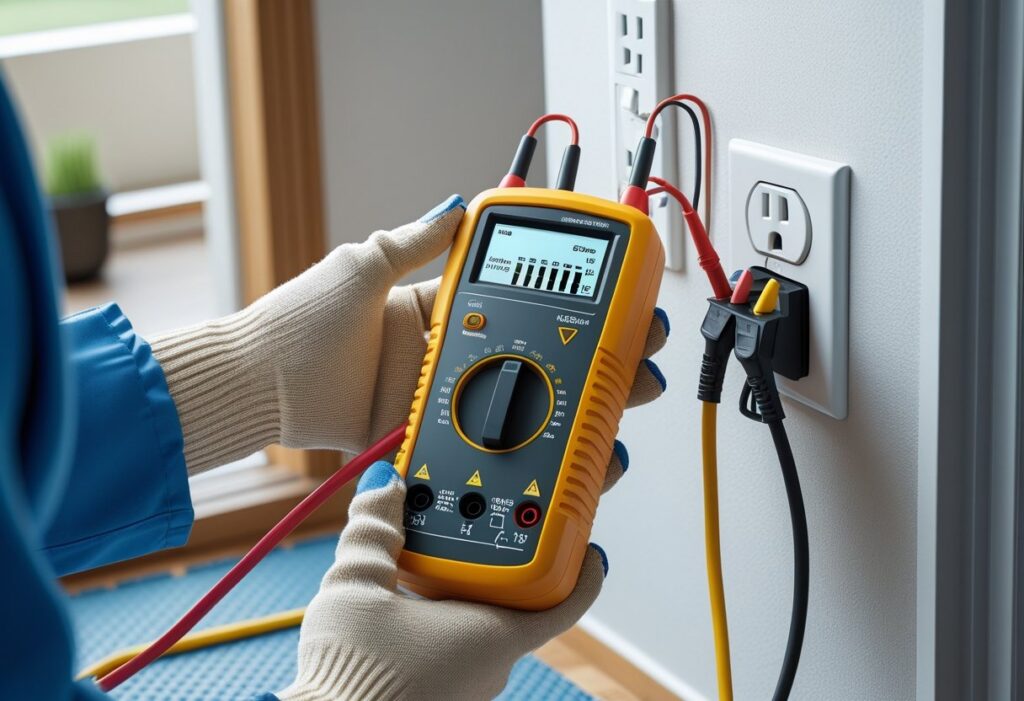
Knowing how to test outlets for grounding issues really matters for keeping your home or business safe. The easiest way to check if an outlet is grounded properly is by using a simple plug-in tester or a multimeter set to continuity mode. That way, you can catch problems before they cause shocks or fry your electronics.
At Magnify Electric, we want everyone to feel at ease about their electrical safety. Our licensed electricians help with anything from checking outlet grounding to putting in new fixtures. Whether it’s your house or business, we’re here to keep your electrical system safe and running right.
Understanding Outlet Grounding
Grounding is a basic part of your electrical system. It makes sure electricity flows safely and that faults don’t turn into hazards. Understanding what grounding does and how to spot issues keeps your outlets safer.
What Is Electrical Grounding?
Grounding links your home’s electrical system to the earth. If something goes wrong, like a short, this connection gives electricity a safe way out. It helps guard you against shocks and protects your devices.
In most outlets, grounding uses a third wire called the ground wire. This wire moves stray current safely into the ground. Not all homes—especially older ones—have this wire, which can bump up your risk.
You can check for grounding issues with a multimeter or an outlet tester. Making sure your outlets are grounded is just a solid move for your home’s safety.
Why Grounding Matters for Safety
Grounding keeps you safer from electrical shocks by steering dangerous current away from you and your stuff when something goes wrong.
It also shields your appliances. Without grounding, surges could wreck your electronics or even start a fire.
Devices like GFCI outlets need proper grounding to work right. If your outlets aren’t grounded, those safety features might not kick in when you need them.
Magnify Electric’s licensed electricians make sure your outlets are grounded the way they should be. We’re here to help you dodge expensive repairs and stay safe.
Common Signs of Grounding Problems
Watch out for these signs:
- No voltage reading when testing the ground wire with a multimeter.
- Burning smells or weird noises coming from outlets.
- Outlets that shock or spark when you plug something in.
- Older outlets with just two slots—these usually miss the ground wire.
- GFCI outlets that trip a lot or just won’t reset.
If you spot any of these, it’s time to call a pro. Our team at Magnify Electric will find and fix grounding issues safely.
Preparing to Test for Grounding Issues
Before you test an outlet for grounding problems, grab the right tools, follow safety steps, and make sure you manage the power correctly. This keeps you safe and gets you accurate results.
Required Tools and Equipment
You’ll need a multimeter set to continuity or resistance mode. A basic outlet tester can also show if the ground wire’s connected. Don’t skip the insulated gloves—they’re there for your protection.
A screwdriver and needle-nose pliers can help you open covers or tighten things up. A flashlight makes it easier to see inside boxes. And fresh batteries in your multimeter? Always a good idea.
Essential Safety Precautions
Safety first. Always wear insulated gloves. Don’t touch metal parts with bare hands. Stand on a dry, non-conductive surface—like a rubber mat—while you work.
Skip testing if you see damaged cords or exposed wires, unless you take extra care. Keep kids and pets out of the area. If you ever feel unsure, just call a pro. Magnify Electric’s team can guide you through it or handle the job for you.
Shutting Off Power Safely
Turn off power to the outlet at your main panel before starting. Use the circuit breaker marked for that outlet.
Even with the breaker off, double-check with your multimeter to make sure the outlet isn’t live. If you’re not sure which breaker controls the outlet, you can shut off the main breaker for a bit. Always be careful—your safety depends on it.
Magnify Electric can help you shut down and test circuits the right way, whether it’s for your home or business.
Testing Outlets with a Receptacle Tester
Using a receptacle tester is probably the simplest way to check for grounding or wiring problems. It gives you fast answers through indicator lights—no special skills needed.
How Receptacle Testers Work
A receptacle tester plugs into your outlet and checks the wiring and grounding. Inside, it’s got circuits and lights that spot issues like open ground, reversed wires, or missing connections.
The tester’s indicator lights show different patterns, telling you if the wiring is right or if there’s a problem. It doesn’t measure voltage, but it does show if your outlet is safe or needs work. You don’t have to mess with confusing numbers.
Step-by-Step Outlet Testing
First, make sure the outlet’s powered on. Plug in your tester.
Check the lights right away. The tester should have a chart—usually stuck right on it—explaining what the lights mean. Test every outlet in the room or house to catch any issues.
If the tester says incorrect wiring or no grounding, don’t use that outlet until it’s fixed. For anything the tester flags, give Magnify Electric a call. We handle repairs and bigger electrical jobs safely.
Interpreting Tester Results
Here’s a quick guide:
| Light Pattern | Meaning |
|---|---|
| All lights on | Proper wiring and grounding |
| No ground light | Ground wire missing |
| Reverse polarity lights | Hot and neutral reversed |
| No lights | No power or broken outlet |
If you see “no ground,” your outlet can’t safely discharge excess electricity—a real risk if there’s a surge.
Don’t try to fix wiring yourself unless you know what you’re doing. Call Magnify Electric. We’ll repair or update your outlets to code and keep your place safe.
Verifying Ground Connections with a Multimeter
It’s important to check the ground connection of an outlet for safety. You’ll need to set up your multimeter, know how to test between hot, neutral, and ground, and understand what the readings mean. This helps you find grounding problems that could lead to shocks or device damage.
Setting Up Your Multimeter
Make sure your multimeter works. Set it to continuity or resistance (ohms) mode. Continuity mode will beep if there’s a complete path—super handy.
Put the black probe in the COM port and the red one in the VΩ port. If your meter has auto-ranging, turn it on; otherwise, use a low resistance range.
Test your meter on a good connection before you start. It’s a quick way to make sure it’s working right.
Testing Between Hot, Neutral, and Ground
Carefully take off the outlet cover. Touch one probe to the hot (black or red wire) and the other to the ground (bare copper or green wire). If you get a beep or very low resistance, your ground’s connected.
Now test between neutral (white wire) and ground. Again, you want low resistance.
If you test between hot and neutral, your meter should show the circuit voltage in voltage mode. Don’t use resistance mode with the power on.
Never test resistance or continuity with the power on—it’s not worth the risk.
Understanding Multimeter Readings
A low resistance (near zero) between ground and neutral or hot means the ground’s good.
If resistance is high or there’s no beep, the ground might be missing or bad.
Weird or inconsistent readings? That could mean wiring problems or loose wires. If you’re not sure, call a licensed electrician.
Magnify Electric’s team can help you troubleshoot and fix grounding issues safely. We handle homes and businesses—just reach out if you need a hand.
Identifying and Troubleshooting Grounding Issues
Grounding issues can cause safety hazards and electrical problems. Knowing how to spot and fix common grounding problems can keep you safer and your system working right. Here’s what to check and what you might need to do.
Loose or Disconnected Ground Wires
Loose or disconnected ground wires pop up a lot. Usually, they’re bare copper or green and connect your outlet to the house’s grounding.
If the ground wire’s loose, the outlet isn’t grounded, which puts you at risk for shock or device damage. An outlet tester might show “open ground,” or your multimeter won’t beep between ground and the system.
To check, turn off the breaker, remove the cover, and look at the ground wire. Is it tightly attached to the outlet’s ground screw and the box’s grounding? If wires look damaged or brittle, they’ll need reconnecting or replacing.
Fixing Open Ground Outlets
An open ground means the outlet isn’t tied into the ground system—even if it looks fine. That’s a big safety problem.
To fix it, make sure a ground wire’s there and connected inside the box. If it’s missing, you’ll have to run a new ground wire back to the main ground, like the bus bar in your panel.
Use your multimeter on continuity mode to check for a solid ground path. If you’re not sure about wiring or grounding, call a professional.
Magnify Electric handles grounding repairs with care. Our licensed electricians can sort out open ground problems in homes or businesses.
When to Call a Licensed Electrician
Some grounding issues are just too tricky—or risky—to tackle alone. If you’re not comfortable with wiring or the problem’s at your main panel, get a licensed electrician.
Call a pro if there’s no ground wire, wires are damaged, or a bunch of outlets have grounding problems. Bad repairs can lead to shocks or worse.
Our Magnify Electric team is ready for all your electrical needs. We know how to handle grounding repairs and upgrades safely, so your place stays secure and up to code. When in doubt, just call us.
Tips for Maintaining Proper Grounding
Keeping your outlets grounded is key to preventing electrical shocks and making sure your system runs safely. Check outlets now and then, and if your home’s got old wiring, think about updating it. Staying on top of things helps you avoid trouble and keeps your electrical setup reliable.
Regular Outlet Inspections
Check your outlets every so often with a basic outlet tester or multimeter to see if they’re grounded right. Watch for signs like flickering lights, odd warmth around the outlet, or a device that just won’t work when plugged in. Stuff like that can mean grounding problems or wiring issues.
If you’re using an outlet tester, keep an eye on those indicator lights. An “open ground” reading means the grounding wire isn’t hooked up. That’s a safety risk—definitely something to fix soon. You can also check continuity between the outlet’s ground hole and the electrical panel’s ground to make sure the connection is solid.
If you spot a problem, it’s a good idea to call a licensed electrician from Magnify Electric. We’re here to help you keep your electrical outlets safe and working, whether it’s at home or your business.
Upgrading Older Electrical Systems
A lot of older homes still have outlets without grounding wires, which just doesn’t cut it by today’s safety standards. If you find ungrounded outlets, you might want to think about upgrading your wiring to include proper grounding. It’s a move that can help prevent shocks and protect your devices from damage.
Upgrading usually means swapping out two-prong outlets for three-prong ones and running a grounding wire back to your electrical panel. It’s not really a DIY job—licensed pros like Magnify Electric know how to handle it safely and bring your system up to code.
Adding grounding also helps your circuit breakers and safety devices work better. There’s some peace of mind in knowing your electrical system is actually protecting you if something goes wrong.
Potential Risks of Ungrounded Outlets
Ungrounded outlets can be a real headache, causing safety issues and even damaging your stuff. Getting a handle on these risks can help you avoid accidents and expensive repairs.
Electrical Shock and Fire Hazards
With ungrounded outlets, your risk of electrical shock goes up. No grounding wire means if there’s a fault, electricity can’t safely get to the ground. Metal parts on outlets or appliances could get energized—and if you touch them, you might get shocked.
Fires are another worry. Shorts or bad wiring in ungrounded outlets can cause overheating, and that can spark fires, especially if you’re plugging in older or damaged equipment.
Magnify Electric’s licensed electricians can check and fix grounding problems, making your place safer and up to today’s standards.
Appliance and Device Damage
When outlets aren’t grounded, your electronics miss out on protection from electrical surges. Surges from storms or power hiccups can fry sensitive devices if there’s no proper ground.
Ungrounded outlets can also mess with how some appliances run, causing weird interference or just poor performance. Over time, that means more repairs and replacements—nobody wants that.
Upgrading your outlets or getting proper grounding in place helps shield your devices and saves you money in the long run. Magnify Electric’s got you covered for electrical safety and efficiency.
Understanding Electrical Codes for Grounding
When it comes to grounding, electrical codes matter—a lot. These rules keep you and your property safer from shocks and fires. Basically, grounding gives stray electricity a safe way to get to the earth if something goes sideways.
The National Electrical Code (NEC) lays out the standards for grounding in homes and businesses. Outlets in spots like kitchens and bathrooms have to be grounded and usually need GFCI (Ground Fault Circuit Interrupter) protection to help prevent shocks in wet areas.
A few key points about grounding codes worth knowing:
- All new outlets should be grounded to meet NEC standards.
- Electrical panels must be properly grounded to avoid hazards.
- Ground wires need to connect securely to metal boxes and outlets.
- Ungrounded outlets aren’t code-compliant and should be fixed.
Testing your outlets for grounding makes sure you’re up to code. If something’s off, don’t wait to get it fixed.
Magnify Electric’s licensed electricians can handle everything from simple outlet repairs to full panel grounding. We’ll make sure your place is safe and follows the rules. You can count on us to keep your electrical system running right.
Frequently Asked Questions
Testing outlet grounding isn’t rocket science, but you do need the right tools and a bit of know-how. Here’s a quick rundown of what to look for, how to use testers, and how to check if your outlet’s actually grounded.
What steps are involved in testing an outlet for grounding with a multimeter?
Start by setting your multimeter to AC voltage. Stick one probe in the hot slot, the other in the ground slot. You should get a voltage reading close to what the outlet’s rated for—usually around 120 volts. If you see little or nothing, the ground might be bad.
Then, check resistance or continuity between the ground and a known good ground point. You want to see very low resistance, or just hear a beep—means the ground connection is solid.
Can you identify ungrounded outlets by their appearance, and if so, how?
Sometimes you can tell by looking. Old two-prong outlets don’t have a ground slot. Modern ones have three: hot, neutral, and ground. If it’s only got two prongs, odds are it’s not grounded.
But don’t get fooled—a three-prong outlet doesn’t always mean it’s actually grounded. You need to test it to be sure.
What are the alternatives for testing an outlet’s ground if you don’t have a multimeter?
Grab an outlet tester. They’re cheap, plug right in, and use light patterns to show if the wiring and ground are good.
You could also try a simple circuit tester or a plug-in GFCI tester, especially if you’re checking outlets with ground fault protection. Here’s more on testing outlets.
How can you confirm that an outlet is properly grounded using an outlet tester?
Plug in the tester and watch the indicator lights. There’s usually a guide that tells you what each pattern means, including whether the ground’s working.
If you get the right lights, your outlet’s ground is good. If not, you might have an ungrounded outlet or some other wiring weirdness.
Are there any reliable methods to check outlet grounding you can find on forums like Reddit?
A lot of folks on forums swear by outlet testers or multimeters. Some mention checking the main electrical panel for proper grounding, too.
If you find anything odd or just aren’t sure, it’s smart to call a licensed electrician—like our crew at Magnify Electric. Better safe than sorry, right?
When using a multimeter in a car, how do you test for a good ground connection?
Switch your multimeter to resistance or continuity mode. Touch one probe to the car’s metal frame (that’s your ground) and the other to the battery’s negative terminal.
If you see a low resistance reading, or hear a beep, you’ve got a good ground connection. It’s almost like checking the ground in a home outlet—pretty straightforward.
Magnify Electric’s licensed electricians can tackle any electrical issues you’re dealing with. From grounding checks to installing new fixtures, we’re here to lend a hand for your home or business.