
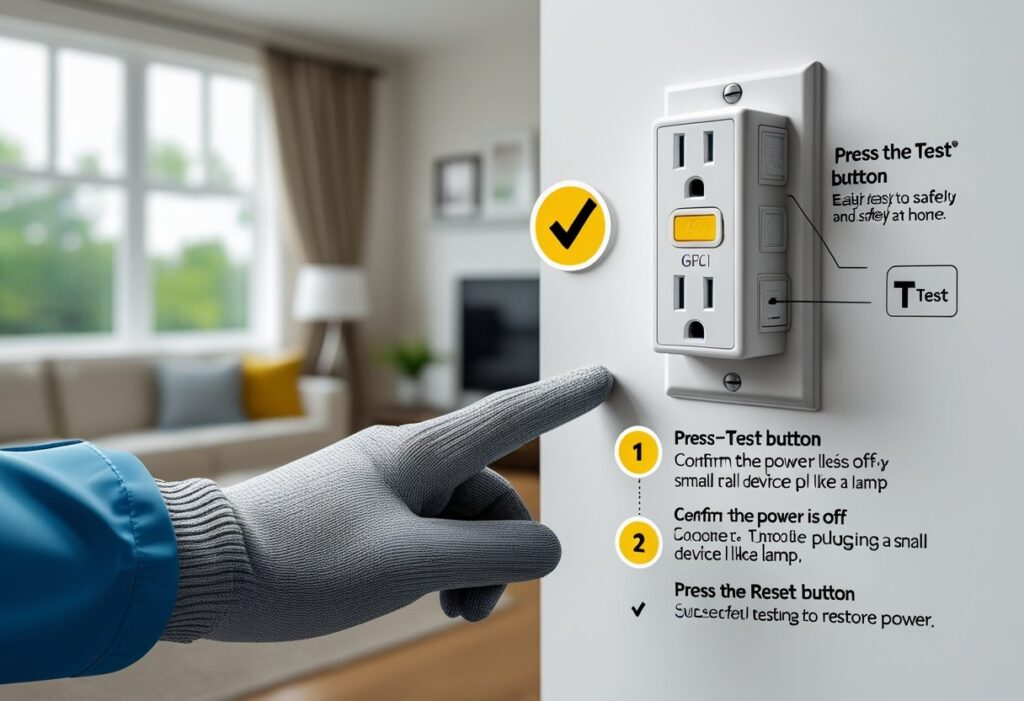
Testing a GFCI outlet is simple and important for keeping you safe from electrical shock. To test your GFCI outlet, press the “Test” button and check if the power cuts off. Then press the “Reset” button to restore it.
This quick check ensures the outlet works correctly and can protect you in case of a ground fault.
You don’t need special skills or tools to do this. It only takes a few seconds.
Knowing how to test your GFCI outlets helps you catch problems early and avoid hazards in places like your kitchen, bathroom, or outdoors.
What Is a GFCI Outlet?
A GFCI outlet is a special kind of electrical outlet designed to protect you from electric shock. It works by watching the flow of electricity and turning off power quickly if it notices a problem.
You often find these outlets in places where water is nearby. Water and electricity can be dangerous together.
How GFCI Outlets Work
A GFCI outlet constantly checks the electricity going into and coming out of a device. It compares the current in the hot wire to the current in the neutral wire.
If it detects even a tiny difference, it means electricity might be leaking. When this happens, the GFCI trips and cuts off power in less than a second.
This fast action helps stop shocks and serious injuries. The outlet usually has a test button to check if it’s working and a reset button to turn it back on after it trips.
Where GFCI Outlets Are Required
GFCI outlets are required in areas where water and electricity could mix. You will find them in kitchens, bathrooms, garages, basements, and outside.
These places are higher risk for shocks because water can cause faults in electrical circuits. Building codes often require GFCI outlets in these spots to keep you safe.
If you use power tools or appliances near water, having GFCI protection is important for preventing accidents. If you’re unsure where to install them, check local electrical rules or ask an electrician.
Safety Precautions Before Testing
Before you test a GFCI outlet, make sure you have the right tools and that you turn off the power safely. This helps prevent shocks and keeps your testing accurate.
Tools Needed
To test a GFCI outlet, you will need a few specific tools. A multimeter or voltage tester is essential to check if the outlet is live and to measure voltage.
You should also have a small screwdriver for opening the outlet cover if needed. A non-contact voltage tester can help you check if wires are live without touching them.
Always wear rubber-soled shoes and avoid working in wet areas. Keep all your tools dry to reduce the risk of electric shock.
Turning Off Power Safely
Before you start testing, turn off the power at your circuit breaker. Find the breaker that controls the outlet and switch it off.
Test the outlet with your voltage tester first to make sure no electricity is running. This is important to work safely and avoid shocks.
If you can’t identify the right breaker, turn off the main breaker to the whole house. This stops electrical flow until you finish your work.
Outlets can still hold some charge even after the power is off, so be cautious.
Step-by-Step Guide to Testing a GFCI Outlet
Testing your GFCI outlet ensures it protects you from electrical shocks. You will learn to find the buttons, use the built-in test feature, and also test it with a small appliance.
Locating the Test and Reset Buttons
Your GFCI outlet has two key buttons: Test and Reset. These buttons are usually found on the front face of the outlet.
The Test button is often black or red, while the Reset button is usually white or red. Sometimes the buttons may be labeled or marked clearly.
If you don’t see these buttons, then the outlet may not be a GFCI type. Make sure to have the power on before you test.
Knowing where these buttons are is the first step to safely checking your outlet’s function.
Performing the Built-In Test
Press the Test button on the GFCI outlet. This action should immediately cut power to the outlet.
Check if the Reset button pops out, showing the trip function is working. Plug in a lamp or small device to confirm there is no power.
To restore power, press the Reset button firmly until it clicks in. If the outlet does not cut power or reset properly, you may need to replace it.
Test the GFCI outlet monthly to keep it reliable for your safety.
Manual Test with an Appliance
You can also test the outlet by plugging in an appliance like a lamp or phone charger. Turn the appliance on first.
Press the Test button on the GFCI outlet. The appliance should immediately lose power and turn off.
Then press the Reset button to restore power and see the appliance turn back on. This method checks the GFCI under actual electrical load.
Repeat this test regularly to make sure your GFCI outlet is protecting you and your home.
Troubleshooting Common GFCI Outlet Issues
When you test a GFCI outlet, you might see different results, including trips or failure to reset. Knowing how to interpret these results and what to do next is key to keeping your outlet working safely.
Interpreting Test Results
When you press the test button on a GFCI outlet, it should cut power to the outlet and attached devices immediately. If the power does not cut off, the outlet’s protection is not working correctly.
If the power cuts off but does not come back on after resetting, the outlet may detect a ground fault or have wiring issues. Tools like a plug-in tester can help you check for incorrect wiring or other faults.
Look out for these signs:
- Outlet won’t reset
- Power stays on during the test
- GFCI trips frequently
These indicate a problem that needs to be addressed.
Resetting a Tripped GFCI
To reset a tripped GFCI outlet, press the red or black reset button after the test button has been pressed or after a power interruption. Make sure nothing connected to the outlet is faulty before resetting, as a short circuit or overloaded devices can cause the GFCI to trip again.
If the reset button does not stay pushed in, wait a moment and try pressing it again firmly. Test the outlet after resetting by pressing the test button once more to confirm it trips and resets properly.
What To Do if the Outlet Does Not Reset
If your GFCI outlet won’t reset, first unplug all devices connected to it. Sometimes a device can cause the fault.
If it still won’t reset, check for visible damage or burning smells around the outlet. Avoid forcing the reset button repeatedly.
Repeated failure to reset can indicate wiring problems or a faulty GFCI that needs replacement. When unsure, call a licensed electrician for a safe and proper inspection and repair.
This is especially important if the GFCI trips often or overheats.
When to Replace or Call a Professional
Knowing when to replace your GFCI outlet or get help from an expert can save you from electrical hazards. Watch for specific signs that show your outlet may be failing.
Signs of a Faulty GFCI
If your GFCI outlet trips often without reason or won’t reset, it might be faulty. You may notice it does not power devices even after pressing the reset button.
Another sign is if the outlet feels warm or overheats when in use. Overheating can mean internal damage or wiring problems.
Sparks or burning smells near the outlet are serious issues that need immediate attention. A failing GFCI won’t pass a test when you press the test button, or it trips but never restores power.
These are warning signs you should replace the outlet right away.
Choosing Qualified Electricians
When you need an electrician, choose someone licensed and experienced with GFCI outlets. A good electrician can fully test your outlet and fix wiring issues safely.
Look for electricians who offer clear pricing and have good reviews from other customers. Ask if they follow local electrical codes and use modern safety equipment.
Avoid DIY fixes if wiring problems are involved. A professional will prevent risks like shocks, fires, or damage to your home electrical system.
Make sure they give you a written estimate before starting work.
Tips for Maintaining GFCI Outlets
Keeping your GFCI outlets in good shape means testing them regularly and protecting them from moisture and damage. These simple steps help your outlets work correctly and keep you safe from electrical shocks.
Recommended Testing Frequency
You should test your GFCI outlets every month to make sure they trip and reset properly. Most GFCIs have a Test button and a Reset button right on the outlet.
Press the Test button first; this should cut power to the outlet. Then press the Reset button to restore power.
If the outlet doesn’t trip or reset, the GFCI may be faulty and might need replacing. Test outlets located in kitchens, bathrooms, and outdoor areas more often because these places are more exposed to moisture.
Also, check them after a power surge or storm, as such events can damage GFCI outlets.
Preventing Moisture and Damage
Keep your GFCI outlets dry and clean to avoid malfunctions. Moisture is a common cause of issues, especially for outlets outdoors or near sinks.
Use weatherproof covers for outdoor outlets to protect them from rain and snow. Avoid overloading the outlet with too many devices at once.
Look out for warning signs like flickering lights or burning smells around the outlet. If you notice any of these, turn off power and have a professional inspect the wiring and outlet for damage.
Frequently Asked Questions
You can check if your GFCI outlet is working by using the built-in test button and resetting it. Testing with a multimeter can help verify wiring, but it won’t simulate a ground fault.
OSHA has specific rules for workplace testing, and you should always test a new GFCI before installation.
What steps should I follow to check if my GFCI outlet is working properly?
First, press the “TEST” button on the outlet to simulate a ground fault. The power should turn off.
Then press the “RESET” button to restore power. If the outlet does not reset, it may need replacement.
Testing your GFCI monthly helps keep it working safely.
Can I safely test a GFCI outlet using a standard multimeter, and if so, how?
Yes, you can use a multimeter to check voltage and wiring. Set the meter to measure AC voltage and check between the hot and neutral terminals.
However, a multimeter won’t test if the GFCI trips during a ground fault.
Is there a way to test my GFCI outlet for functionality without any power supply?
No, the outlet needs to be powered to test its trip function. Using the “TEST” button simulates a ground fault and requires electricity.
Without power, you cannot check if the GFCI will shut off properly.
What are the OSHA requirements for testing GFCI outlets in a workplace setting?
OSHA requires monthly testing of GFCI outlets to ensure safety. Tests must verify the GFCI trips and resets correctly.
Keep records of your tests as part of workplace safety checks.
How do I properly test the GFCI outlet’s test button to ensure it’s functioning?
Press the “TEST” button once. The power should cut off immediately, indicating the outlet tripped.
Press “RESET” to restore power. If it does not reset, the outlet may be faulty.
Before installing a new GFCI outlet, what testing procedure should I follow to confirm it’s in good condition?
Check for visible damage or defects before installing.
After wiring, press the outlet’s “TEST” button.
Make sure the power cuts off.
Press the “RESET” button to restore power.