
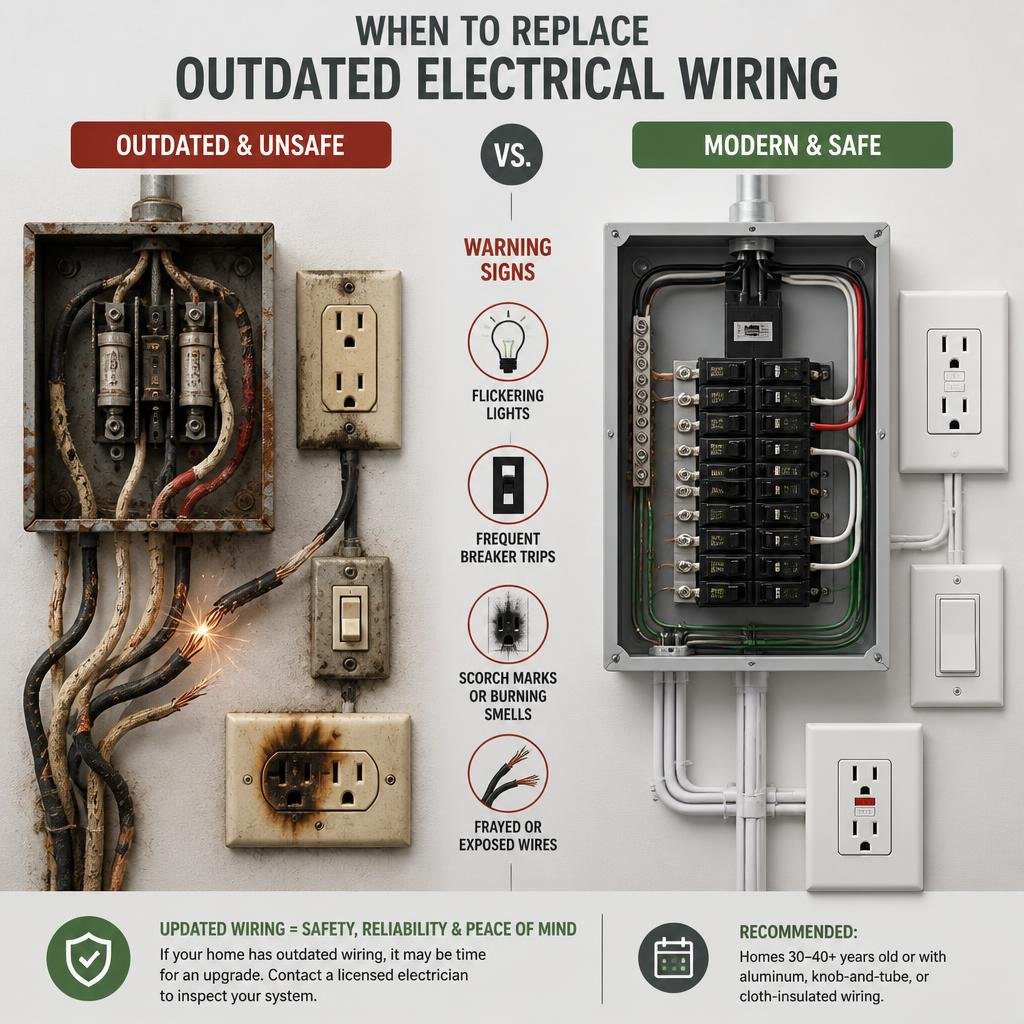
When to replace outdated electrical wiring isn’t always obvious. Lights come on, outlets work, so what’s the problem, right? But if your wiring is old, damaged, undersized, or showing warning signs, it’s probably time to call a pro and talk upgrade.
Waiting too long can put your place at risk of electrical fires, shocks, outages, and fried electronics. A timely inspection can help you figure out if a repair will cut it or if it’s time for a full replacement.
Why Old Wiring Turns Into a Safety Problem
Old wiring can look fine on the outside while falling apart inside your walls, attic, or crawl space. As you plug in more stuff, worn-out wires might not keep up.
How Wiring Materials Wear Out
Wiring doesn’t last forever. Insulation dries out, cracks, or gets brittle. Metal connections loosen over the years, especially with temperature swings.
Some older systems use materials like knob-and-tube or aluminum wiring. These setups might still work, but they usually lack proper grounding, have less capacity, or just aren’t as stable as what’s needed today.
Fire, Shock, and Overload Risks
When old wiring overheats, arcs, or carries more current than it was made for, fire risk goes way up. Loose connections and damaged insulation can also increase shock risk.
Older buildings with lots of modern electronics often overload their circuits. That can mean tripped breakers, dead outlets, and ruined devices.
Warning Signs Inside a Home or Building
You don’t have to open up the walls to spot wiring trouble. Most of the time, it’s the little issues that keep popping up.
Frequent Breaker Trips and Blown Fuses
If breakers trip all the time or fuses keep blowing, your system might be overloaded or not distributing power safely. One trip isn’t a big deal—over and over is a red flag.
If it happens in different rooms or with different devices, it’s time for a closer look at your wiring or panel.
Flickering Lights, Warm Outlets, and Burning Smells
Lights that dim or flicker when you turn on appliances could mean weak wiring or loose connections. Outlets, switches, or cords that feel warm? Never a good sign.
A burning smell near an outlet, switch, or panel is a serious warning sign. If you catch that odor, stop using the circuit and call for an inspection ASAP.
Two-Prong Receptacles and Not Enough Outlets
Two-prong outlets usually mean there’s no grounding. That’s not great for safety—or for using modern electronics the way they’re supposed to be used.
If you’re always running extension cords or power strips because there aren’t enough outlets, your wiring probably isn’t keeping up. Happens a lot in older homes and some older commercial spaces.
Property Types Most Likely to Need Upgrades
Some places just hit that point where rewiring makes more sense than patching things up. Age, usage, and changing power needs are the big reasons.
Older Homes With Outdated Electrical
Homes built decades ago might still have their original wiring, which often can’t handle today’s loads or safety standards. You’ll see this a lot in houses with few outlets, old panels, or a history of patchwork fixes.
If you’ve added rooms, upgraded kitchens, or brought in bigger appliances, the old wiring might be stretched thin. That’s a classic reason to wonder if it’s time to replace outdated electrical wiring.
Commercial Spaces With Growing Power Needs
Businesses keep adding equipment, lighting, and computers—usually faster than the wiring can keep up. This leads to hot circuits, nuisance trips, and uneven power.
Commercial spaces get heavy use all day, so worn wiring shows trouble sooner. Planning an upgrade before things fail can save headaches and keep people safe.
Best Times to Plan a Rewiring Project
Honestly, the best time to rewire is before things get urgent. Planning ahead can make the job smoother and less disruptive.
Before Renovations or Big Appliance Installs
Remodeling a kitchen? Finishing a basement? Adding a big appliance? Always check the wiring first. You don’t want to pile new loads onto an old system without knowing if it can handle them.
It’s also a smart time to add outlets, new circuits, or better grounding. Doing electrical before drywall and finishes go up saves a ton of hassle.
During Panel Upgrades, Smart Tech, or EV Charger Prep
If you’re upgrading your panel, adding smart tech, or prepping for an EV charger, check the rest of the system too. A new panel can’t fix wiring hidden in the walls.
Adding Lutron controls, wall chargers, or other modern gear? Make sure your wiring supports them. Saves you from future service calls.
After a Safety Inspection
If an inspection finds heat damage, old materials, missing grounding, or code issues—don’t wait. Those usually mean you need more than a quick fix.
A clear report gives you a starting point, so you can decide if you need a targeted replacement or a full rewire.
What a Pro Evaluation Should Cover
A real evaluation goes beyond just looking at outlets and switches. You want to know how the system handles a load and if it meets safety standards today.
Load Capacity, Grounding, and Code
Your electrician should check if your system can handle what you use now—and what you’ll want to use later. That means looking at panel size, circuit loads, grounding, bonding, and any code gaps.
In older places, I see systems that were “good enough” years ago, but upgrades elsewhere leave the wiring behind. A careful review shows if the wiring itself is the problem or if a smaller fix will work.
Outlets, Switches, Lighting, and Compatibility
The checkup should include outlets, switches, fixtures, and any special devices. Loose outlets, worn switches, and mismatched dimmers can flag deeper wiring problems.
If you have recessed lighting, outdoor lights, ceiling fans, surge protectors, or smoke and CO₂ detectors, your wiring needs to match. Compatibility isn’t just about looks—it’s about safety.
Choosing the Right Electrician for the Upgrade
Your rewiring project is only as good as the electrician you hire. You want someone licensed who can explain what’s going on and tailor the fix to your place.
What to Look For in an Electrician
Look for clear communication, proper licensing, and real-world experience with both homes and businesses. The right electrician should know troubleshooting, panel upgrades, outlet and lighting installs, generator hookups, and emergency fixes.
It’s helpful if the company can handle both small jobs and big projects. Wiring problems often show up alongside other electrical needs.
Why Magnify Electric Works Well in Central Texas
Magnify Electric is a solid pick in Central Texas. The crew covers everything from simple fixture swaps to full rewiring—automated lighting, fans, switches, Lutron smart systems, EV chargers, outdoor and recessed lighting, TV installs, surge protectors, wiring, panel upgrades, troubleshooting, generator hookups, smoke and CO₂ detectors, and all-around electrical improvements.
They serve Spicewood, Austin, Bee Cave, Lakeway, Dripping Springs, Georgetown, Leander, Round Rock, Kyle, Cedar Park, Liberty Hill, Westlake, The Hills, Briarcliff, Horseshoe Bay, Sunset Valley, Hutto, and pretty much all of Central Texas.
Frequently Asked Questions
How can I tell what type of wiring my home has (like knob-and-tube or aluminum)?
You might spot clues in the attic, basement, or near the panel, but a lot of wiring hides behind walls. A licensed electrician can usually figure it out quickly and let you know if it’s still safe or needs replacing.
What warning signs suggest the wiring in a house may be unsafe?
Breaker trips, flickering lights, warm outlets, burning smells, discolored outlets, and two-prong receptacles are all warning signs. If you notice any, don’t just guess—get an inspection.
At what age is home wiring typically considered old or in need of an upgrade?
It depends on the material, repairs, and how hard it’s been used. Homes over 30 years old need a good check. Houses built before the 1960s may still have really outdated wiring that should be replaced.
Is wiring that’s around 20–25 years old still considered safe?
It might be, if it’s been cared for and still fits your power needs. Age alone isn’t everything—visible wear, overloads, and outdated parts matter too.
How much does it usually cost to rewire an older home, and what affects the price?
Cost depends on your home’s size, how much wiring needs replacing, how easy it is to access walls and attics, panel condition, and if you need code upgrades. Plaster walls, lots of additions, or old service equipment can all bump up the price.
Are there any programs or assistance options that can help cover the cost of a rewire?
You might find some utility, local, state, or lender programs that pitch in for electrical upgrades, especially if they’re tied to safety or energy efficiency. These options really depend on where you live, so it’s smart to ask your electrician and poke around local assistance programs before you dive in.