
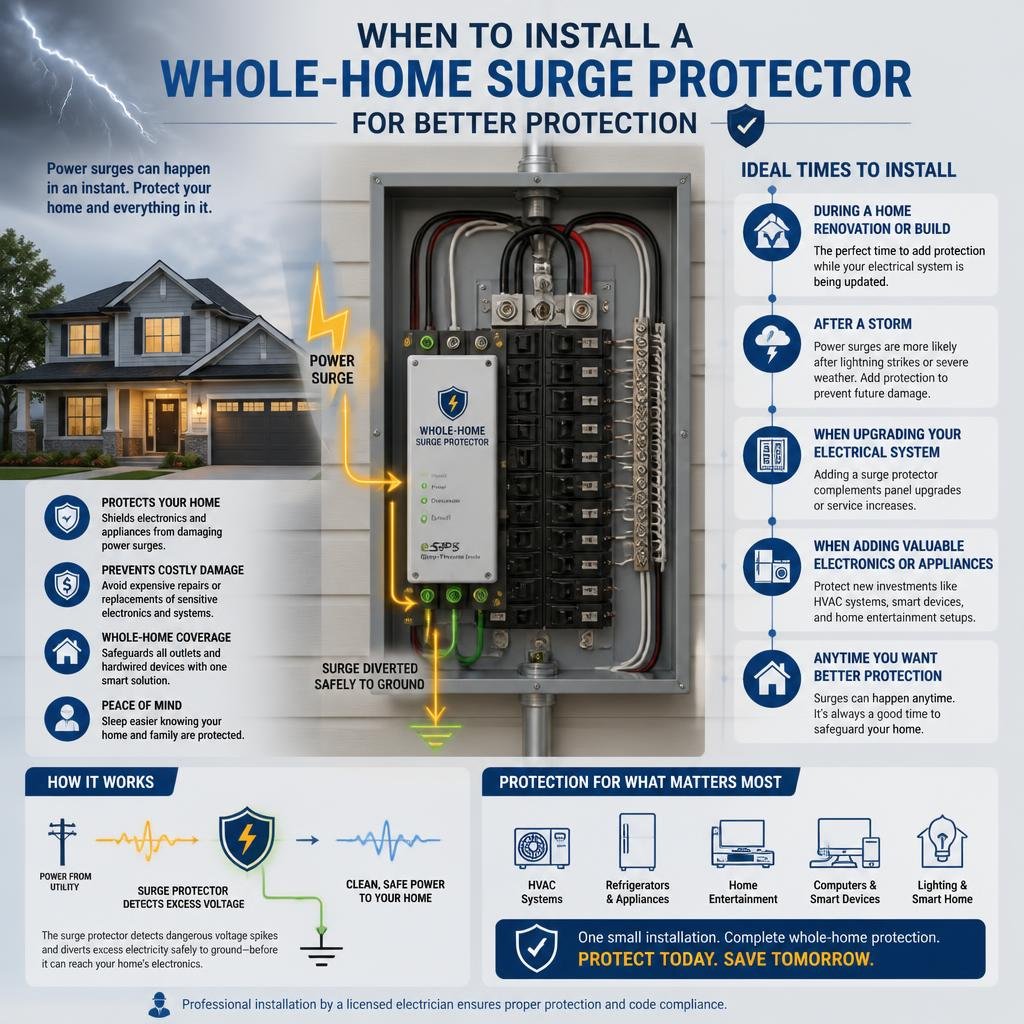
When should you install a whole-home surge protector? Well, that depends on your property, the gear you own, and how often your area gets hit with power issues. If storms are common, you’ve got pricey appliances, or you’ve already had electrical problems, it’s probably time to get one. Waiting too long just ups your risk for damage that could’ve been avoided.
A whole-home surge protector gives you broad protection at the main panel, so your entire electrical system has a better first line of defense against voltage spikes. It’s not a magic fix for every possible electrical problem, but it works best as part of a layered setup—think good wiring and, for some stuff, plug-in surge protection too.
If you’re planning electrical work, upgrading appliances, or adding new smart devices, timing matters. The best move? Install protection before something goes wrong.
What a Whole-Home Surge Protector Does
A whole-home surge protector sits at your main electrical panel and stops excess voltage from spreading through your place. It’s designed to protect the electrical system and everything plugged in from sudden spikes.
The idea is simple: keep surges from frying your appliances, electronics, and hardwired stuff. It’s a practical upgrade if you want broad coverage, not just protection for one outlet.
How It Protects Sensitive Electronics
Sensitive electronics can get wrecked by tiny spikes you might never notice. Think computers, TVs, Wi-Fi routers, smart thermostats, security systems, and the control boards in appliances.
A whole-home unit helps reduce the surge energy that gets into your house, lowering the odds you’ll face fried circuit boards or surprise repair bills. You’ll really notice the difference when several devices are running at once or when big appliances cycle on and off.
What It Does Not Replace
A whole-home surge protector isn’t a substitute for grounded wiring, the right-sized panel, or code-compliant electrical work. It also can’t make your house immune to every lightning strike or utility glitch.
For some gear, plug-in surge protectors still make sense—especially for high-value electronics like desktop computers, home theater setups, and networking stuff.
Clear Signs Your Property Needs Added Surge Protection
Some properties basically wave a red flag before a surge causes a much bigger headache. If you live somewhere with storms, own expensive equipment, or your electrical system already seems stressed, you’ve got a good case for added protection.
You’ll see these signs in homes and businesses. A quick inspection of your panel and equipment list can help you figure out if it’s worth upgrading.
Frequent Storm Activity and Utility Disturbances
Live somewhere with regular lightning, grid switching, outages, or brownouts? Your risk for surges is higher. Even if the lights stay on, power disturbances can send spikes through your wiring.
Pay attention if neighbors complain about outages or if your own lights flicker during storms. Those are big clues you shouldn’t wait.
Expensive Appliances and Smart Devices on Site
The pricier your stuff, the more surge protection matters. HVAC units, fridges, ovens, washer/dryer sets, smart home hubs, and office electronics can all get zapped by a sudden spike.
Homes and businesses packed with connected devices face a bigger risk—one surge could mean multiple repair headaches at once. That’s usually enough reason to upgrade.
Older Panels or Recent Electrical Issues
Got an old panel, loose breakers, repeated tripping, warm panel covers, or weird flickering? Your system’s telling you something. After a repair, breaker problem, or wiring scare, it’s smart to think about surge protection.
If the system already needs work, adding protection during the same visit just makes sense. It’s easier, and you’re less likely to face more problems down the road.
Best Times to Add Protection During Electrical Work
Honestly, the easiest time to add a whole-home surge protector is when you’re already having electrical work done. It cuts down on labor, avoids extra interruptions, and the device fits right into your existing setup.
It’s also a chance to check grounding, panel condition, and the rest of your electrical system. A licensed electrician will know if your place is ready for the upgrade or if you need to fix something else first.
During Panel Upgrades and Repairs
Replacing a panel, fixing breakers, or updating service equipment? That’s prime time to add surge protection. The electrician already has access to everything, so installation is smoother.
It’s also a good moment to make sure your grounding system is solid. Surge protection only works well if the rest of your setup is in good shape.
After Renovations or New Equipment Installations
Just finished a remodel or installed big appliances? Your electrical load probably changed. Same goes if you added new HVAC, pool gear, shop tools, or big kitchen stuff.
That’s when you should review your protection needs. New equipment often has sensitive control boards that cost way more to replace than you might expect.
Before Setting Up EV Charging or Smart Home Systems
Got plans for EV charging outlets, wall chargers, or smart home systems? Those upgrades make your electrical system both more advanced and more sensitive. Adding surge protection before you flip the switch gives your new gear a fighting chance.
If you’re planning automation, lighting controls, or a bunch of connected devices, include surge protection in the plan. It’s way easier to install now than after everything’s up and running.
Residential and Commercial Factors to Compare
Homes and businesses use electricity really differently, so your timing should fit your daily needs. Either way, you want less downtime, protected equipment, and to dodge expensive repairs.
Budget, equipment value, and how much disruption you can handle all play a part. The more you rely on your electrical system, the more it makes sense to install protection early.
Home Office and Daily Living Demands
Working from home? You probably depend on internet gear, computers, printers, and chargers every day. A surge could knock you offline or damage stuff you need for work.
Even basic stuff like fridges, HVAC, security systems, and lighting benefit from stronger protection.
Business Equipment Downtime Risks
For businesses, a surge isn’t just about broken equipment—it can halt operations. Point-of-sale systems, office computers, lighting, refrigeration, and controls could all go down at once.
That’s why a lot of commercial properties treat surge protection as part of their uptime plan. You’re not just saving hardware, you’re helping avoid lost time and service headaches.
Choosing the Right Installation Partner
Who installs your surge protector matters just as much as what you buy. The best results come from matching the device to your panel, grounding, and power needs—done by someone who does this every day.
You want clean work, safe handling of the main panel, and real-world advice on what your protector can and can’t do. That’s where a licensed pro makes all the difference.
Why Licensed Electricians Matter
Working inside the main panel isn’t a DIY project. A licensed electrician checks compatibility, makes sure grounding is right, and installs everything safely to code.
That’s key because surge protection is only as good as the system it’s installed on. If your panel, wiring, or grounding is off, the protection probably won’t work as expected.
How Magnify Electric Supports Central Texas Properties
Magnify Electric’s a solid pick for Residential and Commercial Electrical Work. You get licensed electricians who tackle everything from simple fixture swaps to full upgrades. That covers automated lighting, ceiling fans, light switches, Lutron smart home systems, EV charging outlets, outdoor lighting, outlets, recessed lighting, TV installs, whole-home surge protectors, wiring, lighting installations, panel upgrades, troubleshooting, portable generator hookups, smoke and CO₂ detectors, and general improvements for homes and businesses.
They cover Spicewood, Austin, Bee Cave, Lakeway, Dripping Springs, Georgetown, Leander, Round Rock, Kyle, Cedar Park, Liberty Hill, Westlake, The Hills, Briarcliff, Horseshoe Bay, Sunset Valley, Hutto, and the rest of Central Texas. That local reach really helps when you need practical service for your home, office, or commercial spot.
Frequently Asked Questions
How do I know if my home needs extra surge protection?
If you get frequent storms, have older electrical gear, expensive electronics, or repeated power issues, you probably need more protection. Rely on smart devices, home office tech, or hardwired appliances with control boards? That’s another reason to consider it.
What are the signs it’s time to add surge protection after a power event or lightning storm?
If your lights flickered, breakers tripped, appliances got weird, or electronics quit working after a storm, that’s a pretty strong signal. Even if nothing died right away, a surge can weaken stuff and cause trouble later.
Is it worth adding surge protection when upgrading an electrical panel or doing a remodel?
Absolutely. That’s one of the best times. The electrician’s already into the system, so you can protect new wiring, appliances, and devices before they’re in full use.
Do I need a licensed electrician to install surge protection at the main panel?
Yes, you do. Main panel work can be risky and has code requirements. The installer should also check grounding and panel compatibility.
How much does it typically cost to add surge protection for an entire house?
Costs depend on your panel, labor, and the device you pick. In the U.S., the protector itself usually runs $100–$400, and pro installation adds another $100–$300 or so.
What are the main pros and cons of adding surge protection for a whole home?
Honestly, the biggest perks are pretty clear: you get much wider protection, your appliances and electronics aren’t as likely to fry during a surge, and you might dodge some expensive repair bills down the road. But, let’s be real—it’s not a magic fix. Surge protection won’t make up for bad wiring, and if you’ve got really delicate gear, you’ll probably still want those little plug-in protectors just to be safe.