
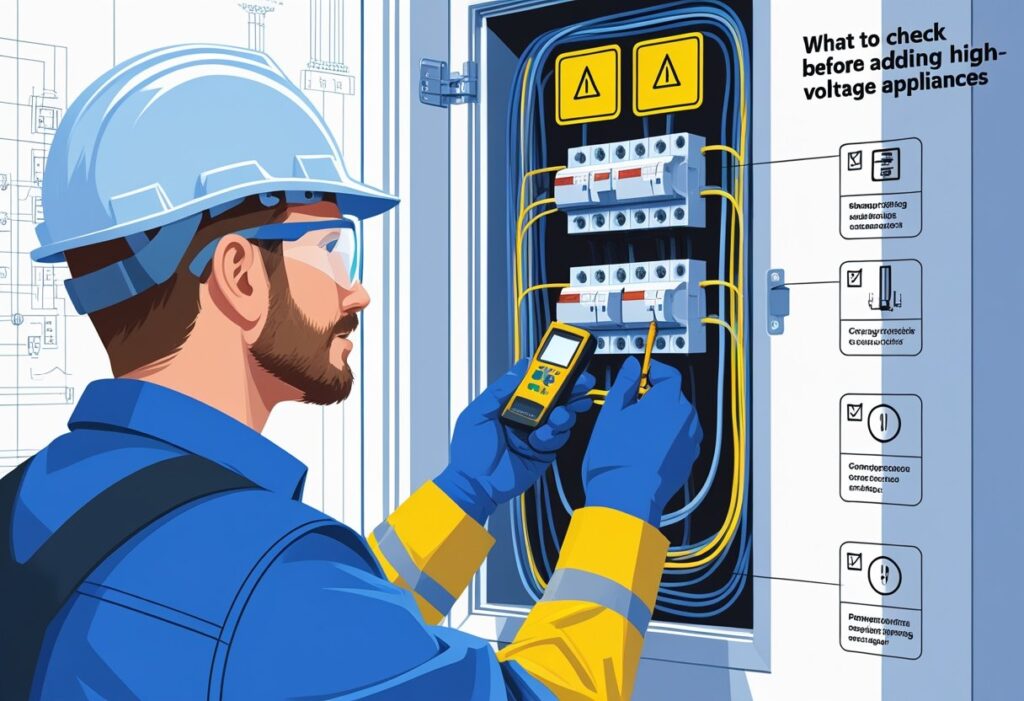
Thinking about adding a high-voltage appliance at home or work? You’ll want to check your electrical system first—otherwise, you could run into overloads, tripped breakers, or worse. Your circuits need to handle the extra load without risking power failures or frying your wiring. A bit of prep keeps things safe and saves you headaches.
Start by looking at your panel and the size of your current circuits. High-wattage gear can push an old panel past its limits fast. Not sure what you’re looking at? Magnify Electric’s licensed electricians can swing by, check things out, and recommend upgrades if you need them.
When you work with Magnify Electric, you get a trusted partner for everything from adding outlets to handling big commercial installs. We’re here to help keep your power steady and your space safe—no matter how complicated things get.
Assessing Electrical System Capacity
Before you plug in that new high-voltage appliance, make sure your electrical system can actually handle it. That means knowing your circuit breaker’s limits, figuring out how much juice you’re already using, and checking that your wiring is up to the job.
Checking Circuit Breaker Ratings
Your breaker decides how much electricity can flow through each circuit. Every breaker has an amp rating—say, 20 amps—which tells you its safe limit. For example, at 120 volts, a 20-amp breaker gives you about 2,400 watts.
To avoid overloads, don’t plan to use more than 80% of a breaker’s rating for long periods. So with a 20-amp breaker, try to keep your steady load under 16 amps (around 1,920 watts).
Big appliances might need their own circuit or a beefier breaker. Take a look at your panel and see what you’ve got before you bring anything new home.
Evaluating Existing Load Demands
Check what’s already running on the circuit you want to use. List out the major stuff—heaters, fridges, AC units. Add up their wattages. Don’t sweat the little things, but those big appliances matter.
If your total is creeping up toward 80% of your breaker’s capacity, it’s time to think twice before adding more. Spreading things out across different circuits cuts down your risk. At Magnify Electric, we help you sort out these details so you’re not left guessing.
Inspecting Wiring Gauge and Condition
Wire size is a big deal. Different circuits need different gauges—like 12-gauge for 20 amps. If you’re running a bigger breaker, you’ll need thicker wire.
Old, brittle, or damaged wires? That’s trouble. Look for cracked insulation, weird discoloration, or loose ends. If you’re not sure what you’re seeing, a licensed electrician should check things out.
Magnify Electric can upgrade your wiring or inspect it so you’re not risking a fire or a fried appliance.
Safety Considerations for High-Voltage Appliances
Adding high-voltage appliances isn’t just about power—it’s about safety, too. You’ll want to check your grounding, watch for any signs of overload, and make sure you’ve got protection against power surges.
Testing Grounding and Bonding
Grounding and bonding keep you and your stuff safe from shocks and fires. Test your grounding system to make sure it’s got a good path to earth. That stops dangerous voltage from building up.
You can use a multimeter, but honestly, calling in Magnify Electric might be easier. We check that all connections are tight and up to code. Bonding ties all the metal parts together—helping cut down on shock hazards. Don’t skip this; bad grounding can get ugly fast.
Identifying Potential Overload Hazards
High-voltage appliances pull a lot of power, so you’ve got to plan ahead. Watch for frequent breaker trips, flickering lights, or weird smells near your panel or outlets. Those are red flags.
Check how many amps your circuit can handle. Most home circuits are 15 or 20 amps, which isn’t always enough for big stuff like ovens or ACs. Magnify Electric’s electricians can figure out if you need a dedicated circuit.
Ensuring Proper Surge Protection
Power surges can mess up your appliances or kill them early. Surges happen when voltage spikes—maybe from storms, maybe from bad wiring. A surge protector built for high-voltage gear will help absorb those hits.
Stick with surge protection devices (SPDs) that meet safety standards and fit your gear’s voltage. They’re like a shield for your wallet. Not sure what you need? Magnify Electric can help you pick and install the right one.
Reviewing Appliance Requirements
Don’t just plug in a new high-voltage appliance and hope for the best. Know what it needs—voltage, current, and any special instructions from the manufacturer. That’s the only way to avoid issues.
Understanding Voltage and Current Needs
High-voltage appliances usually need more than your standard 120V outlet. In North America, big stuff often runs on 240 volts.
Check the label or manual for voltage and current requirements. Current is listed in amps and tells you how much electricity the thing pulls. If your circuit can’t deliver, you’ll have problems—maybe even damage.
Here’s a quick checklist:
- Voltage: Usually 120V or 240V for heavy-duty stuff
- Current (amps): Make sure your circuit matches the appliance
- Power rating (watts): Shows total consumption
Getting these numbers right stops overloads and keeps things safe.
Verifying Manufacturer Specifications
Always check the manufacturer’s instructions. They spell out exactly what your appliance needs—voltage, current, breaker size, maybe even special wiring.
Look for:
- Voltage rating (should match your outlet)
- Max current draw
- Circuit requirements (dedicated or shared)
- Recommended wire or breaker size
Skip these details and you’re asking for trouble. If you’re not sure, get a pro to look things over. Magnify Electric’s electricians can read specs, suggest safe upgrades, and make sure everything’s up to snuff.
Compliance with Local Codes and Standards
You can’t ignore local rules when you’re adding high-voltage appliances. Permits, codes, inspections—they’re not just red tape. They keep your install legal and, more importantly, safe.
Checking Permit and Inspection Requirements
Find out if your city or county wants a permit before you start. Most places do, and they’ll want to see your plans. That way, they know you’re following safety rules.
After you finish, you might need an inspection. The inspector checks your work and makes sure it’s safe. Skip this and you could run into insurance headaches or fines.
Not sure what the local rules are? Magnify Electric’s licensed electricians stay on top of them and can handle the paperwork for you.
Referencing National Electrical Codes
The National Electrical Code (NEC) is the big rulebook for wiring, breakers, outlets, and all that jazz. High-voltage appliances have to be installed by the book to avoid fire and shock risks.
A few NEC basics:
| Appliance Type | Voltage Needed | Circuit Amps Required |
|---|---|---|
| Dishwasher (Standard) | 120 volts | 15 or 20 amps |
| Many high-voltage appliances | 240 volts | Varies (check specifics) |
You’ve got to match the outlet and breaker to your appliance. If it needs 240 volts, don’t try to fudge it with a 120V circuit. That’s asking for trouble.
Magnify Electric keeps up with NEC updates and can make sure your install is good to go.
Planning for Installation and Future Maintenance
Don’t just wedge a high-voltage appliance wherever it fits. Think about where you put it and how you’ll get to it if it ever needs work. A little planning now saves a lot of hassle later.
Clearance and Placement Guidelines
Give your appliance some breathing room—at least 12 inches from walls or anything else. That helps with cooling and cuts down fire risk.
Keep it away from water or damp spots. Wet and electricity? Not a good mix. Also, check that the floor can handle the weight.
Make sure the outlet and circuit are right for the appliance’s needs. Overloading a circuit is a fast way to trip breakers or worse. If you’re at all unsure, have Magnify Electric double-check your setup.
Accessibility for Servicing
Leave space around your appliance so you or an electrician can get to it. Don’t block it with boxes or furniture. Clear access makes repairs and check-ups way easier.
Label your breakers and outlets. Seriously, it saves so much time when someone needs to shut off the right circuit.
Regular maintenance matters. Scheduling check-ups with Magnify Electric’s team can catch problems early and keep your system running smoothly.
Frequently Asked Questions
Adding high-voltage appliances? You’ll want answers about safety, system capacity, voltage, and protecting your investment from voltage swings. Figuring out power needs is key, too.
What safety precautions should I take when installing high-voltage home appliances?
First, turn off the main power—don’t skip this. Use insulated tools and wear gloves and goggles. Secure all connections and follow your local electrical codes.
If you’re not confident, just call Magnify Electric. Our electricians do this stuff every day, so you don’t have to stress.
How can I determine if my home’s electrical system can handle a new high-voltage appliance?
Check your breaker panel for extra capacity. High-voltage appliances usually need their own circuit. Compare your panel’s total amperage to what you’re already using, plus the new appliance’s needs.
Magnify Electric can run a load calculation and tell you if your system’s up to the task.
What is the safe voltage range for operating high-voltage appliances in a residential setting?
Most high-voltage home appliances in the U.S. run safely between 208 and 240 volts. That covers things like ovens, dryers, and big AC units.
Running gear outside that voltage range? Not a good idea—it can cause damage or poor performance.
Are there any specific wattage or power rating considerations for high-voltage appliances?
Absolutely. Just take a look at the label on your appliance—it’ll show the wattage and amperage. That info tells you how much power it’s going to pull. If you plug a bunch of high-wattage devices into the same circuit, you’re basically asking for trouble with overloads.
It’s worth keeping an eye on your total system wattage, otherwise things might not run as smoothly as you’d like.
How do I calculate the power requirements of high-voltage appliances before adding them?
Check the nameplate for voltage (V) and amperage (A). Just multiply those together: volts times amps gives you watts. For instance, 240 V × 10 A comes out to 2400 W.
That number gives you a pretty clear idea of the appliance’s power draw, so you can decide if your system is up for it.
Can you provide tips on protecting my electrical appliances from voltage fluctuations?
Try using surge protectors for your sensitive electronics—these help shield your stuff from sudden power spikes. It’s also a good idea not to run a bunch of high-powered appliances on the same circuit at once; your wiring (and your wallet) will thank you.
If you notice your lights dimming or flickering a lot, or you’re dealing with frequent voltage drops or surges, you might want to look into a panel upgrade. Magnify Electric can help out with that, offering fixes to keep your home’s electrical system safer and more reliable.