
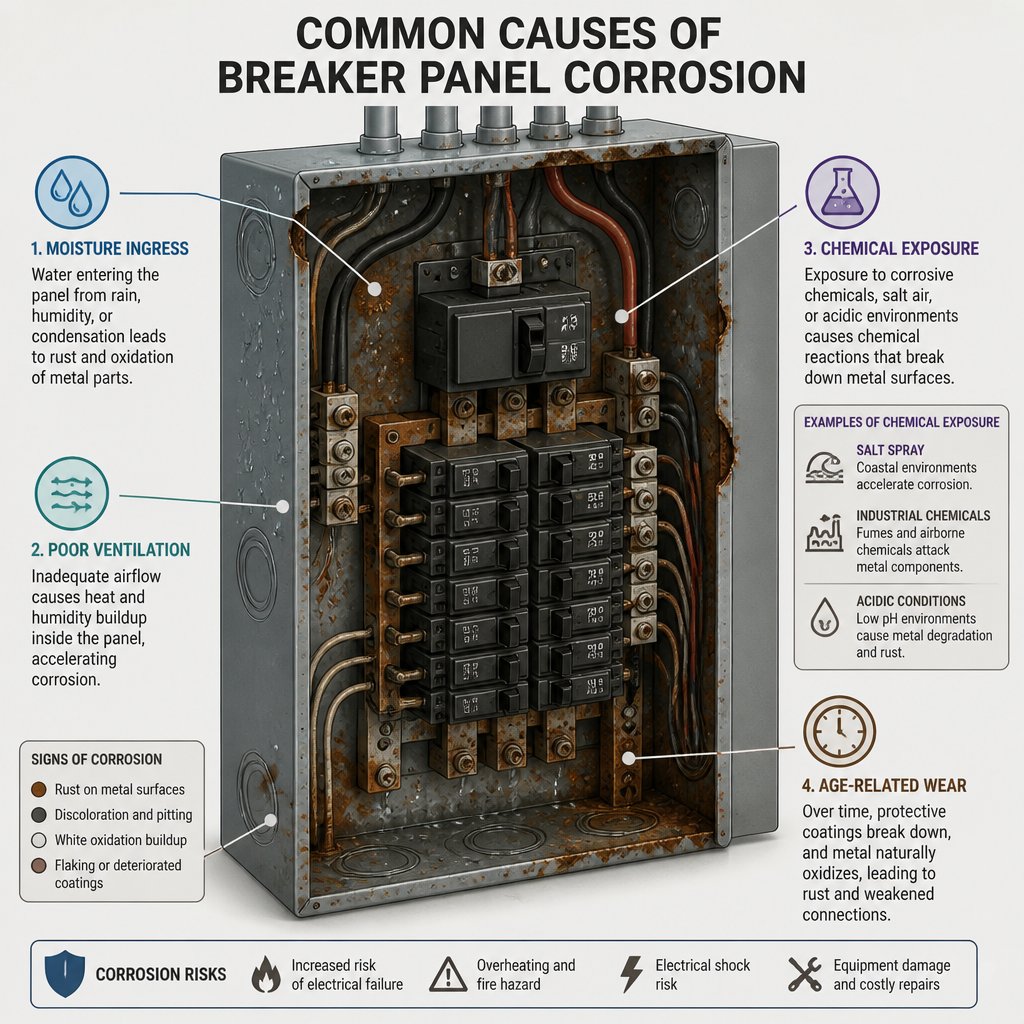
Moisture is the main culprit behind breaker panel corrosion, but it’s rarely working alone. In homes and businesses, the common causes usually include humidity, leaks, outdoor exposure, chemical fumes, loose connections, and old parts that just don’t seal the way they used to. If you spot rust, buildup, or discoloration inside a panel, take it as a warning that your electrical system needs attention, not just a cosmetic flaw.
Corrosion can start small and still mess with safety, reliability, and repair costs. Even if a panel only looks a little worn out, there might already be moisture intrusion or heat damage hiding behind the cover. That’s why a good electrician looks at the whole setup, not just what’s easy to see.
If you own property in Central Texas—Austin, Lakeway, Bee Cave, Dripping Springs, Georgetown, Leander, Round Rock, Cedar Park, Kyle, Liberty Hill, Westlake, Hutto, or anywhere nearby—this is worth caring about. Dry weather doesn’t mean you’re in the clear, especially if your panels are in garages, utility rooms, on exterior walls, or tucked away in damp work areas.
Why Corrosion In A Breaker Panel Matters
Corrosion isn’t just ugly rust. It can slow power flow, weaken breaker parts, and set you up for future electrical headaches. In the field, even a bit of buildup usually means something’s been brewing for a while.
How Corrosion Affects Safety And Reliability
When connections get corroded, resistance goes up and that creates heat. Extra heat damages wires, breakers, and bus bars, and can keep a breaker from tripping when it should during an overload. If that happens, the panel loses a big chunk of its main safety function.
Why Small Rust Spots Can Signal Bigger Electrical Problems
A little rust on screws, breaker handles, or the cabinet might be your first clue something’s wrong inside. Water might have slipped in from above, condensation could be forming, or a loose connection might be causing heat and moisture damage. Small spots usually mean the problem’s active—not just old scars.
Moisture Problems That Trigger Damage
Moisture is the most common trigger, and it sneaks in from places you might not expect. Once water or damp air gets to metal parts, corrosion starts spreading along terminals, screws, and bus bars.
Humidity And Condensation Inside The Electrical Panel
Warm, humid air can condense when it hits a cooler panel or conduit. You’ll see this in garages, laundry rooms, basements, and utility spaces where temperatures swing a lot. Even just high humidity can rust things over time.
Water Intrusion From Roof Leaks, Plumbing Leaks, Or Exterior Walls
Leaks above or near the panel can drip into the cabinet or travel down conduit into the enclosure. Roof leaks, plumbing leaks, and moisture creeping through exterior walls are all things we run into during electrical troubleshooting. Once water’s inside, corrosion can hit breakers, terminals, and wire insulation.
Outdoor And Garage Installations With Poor Weather Protection
Panels in outdoor spaces or exposed garages get hit with rain, humidity, and wind-driven moisture. If the cover’s loose, the gasket’s worn, or conduit openings aren’t sealed, water finds a way in. In coastal or storm-prone areas, poor protection just speeds up the process.
Environmental Conditions That Speed Up Wear
Some settings are just rougher on electrical gear. Heat, airborne particles, and corrosive air can all wear down a panel even if there’s no obvious leak.
Salt Air And Coastal Exposure
Salt in the air speeds up rust, especially where it’s damp and breezy. That’s why panels near the coast corrode faster than those inland. Salt can settle on fittings and eat away at protective coatings.
Chemical Fumes, Dust, And Contaminants In Workspaces
Workshops, garages, warehouses, and light industrial spots usually have dust, cleaning chemicals, oils, or other stuff floating around. These settle inside the panel and, mixed with moisture, help corrosion spread. In commercial spaces, we see more buildup around panels near equipment, storage, or chemical use.
Heat Swings And Poor Ventilation Around Electrical Equipment
Big temperature swings cause condensation inside the panel. Bad airflow traps heat and moisture, which stresses breakers and internal parts. Sometimes, energy-efficient lighting upgrades or changing ventilation and panel placement can help ease that strain.
Installation And Maintenance Issues
Sometimes corrosion starts because of how the panel was installed or maintained. A panel that isn’t sealed well, checked regularly, or kept tight can go downhill fast.
Improper Sealing Around Conduit And Panel Openings
If the openings around conduit, knockouts, or entry points aren’t sealed, moisture finds its way in. Gaps around the box let in humid air, dust, and water. In my experience, poor sealing is one of the first things to check if corrosion shows up near the top of the panel.
Loose Connections And Arcing That Create Corrosive Damage
Loose connections can arc, making heat and leaving behind burned or pitted metal. That just gives corrosion more to work with, since it exposes fresh metal and weakens contacts. Corroded or loose connections can also cause flickering lights, tripped breakers, or random power drops.
Aging Components And Lack Of Routine Electrical Maintenance
Older panels and worn parts lose their grip and can’t stay dry. Without routine safety inspections, small issues sneak by until they’re serious. Regular maintenance helps catch wear, breaker issues, and wiring problems before they turn into big repairs or panel upgrades.
Warning Signs Property Owners Should Not Ignore
Corrosion usually gives you hints before things go really wrong. The trick is to notice them early and treat them as electrical issues, not just surface wear.
Discoloration, Rust, And White Or Green Buildup
Rusty screws, breaker handles, or cabinet spots should get your attention. White or green buildup often means oxidation or corrosion on internal parts and terminals. If the buildup keeps growing, moisture or heat is still at work.
Breaker Problems, Flickering Lights, And Intermittent Power
A breaker that trips a lot, feels weak, or won’t reset cleanly might be reacting to damage inside the panel. Flickering lights and power that comes and goes can point to loose or corroded connections. These issues often pop up and disappear before something finally gives out.
Burning Odors, Buzzing Sounds, And Other Urgent Clues
A burning smell, buzzing, crackling, or a warm panel cover means something’s overheating or arcing. These are big red flags—call a licensed electrician fast. Don’t wait for the panel to fail.
What To Do If You Find Corrosion
If you find corrosion, safety comes first—not grabbing a rag. What you do next depends on how bad it looks and whether the panel still works normally.
When To Shut Off Power And Call A Licensed Electrician
If you smell burning, hear buzzing, see smoke, or spot heavy rust or moisture inside, shut off power if you can do it safely and call a licensed electrician. If the panel’s wet or arcing, treat it as an urgent hazard. Quick action can help protect your place and limit the damage.
Why Cleaning The Panel Yourself Can Be Risky
Cleaning inside a breaker panel can put you up against live parts, bad insulation, or hidden heat damage. Even if it looks dead, there may still be energized parts inside. A trained electrician can check where the corrosion started, test the equipment, and figure out if it’s a quick fix or something bigger.
Repair Versus Panel Replacement
Light corrosion on the cover or a few outside parts might be repairable, especially if you fix the moisture source right away. But if there’s corrosion on bus bars, breaker stabs, lugs, or several breakers, it usually means deeper damage and might need replacement. An inspection helps you decide if repair, panel upgrade, or full replacement is the smarter move.
How To Prevent Future Damage
A dry, well-kept panel lasts longer and works better. Prevention is mostly about keeping moisture out, checking things regularly, and making sure the equipment fits the property’s needs.
Controlling Moisture Around The Electrical System
Keep the area around the panel dry and aired out. Fix roof leaks, plumbing leaks, and wall seepage quickly. Make sure conduit and panel openings are sealed up. In damp spaces, controlling humidity can make a real difference.
Scheduling Safety Inspections And Panel Upgrades
Routine safety inspections catch loose connections, rust, and worn parts before they get serious. If your panel’s old, overloaded, or keeps acting up, upgrading might be the way to go. It’s also a good time to ask about surge protection, outlet upgrades, EV charger installs, or wiring improvements if you need them.
Protecting Residential And Commercial Properties In Central Texas
Central Texas gets heat, dust, storms, and humidity swings, so panel care matters for homes and businesses. If you own a shop, office, rental, or home in Austin, Spicewood, Bee Cave, Lakeway, Dripping Springs, Georgetown, Leander, Round Rock, Cedar Park, Kyle, Liberty Hill, Westlake, Hutto, or nearby, regular maintenance keeps your system safer all year. Some folks even pair panel checks with ceiling fan installs, smart home updates, generator hookups, or lighting upgrades when the electrician’s already there.
Frequently Asked Questions
Why is there white or green buildup on my breakers or inside the panel?
White or green buildup usually means corrosion or oxidation on metal parts inside the panel. It often means moisture, heat, or a loose connection has been causing trouble for a while. Get it checked before it spreads.
Can moisture or humidity in a garage or basement cause the panel to rust or corrode?
Yes, even just humidity can cause corrosion over time, especially in closed-off spaces with bad airflow. Garages, basements, and utility rooms are common trouble spots because temperature swings make condensation. Keeping things dry and ventilated helps.
What does corrosion on the bus bar or breaker stabs usually mean?
Corrosion on the bus bar or breaker stabs usually means the panel’s had moisture intrusion, condensation, or heat from a loose connection. These parts are crucial for power, so corrosion here can cause breaker failure or arcing. Get a pro to check it out.
Can a roof or plumbing leak lead to corrosion inside an electrical panel?
Absolutely. A leak above or near the panel can drip into the cabinet or travel down conduit. Even a small leak can leave enough moisture to start rust and damage contacts. Fix leaks quickly and have the panel checked after.
Is corrosion in the panel a safety hazard that requires replacing the panel?
It can be, depending on where the corrosion is and how far it’s gone. Light surface rust might just need repair, but corrosion on breakers, lugs, or bus bars can make the panel unreliable. A licensed electrician can tell you if you need repair or replacement.
How can I tell if corrosion is from salt air, water intrusion, or a loose connection?
Salt air tends to leave a thin, widespread layer of corrosion, especially if you’re near the coast or in a damp, breezy spot. Water intrusion? You’ll often spot streaks or stains coming from the top or one side of the panel. If it’s a loose connection, you might see heat marks, signs of arcing, or just some odd discoloration in one area. Honestly, getting in close and really looking things over usually reveals what’s going on and helps you figure out what to do next.