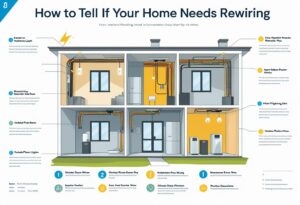
How to Tell If Your Home Needs Rewiring: Easy Signs to Look For
If your lights flicker, breakers trip, or you smell something like burning plastic, your wiring might be in trouble.

If your lights flicker, breakers trip, or you smell something like burning plastic, your wiring might be in trouble.
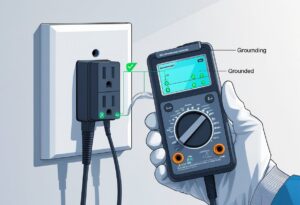
This wire safely directs extra electricity away from the outlet, which helps prevent shocks and fires.
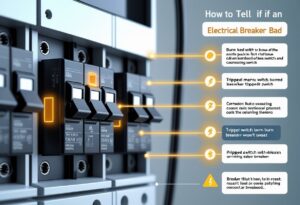
These include problems with resetting, frequent trips without obvious cause, strange smells, or visible damage.
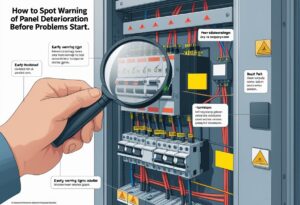
If you spot structural damage, corrosion, or odd color changes, something’s up.
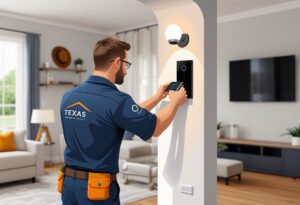
Professional installation means safer wiring, correct device pairing, and a smart-home setup that actually works with your stuff.
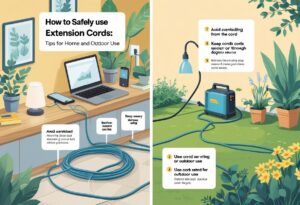
Staying safe with extension cords starts with knowing the risks, picking the right cord, and making sure it’s up to the job.
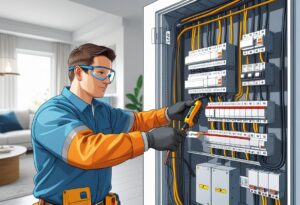
Getting a grip on how your electrical system works makes it a lot easier to figure out when and how you can safely bump up your power.
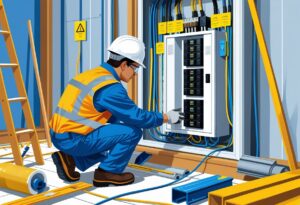
Check for hazards, look over your wiring and panels, and get some professional input.
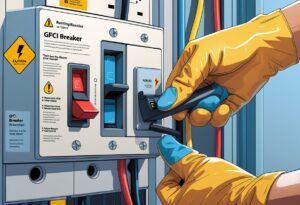
This difference could mean electricity is leaking somewhere unsafe, like through water or a person.
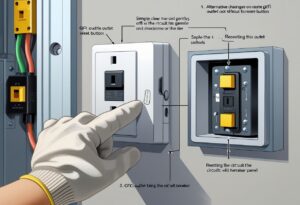
Knowing what they are, the types you might find, and why they trip will help you handle them safely.
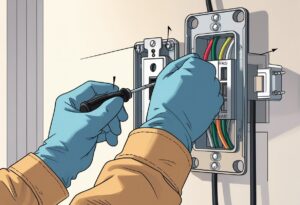
Some allow you to adjust brightness, while others only turn the light on or off.
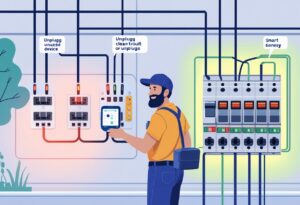
Your electrical panel splits power into different circuits—each feeding outlets, lights, and appliances.
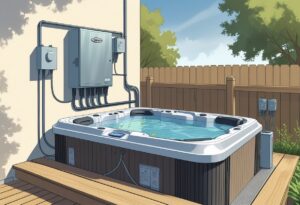
You’ll need a dedicated circuit sized for your hot tub’s full load—usually 30–60 amps at 240V, though you have to check your spa’s label for specifics.
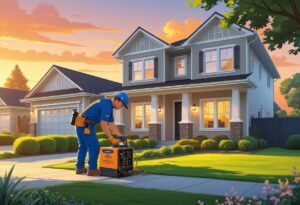
Home surge protection keeps your electronics and appliances safe by blocking or redirecting sudden voltage spikes.
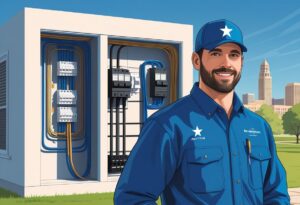
Home rewiring means swapping out old or unsafe electrical wiring for new, code-compliant wiring that can actually handle today’s power needs.

First, list every device you’ll run: desktop or laptop, monitor(s), printer, modem/router, phone/tablet chargers, task lamp, maybe a heater or fan
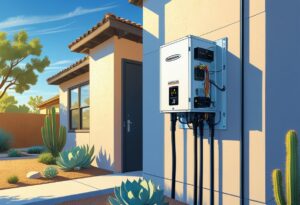
Done right, it protects your wiring, stops backfeed to the grid, and keeps you powered up when the lights go out.
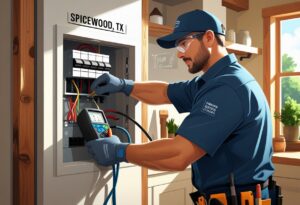
Services cover repairs, smart-home installs, safety devices, outdoor lighting, EV chargers, and emergency support across Central Texas.
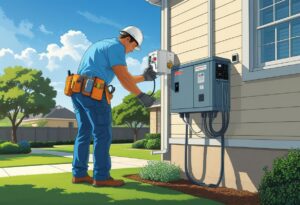
A transfer switch connects your generator to your home’s electrical system in a way that keeps power from feeding back into the grid.
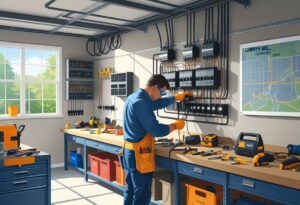
You want an electrical setup that’s safe, up to code, and ready for tools, EV chargers, and whatever else you dream up.
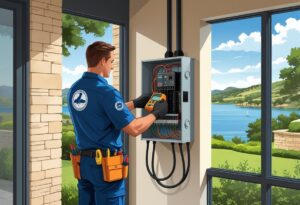
Let’s talk about which electrical problems pop up most, why skilled troubleshooting is worth it, and what’s unique about Horseshoe Bay homes.
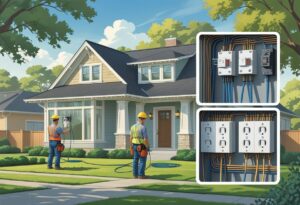
Older Lakeway homes usually have wiring, panels, and outlets that just weren’t built for today’s number of gadgets and high-power appliances.
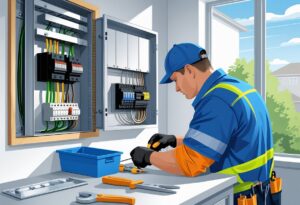
Sometimes it’s about better access, sometimes it’s for a remodel, or maybe you just want to finally meet code or insurance requirements.
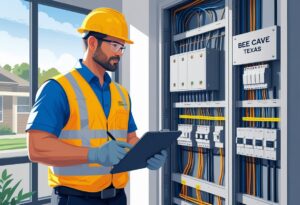
These checks help cut fire and shock risks, confirm permits were followed, and spot repairs or upgrades you might need.
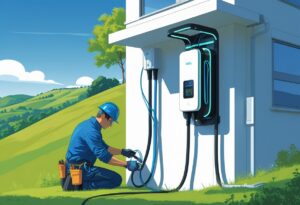
An EV circuit ties together your electrical panel, a dedicated circuit breaker, wiring, a disconnect or subpanel, and the charging device itself.
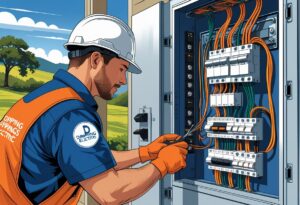
Here’s a quick look at what a panel is, the usual problems around here, and clear signs you need repairs soon.
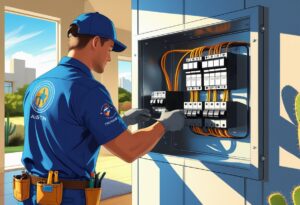
That gives it steady power and helps prevent overloads. It protects your breaker, wiring, and the appliance itself.

The crew installs the right bracket for your TV and wall, then hides cables in-wall or with tidy surface channels that meet code.

Focused light for cooking, modern fixtures, and lower bills? That’s a win.

Commercial wiring repair means fixing electrical systems in businesses so your lights, equipment, and safety devices just work—no drama.