
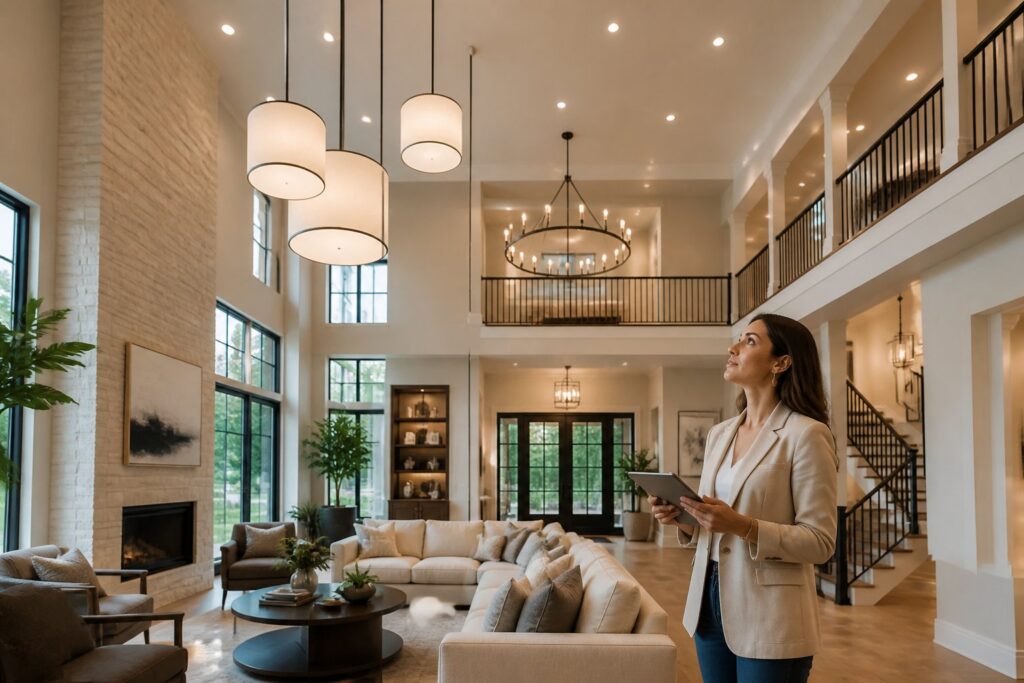
When you’re figuring out how to choose lighting for high ceilings, just know: ceiling height changes everything. A fixture that looks perfect in a regular room can vanish in a tall space, and bad placement leaves your room dim, harsh, or just weirdly shadowed.
The best move is to match fixture size, light output, and layering to the room’s height and how you actually use it. Don’t get stuck on style alone. Think about maintenance, safety, and whether you’re lighting a cozy living room or a big commercial space.
If you’re in Central Texas—Austin, Bee Cave, Round Rock, Cedar Park, Dripping Springs, you name it—lighting for high ceilings means considering local home styles, vaulted layouts, and long-term electrical reliability. If your space feels underlit or you’re not sure about fixture size, a licensed electrician can help you pick a safer, more effective setup before you buy or install anything.
Start With Ceiling Height And Room Function
High ceilings need lighting that fills vertical space but doesn’t overwhelm. What you choose depends on how tall the ceiling is, what the room is for, and how much light you actually want at eye level.
Matching Fixture Scale To Vertical Space
A 12-foot ceiling isn’t the same as a 20-foot ceiling. In taller rooms, you’ll need bigger shades, longer drops, or just more visible fixtures so the light connects to the space below. Small fixtures? They disappear fast—especially in open living rooms or entryways with lots of wall space.
Differences Between Living Areas, Kitchens, And Entryways
Living rooms usually feel better with softer, layered light. Kitchens need brighter task lighting over counters and islands. Entryways? Go for a statement fixture that greets guests with a little drama. The room’s function should guide you, not just the ceiling height.
Residential And Commercial Needs In Tall Spaces
Homes need comfort and visual balance. Commercial spaces need stronger light, better coverage, and easier maintenance. A tall lobby or retail floor needs different spacing and output than a vaulted family room. If you’re lighting a business in Central Texas, planning ahead keeps you from ending up with dark corners or patchy light.
Understand The Main Fixture Types
Different fixture types solve different problems in high-ceiling rooms. Usually, you’ll want one main source, then add other fixtures for balance and function.
When Chandeliers Make Sense
Chandeliers are great when you want a focal point that fills vertical space and adds some weight. They’re perfect for entryways, stairwells, dining rooms, or big living rooms with open volume. The trick is picking one that’s big enough to matter, but not so huge it blocks everything.
Using Pendant Lighting For Focused Illumination
Pendant lights are handy over kitchen islands, dining tables, or reading spots because they bring light closer to where you need it. In high ceilings, pendants pull the light down into the room instead of leaving it floating way up. They’re also a good pick if you want a cleaner, modern look.
Where Recessed Lights Work Best
Recessed lights are solid for general coverage when you want a clean ceiling. Kitchens, hallways, open-plan spaces—they all benefit. In tall rooms, spacing and beam spread matter way more than in low ceilings, so plan carefully.
Adding Wall Sconces And Accent Fixtures
Wall sconces break up tall, blank walls and help fight the cave-like feel high ceilings can bring. Accent fixtures highlight art, beams, or cool details, and they keep the room from feeling flat. Honestly, these smaller layers often make the biggest difference in how finished a room looks.
Plan Layered Light Instead Of One Bright Source
One overhead light? Never enough in a tall room. It’s better to use several layers so the space feels bright, comfortable, and flexible all day.
Ambient Task And Accent Lighting Roles
Ambient light sets the base brightness. Task light lets you cook, read, work, or gather around a table. Accent light draws attention to features you like. When all three work together, the room feels done—never washed out or gloomy.
Reducing Shadows And Dark Upper Walls
High ceilings can leave upper walls and corners in shadow, even if the floor seems bright. Wall-mounted lights, uplights, and carefully aimed fixtures help soften those dark spots. This is especially helpful in vaulted living rooms and stairwells, where shadows can make the room feel disconnected.
Pairing Fixtures With Ceiling Fans And Smart Controls
If there’s a ceiling fan, your lighting should still feel balanced, not like it’s fighting the fan for attention. Smart dimmers, scene controls, and grouped switches make high-ceiling lighting way easier to use. You can tweak it for guests, work, movies, or evening downtime—no more over-lighting.
Choose Output Color Temperature And Efficiency Wisely
Brightness isn’t the whole story. Color temperature and efficiency change how the room feels, how much energy you use, and how comfortable the lighting looks at different times.
How Many Lumens Tall Rooms Usually Need
Tall rooms need more lumens than standard rooms—light has farther to travel. The right number depends on room size, ceiling height, and surface colors, but a big space usually needs more than a single decorative fixture will give. A licensed electrician can help you estimate what you need instead of guessing.
Warm Vs Cool Light For Different Settings
Warm light (2700K–3000K) feels soft and inviting in living rooms, bedrooms, and dining areas. Cooler light works better in kitchens, work zones, or commercial rooms where you want crisp visibility. Around Lakeway, Westlake, and Georgetown, most folks prefer warm white for comfort, then add brighter task lights where needed.
Benefits Of LED Upgrades In Large Spaces
LED fixtures use less energy, run cooler, and last longer than older options. That’s a big deal in high ceilings since bulb changes are a pain and cost more over time. LED upgrades also give you more control over dimming, color, and fixture styles, which helps in both homes and businesses.
Think About Installation Access And Ongoing Maintenance
A beautiful fixture only works if you can install and maintain it safely. High ceilings make access tough, so plan ahead—it saves headaches later.
Fixture Weight Support And Mounting Safety
Big chandeliers and heavy fixtures need real support at the mounting point. The electrical box, framing, and hardware all have to be rated for the load, especially in older homes or vaulted ceilings. If the fixture looks oversized for the structure, get it checked before you install.
Bulb Changes Cleaning And Lift Access
If you need a ladder, lift, or special tool to reach the fixture, swapping bulbs and cleaning becomes a chore. That’s why so many people go for LED fixtures with long lifespans in high ceilings. In commercial spaces, planning for access matters even more—maintenance shouldn’t shut down your business.
When Wiring Improvements Or Panel Upgrades May Be Needed
Old wiring may not support new lighting layouts, dimmers, or smart controls. If you’re adding fixtures, converting to LED, or adding ceiling fans and controls, you might need a panel upgrade or circuit check. This comes up a lot in bigger homes or commercial buildings with extra electrical needs like EV chargers or generators.
Common Selection Mistakes And When To Call An Electrician
Most high-ceiling lighting problems come from poor scale, weak planning, or skipping safety steps.
Choosing Fixtures That Look Too Small
Honestly, this is the mistake I see most. A fixture that seems bold in the store can look tiny once it’s hanging in a tall room with open walls and far-off sightlines. If you’re unsure, go bigger or pick a design with more visual punch.
Ignoring Glare Dimmer Compatibility And Switch Placement
Bright light pointed the wrong way can cause glare, especially with shiny floors, glass, or glossy counters. Not every LED fixture works with every dimmer, so check compatibility. And switch placement matters—a tall room needs switches that are easy to reach and make sense for daily life.
Projects That Need Professional Electrical Service In Central Texas
Call a professional electrician if you need new wiring, panel work, ceiling fan support, high-mount fixture installation, or if your room is dim or flickering. A licensed pro is also the right call when you’re lighting a tall commercial space in Austin, Spicewood, Leander, Hutto, Kyle, or anywhere in Central Texas. If the project involves safety concerns, structural mounting, or multiple circuits, let a pro handle it.
Frequently Asked Questions
What types of light fixtures work best in rooms with very tall ceilings?
Big chandeliers, long pendants, recessed lights, wall sconces, and track lighting can all work in tall rooms. The best pick depends on how you use the space and how much visual impact you want.
How do I pick the right pendant or chandelier size for a high-ceiling living room?
Look at the room’s width, ceiling height, and furniture layout. The fixture should feel proportionate and low enough to connect with the living area—without blocking views or movement.
How low should a pendant light hang from a 20-foot ceiling?
Depends on what’s below. Over a table or island, hang it low enough to give focused light. In open areas, it might need to hang higher for clearance and balance.
What lighting ideas work well for vaulted ceilings in an open living space?
Mix recessed lights, statement pendants or a chandelier, wall sconces, and accent lighting. This keeps the ceiling area interesting and makes sure you have good light at seating level.
How can I layer ambient, task, and accent lighting in a room with high ceilings?
Use recessed or ceiling fixtures for ambient light, pendants or lamps for task light, and sconces or accent spots for depth. Layering gives you more control and helps cut down on dark upper walls and harsh shadows.
Are floor lamps and wall sconces enough to light a tall-ceiling room without harsh overhead glare?
They definitely help, especially if you’re after a cozy vibe in a living room or bedroom. But honestly, in bigger rooms, you’ll probably want some ceiling lighting mixed in. Layering different light sources just feels more balanced, you know?