
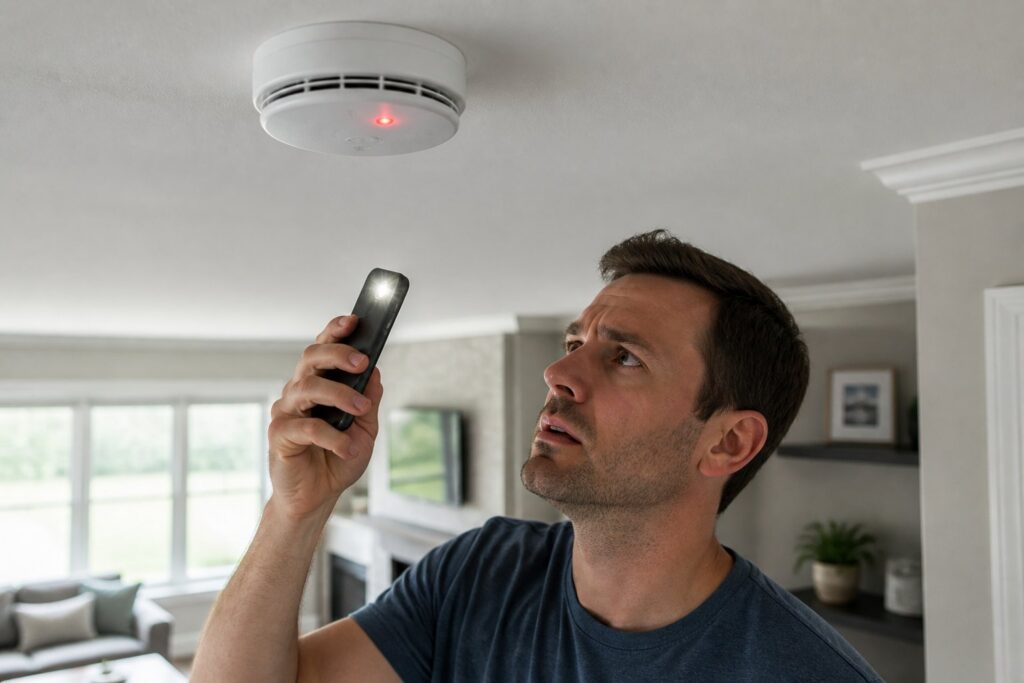
Smoke detectors are easy to overlook until they start chirping, fail a test, or just look old. So, how do you really know if your smoke detectors are outdated? The honest answer: age, failed testing, physical wear, and missing newer safety features all mean it’s probably time to swap them out.
A smoke detector might look fine on the outside, but the sensor inside loses sensitivity as years go by.
If you own a home or business anywhere in Central Texas—Austin, Round Rock, Lakeway, Dripping Springs, Cedar Park—it’s worth taking a few minutes to check your alarms. You don’t want to find out too late that they’re not up to the job. If your alarms are older, hardwired, or tied into a bigger electrical system, a licensed electrician can help you figure out what needs replacing and what’s ready for an upgrade.
Why Detector Age Matters
Age really does matter with smoke alarms. Even if the light’s on and it chirps when you press the button, the sensor inside can drift and slow down how fast it reacts to smoke.
How Sensor Performance Declines Over Time
Every smoke detector has a sensing component that wears out eventually—thanks to dust, humidity, and just plain time. I’ve seen plenty of older alarms in kitchens, hallways, and bedrooms that just don’t catch smoke as quickly as they should. The decline is sneaky. The alarm might still chirp during a test, but that doesn’t mean it’s working at full strength.
Why Older Units Raise Safety Risks
Old detectors can respond slowly, miss early smoke, or just go off for no good reason. In a real fire, a delay of even a minute can make a huge difference. If you own an older home in Westlake, Bee Cave, or Georgetown, those alarms could be original to the house—and honestly, that’s a bigger risk than most people realize.
Clear Signs It Is Time To Replace Them
You don’t need to guess if a smoke detector is near the end of its life. The date on the unit, repeated errors, and visible wear are big clues.
Past The Manufacturer Replacement Date
Most smoke detectors should be swapped out about 10 years after the manufacture date. If that date has come and gone, just replace it—even if it still seems to work. I’ve seen plenty of alarms in Central Texas homes that stayed up way past their prime because nobody checked the label.
Frequent Chirping Or False Alarms
A single chirp every 30 to 60 seconds usually means end-of-life, not just a dying battery. False alarms, especially if it reacts to steam or small temperature changes, can mean the sensor’s going bad. If you’ve already changed the batteries and it keeps chirping, the alarm is probably done.
Yellowing Plastic Or Visible Damage
Yellowed plastic, cracks, missing covers, or heat damage are all warning signs. Yellowing usually happens from age and heat, especially near kitchens or on ceilings. Any visible damage? Don’t risk it—replace the alarm.
Missing Test Button Response
When you press the test button, the smoke detector should sound loud and clear. If it’s silent, weak, or cuts in and out, there’s a problem with the battery, wiring, or sensor. A failed test is a clear sign it’s time for a new one.
How To Check The Date And Model
Checking the label only takes a minute and gives you a better answer than just guessing. The manufacture date, power source, and model type tell you how long it should last.
Where To Find The Manufacture Date
Take the alarm down from the ceiling or wall and look on the back or side. The manufacture date is usually printed near the serial or model number. No date anywhere? That’s a red flag—just replace it.
How To Identify Battery-Only Versus Hardwired Units
Battery-only alarms open easily for battery changes and aren’t hooked to house wiring. Hardwired alarms connect to electrical wiring and usually have a backup battery. Not sure which you have? Look for a plug-in harness, a circuit connection, or a breaker that controls the alarm.
What To Look For In Product Labels
Check for the model number, manufacturing date, battery type, and any replacement advice from the maker. Some labels also say if it’s ionization, photoelectric, or dual-sensor. If the label’s faded or missing, that’s yet another reason to upgrade.
Features Missing From Older Units
Old alarms might still beep, but they often lack features newer homes rely on for better and faster protection. If your detectors are basic, you might get a real safety boost by switching to newer models.
Interconnected Alarm Protection
Interconnected alarms all sound together if one detects smoke. That’s a big deal in larger homes, two-story layouts, or business spaces where you can’t hear every alarm from every room. In older homes, this upgrade is especially handy during electrical updates or remodels.
Photoelectric And Dual-Sensor Options
Photoelectric alarms are usually better at catching smoldering smoke. Dual-sensor models combine more than one method, so you get broader coverage in kitchens, hallways, and bedrooms. If your detectors are ancient, they probably don’t have either.
Smart Alerts And Voice Notifications
Some newer alarms send alerts to your phone or even speak a voice warning instead of just blaring a siren. Those features help when you’re away or trying to figure out which room set it off. For busy households, that’s a real plus.
Common Replacement Mistakes To Avoid
Swapping out a smoke detector seems easy, but a few mistakes can leave you just as unprotected as before.
Changing Batteries Instead Of Replacing Old Devices
A new battery won’t fix an expired sensor. If the alarm’s past its service life, changing batteries is just kicking the can down the road. I’ve seen this happen year after year, only for folks to realize their alarm was outdated the whole time.
Mixing Incompatible Alarm Types
Not all alarms work together. Mixing brands or sensor types in an interconnected setup can mess with synchronization or response. Replacing multiple units? Make sure they’re compatible before you buy.
Ignoring Placement Problems
Even a brand-new detector can underperform if it’s in the wrong spot. Too close to kitchens, bathrooms, or vents, and it’ll false alarm all the time. Too far from bedrooms or exits, and you might not hear it when you need to.
When To Call A Licensed Electrician
Some detector jobs are easy, but others really need a pro. If there’s wiring, panel work, or a bigger safety upgrade, professional service is the safer bet.
Hardwired Alarm Issues
If a hardwired alarm won’t power up, keeps tripping the breaker, or loses connection with other alarms, get it checked out. Wiring problems are more than just annoying—especially in homes needing outlet upgrades or surge protection. A licensed electrician can track down the issue without putting your place at risk.
Upgrades During Remodels Or Panel Work
Remodeling is a perfect time to update smoke alarms, especially if you’re already planning ceiling fan work, wiring improvements, smart home upgrades, or a panel update. It’s just easier to improve alarm coverage when ceilings are open or circuits are being changed.
Safety Inspections For Older Central Texas Properties
Older homes and small businesses in Central Texas often need a bigger look at alarm placement, wiring, and overall electrical condition. If you’ve got a property in Austin, Spicewood, Leander, Kyle, Hutto, or nearby, a safety inspection can spot outdated devices before they fail. That’s especially helpful if you’re prepping for an insurance review, remodel, or sale.
Frequently Asked Questions
Do smoke detectors really need to be replaced after 10 years?
Yes, most smoke detectors should be replaced after about 10 years from the manufacture date. Even if they still beep during a test, the sensor just isn’t as reliable anymore.
What are the common signs a smoke detector is past its usable life?
Look out for chirping that won’t stop after a battery change, yellowed plastic, failed test responses, and missing or unreadable date labels. If it’s over 10 years old, that’s a clear sign to replace it.
Where can I find the manufacture date or expiration date on my smoke detector?
Check the back or side of the unit after you take it down. The manufacture date is usually near the model or serial number. Some units also list replacement info on the label.
Is it safe to keep using an old smoke detector that still beeps during tests?
A successful test doesn’t guarantee the detector is still reliable. If it’s past its recommended lifespan, replace it—even if it still beeps.
Why does my smoke detector keep going off for no reason, and could age be the cause?
Age could definitely be part of it. Older alarms get more sensitive to dust, humidity, steam, and temperature swings, which can set them off. If you’re getting repeated nuisance alarms, check the unit and replace it if needed.
How can I tell if my carbon monoxide detector is expired or needs replacing?
Flip your detector over and look for a manufacture date—usually printed on the back or side. Most brands recommend swapping out the unit after a certain number of years, which might be less time than you’d think. If it’s past that date or if it doesn’t pass a test, it’s probably time for a new one.