
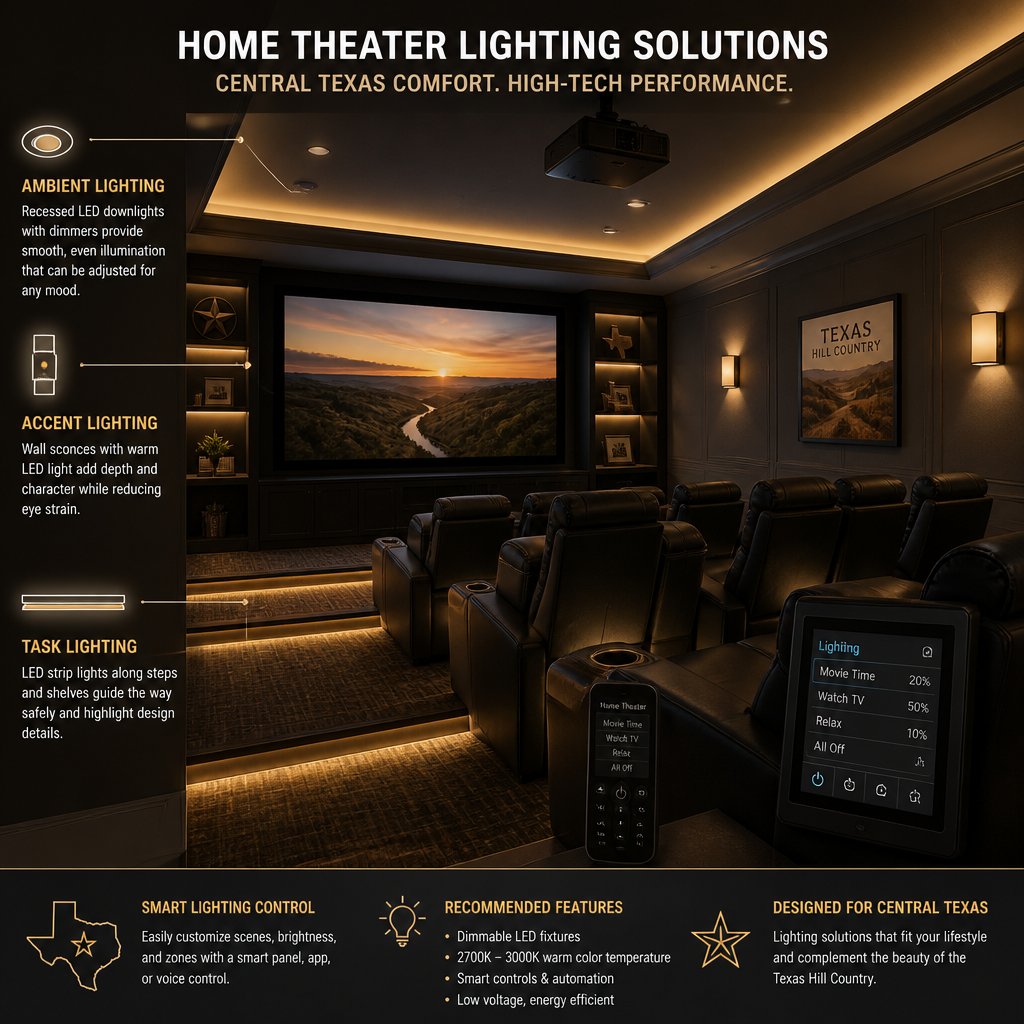
A solid home theater lighting plan does a lot more than just make the space look good. It helps protect screen contrast, keeps you from stumbling around in the dark, and lets you switch from bright prep time to that deep, cinematic vibe without a hassle. The best lighting for home theaters strikes a balance—enough visibility, comfort, and control so your room feels like the movies, not a washed-out living room.
In Central Texas, getting that balance right matters even more. Most theater rooms double as media spaces, bonus rooms, or just part of a bigger open floor plan. The right lighting setup makes your space feel finished, whether you’re in Austin, Bee Cave, Lakeway, Dripping Springs, Georgetown, Leander, Round Rock, Cedar Park, Kyle, Liberty Hill, Westlake, Hutto, or anywhere nearby.
If you’re planning a new room or just tweaking what you’ve got, start simple: pick lighting that supports the screen, not fights with it. Careful fixture placement, dimming, and layers of light really do make all the difference.
What Good Theater Lighting Needs To Do
The best theater lighting shows up when you need it, then fades into the background when you don’t. It should protect picture quality, help you move around safely, and set a calm, focused mood for movie night.
Support Screen Visibility And Contrast
Too much light aimed at the screen? That’ll flatten the image fast—especially with projectors or shiny TV surfaces. The trick is to keep light away from the viewing area and lean on softer sources around the room instead.
A gentle, warm glow near the room’s edges helps your eyes adjust without killing contrast. That’s why bias lighting, low-level sconces, and controlled ceiling fixtures usually beat a single bright overhead.
Create Safe Movement Before And After Viewing
You need enough light to walk in, find your seat, and get out after the credits roll. Step lights, low wall lights, and subtle aisle lighting make it easier to use the space without wrecking the movie mood.
In homes with theater rooms on lower levels or with risers, this matters even more. Honestly, I’ve seen a simple lighting path save people from tripping over cords or missing a stair more than once.
Set The Right Mood Without Glare
Glare is a quick way to make a theater room uncomfortable. You want soft, indirect light that dims easily.
Warm color temps feel more relaxed for viewing, while harsh, cool light can make everything seem too busy. If you want that true cinema feeling, pick fixtures and controls that let you go from full brightness to a subtle glow with one touch.
Layered Lighting That Works In Real Rooms
The best home theater lighting setups use more than one light source. Layering gives you options—so the room works for movies, game day, cleaning, or just hanging out.
Ambient Lighting For General Illumination
Ambient lighting sets your base level of light. In theater rooms, you’ll want this low and spread out, so nothing feels harsh or flat.
Recessed lights on dimmers are a go-to because they stay out of the way and can be dialed down for viewing. In multipurpose rooms, ambient lighting is great for switching between entertainment and everyday living.
Accent Lighting For Architectural Detail
Accent lighting highlights trim, built-ins, columns, wall textures, or art—without blasting the screen. It adds depth and a finished look.
Soft LED coves, backlit shelves, and low-output wall washes can make a theater feel custom. Used right, accent light adds interest while keeping the viewing area chill.
Task Lighting For Seating, Controls, And Storage
Task lighting is for the little things—finding the remote, grabbing snacks, or checking equipment. It should be focused, local, and easy to control.
Small lights near seats, closets, racks, or cabinets make the room more usable day to day. If you plan it well, task lighting is bright enough for what you need, but won’t distract from the movie.
Fixture Types Worth Considering
Different fixtures do different jobs, and most good home theater lighting plans use a mix. The main goal: keep direct glare down but still have enough flexibility for real life.
Recessed Lights For Clean, Controlled Coverage
If you want a tidy ceiling, recessed lights are a solid pick. With the right trim and layout, they give even coverage without adding clutter.
In theater rooms, dark trims and dimmable lamps help the lights blend in. It’s a practical choice, especially if you want light for cleaning or setup but don’t want anything hanging down.
Wall Sconces For Soft Side Illumination
Wall sconces bring a cozy, theater-like feel and work nicely for side lighting. They spread light gently and help the room feel more finished.
They’re a good pick when you want style and comfort in one. Sconces seem to work best when they’re dimmable and the light hits the wall—never straight in your eyes.
LED Strip Lighting For Steps, Risers, And Cove Effects
LED strip lighting is incredibly useful in home theaters. You can run it on stair noses, under risers, behind seats, or up in ceiling coves.
These strips boost safety and create a soft glow that matches the room’s mood. They also pair well with smart controls, letting you tweak brightness and color for movie night or just another day.
Fiber Optic And Specialty Ceiling Effects
Fiber optic and specialty ceiling effects are really about atmosphere. They can give you that starry sky look or add subtle details that just make the room feel special.
These work best as accents, not main light sources. If you want drama without glare, this kind of touch can make the space feel custom.
Control Options For Comfort And Flexibility
Lighting control matters as much as the fixtures. If you can’t adjust the room quickly, even great lighting can get annoying.
Dimmers And Zoned Circuits
Dimmers let you set the mood, which is huge in a theater room. Zoned circuits go further—you can control different parts of the room on separate switches.
That way, you can leave aisle lights on while dimming the rest, or just light the back for cleanup. It’s a setup that really does make the room easier to live with.
Smart Home Integration And Scene Presets
Smart lighting systems let you save scenes for movies, sports, cleaning, or intermission. Presets save time and make the space feel more put-together.
If you’ve already got smart home systems, tying theater lights into the same platform makes life easier. You won’t have to cross a dark room just to change the lighting.
Remote Access, Voice Control, And Automation
Remote and voice control are handy when you’ve got your hands full or you’re already settled in. Automation can dim the lights when a movie starts or turn them on with motion.
These features aren’t just convenient—they help keep things safe and consistent. A good automation setup can take a lot of the fuss out of daily use.
Electrical Planning, Safety, And Performance
A theater room is only as good as its electrical plan. Good wiring, smart switch placement, and the right load planning make sure your lighting works for the long haul.
Avoiding Glare, Flicker, And Overlighting
The most common lighting mistakes? Lights that are too bright, aimed wrong, or don’t match the screen’s size and finish.
Flicker can creep in with cheap LEDs or mismatched dimmers. Sticking with quality fixtures and the right controls will save you a lot of headaches.
Wiring, Switch Placement, And Panel Capacity
Good electrical design starts simple. Switches should be easy to reach, circuits laid out clearly, and your panel needs room for any upgrades.
If you’re adding more lighting zones, smart controls, ceiling fans, outlets, or surge protection, plan for the whole room. This is especially true in older Central Texas homes—sometimes you really do need to check panel space and wiring.
When To Schedule Professional Installation
Bring in a licensed electrician for new circuits, hardwired fixtures, switch rework, panel changes, or any sign of old or sketchy wiring. It matters even more if you’re remodeling.
A pro can spot things you might miss, like overloaded circuits or bad grounding. If you want a clean, safe result, it’s worth it.
Choosing A Setup For Your Space And Budget
The “best” lighting setup depends on how you actually use the room. A dedicated theater needs something different than a family media room, but you can get a sharp look on a budget if you pick carefully.
Solutions For Dedicated Theater Rooms
Dedicated theaters can go darker, so you get more dramatic lighting control. Recessed dimmable cans, step lights, LED coves, and wall sconces usually work well together.
This kind of room benefits from a layered plan that keeps the screen clear and the edges soft. If you want a real cinema vibe, focus on control, low glare, and easy scene changes.
Approaches For Media Rooms And Multipurpose Spaces
Multipurpose rooms need lighting that shifts fast. You might want brighter light for reading or cleaning, then a cozy setup for movies.
In these rooms, flexible recessed lighting, adjustable sconces, and smart scenes are usually the way to go. It helps if storage, outlets, and switches are easy to reach so the space stays practical.
Long-Term Value Through Energy-Efficient Lighting
LED lighting offers strong performance with lower energy use and less hassle over time. That’s a big deal in rooms where the lights might stay on for hours during games or movie marathons.
Energy-efficient fixtures also run cooler and last longer, which is great in enclosed spaces. For most homeowners, LED ends up being one of the best long-term lighting choices.
Frequently Asked Questions
What type of lighting creates the best movie-watching atmosphere in a home theater?
Soft, dimmable lighting with warm tones usually sets the best mood for movie-watching. You want light that supports the space, not competes with the screen—so low-level accent and bias lighting are both great.
Which ceiling light options work well without causing screen glare?
Recessed lights with dimmers tend to be the safest ceiling pick for theater rooms. Go for dark trims, smart placement, and low output to keep light off the screen and out of your eyes.
Are LED strip lights a good choice for home theaters, and where should they be placed?
Absolutely—LED strip lights are super useful in theater rooms. Stick them on stair edges, risers, behind seats, in coves, or around shelves for a soft glow and better safety.
Do wall sconces improve the look and comfort of a home theater room?
Wall sconces can add both style and comfort, especially if they’re placed well and dimmed right. They help the room look finished and light the sides without blasting the screen.
What are the most common lighting mistakes people make in home theater setups?
The biggest mistakes? Using lights that are too bright, putting fixtures where they cause glare, and skipping dimmers. Bad fixture choices and weak control can make even a fancy theater feel harsh and awkward.
How can I make my home theater feel brighter without washing out the screen?
Try using indirect lighting or some low wall lights, and keep things dimmable—avoid blasting the whole room with a harsh ceiling light. If you want a bit more brightness, maybe add some lights along the edges or corners, but steer clear of shining anything right at the screen wall.