
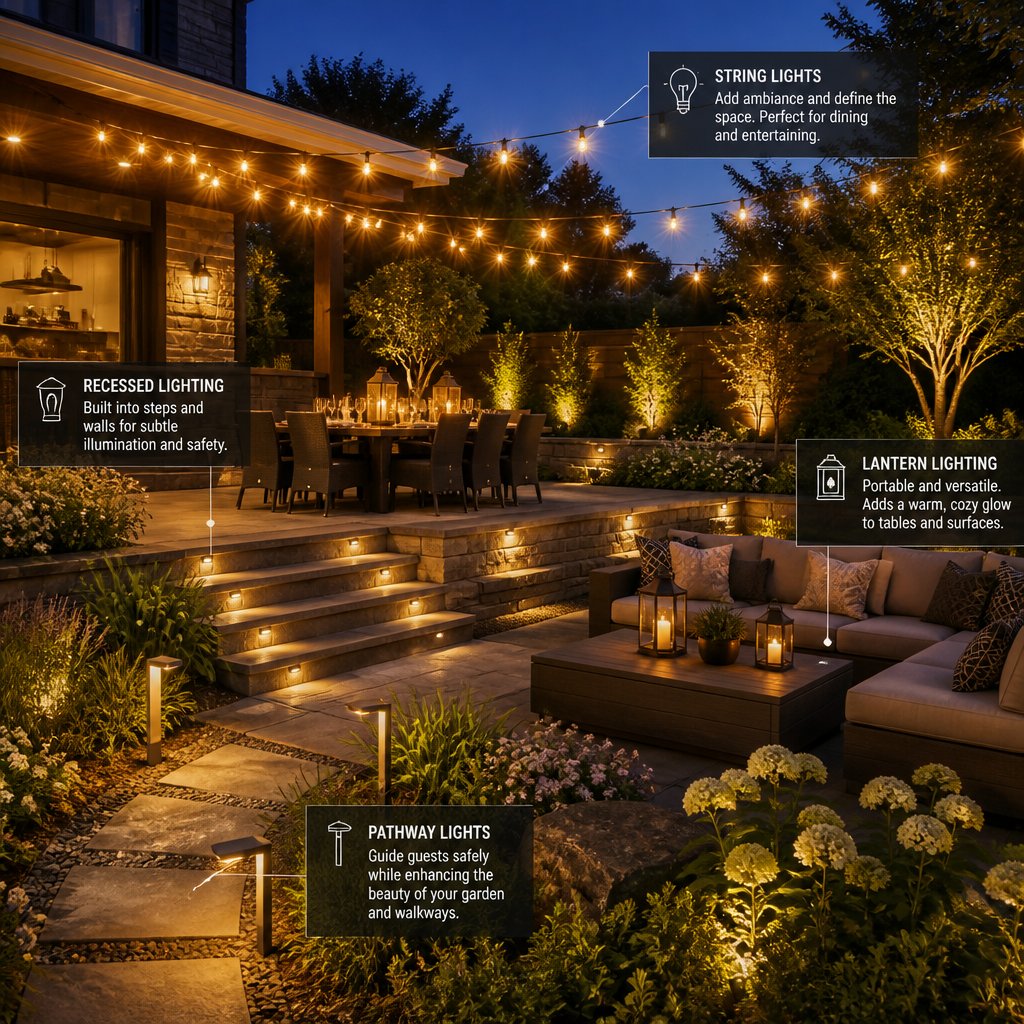
If you want your patio, deck, or backyard to feel inviting after sunset, the best lighting options for outdoor entertaining spaces do two jobs at once. They make the space safer to move through, and they set the mood so people want to stay awhile.
The right plan usually starts with layers, not just one bright fixture trying to do everything. A good outdoor lighting layout gives you soft ambient light, focused task light, and a few accent points that make your space feel finished. That balance matters whether you’re hosting dinner in Austin, relaxing in Lakeway, or lighting a backyard gathering space in Round Rock.
You don’t need the brightest setup on the block. You need the right fixtures in the right spots, sized for how you actually use the space. If you’re planning a new lighting layout or updating old fixtures, it helps to think like an electrician and a host at the same time.
How To Match Lighting To The Way You Entertain
The best lighting plan starts with your habits. A space for family dinners needs different light than a deck for cocktails, a poolside hangout, or a backyard path that guests use after dark.
Think about where people sit, eat, walk, and gather. Once those zones are clear, it’s much easier to pick fixture types, brightness levels, and placement that feel natural.
Dining Areas And Outdoor Kitchens
Dining spaces need steady, usable light so people can see their food, plates, and faces. Outdoor kitchens need a little more brightness over grills, counters, and prep areas, similar to indoor task lighting.
Pendant lights, ceiling-mounted fixtures, and well-placed wall sconces often work well here. If you cook outside a lot, make sure the light actually lands on the work surface and doesn’t cast shadows right where your hands are.
Patios, Decks, And Conversation Zones
For patios and decks, softer light usually works best. You want people to relax, not feel like they’re standing under a parking lot light.
String lights, low-glare sconces, and small accent fixtures can warm up the space without overpowering it. In my experience, conversation areas feel best when the light comes from more than one direction, so faces look natural and the space feels calm.
Pathways, Pools, And Backyard Features
Pathways need enough light for safe footing, especially when guests are carrying drinks or plates. Pools and water features need careful placement so light helps visibility without shining in people’s eyes.
Landscape lights and path lights are useful here, while spot-style fixtures can highlight trees, planters, stonework, or a backyard feature wall. In places like Dripping Springs, Cedar Park, or Georgetown, where yards often have a mix of stone, slope, and open space, that layer of light can make a big difference after dark.
Core Fixture Types To Consider
The fixture you choose should match the job the light is doing. Some lights are there to create mood, some are there to help you see, and some are there to make the whole yard feel connected.
A strong outdoor plan often combines decorative fixtures with practical ones. That mix gives you flexibility for weeknight use, weekend gatherings, and seasonal entertaining.
String Lights For Atmosphere
String lights are one of the easiest ways to add warmth to an outdoor space. They work especially well over patios, pergolas, and fence lines where you want a soft glow instead of sharp light.
They’re popular because they’re simple, affordable, and easy to scale. For a budget-friendly upgrade in places like Kyle, Leander, or Hutto, string lights can make a plain space feel more finished fast.
Wall Lights And Sconces For Everyday Use
Wall lights and sconces are dependable for daily use because they light entrances, seating edges, and exterior walls without taking up ground space. They also help define the structure of the home after sunset.
These fixtures are a smart choice near doors, covered patios, and outdoor kitchens. They can also support safety by brightening steps and transition points.
Landscape And Path Lights For Visibility
Path lights and landscape lights guide movement and help prevent dark spots. They’re especially helpful along walkways, garden borders, and driveways where guests may not know the layout well.
Used well, they should feel subtle, not harsh. A row of evenly spaced fixtures can make a yard easier to use without making it feel overlit.
Pendant, Chandelier, And Ceiling-Mounted Options
Pendant lights and outdoor chandeliers add style to covered spaces, while ceiling-mounted fixtures give broad light for porches and pavilions. These options work well when you want the room-like feel of an indoor space outdoors.
They’re a strong fit for covered patios and dining areas in Westlake, Bee Cave, and Spicewood, where homeowners often want entertaining spaces that feel polished and welcoming. When installed correctly, they can make the whole area feel like an extension of the home.
Brightness, Color Temperature, And Beam Control
Getting the light level right matters as much as choosing the fixture. Too much brightness can flatten the space, while too little leaves guests squinting or guessing where to walk.
Color temperature changes the mood, and beam control keeps the light where you need it. These details are what separate a decent setup from one that feels comfortable all evening.
Choosing Lumens Without Overlighting
Lumens tell you how bright a fixture is, but more isn’t always better. Outdoor entertaining spaces usually work best with enough light for safety and tasks, not so much that the area feels stark.
A dining zone may need moderate light, while a path or grill area may need more focused brightness. If your lights feel too intense at night, that’s often a sign the layout, not just the bulb, needs adjustment.
Warm Vs Cool Light For Comfort And Function
Warm light, usually in the 2700K to 3000K range, tends to feel softer and more comfortable for social spaces. Cooler light can work for task areas, but too much of it can make a backyard feel less inviting.
For most patios, decks, and dining areas, warm light is the safer starting point. Cooler light may still have a place near a grill, utility area, or side yard where function matters more than mood.
Directing Light To Reduce Glare And Dark Spots
Good outdoor lighting should light the space, not blind your guests. Aim fixtures toward surfaces, walkways, and features instead of pointing them directly at people.
Beam spread matters here. Narrow beams are useful for accents, while wider beams can cover more area with less hot spotting. If you notice harsh glare from a neighbor’s property or your own fixtures, a simple aiming change can make the whole space feel more balanced.
Energy Efficiency And Smart Control Features
Energy use matters when outdoor lights stay on for long hours. Efficient fixtures and controls can lower operating costs and make the system easier to live with day to day.
Smart controls also help your lighting match real use. That means less waste, fewer late-night trips outside, and a more polished setup for entertaining.
LED Upgrades And Long-Term Operating Costs
LED fixtures are the standard choice for most outdoor projects now because they use less energy and usually last longer than older bulbs. That can make a real difference if you light several zones around a backyard, pool, or commercial patio.
The upfront cost is often higher than basic bulbs, but the long-term savings usually make sense. For homeowners and business owners in Central Texas, that matters when you want dependable lighting without frequent maintenance.
Timers, Dimmers, And Zoned Controls
Timers help your lights turn on and off on a schedule, while dimmers let you adjust the mood as the evening changes. Zoned controls are even better because they let you run dining, path, and accent lights separately.
That kind of setup is useful for both homes and commercial outdoor spaces. You can keep safety lighting on while lowering the brightness over a seating area after guests arrive.
Smart Home Integration For Outdoor Systems
Smart controls can connect outdoor lights to your phone, voice assistant, or home automation system. That gives you more flexibility when you’re away, traveling, or hosting on short notice.
A well-set system can also help with energy control and routine use. If you already use smart thermostats, cameras, or security systems, outdoor lighting can often be tied into the same routine.
Safety, Weather Protection, And Electrical Planning
Outdoor lighting has to handle rain, heat, humidity, and dust, especially in Central Texas. It also has to be wired in a way that keeps people safe and protects the system over time.
Good planning matters here. The right fixtures and electrical setup help the lights last longer and reduce trouble later.
Wet-Rated Fixtures And Outdoor Wiring Basics
Not every outdoor fixture is made for every location. Wet-rated fixtures are designed for direct exposure to rain, while damp-rated fixtures are better for covered areas.
Wiring should also be protected for exterior use, with proper boxes, seals, and conduit where needed. If you’re adding new circuits for lighting installation, it’s worth planning for future needs like ceiling fans, outlet upgrades, or other outdoor electrical work.
GFCI Protection, Surge Protection, And Code Considerations
Outdoor circuits need proper GFCI protection to help reduce shock risk. Surge protection can also guard lighting systems from electrical spikes during storms, which is useful in areas across Central Texas where weather can change fast.
Code requirements matter too, especially for new builds, major remodels, or commercial properties. If you’re also considering panel upgrades, generator hookups, or EV charger installation, it’s smart to have the outdoor lighting plan reviewed at the same time.
When Lighting Installation Should Be Left To A Professional
Call a professional when wiring is old, the layout needs new circuits, or the fixtures are being installed in hard-to-reach places. The same goes if your outdoor space already has flickering lights, overloaded circuits, or signs of moisture damage.
A licensed electrician can also help with troubleshooting, load planning, and safer fixture placement. For homeowners and businesses in Austin, Round Rock, Cedar Park, and nearby communities, that can save time and prevent costly mistakes.
Design Mistakes That Can Ruin The Space
Even a nice fixture can look wrong if it’s placed poorly. A few common mistakes can make an outdoor space feel harsh, dark, or awkward to use.
The good news? Most of these problems are easy to avoid with a little planning. A better layout usually comes from restraint, not more hardware.
Using One Light Source For The Entire Yard
One bright fixture in the middle of the yard rarely works well. It creates flat light in one area and deep shadows everywhere else.
Layered lighting is usually much better. A mix of ambient, task, and accent light makes the space feel more natural and much easier to use.
Placing Fixtures Where They Create Glare
Glare is one of the fastest ways to make an outdoor area uncomfortable. Fixtures placed too low, too high, or aimed at eye level can make guests squint instead of relax.
This problem is common near decks, patios, and poolside seating. A better angle, a shielded fixture, or a dimmer can often fix it without replacing the whole setup.
Ignoring Maintenance, Access, And Future Expansion
Outdoor lights need cleaning, bulb changes, and occasional repairs. If a fixture is mounted where nobody can safely reach it, that small task becomes a big one.
It also helps to think ahead. If you might add more seating, a fire pit, a pergola, or a new outdoor kitchen later, leave room in the design for expansion so you’re not starting from scratch again.
Frequently Asked Questions
What are the best types of lights to create a cozy vibe on a patio or deck?
Warm string lights, soft wall sconces, and low-glare pendants usually create the most inviting feel. The key is to avoid one harsh overhead source and use a few gentle layers instead.
How can I light up an outdoor entertaining area on a budget without it looking cheap?
Start with LED string lights, a few path lights, and one or two well-placed sconces. Good placement matters more than expensive fixtures, and a simple layout can still look polished if the light is warm and balanced.
Which outdoor lights are safest and truly waterproof for year-round use?
Look for fixtures rated for wet locations, not just covered spaces, if they’ll be exposed to rain. You should also make sure the wiring, boxes, and outlets are designed for outdoor use and protected by GFCI where required.
What lighting works best for a covered patio when I can’t install recessed lights?
Surface-mounted ceiling fixtures, pendants, and wall sconces work well on covered patios. If you want more flexibility, add dimmers so you can shift from task light during dinner to softer light later in the evening.
How do I layer ambient, task, and accent lighting for outdoor gatherings?
Start with ambient light to shape the vibe—think string lights or lanterns for a soft glow. Add task lighting right where folks need it, like over the grill or the dining table, so nobody’s fumbling with their food. Then, toss in some accent lights to draw attention to cool stuff like trees, stone walls, or that little fountain you’re proud of. Mixing these keeps your space interesting and avoids that washed-out, too-bright look.
What are some modern front-of-house lighting ideas that feel welcoming but not too bright?
Try mixing in some warm wall lights, maybe a few gentle path lights, and a bit of soft uplighting on your landscaping or columns. You want to guide folks to your door and boost curb appeal, but nobody wants their place to look like an airport runway, right? Just enough glow to feel inviting—nothing harsh or over the top.