
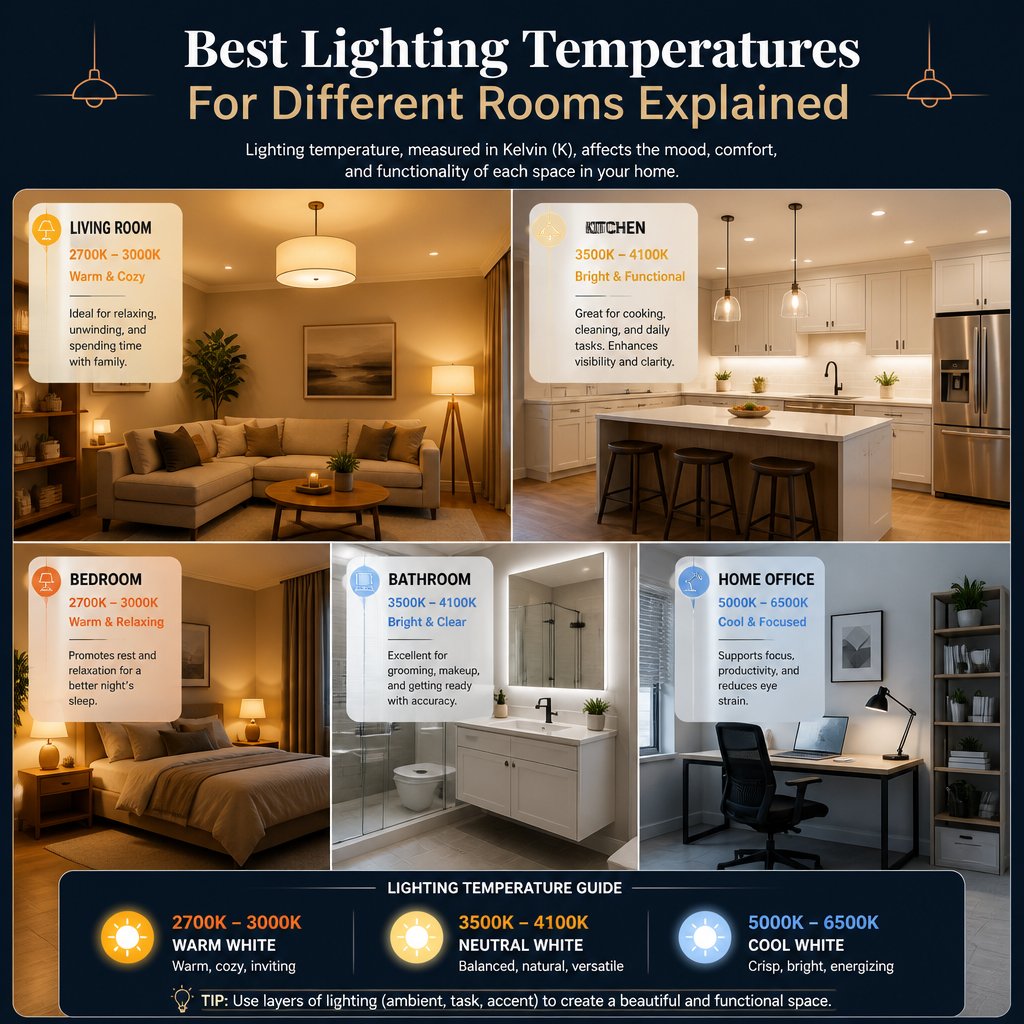
Choosing the best lighting temperatures for each room really comes down to this: your light should fit how you use the space. A soft, warm glow makes a room feel cozy and inviting. Cooler tones? They help you see clearly when you’re cooking, working, or getting ready for the day.
Ever walk into a room and it just feels off—too harsh, too gloomy, or just flat? Odds are, the color temperature is to blame. The right lighting can make your home feel more comfortable, your workspaces more functional, and your whole place more put together. If you’re in Central Texas and considering a lighting update, taking a quick room-by-room look saves you a lot of headaches (and maybe a call to a licensed electrician for a better fix).
What Color Temperature Actually Means
Color temperature tells you if a light looks warm, neutral, or cool. It’s measured in Kelvins (K), and that number changes the mood of a room as much as the fixture style.
Kelvin Scale Basics
Lower Kelvin numbers, like 2700K, give off a warm, soft white that feels homey. Midrange, like 3000K or 3500K, is cleaner and pretty balanced. Higher numbers—4000K to 5000K—look brighter and cooler.
Honestly, I think of Kelvin as a mood-setter first, style second. One bulb can totally change how paint, wood, stone, and even your skin look.
Warm Vs Cool Light at a Glance
Warm light feels relaxed and welcoming, so it’s a go-to for living rooms, bedrooms, and dining spaces. Cool light feels sharper and more alert—perfect for kitchens, offices, bathrooms, or anywhere you’re doing detailed stuff.
If you want a shortcut: warm light = comfort, cool light = clarity. Most rooms land somewhere between.
Why Brightness and Color Are Not the Same
A bright bulb isn’t always a cool bulb, and vice versa. Lumens measure brightness; Kelvin measures color.
That’s important when you’re picking LED options or swapping out fixtures. Maybe you want more light for a workspace but still prefer a softer color so it doesn’t feel like a hospital.
How Room Function Should Guide Your Choice
Start with what the room’s for. Spaces for rest, spaces for work, and rooms that do both all need slightly different lighting plans.
Spaces Meant for Rest
Bedrooms, nurseries, and chill sitting rooms usually feel best with warmer light. Soft white tones help the room stay calm in the evening and less harsh at night.
If you want to wind down after a long day, 2700K to 3000K usually hits the mark. It’s comfortable but not so warm the room looks yellow.
Areas Used for Tasks and Focus
Kitchens, home offices, bathrooms, laundry rooms, and garages need cleaner light. You want enough clarity to read, prep food, see details, and stay safe around tools or water.
A neutral to cool range—think 3500K to 5000K—usually works. It makes surfaces easier to see and cuts down on eye strain during close-up work.
Multiuse Rooms That Need Flexibility
Family rooms, open-concept spaces, and kitchen-dining combos often need more than one lighting mood. One fixed temperature might feel too warm for chores, too cool for hanging out.
Dimmers, layered fixtures, and smart lighting systems let you shift the feel as you need. That kind of flexibility is especially handy in Central Texas, where rooms often wear a lot of hats.
Recommended Ranges by Area of the Home
Every room does its own thing, so lighting shouldn’t be one-size-fits-all. These ranges work for most homes and help you balance comfort, function, and style.
Living Rooms and Family Rooms
For living and family rooms, 2700K to 3000K usually feels right. You get a warm, lived-in vibe that’s good for conversation, reading, or just relaxing.
If you get a lot of daylight, 3000K helps the space avoid looking too yellow at night. Darker rooms? 2700K feels softer and more relaxing.
Kitchens and Dining Areas
Kitchens often look best around 3000K to 4000K. Lots of folks land on 3500K for a clean look that’s not too harsh. That range keeps food colors true and counters easy to see.
Dining areas usually feel cozier at 2700K to 3000K. If your kitchen and dining room are open to each other, layered lighting and dimmers help balance both needs.
Bedrooms and Nurseries
Bedrooms are happiest at 2700K to 3000K. That warm range sets a restful mood and makes nighttime routines easier.
Nurseries? Go with soft warm light too, especially for late-night feeds or check-ins. You want enough light to be safe, but not so much it wakes everyone up.
Bathrooms and Vanity Lighting
Bathrooms need a more neutral light—usually 3500K to 4000K. That helps with shaving, makeup, and other close-up stuff.
For vanity lighting, accuracy matters. A balanced neutral white gives you a truer view in the mirror than really warm bulbs.
Home Offices and Study Spaces
Home offices do well at 3500K to 5000K, depending on your work. Cleaner white light helps you stay alert, especially during long reading or computer sessions.
If you work from home in Cedar Park, Georgetown, or Leander, smart dimmers or adjustable LEDs can make your office comfortable all day. That flexibility is a lifesaver when the same room is for both work and family.
Hallways, Entryways, and Laundry Rooms
Hallways and entryways usually look best with 3000K to 3500K. You want these areas to feel welcoming and bright enough for safe movement, and to match the rest of the house.
Laundry rooms benefit from 3500K to 4000K—makes it easier to spot stains and read labels. Here, function comes first.
Commercial and Shared Space Considerations
Commercial spaces need lighting that fits both people and the job at hand. Good lighting bumps up comfort, productivity, and the customer experience without making things feel cold or washed out.
Offices and Conference Areas
Offices typically do well at 3500K to 4000K. That range helps with focus but doesn’t feel too harsh. Conference rooms might use a slightly warmer neutral for comfort during meetings.
If your team spends long hours under artificial lights, picking the right color temperature can help reduce fatigue. Pair good bulbs with solid installation and controls for the best results.
Retail and Customer-Facing Interiors
Retail spaces often go with 3000K to 4000K, depending on brand and display needs. Warmer light feels more inviting; neutral light makes products pop and look accurate.
I’ve seen stores look better instantly after a simple temperature tweak. The whole place feels more intentional, and customers can actually see the merchandise.
Hospitality, Worship, and Waiting Spaces
Hotels, lobbies, waiting rooms, and worship spaces usually work best with warmer, welcoming tones—around 2700K to 3000K. People relax more the second they walk in.
Layered lighting and dimmable controls add flexibility for day, night, events, or quiet moments without constant bulb changes.
Common Lighting Mistakes to Avoid
Even a solid lighting plan can fall apart if you miss a few basics. Most issues come from mismatched temps, ignoring natural light, or skipping controls that actually make life easier.
Using One Temperature Throughout the Whole Property
It’s tempting to just buy one kind of bulb for every room, but that usually leaves your home feeling flat. Bedrooms, kitchens, and offices all need different light. Copy-pasting the same temperature everywhere rarely works.
Match the bulb to the room’s job. You’ll be more comfortable, and your space will work better every day.
Ignoring Natural Light and Time of Day
A room with lots of morning sun might need a different bulb than a dark hallway. Evening use matters too—bright, cool light can feel too harsh at night.
If a room changes a lot from day to night, try dimmers or smart home controls. You can fine-tune the light instead of getting stuck with one setting.
Choosing Bulbs That Clash With Finishes and Paint
Color temperature can totally change the look of cabinets, floors, counters, and walls. Warm light flatters wood; cool light makes whites and grays look crisp.
Before swapping every bulb, test a couple first. It’s a small step that can save you from a lighting choice that looks great in the store but weird at home.
Overlooking Dimmers, Controls, and Smart Home Settings
Even the best bulb feels off if the controls aren’t right. Dimmers, occupancy sensors, and smart systems help one room do multiple jobs with less hassle.
If your switches are old or fixtures don’t play nice with new bulbs, an electrical upgrade is worth considering. A licensed electrician can help you get a more flexible setup.
When an Electrical Upgrade Makes Sense
Sometimes the problem isn’t just the bulb—it’s the fixture, wiring, or controls behind it. If your lighting feels inconsistent or unreliable, an upgrade might be the safer bet.
Signs Your Fixtures or Wiring Need Attention
Flickering lights, buzzing switches, hot fixtures, bulbs that die fast, and uneven brightness all signal trouble. Watch for old wiring, loose switches, or fixtures that struggle with LEDs.
These aren’t just lighting preferences—they could mean you need electrical troubleshooting, new outlets, or a deeper inspection.
Efficiency Gains From Modern LED Installation
Modern LEDs use less energy and last way longer than old bulbs. That cuts down on maintenance, especially in high-use areas like kitchens, offices, and entryways.
LED upgrades also make it easier to pick the exact Kelvin range you want, room by room. For a lot of Central Texas homeowners, that means better lighting and better efficiency in one move.
When To Call a Licensed Electrician in Central Texas
If your lighting project involves new circuits, dimmer compatibility, panel upgrades, or hard-to-reach fixtures, call a licensed electrician. This is especially true for older homes and commercial spaces in Austin, Spicewood, Bee Cave, Dripping Springs, Hutto, and nearby towns.
It’s also smart to get help if you’re adding ceiling fans, surge protection, smart controls, EV chargers, or generators. A well-planned electrical update makes your lighting safer and easier to live with for years.
Frequently Asked Questions
What color temperature works best in a living room for a cozy but bright feel?
A living room usually feels best around 2700K to 3000K. That range is warm and inviting, but still bright enough for reading, visiting, or watching TV.
Which light temperature is ideal for a kitchen so food prep looks clear and accurate?
Kitchens often do well at 3500K to 4000K. That gives you a clear, neutral look that makes chopping, cleaning, and seeing food colors easier.
What’s the best color temperature for a bedroom to help you relax at night?
Bedrooms usually work best with 2700K to 3000K. Warmer light helps the room feel restful and calm before bed.
What light temperature should you use in a home office to stay focused without eye strain?
Home offices benefit from 3500K to 5000K, depending on what feels comfortable and how much daylight you get. A lot of people like 4000K—it feels clean and alert, but not too harsh.
Which color temperature creates the most flattering, inviting mood in a dining room?
Most dining rooms just seem to glow at around 2700K to 3000K. That kind of warm light really flatters everyone at the table—honestly, it just makes meals feel more inviting.
For bedrooms, is 3000K or 3500K typically the better choice?
Honestly, 3000K usually wins out for bedrooms since it gives off a softer, more relaxing glow. But hey, if you’re someone who reads, gets dressed, or does other things in there and craves a brighter, cleaner vibe, 3500K isn’t a bad pick either. It just depends on what feels right for you.