
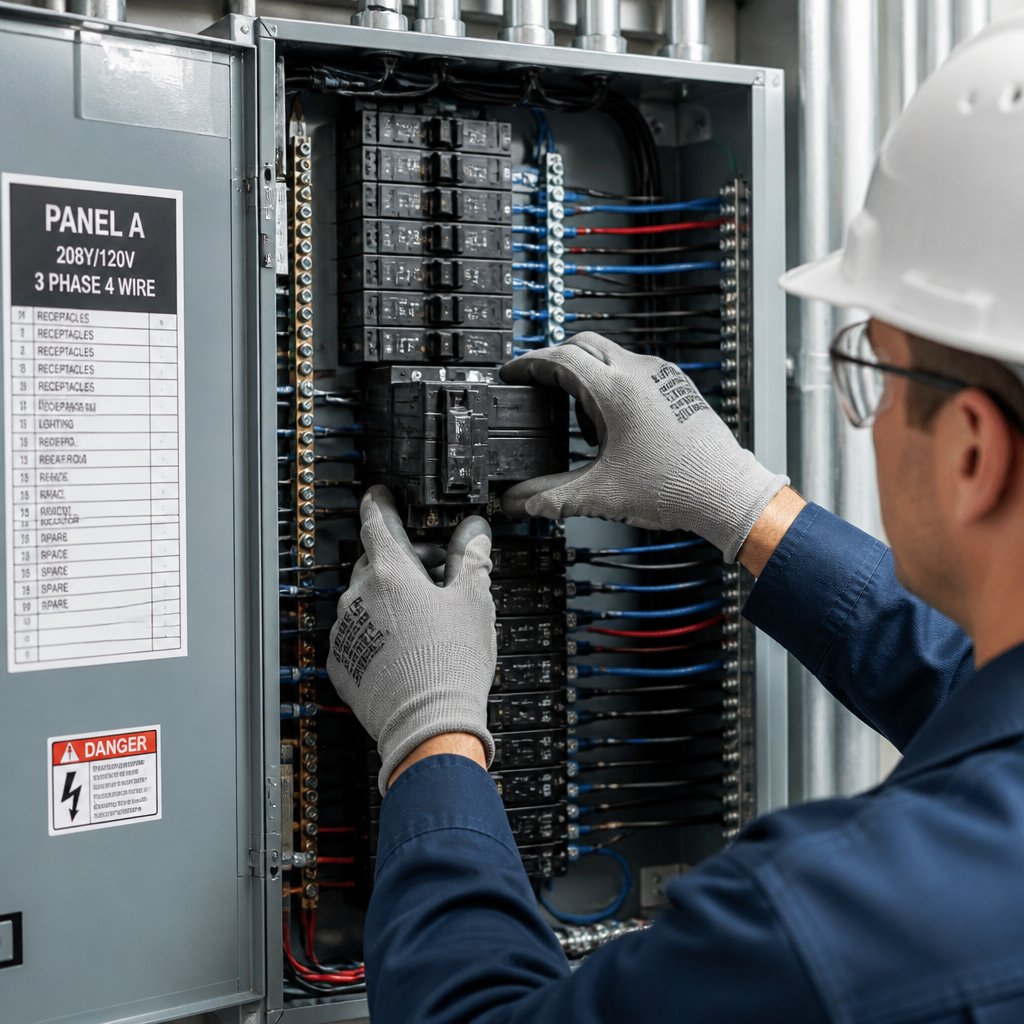
Older breaker panels can quietly hold a business back long before they fail outright. If your building still relies on aging electrical gear, you might be dealing with weak capacity, extra heat, and circuits that just can’t keep up with modern loads—think computers, upgraded lighting, HVAC controls, EV chargers, or a generator hookup.
Why businesses should upgrade outdated breaker panels really comes down to safety, reliability, and room to grow. When your electrical system matches today’s demand, you cut fire risk, avoid preventable downtime, and make future upgrades much easier. If you run a business in Austin, Round Rock, Cedar Park, Georgetown, or anywhere in Central Texas, it might be time to ask a licensed electrician if your panel’s still up to the job.
What An Aging Electrical Panel Means For A Business
An old panel can still power a building, but that doesn’t mean it’s supporting your business well. As demand grows, the panel can become a weak link for safety, uptime, and adding new equipment.
How Breaker Panels Support Daily Operations
Your breaker panel acts as the main control for electricity in the building. It splits power into circuits for lighting, outlets, office equipment, kitchen gear, HVAC systems, and all the other loads your business uses every day.
When the panel is the right size and stays maintained, each circuit runs within safe limits. That means fewer interruptions, smoother operation, and less strain on the rest of your system.
Why Older Equipment Struggles With Modern Power Demands
A lot of older panels were designed for lighter use than businesses need now. Maybe a space once just had a few lights and basic tools, but now it’s packed with computers, smart tech, security gear, EV charging, or energy-efficient lighting.
Older equipment can struggle with these demands in a few ways:
- Not enough capacity for new circuits
- Outdated breaker designs or old fuse-style parts
- Worn connections that loosen up over time
- Overheating when pushed close to the limit
That’s why so many commercial properties in Lakeway, Bee Cave, Dripping Springs, and Westlake need panel evaluations before adding new loads.
Safety Risks That Grow Over Time
Electrical problems often build up slowly. A panel that seems “mostly fine” can still be a real danger if it’s old, overloaded, or showing wear.
Fire Hazards, Overheating, And Nuisance Tripping
An outdated panel might fail to trip when it should, or it might trip too often because it can’t handle the load. Either way, you could be looking at overloads, loose parts, damaged breakers, or bad internal connections.
Heat is a big deal. If a panel runs hot, the risk of insulation damage, burning smells, and electrical fire goes up. Nuisance tripping interrupts work, and repeated resets can hide a deeper problem that needs attention.
Liability Concerns For Staff, Customers, And Tenants
If you manage a business property, you’re responsible for more than just convenience. You’ve got to think about the safety of employees, customers, tenants, and visitors.
A failing panel can create shock risk, fire risk, and code issues. If a preventable electrical problem leads to injury or property damage, the financial and legal fallout can be serious. A professional inspection lets you tackle the risk before it turns into a claim.
Operational Problems That Hurt Productivity
A weak electrical system isn’t just a safety concern. It can slow your business in ways you might not notice until the losses add up.
Downtime From Unreliable Circuits
When circuits trip without warning, your team has to reset equipment, reboot systems, and wait for power. That kind of hassle can mess with point-of-sale systems, office work, refrigeration, production tools, and security devices.
In a busy shop, office, or warehouse, even a short outage can throw off the whole day. Frequent interruptions make it harder to serve customers and keep staff productive.
Limits On Adding New Equipment, Lighting, And Technology
An outdated panel can block growth. If there’s no room for new circuits, your business might have to delay upgrades to lighting, technology, outlet and switch improvements, or equipment installs.
That’s a real headache when you want to add:
- EV chargers
- New HVAC controls
- Smart building systems
- Security cameras and access control
- Generator hookups
- Energy-efficient lighting
- More office or shop equipment
A modern panel gives you flexibility, which really matters if your business is expanding in Central Texas communities like Leander, Hutto, Liberty Hill, or Kyle.
Financial Reasons To Plan The Upgrade
A panel upgrade costs money up front, but waiting usually leads to bigger bills later. Planned electrical work is almost always easier to budget for than emergency repairs after something fails.
Repair Costs Versus Long-Term Electrical Improvements
Older panels can put you in a cycle of small repairs, repeated service calls, and quick fixes. Those bills add up, especially if the real problem is the panel just isn’t right for the building anymore.
A full upgrade might cost more at first, but it can cut down on repeat service issues and lower the risk of damage to your equipment. It also gives you a cleaner path for future electrical troubleshooting and maintenance.
How Modern Capacity Supports Efficiency And Future Expansion
A properly sized panel can boost efficiency across the building. It makes it easier to plan for future projects like lighting installs, outlet upgrades, surge protection, smart systems, or added production equipment.
That kind of flexibility matters for growth. If your building’s ready for new demand, you’re less likely to scramble when business needs change.
Clear Signs It Is Time To Take Action
Some warning signs are easy to brush off at first. But once they start piling up, your panel deserves a closer look from a licensed electrician.
Frequent Breaker Trips, Flickering Lights, And Warm Panels
Frequent trips are a classic sign a panel’s under stress. Flickering lights can mean loose connections, voltage problems, or overloaded circuits, while a warm panel might signal too much heat inside.
Other red flags: burning smells, breakers that feel loose, or breakers that won’t reset cleanly. If you see any of these, it’s smart to schedule a safety inspection soon.
Renovations, EV Chargers, Generators, And Other Load Changes
Load changes are a big reason businesses need panel upgrades. If you’re remodeling, adding office space, installing EV chargers, or planning generator hookups, the old panel might not have the capacity or space you need.
Even small changes can push an old system too far. That’s why it’s smart to review your electrical plan before new equipment goes in—not after problems show up.
How Businesses Should Approach The Project
A panel upgrade should start with a real look at the building, current load, and future plans for the space. That way, the work stays safe, practical, and fits your property.
The Value Of A Professional Inspection And Load Assessment
A licensed electrician can check the panel, test problem circuits, and review how much power the building actually uses. That load assessment helps figure out if you need a repair, a service upgrade, or a full replacement.
This step also helps spot related issues like outdated wiring, undersized breakers, or grounding problems. Honestly, those extra findings matter—a new panel only works well if the rest of the system’s in good shape too.
Choosing Solutions That Fit Central Texas Properties
Central Texas buildings run the gamut, from old retail spaces and offices to newer mixed-use properties and shops. The right solution should fit the building’s age, use, and growth plans—not just what code says.
That might mean sizing for extra lighting, EV charging, HVAC upgrades, or backup power. A thoughtful approach gives you a system that works now and leaves room for what’s next.
Frequently Asked Questions
How can an old breaker panel affect a business’s electrical safety and fire risk?
Old panels might not trip properly during an overload, letting wires and connections overheat. That raises the risk of electrical fire, shock, and equipment damage.
What are the warning signs that a commercial breaker panel needs to be replaced?
Look for frequent breaker trips, flickering lights, warm or discolored panel covers, burning smells, and breakers that feel loose or won’t reset well. If you spot several of these, get the panel checked soon.
How much does it typically cost to upgrade a breaker panel in a business?
It depends on panel size, building age, wiring condition, and how much labor’s needed. A licensed electrician needs to inspect the site first to give a fair estimate.
Will upgrading the breaker panel help prevent nuisance tripping and unexpected downtime?
If the tripping is caused by an overloaded or outdated panel, yes. A properly sized upgrade can support your current load and reduce avoidable interruptions.
How do you determine the right electrical panel size for a business’s current and future needs?
An electrician looks at your current load, planned equipment, building layout, and future expansion goals. That assessment helps you pick a panel with enough capacity—without oversizing it for no reason.
Do businesses need permits or inspections to replace or upgrade a main electrical panel?
Yeah, in most places, you do. Swapping out or upgrading a main electrical panel almost always means you’ll need a permit and, honestly, an inspection too. It’s not just red tape—local codes and safety standards are there for a reason.