
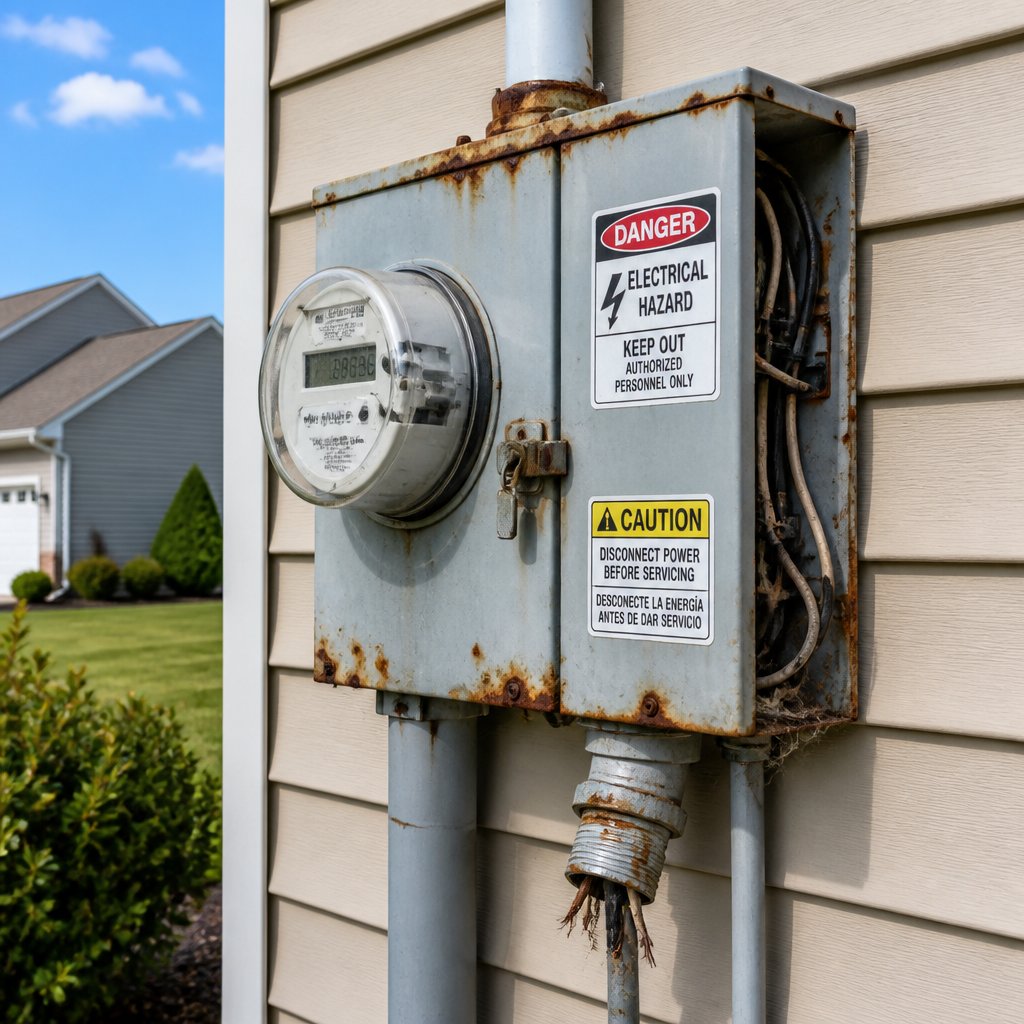
Homes usually drop hints before electrical trouble gets serious. Flickering lights, a warm panel, rust by the meter, or a loose-looking service cable—none of that is just cosmetic. Those signs your electrical service entrance needs attention often mean safety risks, power issues, or equipment wearing out sooner than it should.
The service entrance brings utility power into your home, so if something’s wrong here, it can mess with everything from lighting and appliances to panel performance and surge protection. In Central Texas, storm damage, heat, and just plain old age all play a part—especially in Austin, Round Rock, Cedar Park, and Lakeway. If anything seems off, a licensed electrician can check it out and help you head off a bigger problem.
What The Service Entrance Does
Think of your service entrance as the bridge between the utility and your home’s wiring. It brings power from the street or overhead lines into the meter, then the main disconnect and panel, where it splits off to your outlets, lights, and bigger stuff.
How Power Gets From The Utility To Your Panel
Power comes onto your property through overhead lines or underground cables, then heads through the meter and into the main equipment. After that, it reaches your panel, where breakers send it around the house. If anything along that path gets damaged, loosened, or just isn’t big enough for your needs, you’ll probably notice problems at your panel, lights, or appliances.
Why This Area Matters For Safety And Reliability
This part carries the whole load for your place, so it’s a big deal for safety. A bad connection, damaged cable, or moisture can all cause heat, outages, or equipment to fail. In Central Texas, regular electrical maintenance and safety inspections are honestly worth it—catching issues early is way better than dealing with an emergency.
Visible Warning Signs Outside
A lot of problems show up outside before you see anything inside. Take a quick look around the meter, mast, and service lines now and then—damage here needs attention sooner, not later.
Damaged Weatherhead Or Service Mast
A bent mast, cracked weatherhead, or missing hardware can let water in or put too much strain on the wires. After a big storm, this is one of the first spots I check. If the mast leans, splits, or pulls away from the roof, you’ll want a licensed electrician out there fast.
Loose, Sagging, Or Frayed Service Drop Lines
Service drop lines should be tight and supported. If they’re sagging, the insulation’s broken, or you see fraying, that’s a real hazard and can mess with your power. If you spot this from the ground, don’t touch anything—just call for help.
Rust, Corrosion, Or Water Intrusion Around Equipment
Rust near the meter socket or stains by the entry point usually mean leaks or long-term exposure. Water and electricity? Never a good combo. Corrosion weakens connections over time, and this pops up a lot in older homes where weather sealing’s failed.
Indoor Clues That Point To Upstream Problems
What you see inside can still trace back to the service entrance. When the main supply isn’t steady, you’ll notice it in your lights, panel, and sensitive electronics.
Flickering Lights And Inconsistent Power
If your lights flicker when you run the microwave, HVAC, or laundry, it’s probably not just a bad bulb. Loose connections, failing service gear, or voltage drops can all cause this. With newer smart home stuff or energy-saving lights, you might notice the instability even more.
Warm Panels, Burning Odors, Or Buzzing Sounds
A warm panel is never a good sign. A burning smell, sizzling, or buzzing near the main panel means something’s heating up or a connection’s failing. If you catch this, turn off what you can safely and get service right away.
Frequent Breaker Trips Or Unexplained Appliance Issues
If breakers keep tripping, lights dim, or appliances quit early, it might be a supply problem, not just a bad appliance. Heavy loads like EV chargers or generators can really stress a weak service entrance. Usually, the real issue is upstream.
Common Causes Behind These Problems
Most service entrance trouble comes from wear and tear, weather, or equipment that’s just not up to today’s demand. In older homes or busy businesses, these things can sneak up until the system starts acting up.
Age, Weather Exposure, And Storm Damage
Texas weather—heat, wind, rain, lightning—can beat up service equipment over time. Old parts dry out, crack, or loosen after storms. In places like Dripping Springs, Georgetown, and Liberty Hill, weather’s a big reason folks call for electrical troubleshooting.
Undersized Equipment For Modern Electrical Demand
Most homes now use way more devices than the original gear was built for. Upgrades like new panels, EV chargers, tankless water heaters, and smart systems can overload older setups. If your electrical needs have grown, your service entrance might need an upgrade to keep up.
Poor Past Repairs Or Code Compliance Issues
Quick fixes, sketchy splices, or old parts that don’t meet code can cause hidden headaches. These problems often pop up after a storm or when a circuit gets pushed too hard. A proper inspection can show if things were fixed right or just patched.
Risks Of Waiting Too Long
Problems with your service entrance almost never fix themselves. Waiting usually means more danger, higher repair bills, and less reliable power.
Fire And Shock Hazards
Loose connections and moisture can cause heat, arcing, or even expose live parts. That’s a real fire and shock risk, especially by the meter or main disconnect. If you think there’s an issue, treat it seriously—it’s not just routine maintenance.
Higher Chance Of Service Failure
A weak service entrance can fail when you need it most—during heat waves, storms, or high demand. Losing power isn’t just a hassle; it’s a real problem for homes and small businesses. For folks in Westlake, Leander, Hutto, and nearby, reliability matters as much as safety.
Costlier Repairs And Insurance Concerns
Ignore small damage, and it’ll usually turn into bigger failures. Water, corrosion, and heat can mean you’ll replace more parts later. Insurance companies might also raise questions if electrical issues go unaddressed, so fixing things early protects your home and your wallet.
When To Call A Licensed Electrician
If your service entrance looks rough or your home keeps having electrical issues, it’s time for a pro. Acting sooner makes it easier (and cheaper) to fix things and keep your place safe.
Situations That Need Prompt Professional Evaluation
Call right away if you see a damaged mast, loose service drop, rust at the meter, burning smells, buzzing, or repeat breaker trips. Same goes for power loss in more than one area. If a storm just rolled through, don’t wait for the next outage.
What An Inspection May Include
A licensed electrician will probably check the service cable, weatherhead, meter socket, grounding, main disconnect, and panel connections. They’ll look for overheating, water entry, corrosion, and code problems. Usually, this inspection gives you a clear idea of what needs fixing, maintaining, or upgrading.
How Service Entrance Repairs Connect To Panel Upgrades And Surge Protection
Service entrance repairs often go hand-in-hand with other smart improvements. If your system’s old or too small, a panel upgrade might be the best move for new stuff like lighting, outlets, ceiling fans, or an EV charger. Surge protection helps shield your electronics once the main service is solid—definitely a good idea for homes and businesses.
Frequently Asked Questions
What warning signs suggest my home’s electrical grounding might be poor?
If you keep getting static shocks, see flickering lights, or your equipment acts weird, grounding could be the culprit. A licensed electrician can test things and spot grounding faults at the service entrance or panel.
Why do my lights flicker or dim when appliances turn on?
That’s usually a voltage drop or a loose connection. If it happens a lot, the service entrance, meter base, or main panel probably needs attention.
What does a burning smell or buzzing near the meter or main panel mean?
That’s a sign of heat, arcing, or a failing connection. Treat it as urgent. Only turn off power if you’re sure it’s safe, then call an electrician ASAP.
Should I worry if the service cable, mast, or weatherhead looks damaged or loose?
Absolutely. Those parts bring power into your home. Damage here can cause outages, shock, or fire. Don’t touch it—just get it checked quickly.
What does it mean if breakers trip often or fuses blow repeatedly?
Your system might be overloaded, a circuit could be failing, or the service entrance isn’t supplying power right. If breakers keep tripping, something’s wrong—get it inspected.
When should I call an electrician if I see rust, water staining, or corrosion around the meter or service equipment?
If you spot rust, water stains, or any corrosion near your meter or service panel, it’s time to pick up the phone. Moisture’s sneaky—it can start causing trouble inside those boxes way before anything obvious goes wrong. Don’t wait for something dramatic; just get it checked out.