
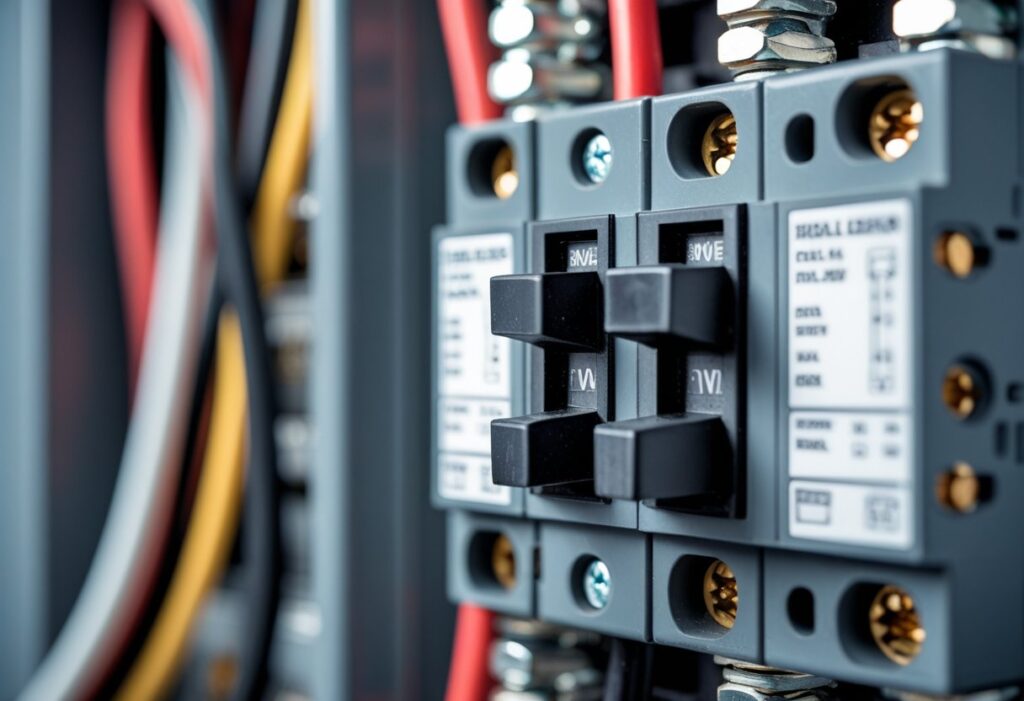
A double pole breaker is a key part of your home’s electrical system. It keeps you safe when using high-power appliances.
It protects circuits that run on 240 volts by cutting off both wires at the same time if there is an overload or fault. This makes it different from a single pole breaker, which only controls one wire and is used for lower voltage circuits.
You’ll often find double pole breakers powering big machines like dryers, water heaters, or air conditioners. Knowing what they do can help you understand your circuit breaker box better.
Understanding Double Pole Breakers
A double pole breaker controls two circuits at the same time. It handles more power than single pole breakers.
It is designed for high-voltage appliances and manages both live wires together. This ensures safety for your home’s electrical system.
Definition of a Double Pole Breaker
A double pole breaker connects to a 240-volt circuit. Single pole breakers handle 120 volts, but double pole breakers serve larger appliances like dryers, water heaters, and HVAC systems.
It occupies two slots in your breaker panel and controls two separate wires, often called “hot” wires. It trips both circuits at the same time if a fault or overload occurs.
This reduces the chance of electrical damage or hazards.
How Double Pole Breakers Work
These breakers monitor two live wires at once. If the current through either wire becomes too high, the breaker trips and shuts off power to both wires.
This protects your home from overheating and electrical fires. It keeps large, power-hungry appliances running safely by stopping excess current.
Because it handles 240 volts, it uses two poles or switches inside one unit to break the circuit. This design cuts off power fully, unlike single pole breakers that only interrupt one wire.
Key Components of a Double Pole Breaker
A double pole breaker has several main parts:
- Two switches: Each controls one live wire.
- Trip mechanism: Detects overloads and triggers both switches to open.
- Terminals: Connect to the wires in your breaker panel.
- Handle: Lets you manually turn the breaker on or off.
These parts work together to disconnect both wires during a fault. The breaker is sized by amperage, usually from 15 to 100 amps depending on the appliances.
Differences Between Double Pole and Single Pole Breakers
Double pole and single pole breakers differ in how much power they handle, what appliances they protect, and how they look in your breaker panel.
Voltage and Circuit Capabilities
Single pole breakers connect to one hot wire and control 120 volts. They are perfect for regular household outlets and lighting circuits.
They usually handle 15 or 20 amps of current, enough for most everyday devices. Double pole breakers connect to two hot wires, allowing them to control 240 volts.
This higher voltage is needed for big appliances like dryers and HVAC units. They protect both wires at the same time, offering safer handling of heavy electrical loads.
Common Uses for Each Type
You’ll find single pole breakers used for standard circuits like lights, TVs, and small appliances. They protect smaller loads and keep everyday electrical use safe.
Double pole breakers are for devices that need 240 volts, like ovens, water heaters, and air conditioners. They disconnect both lines if there’s a fault or overload.
Physical Differences in Panels
Inside your breaker panel, single pole breakers take up one slot and have one switch. They are narrow and small.
Double pole breakers are wider, occupying two slots side-by-side. They have a linked switch that flips both poles at once.
You’ll see a bar or handle connecting them, so they stay in sync when turned on or off. This ensures both wires are always protected together.
Applications of Double Pole Breakers
Double pole breakers are used where 240 volts are needed. They protect circuits with higher power demands.
You will find them in various settings, handling different types of electrical loads.
Residential Electrical Systems
In your home, double pole breakers power major appliances. These include electric dryers, ovens, water heaters, and HVAC systems.
These appliances need 240 volts to run efficiently and safely. The breakers usually handle higher amps, like 30 to 60.
This prevents overload and potential damage. Because they control two hot wires, they protect both sides of the circuit at the same time.
Commercial and Industrial Uses
In businesses or factories, double pole breakers protect heavy equipment. These can be large motors, commercial ovens, or machine tools.
These devices often require more power than typical home appliances. The breakers in these settings might be rated for even higher amps.
They manage electric load safely and prevent fires or equipment failure. You might also see double pole breakers in systems that split power across multiple circuits.
This gives you better control and safety for complex setups.
Installation and Safety Tips
Installing a double pole breaker needs careful attention to ensure it works correctly and keeps your home safe. You’ll need to follow specific steps and take safety measures when handling the breaker.
Knowing when to replace it helps maintain your electrical system’s reliability.
Proper Installation Procedures
Turn off the main power before starting to avoid any electrical shock. Check your breaker box to make sure the double pole breaker matches the amperage demand of your circuit.
Install the breaker so it connects to two separate bus bars in the panel. This way, it controls two live wires and cuts power to both if there’s an overload.
Make sure the breaker snaps firmly into the slot. Fasten the wires securely to the breaker terminals.
Label the breaker clearly. This helps you know which circuits are protected and simplifies future troubleshooting.
Safety Precautions for Handling Breakers
Always use insulated tools and wear rubber-soled shoes when working inside the breaker box. Keep the area dry to avoid electric shocks.
Never touch live parts or metal connections directly. Use a voltage tester to confirm the power is off on the breaker you’re working with.
Avoid over-tightening screws on the breaker terminals. Follow the torque specifications provided by the manufacturer if available.
If you’re unsure, call a professional electrician to handle installation or repairs.
When to Replace a Double Pole Breaker
Replace your double pole breaker if it frequently trips without a clear cause. This may signal internal damage.
Look for signs like burn marks, corrosion, or a breaker that feels loose in its slot. These show the breaker isn’t working safely.
If your breaker is old or doesn’t meet your current electrical load, upgrading it can prevent overloads or electrical fires.
Always switch off the main power before removing or replacing a breaker. If you notice issues, such as buzzing sounds or the breaker won’t reset, it’s time to get a replacement.
Advantages of Using Double Pole Breakers
Double pole breakers give you reliable protection and support for high-power electrical systems. They help keep your home safe from electrical faults and let you run big appliances without trouble.
Enhanced Safety Features
Double pole breakers protect both hot wires in a 240V circuit. If one wire has a problem, the breaker cuts power to both wires at the same time.
This helps prevent electrical shocks and reduces fire risks. Because these breakers control two wires together, they stop current from flowing unevenly.
This balanced protection helps avoid damage to your wiring and appliances. It also ensures you won’t accidentally turn on just one side.
Support for High-Powered Devices
Many household appliances like electric ovens, water heaters, and air conditioners need 240 volts to work properly. Single pole breakers only provide 120 volts, which is not enough for these devices.
Using a double pole breaker allows you to deliver full power safely to your equipment. It can handle larger loads without tripping often.
Your devices will run smoothly and efficiently without overloading your electrical system.
Troubleshooting Common Issues
Some problems with double pole breakers happen because circuits have too much power running through them. Other issues come from the breaker itself not working right.
Knowing how to spot these problems can help you keep your electrical system safe and working well.
Overloading Circuits
When a double pole breaker trips often, the circuit is likely overloaded. This happens when too many devices or appliances use more electricity than the breaker can handle.
To fix this, reduce the number of items running on that circuit. Move some devices to different circuits if possible.
Using high-power appliances like heaters or ovens on separate breakers helps prevent overload. Check the breaker’s amperage rating.
If your circuit needs a higher rating, talk to an electrician about upgrading it safely.
Identifying Faulty Breakers
If your breaker keeps tripping even when the load isn’t high, the breaker itself might be faulty. Signs of a bad breaker include breakers that won’t reset or sparks and burning smells near your electrical panel.
You can use a multimeter to check if it’s passing electricity correctly. If it fails these tests, replace the breaker.
Do not try to fix or replace a breaker yourself unless you have experience. Contact a professional electrician to handle any breaker problems and keep your home safe.
Selecting the Right Breaker for Your Needs
Choosing the right breaker keeps your electrical system safe and working well. Think about the voltage and amperage your circuits use.
A double pole breaker is usually for 240 volts. It protects two wires at once, which helps stop overloads.
This makes it a good choice for big appliances like dryers or ovens.
Here are some tips to help you choose:
- Check the voltage: Use a double pole breaker for 240-volt circuits.
- Match the amperage: The breaker’s amp rating should match your device’s needs.
- Consider safety: Make sure the breaker can handle the load to avoid overheating.
If you are not sure which type or size to choose, ask a licensed electrician. They can advise you based on your home or business needs.
Using the wrong breaker can cause electrical fires or damage your appliances. Take time to pick the right one.
You can also find breakers for special needs, such as outdoor use or protection against weather. These add an extra layer of safety if your breaker box is outside.
Follow all wiring color codes and safety rules when installing your breaker. If you do this right, your electrical system will stay safe and reliable.
Frequently Asked Questions
You need the right wiring and breaker type to keep your electrical system safe. Knowing which appliances need a double pole breaker and understanding the difference between single and double pole breakers helps you make the best choice.
How do you wire a double pole 20 amp breaker?
Connect the two hot wires from your 240-volt circuit to the breaker’s terminals. Attach the neutral and ground wires to their bars in the panel.
Always turn off power before working. Follow local codes for safety.
What types of appliances require a double pole 20 amp breaker?
Electric dryers, water heaters, and some HVAC units need a double pole 20 amp breaker. These appliances use 240 volts and require more power than standard outlets or lights.
Can you use a single pole breaker for 240v applications?
No, single pole breakers only work for 120-volt circuits. Using a single pole breaker for 240 volts is unsafe and can cause electrical faults.
What’s the difference between a double pole and a single pole breaker?
A single pole breaker handles one hot wire and protects 120-volt circuits. A double pole breaker handles two hot wires and protects 240-volt circuits.
Is it possible to connect two separate circuits to a double pole breaker?
No, a double pole breaker protects one 240-volt circuit. Each breaker should protect only its designated circuit.
What’s the advantage of using a double pole breaker instead of a single pole?
A double pole breaker interrupts both hot wires at the same time. This improves safety and ensures the full 240-volt circuit stays protected.
Single pole breakers only cut power to one side of the circuit.