
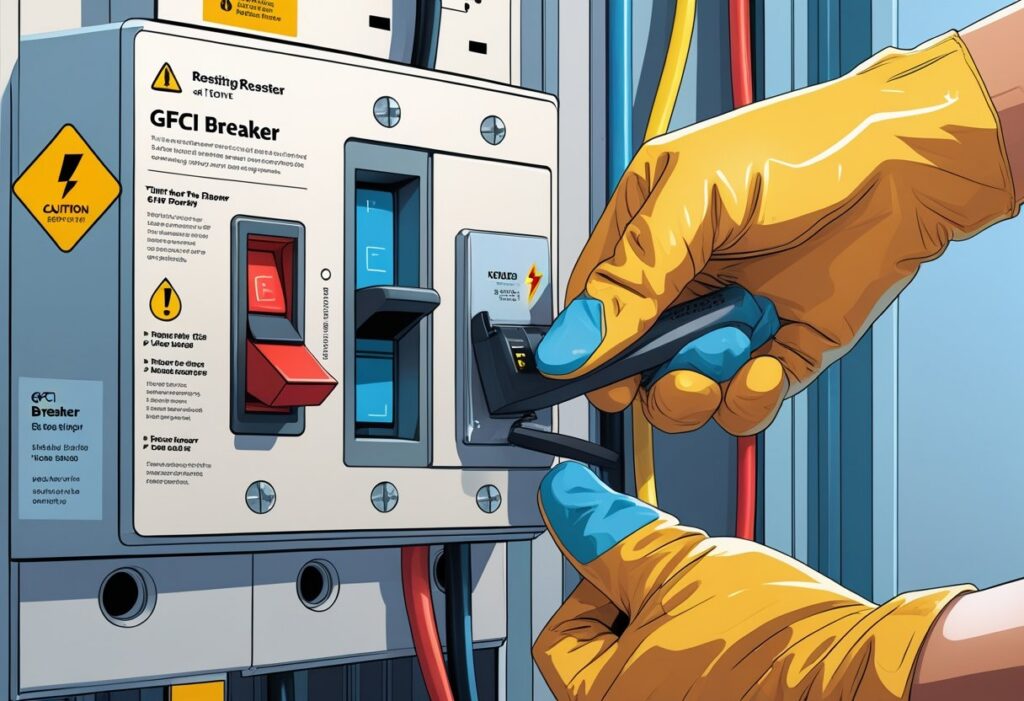
If your GFCI breaker trips, it usually means it detected a ground fault to protect you from electrical shock. To reset a GFCI breaker, locate the breaker in your electrical panel, switch it fully to the OFF position, then switch it back ON.
This should restore power unless there is an ongoing issue. Sometimes the breaker won’t reset if there is an electrical fault, such as an overloaded circuit or a short.
If this happens, unplug devices or check for wiring problems before trying again.
What Is a GFCI Breaker?
A GFCI breaker is a safety device that protects you from electric shocks. It cuts off power when it senses an electrical problem.
You’ll find this type of breaker especially useful in places where water or moisture is common.
How GFCI Breakers Work
A GFCI breaker monitors the electrical current running through the circuit. It compares the current flowing in with the current going out.
If it detects a difference, even a small one, it trips and turns off power almost instantly. This difference could mean electricity is leaking somewhere unsafe, like through water or a person.
You reset a GFCI breaker by switching it fully off and then back on at your breaker panel. This restores power if the cause of the trip is fixed.
The quick trip helps stop shocks or fires caused by faulty wiring or appliances.
Common Locations for GFCI Breakers
You’ll mostly find GFCI breakers protecting circuits in wet or damp areas. These include kitchens, bathrooms, garages, basements, and outdoor outlets.
These locations are more at risk because water can cause electricity to flow in unsafe ways. Using a GFCI breaker here keeps you safer by shutting off power fast if a problem happens.
Some modern homes have GFCI breakers covering entire circuits, giving more comprehensive protection in these risky areas.
Signs Your GFCI Breaker Needs Resetting
Your GFCI breaker may trip for several reasons related to safety or electrical faults. Knowing the usual causes and the signs that show your GFCI needs resetting can help you fix the issue quickly and keep your home safe.
Why GFCI Breakers Trip
GFCI breakers protect you from electric shocks. They trip when they detect a difference in the electrical current between the hot and neutral wires.
This usually happens because of a ground fault or short circuit.
Common reasons your GFCI might trip include:
- Water or moisture near outlets
- Damaged or faulty appliances
- Overloaded circuits with too many devices
- Wiring problems like loose connections
If your GFCI breaker trips often, it could mean there is a serious electrical issue. In these cases, resetting the breaker is a temporary fix, but you should check for the source of trouble.
Symptoms of a Tripped GFCI Breaker
You can tell your GFCI breaker has tripped if:
- Certain outlets suddenly stop working
- The reset button on the GFCI outlet is popped out
- Lights or devices connected to the circuit don’t turn on
Sometimes, the breaker may not reset properly if it is worn out or faulty. Other signs include discoloration around the outlet or a faint burning smell, which means you should call an electrician.
If you notice these symptoms, try pressing the reset button. If the GFCI stays tripped or won’t reset, avoid using that circuit until it is inspected or repaired.
Step-By-Step Guide: How to Reset a GFCI Breaker
Resetting a GFCI breaker involves safety checks, locating the right breaker, and following a specific reset process. You need to be cautious and methodical to make sure everything works safely.
Safety Precautions Before Resetting
Before you start, turn off any devices or appliances connected to the circuit. This prevents sudden power surges that can cause damage or injury.
Next, turn off the main breaker to cut power to the panel if you need to open it. Always use insulated tools and avoid touching metal parts inside the breaker box.
Wear rubber-soled shoes and stand on a dry surface. This reduces the risk of electric shock.
If you are unsure or uncomfortable, call a licensed electrician to handle the reset.
Locating the GFCI Breaker
Open your circuit breaker panel carefully. Use a flashlight if the area is dimly lit.
Look for a breaker labeled GFCI or one with a small test button. It often looks different from standard breakers, usually with a “Test” and “Reset” button.
If breakers are not labeled, check which one controls outlets in wet areas like the kitchen, bathroom, or garage.
Make sure the breaker you identified is tripped. It will be in the middle position or clearly switched off.
The Correct Way to Reset
Flip the breaker fully to the off position first. Some breakers won’t reset if you skip this step.
Wait a moment, then switch it firmly back to the on position. Press the reset button on the breaker if it has one.
If it stays in the on position, your power is restored. Plug in a device to check if power has returned to the outlets protected by this breaker.
If the breaker trips again immediately, do not keep resetting. This could mean a wiring issue or a faulty device needs professional inspection.
What to Do If Your GFCI Breaker Won’t Reset
If your GFCI breaker won’t reset, there’s likely an ongoing electrical problem. Check the wiring and any devices on that circuit.
This helps you avoid damage and keeps your home safe.
Troubleshooting Electrical Issues
First, turn off all devices plugged into outlets on the GFCI circuit. Sometimes, an overload causes the breaker to trip and prevents it from resetting.
Next, press the reset button on the breaker firmly. If it still doesn’t reset, there might be a short circuit or a ground fault in your wiring.
Check the breaker itself for any visible damage. A faulty breaker may need replacement.
If you’re unsure, use a circuit tester or multimeter to find wiring problems before calling an electrician. Always make sure the power is off before handling wires.
Identifying Faulty Appliances
Sometimes, a bad appliance causes the problem. Unplug everything on the GFCI circuit.
Plug in each appliance one at a time, then try resetting the breaker after each one. If the breaker trips after plugging in a specific device, that appliance could be faulty.
Appliances with damaged cords or internal issues often cause ground faults or shorts. Repair or replace any appliance that causes the breaker to trip.
Remember, frequent tripping might signal bigger electrical issues, so keep an eye on the breaker’s behavior.
When to Call a Professional Electrician
If your GFCI breaker keeps tripping or won’t reset after you’ve tried normal steps, you may need expert help. Some electrical problems need a trained eye to avoid risks.
Recognizing Complex Electrical Problems
Call a professional if your GFCI breaker trips often without an obvious cause. Frequent tripping can mean wiring problems, a short circuit, or faulty devices on the circuit.
If the breaker won’t reset after pressing the reset button, there might be damaged wiring or a bad breaker. Other signs include sparks, burning smells near outlets, or outlets that don’t work correctly.
A licensed electrician can find the root cause and repair it safely.
Ensuring Long-Term Safety
Trying to fix electrical issues without the right knowledge can make things worse or create hazards. A professional can check all wiring and outlets connected to the GFCI breaker to make sure everything meets safety codes.
They also test your system to prevent future problems. Hiring an expert helps keep your electrical setup working correctly and protects your home.
Tips to Prevent Future GFCI Breaker Trips
To keep your GFCI breaker from tripping often, do not overload the circuit. Avoid plugging too many devices into the same outlet or circuit.
This helps prevent the breaker from shutting off due to too much power being used. Make sure your electrical devices and cords are in good shape.
Damaged or wet cords can cause a ground fault and trip the GFCI. If you find any wear or exposed wires, replace or repair them right away.
Keep outlets and areas around them dry. Moisture can cause the GFCI to trip. Use covers on outdoor outlets and be careful when using water near outlets.
If your GFCI outlets or breakers are older than 10 years, consider replacing them. Age can make them less reliable and prone to tripping.
This is especially important if your home hasn’t had an electrical inspection recently.
Try this simple checklist to avoid trips:
| Action | Why It Helps |
|---|---|
| Unplug unused devices | Reduces circuit load |
| Check for damaged cords | Prevents ground faults |
| Keep outlets dry | Avoids moisture-related trips |
| Replace old GFCI outlets | Keeps protection working well |
By following these tips, you reduce the chances of your GFCI breaker tripping when it’s not needed.
Frequently Asked Questions
You will learn the right way to reset your GFCI safely. You will get clear steps for both outlets and breakers.
You will discover why resetting might fail and how often to test your devices. You’ll also find advice on what to do if the breaker trips a lot and special steps after power outages.
What steps should I follow to safely reset a GFCI outlet?
First, unplug any devices connected to the outlet. Press the “Reset” button on the GFCI outlet firmly until it clicks.
If the outlet does not reset, check if the circuit breaker has tripped. Always make sure your hands are dry and you are standing on a dry surface before working with electricity.
Can you guide me through resetting a tripped GFCI circuit breaker?
Go to your breaker panel and open the door. Find the breaker labeled GFCI.
Switch the breaker all the way to the “Off” position first, then flip it back to “On.” This restores power to the circuit the GFCI protects.
What might be the reason my GFCI breaker won’t reset?
A ground fault or a short circuit on the circuit can prevent your GFCI breaker from resetting.
If the circuit has too many devices plugged in, it may become overloaded. Unplug some appliances and try resetting the breaker again.
How often should I test and reset my GFCI outlets at home?
Test your GFCI outlets once a month by pressing the “Test” button. This creates a fault to see if the outlet trips.
After testing, press the “Reset” button to restore power.
What should I do if my GFCI breaker trips frequently?
Frequent tripping usually means there is a problem with the circuit or the outlet.
Unplug devices and reduce the load on the circuit. If the breaker still trips, call a professional electrician to check the wiring.
Is there a special procedure to reset a GFCI breaker after a power outage?
After a power outage, your GFCI breaker might stay off for safety.
First, switch the breaker to the “Off” position. Wait a few seconds, then switch it back to “On.”
This resets the breaker for normal use.