
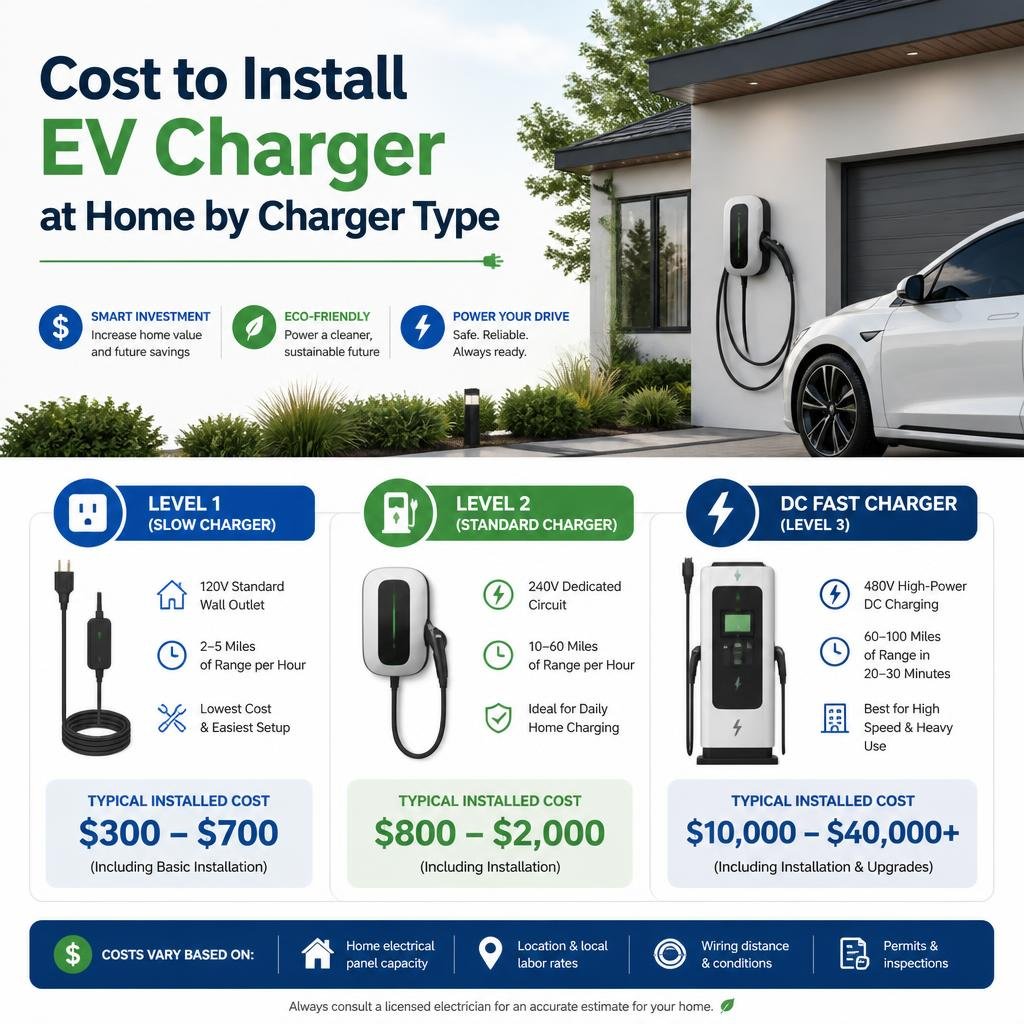
If you’ve started looking into the cost to install EV charger at home, you’ll notice the first number you see is rarely the whole story. Sometimes it’s a simple, affordable job. But a long wiring run, a packed electrical panel, or permit hassles can push the price up quickly.
Most U.S. homeowners pay around $800 to $3,500 to install a home EV charger, with Level 2 setups being the most common. If your home has enough electrical capacity and the charger sits close to the panel, you’ll usually stay near the low end. Need upgrades? That’s when the price climbs.
That price range actually matters—a lot—because the type of charger, your home’s wiring, and local code rules all shape the final bill. If you’re planning ahead, it’s good to know where the money really goes before you start calling for quotes.
What Homeowners Typically Pay
Your total price mostly depends on whether you want basic overnight charging or a faster Level 2 setup. In many homes, the charger itself is just one part of the bill—labor, materials, and permits can easily tack on a few hundred dollars or more.
Common Price Ranges for Level 1 and Level 2 Setups
Level 1 is the budget option. It often just uses a standard 120V outlet. If you already have the right outlet, you might only pay for the charger cord or some minor electrical tweaks.
Level 2 installation is what most people end up with. In the U.S., many homeowners spend $800 to $3,000 for a typical Level 2 job, and more if panel work is needed. Usually, a full install with equipment and labor lands between $1,200 and $2,750 for a standard single-family home.
What Is Usually Included in an Installation Quote
A typical quote covers the charger or outlet, wiring, conduit, breaker work, labor, and permits. Some electricians throw in testing, setup help, and a quick walkthrough on using the charger.
If the quote seems low, double-check what’s missing. Drywall repair, trenching, long wire runs, or panel upgrades are often extra.
What Changes the Final Price
Small details in your house can swing the final total more than the charger brand itself. The biggest price drivers? Electrical capacity, wiring distance, and local code steps.
Electrical Panel Capacity and Available Circuit Space
If your panel has room for a new breaker and enough capacity, the job is usually straightforward. If the panel is full or close to its limit, the electrician might need to install load management equipment or even replace the panel.
Older homes often need a closer look before you add a charger. A quick panel check can help you avoid surprise costs later.
Distance From the Panel to the Parking Area
The farther your parking spot is from the electrical panel, the more wire, conduit, and labor you’ll need. A charger in a garage near the panel is usually cheaper than one across the house or outside.
Longer runs can mean more time spent routing through walls, attics, or outside. That’s why two homes with the same charger can end up with very different prices.
Permits, Code Requirements, and Inspection Costs
Most cities and counties require a permit for new EV charging circuits. Permit fees are usually modest, but still add to your total.
Code rules might affect where you can mount the charger, what breaker size you need, and whether outdoor equipment has to be weather rated. Inspection costs are usually small compared to labor, but they shouldn’t be ignored.
Equipment Choices That Affect Budget
The charger you pick changes both the upfront hardware cost and how tricky the install will be. Some models are simple and cheap, while others come loaded with app control, scheduling, and load management.
Outlet-Based Versus Hardwired Charging Options
An outlet-based charger plugs into a 240V receptacle, making future replacement easier. It’s a good option if you want flexibility or think you’ll move the charger later.
Hardwired chargers connect straight to your electrical system. They often look cleaner and can handle higher output, though they might need a bit more labor to install.
Amperage, Smart Features, and Weather-Rated Units
Higher amperage usually means faster charging, but it also means heavier wiring and a bigger breaker. That bumps up the total even before labor is factored in.
Smart features like Wi-Fi control, energy tracking, and scheduled charging add to hardware costs. Outdoor units need proper weather ratings, which can limit your options and affect the price.
When Extra Electrical Work Is Needed
Some homes need more than just a charger install. That’s when the project shifts from a simple appliance upgrade to a bigger electrical job.
Panel Upgrades, Load Management, and New Wiring Runs
A panel upgrade can be one of the biggest add-on costs. Depending on your home, it might add several hundred dollars to well over $2,500.
Load management is sometimes a lower-cost option if your panel is tight but not maxed out. New wiring runs add material and labor costs, especially if the route is long or tricky.
Garage, Carport, and Outdoor Mounting Considerations
Garage installs are usually the easiest since the wiring and mounting are protected. Carport and outdoor installs may need extra conduit, stronger weather protection, and more careful mounting.
If you park outside, there’s more attention to placement and code compliance. That can add time, even if the charger itself isn’t pricey.
Ways to Lower Upfront Expenses
You can often cut your total with the right timing and incentive programs. A bit of planning really does make a difference.
Utility Rebates, Tax Credits, and Local Incentives
Some utilities offer rebates for charger hardware or installation. Local incentives can help too, especially if your area wants more home charging.
Federal tax credits might apply, and they can shave down your net cost after install. Since programs change, check current rules before you buy anything.
Timing the Project With Other Electrical Improvements
Already planning panel work, outlet upgrades, or lighting changes? Bundling the projects can save on labor. You pay for one service visit instead of several.
This also helps if your electrician needs access to the same wall, crawl space, or panel. Fewer separate visits usually mean fewer repeat labor charges.
Choosing a Qualified Installer in Central Texas
A home EV charger only pays off if it’s installed safely and sized right. In Central Texas, you want someone who actually knows local code, panel limits, and how homes are wired around here.
Why Licensed Electricians Matter for Safety and Performance
Licensed electricians help you avoid undersized wire, weak connections, and breaker headaches. That’s especially important for EV charging, since the circuit might run a heavy load for hours.
They can also spot issues like outdated panels, bad grounding, or hidden wiring problems before they become bigger delays. That saves time and helps your charger work as it should.
What Makes Magnify Electric a Strong Fit for Residential and Commercial Electrical Work
Magnify Electric is a solid pick when you want one team for EV charging outlets and wall-mounted chargers, automated lighting, ceiling fans, light switches, Lutron smart home systems, outdoor lighting, outlet services, recessed lighting, TV installs, whole-home surge protectors, wiring, lighting installs, panel upgrades and repairs, troubleshooting, portable generator hookups, smoke and CO₂ detectors, and general electrical improvements for homes and businesses.
You’ll get support from licensed electricians who handle everything from simple fixture swaps to full electrical upgrades, commercial lighting, safety inspections, smart home integrations, and even emergency electrical support. Magnify Electric serves Spicewood, Austin, Bee Cave, Lakeway, Dripping Springs, Georgetown, Leander, Round Rock, Kyle, Cedar Park, Liberty Hill, Westlake, The Hills, Briarcliff, Horseshoe Bay, Sunset Valley, Hutto, and surrounding Central Texas communities.
Frequently Asked Questions
How much does it typically cost to install a Level 2 charger in a garage?
Most garage installs cost about $800 to $3,000, and a lot of homeowners end up between $1,200 and $2,750 if there’s no major electrical work. Your total goes up if the panel is full, the wiring run is long, or permit costs are higher in your area.
What factors most affect the total price of installing a home charging outlet and charger?
Panel capacity, distance from the panel to the charger, labor, and whether you pick a plug-in or hardwired unit matter most. Charger amperage, smart features, and weather-rated equipment also push up the price.
Do I need an electrical panel upgrade to add a 240V EV charger, and how much can that add?
Not always. If your panel has enough spare capacity and breaker space, you might not need an upgrade, but older or crowded panels often do. A panel upgrade can add several hundred dollars to over $2,500, depending on the home.
Can I use an existing dryer outlet to charge my EV safely, and what would it cost to set up?
You might be able to use a dryer outlet with the right adapter and proper load sharing, but a licensed electrician should check it first. The setup cost is usually lower than a whole new circuit if the outlet and breaker are already suitable.
Is it cheaper to charge an electric car at home or at public charging stations?
Home charging is usually cheaper. In a lot of cases, charging at home can cost about 50% less than public chargers—especially if you charge during off-peak utility hours.
Are permits and inspections required for a home charger installation, and what do they usually cost?
Yeah, in a lot of places across the U.S., you’ll probably need permits and an inspection for a home charger. Fees aren’t usually wild—think somewhere between $50 and $300—but honestly, it really depends on your local rules, which seem to change constantly.