
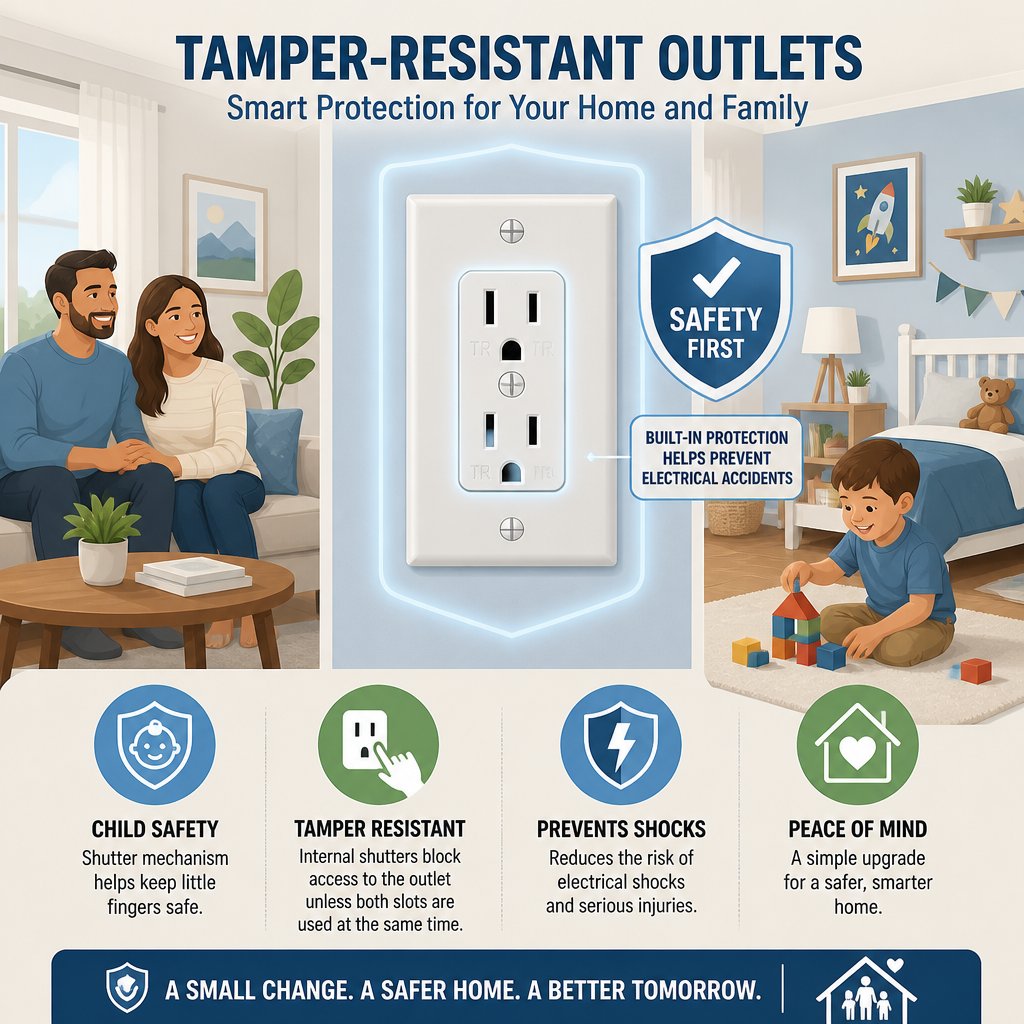
Tamper-resistant outlets might look just like regular ones, but they quietly add a layer of safety. They’re designed to keep curious fingers, keys, paper clips, and all sorts of random objects out of the slots—and that’s a big deal if you’ve got kids around.
The main perks of installing tamper-resistant outlets are safer rooms for kids and guests, better code compliance, and a small upgrade that can bump up your property value over time. If you’re planning outlet replacements in Central Texas, this is one of those updates that just makes sense. And if your wiring is old, your outlets are loose, or your breakers trip a lot, it’s probably smart to have a licensed electrician check things out while you’re at it.
What Tamper-Resistant Outlets Do
Tamper-resistant outlets block access to the live parts inside. You use them just like any other outlet, but there’s a hidden safety feature at work.
How The Internal Shutter Mechanism Works
Inside, there are spring-loaded shutters behind the slots. The shutters only open when you push both slots at once—basically, when you plug something in the right way.
This design stops a child from shoving in a hairpin or toy. As soon as you pull the plug out, the shutters snap shut again, keeping things protected.
How They Differ From Standard Receptacles
A standard outlet just has open slots—easy to poke at. Tamper-resistant outlets look almost identical from the outside, so you might not even notice the difference unless you’re paying attention.
The key change is inside: you get the same daily function, but there’s a built-in shield against accidental contact.
Where They Are Commonly Required
Most updated electrical codes call for tamper-resistant outlets in homes, especially anywhere kids might be. You’ll find them in living rooms, bedrooms, kitchens, hallways, laundry rooms—pretty much all the main spaces.
They’re standard in new builds and renovations all over Central Texas—Austin, Round Rock, Cedar Park, Lakeway, Bee Cave, Dripping Springs, Georgetown, and beyond.
Why They Improve Everyday Safety
Tamper-resistant outlets cut down on household electrical accidents. If you’ve got kids, visitors, or just a busy household, they’re a practical upgrade.
Protection For Children And Guests
Kids are curious, and standard outlets can be a real temptation. Tamper-resistant outlets help stop little ones from sticking things in, which is one of the most common electrical hazards at home.
Guests get the benefit too, especially if they’re not familiar with your house or where all the outlets are. That extra protection matters in family homes, rentals, and anywhere grandkids visit.
Lower Risk Of Foreign Object Contact
With regular outlets, things like keys, paper clips, or toys can easily become shock hazards if they end up in the wrong place.
Tamper-resistant shutters reduce that risk right from the start. Realistically, you can’t supervise every second—so it’s good to have outlets that help cover for you.
Added Peace Of Mind In Busy Rooms
Kitchens, playrooms, living rooms, and bedrooms see a lot of action. In those spots, tamper-resistant outlets give you one less thing to stress about.
Honestly, sometimes just knowing you’ve got a safer setup makes a difference. You can focus on your day (or your evening) without worrying about who’s poking at the outlets.
How They Support Code Compliance And Property Value
Tamper-resistant outlets aren’t just about safety—they help you meet current standards, which comes up during permits, inspections, and resale.
Why Newer Codes Favor This Upgrade
Codes keep pushing for tamper-resistant outlets because they prevent injuries. New homes and many remodels require them where regular outlets used to be fine.
If you’re already updating wiring or fixtures, it makes sense to swap in these outlets. It also keeps future upgrades easier when inspectors come through.
What Homebuyers And Inspectors Notice
Homebuyers might not know every technical detail, but they notice when a house feels well cared for. Modern outlets, clean covers, and visible safety features leave a better impression.
Inspectors look at outlet type, placement, and condition. Tamper-resistant outlets help show you’re keeping up with safety standards.
Benefits For Rentals And Multi-Use Properties
Rental homes, duplexes, offices, and mixed-use spaces see a lot of different people using outlets. You want safety features that work every day, without any fuss.
For property owners, that means fewer headaches and a stronger presentation. It’s a small upgrade, but it shows you care.
Best Places To Install Them
You can put tamper-resistant outlets just about anywhere, but some spots really benefit. In my experience, the best results come from swapping them in where people gather most and where you can’t keep an eye on everything.
Living Areas And Bedrooms
Living rooms, family rooms, and bedrooms are full of charging cords, lamps, and gadgets. Kids play here, guests use outlets—it just makes sense to upgrade.
Replacing standard outlets in these rooms sets a safer baseline. It’s a simple change that blends right in.
Kitchens Bathrooms And Laundry Spaces
Kitchens and laundry rooms mix outlets, appliances, water, and lots of movement—safety matters a lot. Bathrooms, too, with all the moisture and activity near sinks.
Tamper-resistant outlets work well in these rooms, especially if you’re pairing them with GFCI protection where code requires it. If you’re already updating, it’s a good time to check outlet condition and overall safety.
Offices Shops And Customer-Facing Areas
Home offices, workshops, garages, and customer areas all benefit from tamper-resistant outlets. These places see cords, tools, and equipment in constant use.
For businesses or multi-use properties, the upgrade reduces risk and keeps things professional. It’s a practical part of regular electrical maintenance.
When An Outlet Upgrade May Signal Bigger Electrical Needs
Sometimes, swapping an outlet reveals more than just a worn cover. If you spot warning signs during the job, it might be time to look at the whole electrical setup.
Loose Plugs Warm Covers And Other Warning Signs
If plugs fall out, outlets feel loose, or cover plates are warm, those are red flags. Discoloration, crackling, or any burning smell means you need to act fast.
A tamper-resistant outlet won’t fix bad wiring hiding behind the wall. If you see those issues, get the circuit checked before things get worse.
When To Pair The Work With GFCI Or AFCI Protection
Some rooms need more than just a new outlet. Kitchens, bathrooms, garages, laundry rooms, and outdoor spaces often need GFCI protection. Bedrooms and living areas may benefit from AFCI protection.
Upgrading both at once can boost safety and keep you up to code. Plus, it saves you from opening the wall twice.
Connections To Wiring Improvements And Panel Upgrades
If your house still has outdated wiring, frequent breaker trips, or you’ve added things like EV chargers or smart home systems, replacing outlets might just be the start. In older Central Texas homes, I’ve seen outlet upgrades uncover bigger problems—loose connections, undersized circuits, or an overloaded panel.
That’s a good moment to plan a full safety review. Wiring and panel upgrades can make your outlet replacements more effective and reliable.
Installation Choices And Long-Term Value
Tamper-resistant outlets are a small project, but the details matter. How you install them affects safety and how long they’ll last.
DIY Risks Homeowners Often Miss
Swapping a receptacle looks easy, but you’re still dealing with live wires and connection order. Homeowners sometimes get the polarity wrong, leave loose wires, or reuse old boxes that really should be replaced.
If you’re not sure about the circuit or the wiring looks sketchy, the risks go up. That’s why a lot of folks call a pro electrician instead of guessing.
What Professional Installation Typically Includes
A pro will check the circuit, confirm the outlet type, tighten connections, and make sure the new outlet sits right. If there’s heat damage or grounding issues, they’ll spot that too.
For homes in Austin, Spicewood, Westlake, Hutto, Liberty Hill, and the rest of Central Texas, careful work like this saves time and headaches down the road. You get a cleaner, more dependable result.
Why This Small Upgrade Fits Preventive Electrical Maintenance
Tamper-resistant outlets fit right into routine electrical maintenance. They fix a real safety issue without needing a big remodel. They’re a smart part of a bigger plan—maybe you’re also adding lighting, surge protection, ceiling fans, generator hookups, or just getting a safety check.
These small upgrades tend to pay off quietly. You might not think about them every day—and that’s kind of the point.
Frequently Asked Questions
How do tamper-resistant outlets help prevent electrical injuries in children?
Tamper-resistant outlets have internal shutters that only open when a proper plug goes in evenly. That stops a child from poking in a key, toy, or paper clip that could cause a shock or burn.
What makes tamper-resistant outlets different from standard outlets?
They look almost the same, but tamper-resistant outlets have a spring-loaded shutter system inside. Standard outlets just have open slots, which are easier to poke with foreign objects.
Are tamper-resistant outlets required by electrical code in homes?
In many new homes and remodels, yes—they’re required in specific spots. Code rules vary, so a licensed electrician can help you figure out what’s needed for your place.
Do bathrooms or other wet areas benefit more from tamper-resistant outlets?
Bathrooms, kitchens, laundry rooms, and damp areas definitely benefit from extra outlet safety since moisture raises the stakes. Tamper-resistant outlets help, and those rooms might also need GFCI protection depending on code.
How can you tell whether your home already has tamper-resistant outlets installed?
Check the face of the outlet or look for markings. Most tamper-resistant outlets are labeled “TR.” A licensed electrician can confirm during an inspection if you’re not sure.
Why can some plugs feel harder to insert into a tamper-resistant outlet, and is that normal?
Yeah, it’s pretty normal to notice a bit more resistance. Those little shutters inside need both prongs to press in at the same time. But if you’re really having to shove the plug or it just won’t go, it’s worth pausing to check for bent prongs or any damage before giving it another shot.