
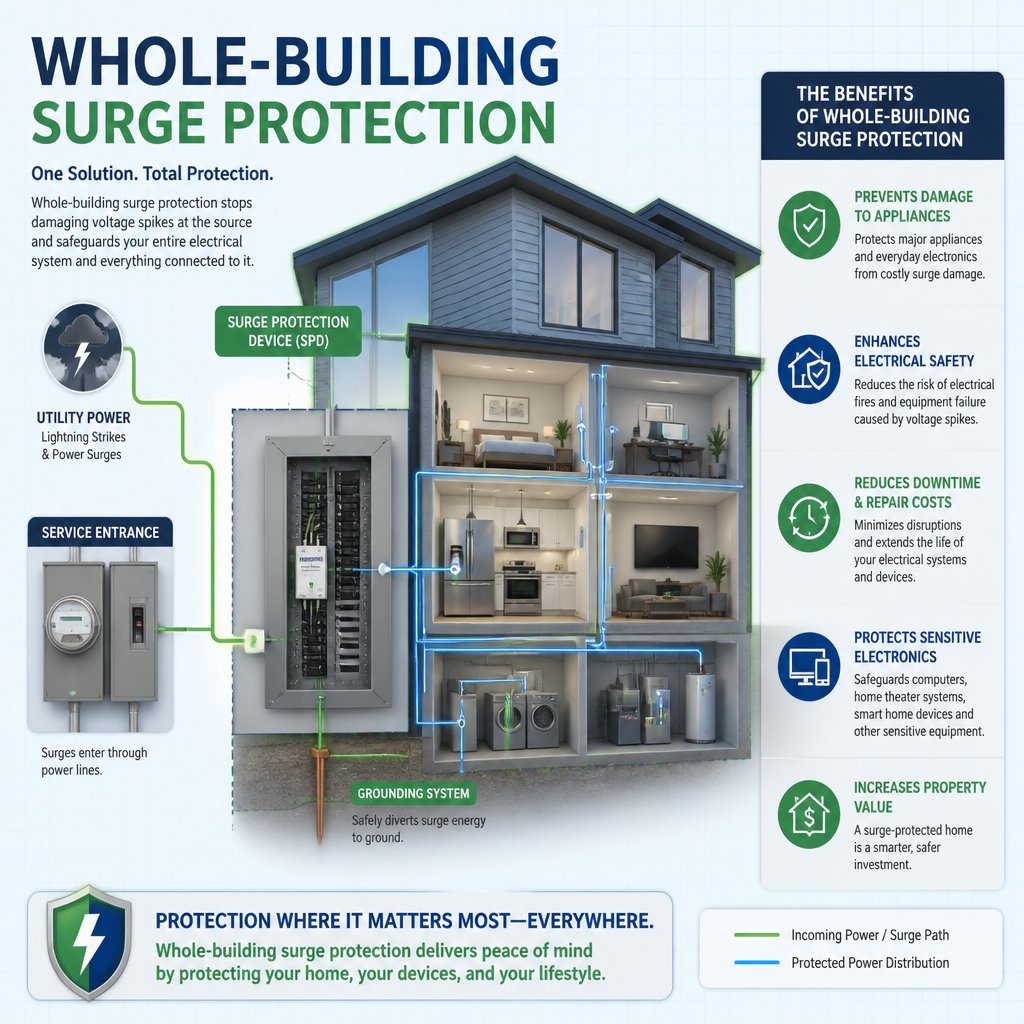
You probably don’t give surge protection much thought until a storm hits or an appliance bites the dust. By that point, the damage is often done. The advantages of whole-building surge protection become pretty obvious when you realize how much you’ve got at stake—your HVAC, kitchen gear, smart gadgets, office tech, and even the panel itself.
A whole-building surge protector sits at the panel, so it shields your stuff before excess voltage can snake through your circuits. It’s a smart move for homes and businesses that run on sensitive electronics and need steady power. Folks in Austin, Bee Cave, Lakeway, Dripping Springs, Georgetown, Round Rock, and across Central Texas will probably find it’s a practical way to cut down on repairs and headaches.
The biggest value? Whole-building surge protection helps protect your entire electrical system—not just the stuff you plug into a strip.
What Whole-Building Surge Protection Does
You install whole-building surge protection at or near your main panel, so it blocks excess voltage before it can spread. It’s meant to defend your whole electrical system, making it a lot more complete than just using point-of-use protection.
How It Differs From Power Strips
A surge strip only covers what’s plugged into it. That’s it. Whole-building protection works at the panel and reduces risk for everything—wiring, outlets, and all the gear connected throughout the property.
That difference really matters. A surge strip might save your TV, but a panel-mounted protector can help with appliances, lighting, and anything hardwired.
Where It Fits In Your Electrical System
You usually mount the device at the main service panel or a subpanel, depending on your setup. It works right in the path of your building’s electricity, so it reacts quickly when voltage spikes come in from the utility or even from inside.
It’s a handy upgrade during panel upgrades, wiring changes, or when you’re adding new equipment. A good electrician will match the protector to your system size, grounding, and load.
How It Protects Expensive Equipment
Surges can travel farther than you’d think, and the priciest damage often hits the stuff that runs nonstop. Whole-building protection lowers the odds that a spike takes out your high-dollar systems.
Safeguarding Appliances And HVAC Systems
Big appliances and HVAC units get targeted because they use motors, control boards, and compressors. Spikes can fry those parts, cause weird failures, or wear out the equipment faster.
For homeowners, that means protection for fridges, washers, dryers, water heaters, and air conditioners. Businesses get help shielding refrigeration, building controls, and other hardwired gear that’s expensive to fix.
Reducing Risk To Smart Home And Office Electronics
Homes and offices now rely on devices that hate voltage swings. Smart thermostats, routers, computers, cameras, and media systems can all get zapped by sudden surges.
Whole-building protection adds a broad first line of defense. Electricians still suggest using plug-in surge strips for super-sensitive stuff—layered defense is usually safest.
Safety And Reliability Benefits
Surge protection isn’t just about saving your gear. It also helps your electrical system run safer by cutting down the stress on circuits and devices.
Lowering The Chance Of Electrical Damage
Surges can mess with insulation, control boards, outlets, and breakers—especially if they happen more than once. Even smaller spikes add up over time.
By limiting that exposure, whole-building protection helps reduce the risk of fire-related damage, equipment failure, and emergency calls. That’s why plenty of property owners add it during maintenance or safety checks.
Helping Stabilize Daily Electrical Performance
If you’ve dealt with flickering lights, tripping breakers, or equipment that keeps dying, surge protection might help. It won’t fix everything, but it can take one major problem off your plate.
That’s a big deal in busy homes and businesses where steady power matters. Less stress on your system usually means fewer surprises day to day.
Long-Term Value For Homes And Commercial Properties
A good surge protector isn’t a huge expense compared to replacing fried appliances or electronics. Over time, it can be one of the smarter investments you make for your electrical system.
Avoiding Repair And Replacement Costs
One surge can kill several things at once. If it takes out an HVAC board, fridge, network gear, or office computer, those bills add up fast.
Businesses lose time and money when equipment goes down. For homeowners, skipping even a single big replacement can make surge protection pay for itself.
Supporting Panel Upgrades And Future Electrical Additions
Whole-building protection pairs well with panel upgrades, EV charger installs, generator hookups, and other improvements. As you add more tech, system-level protection only gets more valuable.
It’s also a smart move for new smart home setups, lighting projects, and outlet or switch upgrades. The more your property leans on electronics, the more it makes sense to protect the panel that feeds them.
When Surge Protection Makes The Most Sense
Some places need surge protection right away, others only after repeated issues. If you’re seeing electrical problems or planning a major upgrade, it’s worth thinking about sooner rather than later.
After Storm Activity Or Repeated Electrical Issues
Central Texas weather brings lightning and grid changes that can cause nasty spikes. If storms, brownouts, or weird equipment failures have hit your place, surge protection is a smart next move.
If you’ve had to troubleshoot the same device or circuit more than once, that’s another sign your system might need more than just a reset.
During Renovations, EV Charger Installation, Or Generator Hookups
Renovations are a good time to add surge protection since you’re already working on the panel. Same goes for EV charger installs, generator hookups, or wiring upgrades.
Those projects change your electrical load. Adding surge protection while you’re at it saves you from cracking open the panel again later.
Choosing Professional Installation In Central Texas
Surge protection only works as well as the install. Honestly, getting the sizing, grounding, and panel compatibility right makes a big difference in how well things hold up.
Why Proper Sizing And Panel Compatibility Matter
Not every protector fits every panel, and not every panel needs the same rating. If you go too small, it’ll wear out fast. If it’s mismatched, you might not get the protection you expect.
A pro electrician checks your panel type, space, grounding, and load before installing anything. That’s especially true in older buildings or places with a mix of old and new gear.
What Property Owners In Austin-Area Communities Should Ask
If you’re in Austin, Spicewood, Bee Cave, Lakeway, Dripping Springs, Georgetown, Leander, Round Rock, Cedar Park, Kyle, Liberty Hill, Westlake, Hutto, or nearby, ask about both the main protector and any plug-in devices you might still want. Also, see how the device fits with panel upgrades, smart home gear, EV chargers, or generator hookups.
Ask about warranties, how to spot when it’s time to replace the unit, and whether your grounding system needs work. A good installer should break it down in plain English and help you understand your options.
Frequently Asked Questions
Is a whole-house surge protector worth installing for most homes?
For a lot of homes, absolutely—especially if you’ve got pricey appliances, smart gear, or HVAC equipment. It adds a solid layer of protection at the panel and helps cut the risk of widespread electrical damage.
How does a whole-home surge protector work to protect appliances and electronics?
It goes at the electrical panel and diverts extra voltage away from your circuits. That means less surge energy reaches your outlets, appliances, and devices.
Will a whole-house surge protector help during nearby lightning strikes?
It can help, and that’s actually one of its main jobs. A direct hit or a surge from the utility can still be pretty intense, so a lot of folks use plug-in strips for their most sensitive electronics too.
What are the pros and cons of whole-house surge protection compared to plug-in surge strips?
Whole-house protection covers everything—including hardwired systems. Plug-in strips only cover what’s plugged in. The tradeoff? Whole-house is broader, but strips give extra protection for computers, TVs, and office gear.
How much does a whole-home surge protector typically cost, including installation?
The cost depends on your panel, setup, and labor. Most people find it’s a pretty affordable upgrade compared to replacing appliances or electronics after a surge.
Are whole-house surge protectors one-time use, and how do you know when they need replacement?
No, whole-house surge protectors aren’t just a one-and-done thing. They handle multiple surges over their lifetime, but each hit wears them down a bit more. If you notice the indicator light’s out or showing a fault, that’s a pretty clear sign something’s up. And honestly, if your home’s taken a few big surges over the years, it’s smart to have an electrician check things out and let you know if it’s time for a swap.