
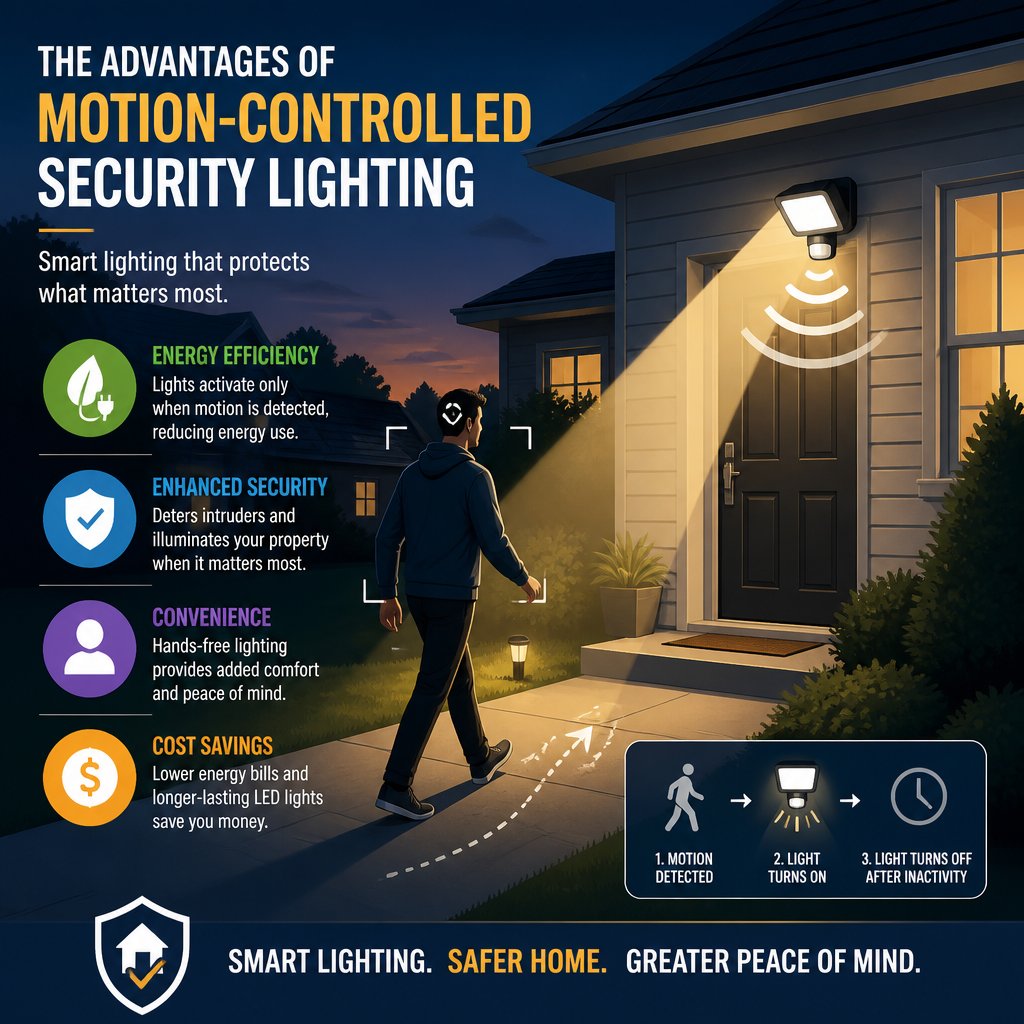
Motion-controlled security lighting gives you two big wins at once, better visibility and smarter energy use. When the right light flips on the second it senses movement, you make it harder for unwanted activity to stay hidden—and everyday movement around your place just feels easier and safer.
If you want a practical upgrade that helps protect doors, driveways, and walkways while cutting wasted runtime, motion-controlled security lighting is one of the simplest choices you can make. For a lot of Central Texas homes and businesses, it’s a small change that brings steady value day and night.
You get more than just security, too. Motion lighting lets you reach dark areas without fumbling for a switch, supports energy-efficient lighting choices, and adds a layer of comfort that really matters after sunset. If you’re weighing options for your home, storefront, or commercial lot, it’s worth thinking about where motion lighting actually works best—and when a licensed electrician should handle the install.
How Motion Sensors Improve Property Security
Motion sensors add a fast response to a dark area, which honestly makes a big difference for both homes and businesses. The light pops on when it detects movement, so potential trouble doesn’t stay hidden, and you get a clearer view of what’s happening outside.
Deterring Unwanted Activity
A bright light switching on out of nowhere? That’ll make most people pause—or just leave. That quick reaction is one of the clearest advantages, especially near side yards, back doors, and alley access.
Increasing Visibility Around Entry Points
Entry points are the first places I check during a security lighting walk-through. When doors, gates, and garage areas are well lit, it’s easier to spot movement, read faces, and notice anything odd.
Helping Occupants Feel Safer After Dark
Good lighting really changes how a property feels at night. Whether you’re getting home late in Austin, closing up shop in Round Rock, or checking a side gate in Lakeway, motion lighting can make the space feel less exposed and just more manageable.
Everyday Convenience And Energy Savings
Motion lighting isn’t just about security—it saves energy and makes daily life easier. You get light when you need it, and you’re not paying for brightness when nobody’s around.
Reducing Wasted Runtime
Traditional lights are left on longer than needed all the time. Motion sensors fix that by flipping on only when there’s activity, which drops electric use and usually helps bulbs last longer.
Making Outdoor Areas Easier To Use
No need to juggle groceries in a dark driveway or hunt for a switch at the side door. Hands-free lighting is one of those things you don’t realize you love until you have it.
Supporting Energy-Efficient Lighting Choices
Motion sensors pair especially well with LED fixtures. That combo gives you low energy use, less maintenance, and more control over lighting hours—a smart fit for homes in Cedar Park, Georgetown, and around Central Texas.
Best Locations For Practical Results
Placement matters as much as the fixture. The most useful motion lights cover actual traffic paths, dark corners, and spots where people enter or leave.
Front Doors And Side Yards
Front entries and side yards are weak spots—they get used a lot and can stay dark. A well-aimed light helps guests, family, and delivery drivers move safely while discouraging hidden activity.
Driveways Garages And Walkways
Driveways and walkways really benefit from motion lighting. It guides movement and cuts down on trip hazards. Garages, especially detached ones, usually need extra coverage since they can sit away from the main house and stay dim longer.
Commercial Parking Areas And Service Entrances
For businesses, parking areas and service doors are smart places for motion lighting. They help staff and customers see better after dark, and they boost site safety around loading areas, dumpster gates, and back entrances.
Key Features That Affect Performance
Not every motion light works the same way, and the details actually matter. Range, brightness, and weather resistance all play into whether your lighting does the job.
Detection Range And Sensitivity
A sensor that’s too short-ranged misses movement, but if it’s too sensitive, it’ll react to every passing car or gust of wind. You’ve got to match the sensor to the space so it covers what you care about, without becoming a headache.
Brightness Color Temperature And Coverage
Brightness should fit the space, not blast it. A wide driveway or parking lot needs more coverage than a small porch, and the color temperature should make things easy to see—without harsh glare.
Weather Resistance And Fixture Durability
Central Texas weather can be rough—heat, storms, dust. Weak fixtures wear out fast. Look for outdoor-rated products built to last. Cheaper housings and seals often fail sooner than you’d expect.
Common Drawbacks And How To Avoid Them
Motion lighting works best when it’s installed with care. Most complaints stem from bad placement, low-quality parts, or settings that never got adjusted for the property.
False Triggers From Animals Traffic Or Wind
Small animals, passing cars, and swaying branches can all set off a sensor. You can cut that down by tweaking sensitivity, changing the angle, and keeping the detection zone tight.
Poor Placement That Creates Shadows Or Glare
A poorly placed light leaves dark gaps or shines straight into your eyes. During installation, it’s smart to test the beam at night—catch those shadow pockets and glare before they become a problem.
Choosing Cheap Fixtures That Fail Early
Low-cost fixtures might look fine at first, but they often show weak seals, dim output, or sensor issues pretty quickly. A better-built light usually saves money in the long run—fewer replacements, fewer service calls.
When Professional Electrical Service Makes Sense
Some motion light jobs are simple, but some really call for a licensed electrician. If the work involves wiring changes, added controls, or old electrical parts, professional service is the safer path.
Replacing Older Wiring Or Switches
Old wiring can hide problems behind the walls or at the fixture box. If you’re upgrading lighting in an older home or business, an electrician can check for safe connections, grounding, and worn switches that need replacing.
Adding Smart Controls Or Security Integration
Motion lighting now often ties into smart home systems, cameras, or security controls. When you want that setup, proper wiring and device pairing really matter—especially if you want reliable automation without nuisance trips.
Checking Panels Surge Protection And Code Safety
A lighting upgrade is a good time to review the panel, surge protection, and the general safety of your circuit. In places like Westlake, Dripping Springs, and Leander, I often see homeowners benefit from a quick electrical inspection before adding more outdoor loads.
Frequently Asked Questions
How can motion-activated lights help deter burglars and improve home security?
Motion-activated lights take away the cover of darkness, making it harder for someone to sneak up unnoticed. The sudden light also draws attention to movement, which is why these fixtures are a strong part of home security.
Do motion sensor lights still use electricity when they’re turned off?
Yep, most motion sensor lights still use a tiny bit of power while they wait for movement. That standby use is super low, though—way less than keeping a regular light on for hours.
Do motion sensor light bulbs actually save energy compared to regular bulbs?
Usually, yes, because the light’s on for less time. The biggest savings come from automatic shutoff, especially in places where lights are often left on by accident.
What are the main drawbacks or downsides of using motion-activated security lights?
The most common issues? False triggers, bad placement, and fixtures that don’t last. If the sensor’s not set up right, you’ll get glare, shadows, or lights that flip on too often.
What’s the most common problem with PIR motion sensors, and how can it be fixed?
False activation from heat shifts, animals, or moving objects is the big one. You can usually fix it by adjusting sensitivity, narrowing the detection area, and mounting the sensor at the right height and angle.
Which is better for security lighting: PIR sensors or other types of motion sensors?
PIR sensors usually get the job done for outdoor security lighting—they’re popular for a reason. Sure, you’ll find other sensor types that might fit certain situations better, especially if you’ve got a tricky spot or lots of movement nearby. Honestly, it comes down to your space, how much traffic you get, and how much you want to tweak things. There’s no one-size-fits-all answer, but PIR is a solid starting point.