
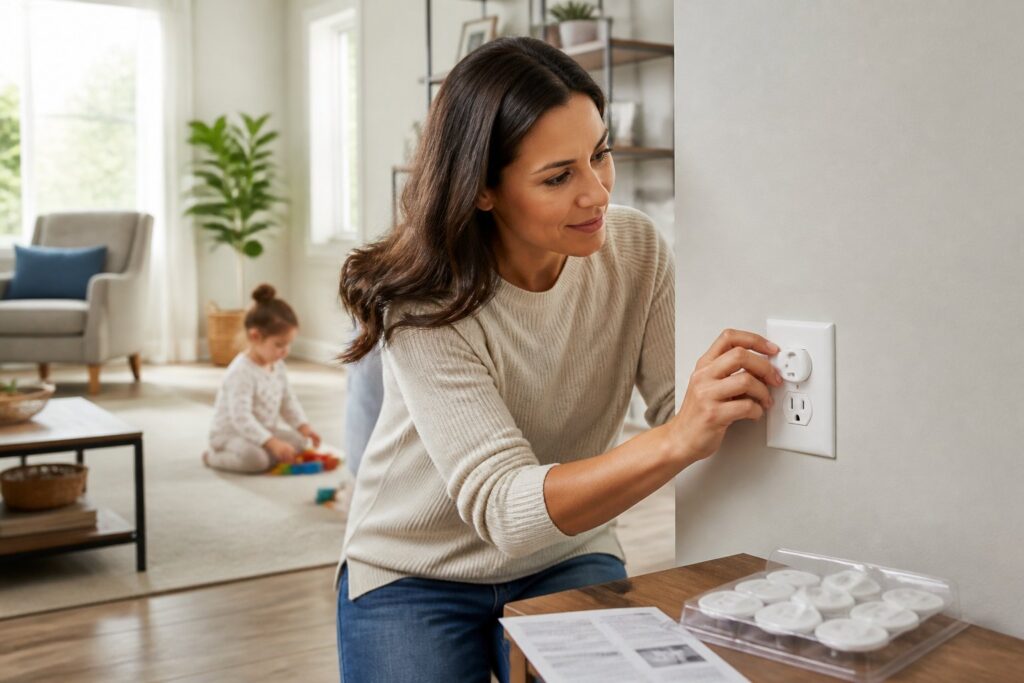
Ever watched a toddler zero in on a wall outlet like it’s the most fascinating thing in the room? Little fingers are quick, curious, and always seem to find the tiniest gaps. So, how to childproof electrical outlets safely really starts with using the right barriers, picking the right hardware, and keeping an eye on worn parts.
You don’t need to gut your house to make it safer. Just a few smart upgrades can block access, reduce shock risk, and give your kids a safer space to roam. If you’re already considering things like outlet upgrades, surge protection, or a full electrical safety inspection, a licensed electrician in Central Texas can help you find the right fix for your place.
Why Outlet Safety Matters
Electrical outlets sit low, stay powered, and adults barely notice them. But to a child, they look like little mysteries worth exploring—so they’re usually the first thing you need to secure.
How Children Interact With Receptacles
Kids don’t see outlets as dangerous. They see holes to poke, plugs to yank, cords to tug—especially in rooms where they’re on the floor. Even older kids get tempted to push buttons, pull covers, or shove furniture to reach a plug.
The Most Common Injury Risks
The biggest risks are shock, burns, and injuries from metal objects poked into the outlet. Loose covers also turn into choking hazards if a child manages to remove them. If an outlet is damaged or the faceplate is cracked, the risk jumps because live parts get easier to reach.
The Safest Ways To Block Access
The best childproofing keeps live parts covered but doesn’t trick you into thinking you’re safer than you really are. Usually, a mix of built-in protection and physical barriers works better than any single quick fix.
Tamper-Resistant Receptacles
Tamper-resistant receptacles (TR outlets) have internal shutters that only open when you push both slots at once. That makes it really tough for a kid to stick in a finger or a toy. For a long-term fix, this is one of the best upgrades you can make in a nursery, playroom, or older home.
Sliding Outlet Covers
Sliding covers let you keep an outlet protected and still use it. When you unplug something, the built-in cover slides closed, blocking access. They’re easy for adults and a lot harder for toddlers to figure out.
Box-Style Protective Covers
Box-style covers surround the whole plug and outlet. These are great when you need extra protection for cords, plugs, or devices that stay plugged in. They work well near cribs, changing tables, and play areas where little hands might grab at the outlet or tug on a cord. Honestly, they feel more secure than those basic plug-in caps.
Safety Devices To Avoid Or Use Carefully
Some outlet products seem helpful at first but end up causing new problems if they’re loose, easy to remove, or just not used right. Always check each product for fit, durability, and whether it really keeps kids out.
Loose Plastic Caps
Loose plastic caps can be pulled out by a determined toddler, and small pieces can be a choking risk. They might give you a false sense of security if they’re not snug or if they pop out during normal use. If you use them, check them often and swap them out the second they fit poorly.
Worn Or Broken Faceplates
If a faceplate is cracked or doesn’t sit flush, swap it out right away. Broken edges expose the outlet and create a clear path to the live parts inside. This pops up a lot in busy homes and rental properties, and it’s worth fixing before anyone uses the outlet again.
Extension Cords In Reach
Extension cords are risky when they hang low or cross open spaces. Kids might chew on them, trip, or pull devices down. If you need temporary power, keep cords short, tucked away, and out of reach. For anything permanent, call a licensed electrician.
Room-By-Room Priorities
Every room is a little different since kids move, sleep, and play all over the house. Focus first on the places where they spend the most time and where outlets are easiest to reach.
Nurseries And Bedrooms
Nurseries and bedrooms need the most careful attention because kids spend a lot of time on the floor, near walls, and close to cords. Use tamper-resistant outlets if you can, then add secure covers to unused outlets. Keep baby monitors, lamps, and chargers out of reach. If there’s furniture near a receptacle, make sure a child can’t crawl behind and get to the plug.
Living Areas And Play Spaces
These rooms usually have the most devices—so more plugs, more cords, and more chances for a kid to grab something. Move furniture to block access when possible, and use box-style or sliding covers on outlets in use. If you have smart home gear, lighting controls, or surge protectors in shared spaces, keep cords neat and tucked away.
Kitchens, Bathrooms, And Laundry Rooms
Kitchens, bathrooms, and laundry rooms are trickier because of water, heat, and appliances. Outlets near sinks, counters, or laundry machines should stay protected and easy to check, especially with curious toddlers around. In Central Texas homes from Austin to Round Rock to Lakeway, I’ve seen these rooms benefit from both outlet protection and a broader electrical safety check.
Signs An Outlet Needs Professional Attention
Some outlet problems go past childproofing—they point to wiring issues, loose connections, or old devices. When that happens, safety devices just aren’t enough.
Warm Surfaces Or Buzzing Sounds
If an outlet feels warm or buzzes, you might have a loose connection or an overloaded circuit. That’s something to take seriously—heat and noise usually mean electrical stress inside the wall. If you can do it safely, turn off power to that circuit and get it checked.
Plugs That Slip Out Easily
When plugs fall out or wobble, the outlet’s probably worn out. A weak grip leads to arcing, spotty power, or a plug that loosens over time. Replacing the outlet can make things safer and just work better day to day.
Older Wiring And Ungrounded Receptacles
Older homes often have ungrounded outlets or old wiring. That limits how well safety devices work and can mean it’s time for a bigger upgrade—especially if you’re planning new lighting, appliances, or EV charging. A licensed electrician can tell you if the outlet needs to be replaced, grounded, or added to a bigger wiring plan.
Keeping Protection Effective Over Time
Childproofing isn’t a one-and-done thing. Covers loosen, kids grow, and rooms change.
Checking Covers During Routine Cleaning
Glance at outlet covers when you vacuum, dust, or wipe baseboards. Make sure each cover sits flush, stays closed, and hasn’t cracked from a dropped toy or shifting furniture. If something’s missing or loose, replace it before using the outlet.
Teaching Safe Habits As Children Grow
As kids get older, talk to them in simple terms about why outlets aren’t for playing. Teach them to ask an adult before plugging in or touching a cord. Short, repeatable rules work way better than long lectures.
When To Schedule An Electrical Safety Inspection
If your home’s older, you notice repeated outlet issues, or you’re planning electrical work like panel upgrades, surge protection, ceiling fans, or generator hookups, it’s a good time for an inspection. That visit can catch hidden wear before it turns into a big repair. For homeowners in Bee Cave, Cedar Park, Georgetown, and the rest of Central Texas, that brings peace of mind and some clear next steps.
Frequently Asked Questions
What are tamper-resistant outlets, and are they safer than plug-in outlet covers?
Tamper-resistant outlets use built-in shutters that block access unless you press both slots at once, making them really tough for small kids to defeat. They’re usually safer and more reliable than removable plug-in caps since they stay put and don’t become choking hazards.
Do I really need outlet covers if my home already has tamper-resistant receptacles?
If you already have tamper-resistant outlets, you probably don’t need extra plug-in caps everywhere. You might still want box-style or sliding covers where a plug stays in, cords are exposed, or a child can reach behind furniture.
Which types of outlet covers are easiest for adults to use but still secure for toddlers?
Sliding covers are usually easiest for adults—they open and close with normal use. Box-style covers are very secure and work well for protecting plugged-in devices, though they’re a bit bulkier.
How can I safely childproof power strips and surge protectors?
Use a power strip cover or a secured enclosure so kids can’t touch the switches or sockets. Keep the strip off the floor if you can, and route cords behind furniture or along walls so little hands can’t pull them loose.
What’s the best way to secure cords and protect things that are plugged into outlets?
Keep cords short, tidy, and out of reach using cord covers, Velcro ties, or by moving furniture. If something needs to stay plugged in, use a secure cover that encloses the plug so the connection stays protected.
Are sliding outlet covers or box-style outlet cover enclosures better for nurseries and playrooms?
Honestly, it depends on the space and what you need. Sliding covers are pretty straightforward and don’t stick out much—they just do the job quietly. But if you want a bit more peace of mind, especially when you’ve got a plug that’s always in use, those box-style enclosures feel sturdier and more reassuring. A lot of parents lean toward them for nurseries or playrooms that see a lot of action.