
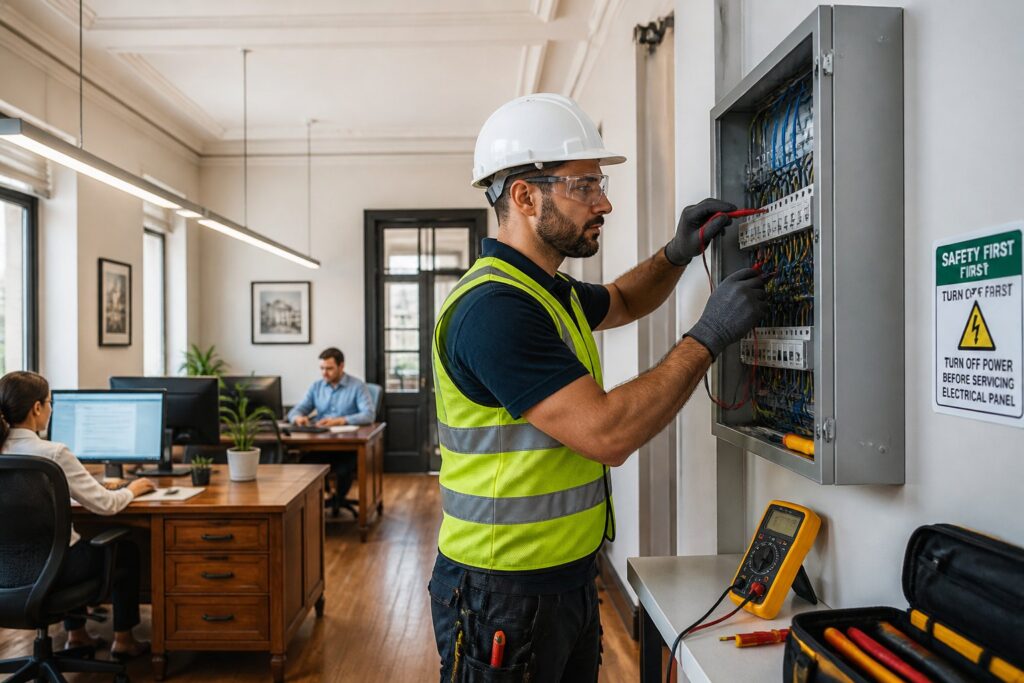
Modern office buildings are packed with devices your old electrical system never had to deal with. Laptops, servers, printers, new HVAC controls, phone chargers, smart lighting, even EV charging—these can all push a legacy setup way past its comfort zone.
If your office wiring is from another era, your safest bet is to check its capacity first, then upgrade the panel, wiring, lighting, and controls in a logical order. This way, you cut downtime, boost safety, and dodge those annoying repeat repairs that just keep eating into your budget.
A lot of Central Texas property owners start with a professional electrical walkthrough—someone who’ll check load, code, and future growth all at once. If you manage an office in Austin, Bee Cave, Lakeway, Dripping Springs, Georgetown, Leander, Round Rock, Cedar Park, Kyle, Liberty Hill, Westlake, Hutto, or nearby, a qualified electrician can help you figure out the right upgrade path before those small warning signs turn into disasters.
Why Older Offices Need Electrical Updates
Older office systems were built for much simpler days. Today’s workspaces demand more from the wiring, panel, outlets, and lighting, so an old system might look fine but actually be running on the edge.
Aging Infrastructure And Rising Power Demands
Back then, offices only needed basic lighting and a handful of machines. Now? Computers, monitors, network gear, printers, HVAC controls, breakroom appliances—everything runs at once. That extra load can quietly push a system to its limits, even if nothing seems wrong on the surface.
Safety Risks Hidden Behind Daily Operations
Old wiring, loose connections, and overloaded breakers can hide out for years. You might spot warm outlets, flickering lights, tripped breakers, or even a whiff of burning before the real issue shows up. These are warning signs you really don’t want to ignore. Old electrical parts can fail in ways that create real fire and shock hazards.
How Modern Workspaces Strain Legacy Systems
Open offices, shared spaces, and hybrid schedules change how and when people use power. New tech can draw heavy bursts of energy, while conference rooms and IT closets often need their own circuits. Without upgrades, a legacy system just can’t keep up—especially when everyone’s in at once.
Assessing The Existing Electrical Setup
A smart upgrade always starts with a clear look at what’s already there. A thorough walkthrough reveals weak spots, what’s fixable, and what should be tackled first to keep people and equipment safe.
What To Check During An Initial Walkthrough
Start with the electrical panel, visible wiring, outlets, switches, lighting, and anything that’s been causing headaches. It’s also smart to note which office areas use the most power—server rooms, kitchens, break areas, conference spaces. A good electrician will check the system’s age and whether the building’s grown past its original design.
Warning Signs Of Outdated Wiring And Panels
Look for breakers that trip a lot, lights dimming when equipment kicks on, loose outlets, and panels with no room for new circuits. Spot cloth-insulated wiring, cracked insulation, discolored outlets, or an old fuse box? Those are big red flags. Usually, these point to age, wear, or just a system that can’t keep up anymore.
When Electrical Troubleshooting Should Come First
If your office is already acting up, electrical troubleshooting needs to come before major upgrades. That way you find the real culprit instead of just guessing. Sometimes, a targeted repair can stop the outages and help you decide if you need a panel upgrade, wiring fix, or both.
Core Upgrades That Deliver The Biggest Impact
The best upgrades boost safety, reliability, and day-to-day usability all at once. In older offices, a few focused changes usually make a bigger difference than endless little repairs.
Panel Upgrades For Capacity And Reliability
Panel upgrades are often the first big step when modern loads outgrow what the old system can handle. A new panel gives you space for more circuits and cuts down on overloads and nuisance tripping. Plus, it sets you up for future needs like EV chargers, conference room tech, or more IT gear.
Wiring Improvements For Safer Distribution
Old wiring can overheat, break down, or just not meet today’s safety codes. Swapping out damaged or undersized wiring helps electricity move safely through the building. This upgrade often solves issues like dim lights or breakers that keep tripping.
Outlet And Switch Upgrades For Daily Use
Outlet and switch upgrades make life easier and safer. Swapping out worn outlets, adding grounded receptacles, and installing dedicated circuits where needed can take a lot of pressure off the system. More outlets in work areas means fewer extension cords and power strips cluttering up the place.
Surge Protection For Sensitive Office Equipment
Most offices rely on computers, network gear, and point-of-sale equipment that can fry from power spikes. Whole-building surge protection adds a shield for these sensitive devices. It’s a practical move if you want to protect data and reduce equipment headaches.
Improving Efficiency, Lighting, And Control
Modernizing electrical systems isn’t just about safety. The right lighting installation and controls can cut energy use and make the office a more comfortable place to work.
Energy-Efficient Lighting For Offices
LED lighting is probably the most effective upgrade for older offices. It uses less energy, stays cooler, and usually outlasts old fixtures by years. That means lower bills and less time spent swapping bulbs where nobody wants to reach.
Lighting Installation That Supports Productivity
Lighting should fit how your team actually works. Bright, even light is great for work areas. Conference rooms and reception spaces? Softer setups with better control work best. Thoughtful lighting can cut glare, boost focus, and make the office feel fresh without a total overhaul.
Smart Controls And Automated Scheduling
Smart controls let you manage lights by time, occupancy, or area. You can avoid wasting energy in empty rooms and keep things consistent during work hours. Automated schedules are especially handy for offices with staggered shifts, conference rooms, and those spaces where someone always forgets to flip the switch.
Planning For Business Continuity And Future Growth
A good plan keeps your business humming while upgrades happen. It should also prep your building for new equipment and changing needs so you’re not ripping things open again in a year or two.
Phasing Work To Reduce Downtime
You can often split electrical work into phases, keeping staff working in other areas while upgrades happen. This matters a lot in busy offices where meetings, phones, or data can’t go down for long. Smart scheduling, after-hours work, and temporary power plans help keep things running.
Preparing For EV Charger Installation And New Loads
More offices are adding EV chargers, bigger server closets, and beefier HVAC. Planning for these loads now means you won’t need another upgrade right after this one. It’s usually easier (and cheaper) to add capacity now instead of tearing into walls again later.
Generator Hookups And Backup Power Readiness
If outages aren’t an option, generator hookups can keep your essentials going. Backup power matters most for network gear, security, emergency lighting, and maybe refrigeration. The setup should fit your real needs—not just a guess thrown together after the fact.
Choosing Professional Help And Avoiding Costly Mistakes
Older buildings hide surprises that only experience can spot. A skilled electrician helps you avoid shortcuts that turn into safety risks or more repairs down the road.
Common Upgrade Errors In Older Buildings
A classic mistake? Adding new equipment without checking if the panel can handle it. Or patching up wiring without fixing what’s causing the trouble. Skipping a full inspection or using undersized circuits just sets you up for more failures and wasted cash.
When Safety Inspections And Maintenance Matter Most
Safety inspections are crucial before a remodel, after ongoing breaker problems, or when you move into an old office. Regular electrical maintenance catches loose connections, worn parts, and overloads before they become real trouble. That’s often the best way to protect both people and equipment.
What Central Texas Businesses Should Ask An Electrician
Ask if you need a panel upgrade, wiring fixes, outlet and switch updates, or just some focused troubleshooting. Also, bring up permits, inspection steps, downtime plans, and future-ready capacity. In Central Texas, it really pays to work with someone who knows the quirks of older buildings in Austin, Round Rock, Cedar Park, Georgetown, and the rest—since building age and use can be all over the map.
Frequently Asked Questions
How can I tell if an office’s electrical system is outdated or unsafe?
If breakers trip often, lights flicker, outlets feel warm, or the panel is out of space, those are warning signs. Old wiring, a fuse box, or constant power issues? Time for a pro to take a look.
What are the most important electrical upgrades to prioritize in an older office?
Panel upgrades, wiring improvements, outlet and switch updates, and surge protection usually have the biggest impact. Lighting and control upgrades are also smart if you want to save energy and make the place more comfortable.
How do I plan an electrical renovation without causing major downtime for staff?
Break the job into phases. Schedule noisy or disruptive stuff after hours when you can. A good electrician will help you set up temporary power and keep key areas online while the rest gets upgraded.
Do older offices need a full panel upgrade, or can the existing panel be improved?
Sometimes you can improve a panel with better organization, new breakers, or added circuits. But if it’s full, undersized, or in bad shape, a full upgrade is usually the safer long-term move.
How can I add more outlets and dedicated circuits to support modern office equipment?
Map out where you need power most, then add circuits for high-demand gear. Dedicated circuits make sense for IT closets, kitchens, printers, and conference rooms—so you don’t overload the system.
What permits and inspections are typically required when updating office wiring?
You’ll usually need permits and at least a couple of inspections when updating office wiring—there’s no getting around it if you want everything up to code. The process can vary a lot depending on your city and the size of the job. Honestly, your electrician should sort out the paperwork and deal with the inspectors before anything gets started.