
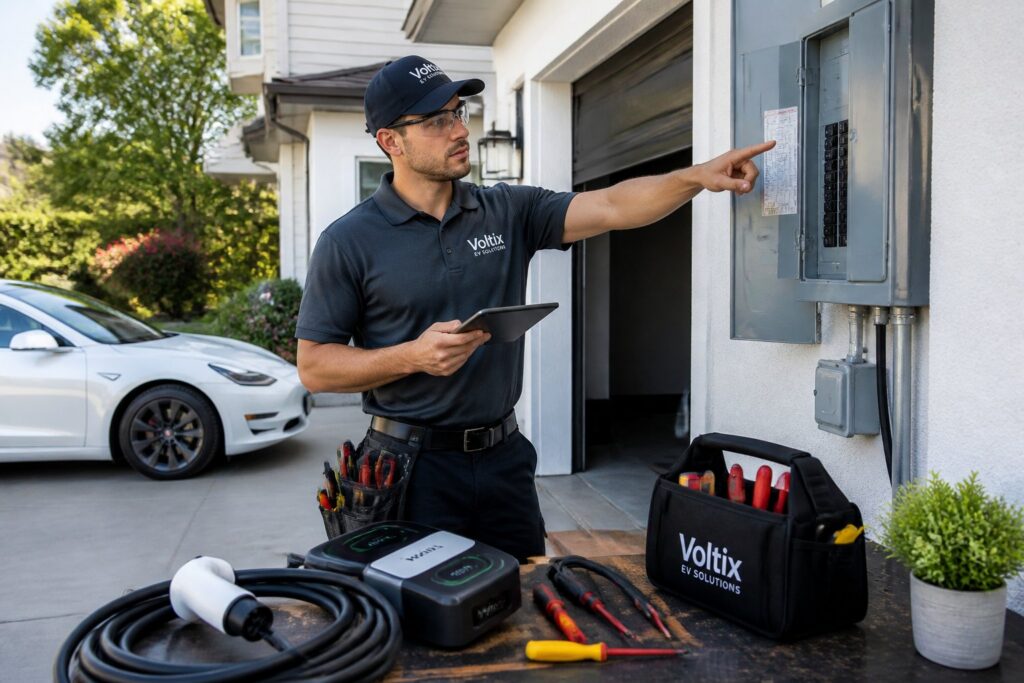
Thinking about getting an EV charger installed? The best results come from some prep before the electrician even shows up. A bit of planning can save you headaches, cut down surprises, and help you pick a setup that actually fits your driving and charging habits. Honestly, the smartest move is to match your charging plan with your electrical system, parking layout, and what you’ll need down the road.
This is true whether you’ve got a home in Austin, a business in Round Rock, or a property in Bee Cave, Lakeway, or Dripping Springs. Good prep helps dodge panel overloads, cable runs that are way too long, awkward charger placement, or annoying permit delays. If you’re not sure where to start, it’s worth talking with a licensed electrician who can walk your property and talk options.
Start With Charging Goals
Your charging goals really shape everything else—equipment, wiring, even where you’ll put the charger. Before you buy anything, take a minute to think about how you use your EV now and what might change in a few years.
Residential Vs Commercial Needs
For homes, it’s usually about convenience and overnight charging. Businesses might have to support employees, tenants, or fleets, which means heavier use and different planning. If you run a business in Central Texas, you’ll want to think about things like access control, future expansion, and how charging fits your daily flow.
Driving Habits And Daily Power Demand
How many miles do you actually drive each day? Does your car usually come home with a low battery? If your commute is short, slower charging might be fine. But if you rack up the miles, you’ll probably want a faster charger and a dedicated circuit. And if there’s more than one EV in the picture, power demand can jump fast.
Level 1, Level 2, And Future Expansion
Level 1 charging uses a standard outlet—super slow, but okay for light use. Level 2 charging is much faster and is what most homeowners and businesses go for. If you think you’ll add another EV, a bigger battery, or want to let guests charge, plan for that now so you’re not ripping things out later.
Evaluate The Existing Electrical System
Your electrical system has to be strong enough to handle the charger’s load. A charger might look simple on the wall, but it puts steady demand on your panel and wiring.
Panel Capacity And Available Circuits
Check your main panel size and see if there’s room for a dedicated EV circuit. It’s not just about spare breakers—the service has to have enough capacity. Older homes, especially those with 100-amp service, can get tight once you add up HVAC, appliances, and charging.
Wiring Condition And Code Readiness
The wiring to the charger needs to be in good shape and sized right. An electrician should check for old parts, loose connections, outdated devices, or anything else that says “not ready.” If the wiring is up to code, it’s safer and makes permits easier.
When A Panel Upgrade May Be Needed
You might need a panel upgrade if your service is maxed out, your panel is old, or the charger just needs more juice than the system can give. This happens a lot with Level 2 chargers in older homes, or when a business wants to run several chargers. Handling the panel first avoids last-minute delays.
Choose The Right Installation Location
Where you put the charger really impacts convenience, cost, and safety. Usually, the best spot keeps the cable run short, protects the equipment, and works with how you park.
Garage, Carport, Driveway, And Parking Areas
Garages are often easiest for home chargers—the unit’s protected and close to the car. Carports and driveways can work too if the charger is rated for outdoors. For businesses, you’ll want marked parking with clear access and enough space so chargers don’t block traffic.
Distance From The Electrical Panel
The farther the charger is from the panel, the more work and materials you’ll need. Short runs are simpler and cheaper. If it’s a long way, you might need conduit, trenching, or thicker wire. Plan this out early so you don’t pick a spot that looks good but costs way more.
Weather Exposure And Physical Protection
Outdoor chargers need to be safe from damage, standing water, and cars bumping into them. In Central Texas, sun, heat, and storms can be rough on exposed equipment. A spot with some shelter and solid mounting hardware helps the charger last and stay reliable.
Plan For Permits, Codes, And Utility Factors
EV charger installation isn’t just about the hardware. You’ve got to deal with local rules, inspections, and utility details that can affect how things run.
Local Permit Requirements In Central Texas
Permit needs shift from city to city in Central Texas—Austin, Cedar Park, Georgetown, Leander, Round Rock, Lakeway, Kyle, and more. Usually, you’ll need a permit if there’s new wiring, a new circuit, or a panel change. If you’re in areas like Westlake, Liberty Hill, Spicewood, Bee Cave, or Hutto, double-check what’s required before starting.
Inspection Expectations And Code Compliance
Expect an inspection for wiring, grounding, breaker size, conduit support, and safe placement. Code compliance matters—a charger is a continuous load, not just a plug-in gadget. Passing inspection keeps things on track and avoids do-overs.
Utility Rate Plans And Load Management
Some folks can save with time-of-use rates, especially if they charge overnight. Load management helps if your panel’s nearly full or you’ll have multiple chargers. A good electrician can help you figure out if you need smart scheduling, load sharing, or something else to keep demand in check.
Prepare The Site For Safe Installation
A little site prep goes a long way. Clear access, sturdy mounting points, and a planned wiring route help the crew work faster and avoid surprises.
Clear Access For Electricians
Make sure the panel, parking area, and work path are easy to reach. Move cars, boxes, and other stuff out of the way so the electrician can get in and work safely. This is extra important in garages, busy lots, and tight side yards.
Mounting Surfaces, Conduit Paths, And Trenching
The charger needs a solid spot for mounting. If it’s not a straight shot, the crew may need a conduit path or trenching, which is way easier if you’ve already looked at the property layout. For bigger homes or businesses, knowing where wiring can go before work starts saves time.
Surge Protection And Safety Shutoff Considerations
Surge protection can help keep your charger and panel safe from power spikes. You’ll also want a clear shutoff for emergencies or maintenance. If you’ve got smart home systems, generators, or other upgrades, make sure the charger fits safely into the bigger setup.
Avoid Common Mistakes Before Installation Day
A lot of charger projects hit the same snags. Spotting these early can save you time, money, and frustration.
Underestimating Future Charging Needs
That charger might be fine now, but if you add a second EV or drive more, it could feel too small fast. It’s way easier to plan for growth now than to redo the work later. Even if you don’t need the capacity right away, prepping for it can save money in the long run.
Choosing Equipment Based Only On Price
Going cheap isn’t always smart. Quality, warranty, load features, and outdoor rating matter as much as price. Spending a bit more upfront can mean safer operation and fewer service calls.
Waiting Too Long To Address Electrical Issues
If your panel, breakers, or wiring are already a problem, don’t wait until installation day. Loose connections, old parts, and overloaded circuits can slow things down or make it unsafe. It’s usually better to get repairs or a panel upgrade done first.
Know When Professional Help Makes Sense
Some installs look easy until you open the panel. If you’ve got old wiring, limited capacity, or a funky layout, professional help is just safer.
Warning Signs That Require An Electrician
Call an electrician if your panel’s crowded, breakers trip often, outlets feel warm, or you’re not sure about your service size. You’ll also want help if the charger is far from the panel or outdoor routing means trenching. These are signs that DIY could turn into a bigger problem.
Benefits Of A Proper Electrical Assessment
A full assessment tells you if your panel can handle the load, if you need an upgrade, and which charger fits. It’s also a chance to spot related issues like outlet upgrades, surge protection, or old wiring. If you want a safe, clean install, this step’s worth it.
What Property Owners In Austin-Area Communities Should Ask
Ask if the electrician has done EV charger installs, panel upgrades, and permit work in Austin, Round Rock, Cedar Park, Georgetown, Leander, Lakeway, and nearby areas. Also ask how they handle load calculations, outdoor-rated gear, and inspections. If you need lighting, smart home, or generator work too, pick a team that can handle the big picture.
Frequently Asked Questions
What electrical panel and service capacity do I need before installing a home EV charger?
It depends on your home’s total electrical load, but most Level 2 chargers need a dedicated circuit and enough spare capacity in the panel. Older homes with 100-amp service may need an upgrade if you’re already running lots of big appliances.
Do I need a permit or inspection to install an EV charger at my property?
Usually, yes—especially in Central Texas cities if you’re adding new wiring, a dedicated circuit, or changing the panel. Permit and inspection rules vary, so check local requirements before you start.
Should I choose Level 1 or Level 2 charging for my home, and what wiring does each require?
Level 1 uses a standard outlet and is slow—fine for light driving. Level 2 is faster and needs a dedicated circuit with the right wire and breaker size.
Where is the best place to mount an EV charger, and how far can it be from the electrical panel?
The best spot is close to your parking, protected from weather, and not too far from the panel. Longer distances are possible, but they bump up labor and material costs.
What are the most common problems that come up during EV charger installation, and how can I avoid them?
The big ones are undersized panels, bad charger placement, permit delays, and outdated wiring. Avoid most of these by getting a full electrical assessment, planning the location early, and picking equipment that fits your real charging needs—not just the lowest price.
How much does a typical home EV charger installation cost, including parts, labor, and any panel upgrades?
The price really depends on a few things: how far the charger is from your electrical panel, the type of charger you pick, permit requirements, and whether your panel needs an upgrade. If your setup is simple—say, the panel’s nearby and everything’s up to code—you’ll probably pay less. But if you need a new service line, extra conduit, or even trenching, that can drive the cost up fast. Honestly, the only way to know for sure is to have someone check out your site and give you a quote.