
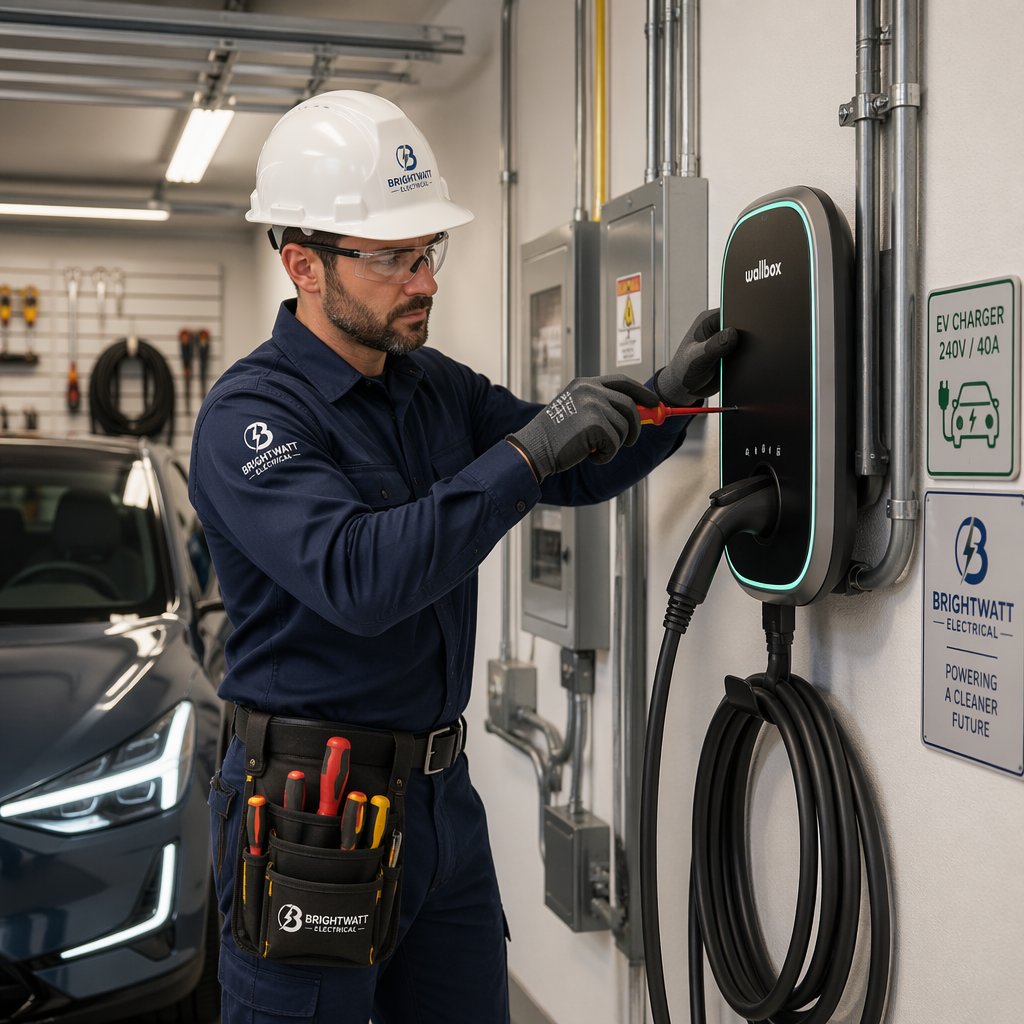
Thinking about installing an EV charger at your home or business? You’ll want a licensed electrician for the job—trust me, it’s not something you want to DIY. A licensed electrician makes sure your charger goes in right, shields your electrical system from overload, and sticks to safety codes. That means fewer headaches like tripped breakers or flickering lights when you plug in your car.
At Magnify Electric, our crew’s handled all sorts of electrical work, both residential and commercial. Whether it’s a simple outlet in your garage or a high-speed wall charger, we’ve got it covered. We can add outlets, upgrade panels, or whatever else your EV setup needs.
Honestly, picking the right electrician just makes life easier. With our team, you get work that keeps your system safe and your EV charging without a hitch. We try to keep things straightforward and safe, so you can get back to what matters.
Why Hire a Licensed Electrician for EV Charger Installation
Installing an EV charger isn’t as easy as plugging in a toaster. The wiring, the power draw, the codes—there’s a lot going on. Doing it right means your property and vehicle stay protected, and the charger works like it should.
Benefits of Professional Installation
When you call in a licensed electrician, you get someone who knows the ropes. They pick the right equipment, run proper wiring, and connect your charger safely to your panel.
They’ll make sure your charger meets local codes and recommend upgrades if your panel can’t handle the load. It’s a good way to dodge power problems or accidental damage.
At Magnify Electric, we tailor every install to your setup. We help you skip costly mistakes and get it done right from the start.
Safety Considerations
Messing with electricity isn’t for the faint of heart. EV chargers need the right voltage, grounding, and circuit size. If you get it wrong? Shocks, fires, or fried wiring aren’t out of the question.
A licensed electrician knows the safety rules and how to keep hazards at bay. They’ll test everything and make sure your system won’t get overwhelmed when you plug in.
Your safety—and your home’s—is at the top of our list. Bringing in a pro cuts down risk and keeps your system steady when you’re charging up.
Insurance and Warranty Protection
Here’s something a lot of folks miss: insurance companies usually want licensed pros on the job. If something goes wrong, you want coverage to stick.
DIY installs or hiring someone without the right background? That can void warranties on your charger and electrical system. Licensed electricians hand over paperwork showing everything’s up to code.
Magnify Electric offers insured, licensed service. You get peace of mind, and your install is backed by both quality work and the right documentation.
Types of EV Chargers and Installation Requirements
Picking an EV charger isn’t just about speed—it’s about what your car needs and what your home’s electrical system can handle. Knowing the charger types and checking your setup helps you stay safe and charge efficiently.
Level 1 vs. Level 2 Chargers
Level 1 chargers plug into a standard 120-volt outlet. They’re slow—think 4-5 miles of range per hour. If you don’t drive much or can charge overnight, this might work.
Level 2 chargers need a 240-volt outlet, like what your dryer uses. They’re way faster, usually filling up most EV batteries in 4 to 8 hours. That’s why most folks pick these for home.
Level 3 chargers (DC fast chargers) are a different beast—super quick, but they need special gear and a ton of power, so you’ll mostly see them at commercial spots.
Compatible Home Electrical Systems
Before you get started, your home’s system has to be up to the task. Level 1 chargers don’t ask much, but Level 2 chargers need a dedicated 240-volt circuit.
Sometimes, your panel needs an upgrade to handle the extra juice. If your house is older, the wiring might not meet today’s standards and could need work.
A licensed electrician from Magnify Electric will check your system to make sure you’re good to go.
Power Capacity Assessment
Your home’s power capacity matters when picking a charger. This means looking at your main breaker and your usual power use.
If your panel’s already near max, adding a charger can tip it over the edge. The electrician might suggest a panel upgrade or a load management system to keep things balanced.
Magnify Electric’s electricians do a thorough check before recommending a charger, so you don’t end up with power issues.
Certified Electrician Qualifications
When you’re picking someone to install your EV charger, you want to know they’re up to standard. That means proper licensing, solid training, and attention to safety rules. It’s about keeping your place safe and getting the job done right.
Licensing Standards
A licensed electrician has passed state exams and met all the requirements. That license means they can legally and safely work in your area.
Usually, licensing means:
- Finishing an apprenticeship
- Logging thousands of hours on the job
- Passing tests on electrical know-how and safety
No license? Big red flag. Always ask to see it.
Training and Certification
Electricians need real training to handle modern stuff like EV chargers. That’s classroom work and hands-on experience.
Certification goes a step further, focusing on skills like safe EV charger installation.
At Magnify Electric, our electricians keep learning to stay current with new tech and standards. That means your charger works right and meets expectations.
Local and National Code Compliance
Electricians have to follow local and national codes for safe, reliable work. Codes cover wiring, breaker setup, and charger placement.
Your electrician should know the National Electrical Code (NEC) and local rules. That helps avoid hazards like fires or failures.
We always check our work against these codes at Magnify Electric. We want your charger to pass inspection and stay safe for the long haul.
The EV Charger Installation Process
Getting an EV charger installed isn’t just a plug-and-play deal. There’s planning, permits, and testing before you can charge up.
Site Inspection and Planning
First up, a licensed electrician checks out your property. They look at your wiring, circuit breaker, and where you park your EV.
This helps avoid overloads or power drops. They’ll also think about convenience, weather, and if you might want upgrades later.
Our team at Magnify Electric makes sure your setup fits your space. Whether it’s a basic outlet or a wall-mounted charger, we’ll help you get it right.
Permitting and Approvals
You might need a permit from the city or utility company before starting. Permits make sure your charger meets safety codes.
Your electrician usually handles the paperwork. That keeps things moving and avoids inspection headaches.
Magnify Electric knows the local rules and helps get approvals, so your project stays on track.
Final Testing and Setup
Once installed, the electrician tests everything—connections, breakers, the charger itself. No one wants flickering lights or power hiccups.
You’ll get a quick walk-through on how to use the charger safely. The electrician checks to make sure you’re getting the right power to your EV.
Magnify Electric’s licensed electricians leave your setup ready to go, so you can charge with confidence.
Upgrading Your Electrical Panel for EV Charging
A lot of homes need a panel upgrade before adding an EV charger. This upgrade makes sure your system can handle the extra power. Knowing when you need it, how it works, and what it costs helps you make the call.
Signs an Upgrade Is Needed
If your house is over 40 years old, your panel might not cut it. Frequent breaker trips or flickering lights? That’s a sign your system is maxed out.
Most EV chargers want a 200-amp panel. If yours is smaller or outdated, it’s upgrade time.
Steps in Panel Upgrades
First, a licensed electrician checks your panel and wiring. Then, they figure out if you need a whole new panel or just a bigger one.
They’ll swap in the new panel or upgrade the old one, update breakers, and make sure connections are solid. After that, they test everything to be sure your charger runs safely. Magnify Electric’s electricians handle the whole process for homes and businesses.
Costs Involved
Panel upgrades can run from $850 to $4,000. The price depends on panel size, job complexity, and your wiring.
A 200-amp upgrade costs more than just swapping panels. Permits and new wiring can add to the bill. At Magnify Electric, we’re upfront about pricing and work to fit your budget.
Choosing the Right Licensed Electrician
Choosing an electrician isn’t just about price. You want someone with experience, the right qualifications, and good feedback. They should understand your EV charger needs and get the job done safely. Here’s how to ask the right questions, check their background, and read reviews so you can pick the right person.
Questions to Ask
Start by asking if they’re licensed and insured. That protects you and shows they follow safety rules. Ask about their experience with EV charger installs—it’s a different ballgame than basic electrical work.
See if they handle permits and inspections. A solid electrician will walk you through the process and make sure everything’s up to code. Get their timeline and total cost, too. Clear answers help you avoid surprises.
Evaluating Experience
Look for electricians who’ve done EV charger installs before. Ask how many similar jobs they’ve finished and if they know both home and business setups. More experience usually means a smoother process.
You want someone who keeps up with new codes and charging tech. That way, your system stays safe and fits your EV. Magnify Electric’s team checks these boxes, whether you need a simple outlet or a fancy wall charger.
Reading Reviews and Testimonials
Reviews say a lot about an electrician’s work. Look for comments on punctuality, professionalism, and job quality. Pay attention to feedback about EV charger installs.
Check a few sources—review sites, testimonials, whatever you can find. Consistent good reviews mean you’re probably in good hands. If there are complaints, see how the electrician responded. Good companies fix problems fast and care about their customers.
Cost Factors in EV Charger Installation
When you’re budgeting for an EV charger, a few things will affect the price: the amount of work, the charger type, and whether you can snag any discounts or rebates. Knowing what goes into the cost helps you plan ahead and avoid sticker shock.
Labor and Material Costs
Most of your expense comes down to labor and materials. Licensed electricians—like the crew at Magnify Electric—charge for their skills and time. If your garage is easy to access, installing a charger there tends to cost less. But if your setup needs electrical upgrades, expect the price to go up.
Materials cover things like wiring, outlets, and safety gear. If your electrical panel’s outdated, upgrading it will add to the bill. Permits and safety checks might tack on more. It’s worth hiring licensed electricians, though—they’ll follow local codes and keep your home safe.
Charger Equipment Pricing
Charger prices are all over the map. Level 1 chargers are the cheapest, but honestly, they charge at a snail’s pace. Most folks opt for Level 2 chargers at home—those are faster and usually priced in the mid-range.
Want to charge super fast? DC fast chargers cost a lot more and need special electrical setups. Picking the right charger comes down to how much you drive and how quickly you want to recharge. If you’re unsure, Magnify Electric can walk you through the options and help you land on something that fits your budget and lifestyle.
Incentives and Rebates
Plenty of places offer rebates or tax credits to help with installation costs. These incentives might come from your city, utility company, or even the feds. Sometimes they’ll cover part of the charger price or a chunk of the installation.
Check what’s available in your area before you get started. Magnify Electric can help you sort through the paperwork and make sure you snag the best deals. Using these programs can really cut down your upfront costs.
Ongoing Maintenance and Support
To keep your EV charger humming along, you’ll need regular care and quick help when something acts up. Maintenance isn’t just about avoiding headaches—it protects your investment and keeps things safe.
Routine Inspections
Regular checkups catch little issues before they snowball. A licensed electrician inspects wiring, connections, and the charger itself to make sure everything’s in good shape. They’ll test voltage and current to confirm the charger’s doing its job.
Try to schedule inspections once a year, or after a big storm or electrical change. This usually includes a look at your breaker panel and any safety devices like GFCI outlets. Spotting wear early helps you dodge downtime and expensive fixes.
Troubleshooting Common Issues
If your charger starts acting up or just stops working, call in a pro. Usual suspects? Loose wires, tripped breakers, or bad charging outlets. Sometimes it’s a quick fix—just a reset—but other times you’ll need an expert.
Don’t risk DIY electrical repairs. The licensed electricians at Magnify Electric know how to find and fix problems safely. They’ll also give you tips to prevent future issues and can handle upgrades if your system needs them.
Preparing Your Home for Future Upgrades
Thinking ahead about your home’s electrical setup can save you money and hassle down the road. Planning for new tech or extra devices makes future upgrades way easier.
Scalability Options
If you want to keep up with growing power needs, your electrical panel should have space for extra circuits. Sometimes that means installing a panel with room to spare or upgrading to one that can handle more juice. EV chargers pull a lot of power, especially if you’re thinking about adding more chargers or other big appliances later.
It’s smart to run conduit or wiring that can handle extra power in the future. This prep work makes upgrades quicker and cheaper. The electricians at Magnify Electric can check out your setup and recommend ways to future-proof your home without spending more than you need to.
Smart Home Integration
Smart home systems can tie together your lighting, climate, and even your EV charger, making life easier and saving energy. To get ready for this, you’ll want wiring and outlets that can support smart devices. Planning ahead for wireless networks also helps everything work smoothly.
By connecting your EV charger to smart controls, you can schedule charging for off-peak hours or keep an eye on energy use from your phone. Magnify Electric’s team can help design a setup that links your charger with your smart home system, so you get convenience and energy savings without the fuss.
Frequently Asked Questions
Putting in an EV charger at home takes some planning. It’s good to know what you’re getting into with costs, timing, and safety. Picking the right electrician really does matter.
What should I look for when hiring an electrician to install my EV home charging station?
Find a licensed electrician who knows EV charger installs. They should understand local codes and be able to handle any wiring upgrades. You want someone who explains things clearly and actually listens to your questions.
Can any electrician install an EV charger, or do they need special certification?
Not all electricians have experience with EV chargers. While a license is a must, it helps to choose someone who’s worked with EV systems before. At Magnify Electric, our team handles both residential and commercial jobs and knows the ins and outs.
How much does it usually cost to have a professional install an electric vehicle charging point at home?
Costs swing a lot depending on your electrical system and the charger you pick. Usually, you’re looking at a few hundred to over a thousand bucks. If your panel or wiring needs upgrades, that’ll add more.
What are the common electrical requirements for installing a home EV charger?
Most home chargers need a dedicated 240-volt circuit with enough amps. Your electrician will check if your panel can handle it or if you’ll need an upgrade. Proper grounding and weatherproofing for outdoor units matter, too.
How long does the installation process for an EV home charger typically take?
A basic install takes anywhere from a few hours up to a full day. It depends on how tricky the wiring is and if upgrades are needed. Your electrician should give you a solid estimate before starting.
Are there specific safety considerations I should be aware of when getting an EV charger installed?
Safety’s a big deal here. Be sure your electrician sticks to all the right electrical codes to prevent overloads and avoid fire hazards. Ask them to really test the setup and walk you through using the charger safely—don’t be shy about questions. At Magnify Electric, we’re pretty serious about these steps to help keep your home safe.