
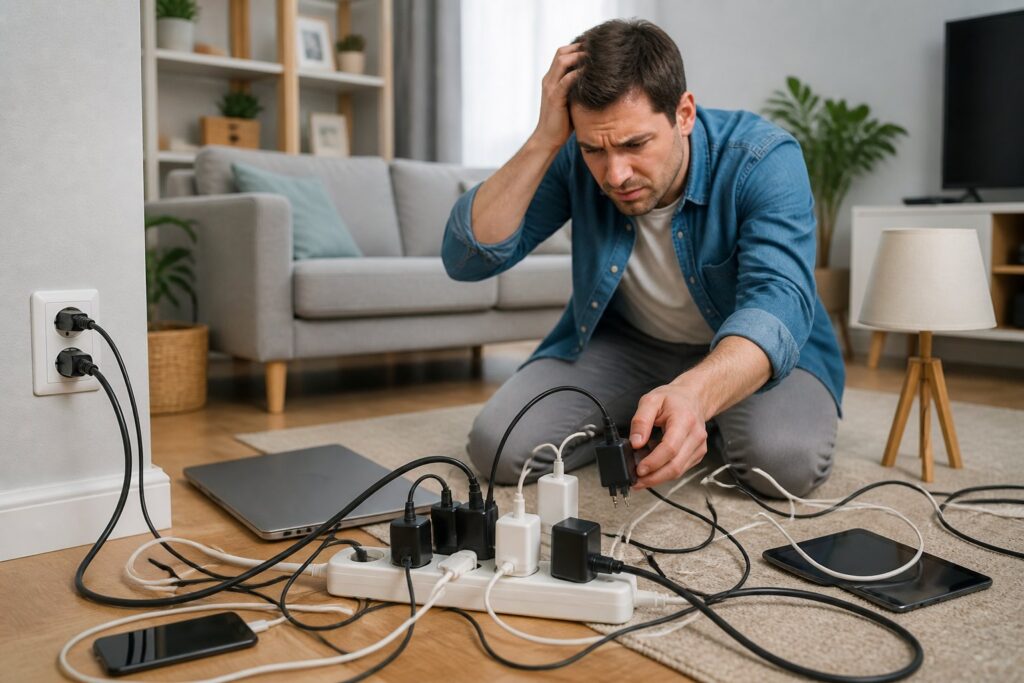
You might not spot outlet issues right away. A room can look fine, but your home could be hinting that it needs more safe power access—especially when extension cords, power strips, and awkward furniture arrangements start taking over. If you’re always moving furniture just to reach a plug, or you rely on cords every day, that’s a big clue you probably need additional outlets.
Older homes weren’t built for today’s charging habits, home offices, streaming devices, modern kitchen gear, and smart gadgets. Even newer homes can’t always keep up as your needs change. A licensed electrician can usually spot whether you’re dealing with a minor hassle or a bigger electrical load problem before things get unsafe.
Why Outlet Capacity Matters In Everyday Living
How your outlets are set up shapes more than just convenience. It’s about powering your daily life safely—laptops, lamps, vacuums, kitchen tools, entertainment systems. When outlets run short, people grab cords and strips, but that can hide a deeper electrical problem.
How Modern Device Use Has Outgrown Older Room Layouts
Many older floor plans handled a few lamps and a radio, maybe a toaster. Now, just one family room might need plugs for a TV, gaming console, soundbar, router, phone chargers, and all sorts of lighting. Around Central Texas, especially in older Austin, Westlake, and Georgetown homes, I see rooms that look fine but are way overmatched for today’s plug-in needs.
Even newer homes can fall behind when you add a home office, EV charger, smart home gadgets, or a treadmill in the spare room. Sometimes the room just needs better outlet placement or a new circuit—nothing too dramatic, but enough to keep things safe and usable.
Convenience Problems That Often Point To A Larger Electrical Issue
If you’re always running cords across walkways or unplugging one thing to use another, that’s not just annoying—it’s a sign the room wasn’t designed for your lifestyle. These workarounds often mean overloaded circuits, bad outlet placement, or outlets that need replacement.
Folks in Lakeway, Cedar Park, Leander, or Dripping Springs can get a site evaluation to see if you need a couple new receptacles or something bigger. The main goal? Safer power where you actually use it.
Everyday Clues You Are Running Out Of Safe Power Access
You’ll usually notice the first clues in small ways. More cords on the floor, clutter near outlets, or maybe you keep plugging several devices into one spot.
Extension Cords Becoming A Permanent Solution
Extension cords are for quick fixes, not running your house day in and day out. If you’ve got cords behind furniture, under rugs, or stretched across the room, your electrical setup’s working way too hard. That creates wear, trip hazards, and puts extra stress on the circuit.
Rooms that depend on extension cords almost always need more outlets. Bedrooms, garages, and older dining rooms-turned-workspaces seem to be the usual suspects.
Power Strips Taking Over Kitchens Bedrooms And Living Areas
Power strips have their place, but they shouldn’t run a whole room. If you’re stacking chargers, lamps, TVs, speakers, and appliances onto one strip, things get crowded fast. That’s a pretty clear sign the room needs added outlets.
Kitchens and living rooms are the biggest offenders here. When the strip’s hidden behind furniture or loaded with high-use devices, the original outlet plan just isn’t cutting it anymore.
Furniture Placement Being Limited By Existing Receptacles
You shouldn’t have to shove your sofa, bed, or desk into a weird spot just to stay near a plug. If outlet location is dictating your furniture choices, your spacing is probably too limited. Bedrooms and family rooms get a lot of complaints about this.
A few extra outlets can open up the room, improve lighting, and make cleaning up easier. Sometimes a small upgrade changes the whole feel of a space.
Electrical Warning Signs That Should Not Be Ignored
Some outlet issues aren’t just about convenience. A few signs mean real electrical stress—and you shouldn’t ignore those.
Warm Covers Sparking Or Loose Plug Connections
If an outlet or cover plate feels warm, that’s not normal. Sparking, buzzing, or loose plugs can mean worn contacts, interior damage, or a wiring problem. Don’t brush off these warning signs.
If you see scorch marks, smell something burnt, or a plug won’t stay in place, stop using that outlet and get it checked. These issues can start small and get worse if you let them go.
Frequently Tripped Breakers When Normal Appliances Are In Use
A breaker that trips once in a while isn’t a huge deal, but if it keeps happening when you use normal stuff—microwave, toaster, vacuum, space heater, hair dryer—that circuit is probably overloaded. Sometimes it’s about outlet distribution, sometimes a bigger electrical fix.
This pops up in homes where too many devices share one circuit. An electrician can figure out if it’s the outlet layout, the breaker, or something deeper.
Lights Dimming When Nearby Devices Turn On
If lights dip when an appliance starts up, the circuit might be strained. A little flicker happens, but regular dimming usually means a load issue or weak connection. This matters even more in homes with older wiring or lots of high-demand devices in the same room.
You’ll see this a lot in kitchens, garages, or rooms with big entertainment setups. It’s worth getting a pro to check it out before it turns into a bigger headache.
Rooms Where More Receptacles Often Make The Biggest Difference
Some rooms just need more outlets than others. These are the spaces where daily device use, special equipment, and flexible layouts put the most strain on your setup.
Kitchens Home Offices And Entertainment Areas
Kitchens need outlets for appliances, charging stations, and lighting. Home offices need them for computers, monitors, printers, and networking gear. Entertainment spaces? TVs, sound systems, consoles, streaming gadgets—you get the idea.
Better outlet placement in these rooms isn’t just safer, it makes life easier. Plus, it gives you room to add surge protection and keeps cords from tangling everywhere.
Garages Workshops And Outdoor Living Spaces
Garages and workshops need outlets for tools, chargers, and work lights. Outdoor spaces might need weather-resistant outlets for lighting, fans, or seasonal stuff. These areas often get overlooked because they were built for occasional use, not regular projects or gatherings.
If you use these spaces a lot, an electrician can help you pick the right outlet types and spots. Sometimes you’ll need GFCI protection or a dedicated circuit for bigger equipment.
Bedrooms Bathrooms And Multiuse Family Rooms
Bedrooms have gone way beyond lamps and alarm clocks. Now it’s phone chargers, sound machines, TVs, maybe even medical devices. Bathrooms and family rooms get a lot of daily use too, so outlet spacing can feel tight.
Upgrades here are practical—they make your daily routine smoother. Just moving a few outlets can make a room way more comfortable.
Upgrade Opportunities Beyond Adding More Wall Access
Adding outlets is just one piece of the puzzle. The right upgrade can boost safety, protection, and convenience all at once.
Tamper Resistant And GFCI Protection Options
Tamper-resistant outlets are great if you’ve got kids. GFCI outlets are a must in spots with moisture—kitchens, baths, garages, laundry rooms, and outside. These upgrades help cut shock risk and keep you up to code.
If you’re already opening walls or updating a room, pick the right outlet type from the start. It saves time and keeps you from needing another fix later.
USB Outlets Smart Home Features And Surge Protection
USB outlets help cut down on charger clutter in bedrooms, offices, and kitchens. If you’re adding smart home features—connected lights, voice controls, automation—consider pairing them with outlet upgrades. Surge protection is smart, especially for electronics, appliances, and home office gear.
These upgrades aren’t flashy, but they make your electrical system work better for real life.
When New Circuits Or A Panel Upgrade May Be Part Of The Fix
Sometimes adding another outlet won’t fix the real problem. If a room’s already close to its circuit limit, you might need a new circuit or even a panel upgrade.
This comes up a lot with EV chargers, new kitchen appliances, or workshop gear. A good electrician will check load balance, panel space, and your future plans before making suggestions.
When To Call A Licensed Electrician In Central Texas
If outlet issues keep popping up, it’s time to call in a pro. Safety comes first, especially if you’re dealing with heat, sparks, or repeated power loss.
Situations That Need Professional Electrical Troubleshooting
You’ll want a licensed electrician if you notice warm outlets, buzzing, scorch marks, loose plugs, frequent breaker trips, or dimming lights when you use appliances. Also call if you need outlets in a kitchen, bath, garage, patio, or office where code matters. DIY fixes can miss hidden problems and sometimes make things worse.
For folks in Austin, Spicewood, Bee Cave, Round Rock, Hutto, Kyle, Liberty Hill, and the rest of Central Texas, a pro can help you avoid guesswork. It’s the safest way to know if it’s a quick fix or something bigger.
What Homeowners In Austin Area Communities Should Expect From A Site Evaluation
A good site evaluation starts with a walk-through of the problem rooms and a chat about how you use them. The electrician should check outlet condition, circuit load, breaker behavior, and if your current setup really fits your needs. If you’re thinking about lighting, outlet upgrades, ceiling fans, surge protection, or smart home updates, now’s the time to plan it all out.
You should get honest advice about whether you need a couple new outlets, a dedicated circuit, or a bigger panel upgrade. That kind of planning keeps your home safe and ready for whatever you throw at it.
Frequently Asked Questions
What are the common signs that a room doesn’t have enough electrical outlets?
You might be using extension cords constantly, moving furniture to reach plugs, or piling several devices onto one power strip. If the room feels like a jungle of cords, it probably needs more outlets.
Is it safe to rely on power strips and extension cords every day?
Not really. They’re meant for short-term or light use, not as a permanent solution. If they’re part of your daily routine, it’s safer to add outlets or improve the circuit.
How can I tell if I can add another outlet to an existing circuit?
It depends on the circuit load, wire size, outlet spacing, and what else is already on that circuit. A licensed electrician can test it and let you know if there’s room or if it’s maxed out. Guessing isn’t worth the risk.
Why do my breakers trip when I use multiple devices in the same area?
That usually means the circuit’s overloaded or something’s drawing more power than it should. Could also be a loose connection, worn breaker, or wiring problem. If it keeps happening, get an electrician to check it out.
How do I know if an outlet is worn out and should be replaced?
Loose plugs, discoloration, crackling, sparks, or heat around the outlet are big red flags. If a plug won’t stay in firmly, the inside might be worn out. When you see these signs, it’s safer to replace the outlet than wait for something worse.
When do electrical issues suggest a full home rewire might be needed?
If you keep dealing with tripped breakers, old wiring, or a bunch of sketchy outlets, it might be time to talk about a rewire. Older homes just aren’t built for all the gadgets, chargers, and smart stuff we use now. Sometimes, a pro can check things out and say, “Hey, you just need a few new outlets.” Other times, it’s clear the whole system’s struggling, and a bigger wiring update makes a lot more sense.