
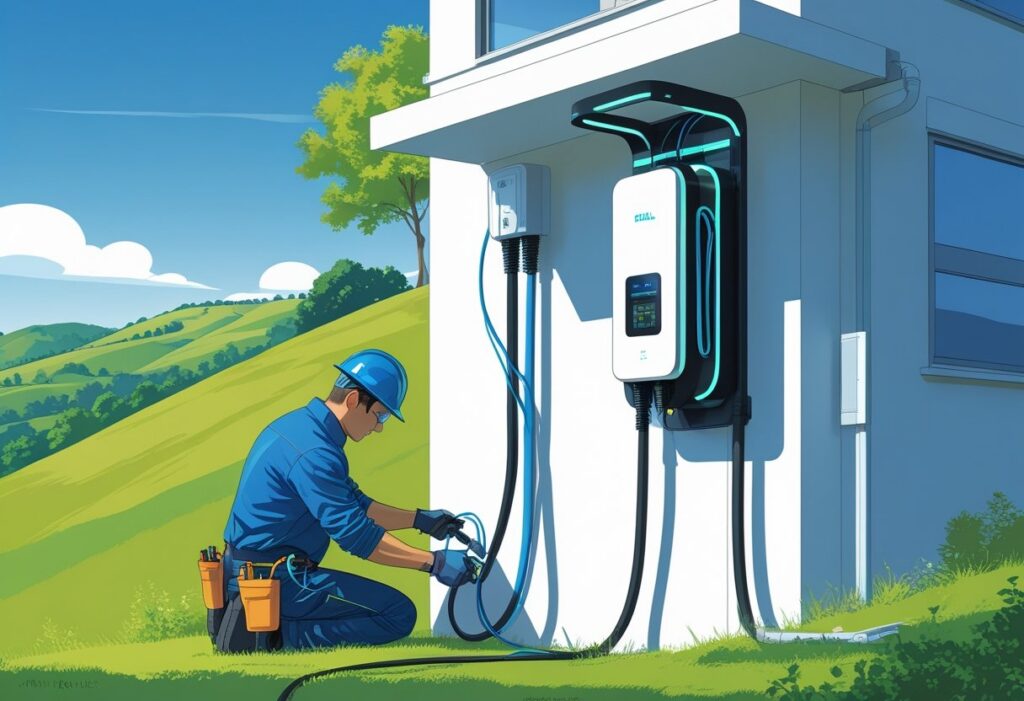
Thinking about an EV charger for your place in The Hills? Setting up a dedicated circuit makes charging way faster, safer, and a lot more reliable than just plugging into a regular outlet. A properly installed EV circuit means you can charge at home or your business without worrying about overloads, flickering lights, or weird electrical hiccups.
Let’s walk through what to check on your property, which chargers actually make sense, and how licensed electricians handle permits, panel upgrades, and all the dedicated wiring bits. Magnify Electric’s licensed electricians work all over The Hills and Central Texas, doing everything from basic outlet installs to big panel upgrades, smart-home setups, EV charging outlets, outdoor lighting, surge protection, troubleshooting, and emergency calls—so your project stays safe and up to code.
If you’re after clear steps, real-life cost factors, and some upkeep tips for EV circuit installation, keep reading. You’ll see how a good team can tailor a setup to your home or business and make sure you’re ready for the future.
Understanding Electric Vehicle Circuit Installation
Here’s a breakdown of the main parts of an EV circuit, charger options, and the safety rules electricians follow.
Key Components of EV Circuits
An EV circuit ties together your electrical panel, a dedicated circuit breaker, wiring, a disconnect or subpanel, and the charging device itself. Your panel needs enough spare capacity, or you’ll need an upgrade to handle the charger’s load. Level 2 chargers usually need a dedicated 240V circuit; wire gauge and breaker size depend on the charger’s amperage (say, a 40A breaker with 8 AWG copper for a 32A continuous load). If you’re mounting outside, you’ll want outdoor-rated wiring and conduit. A local disconnect or lockable subpanel makes servicing safer and easier. Don’t skip ground-fault protection and proper grounding—those keep you and your car safe.
Types of Electric Vehicle Chargers
You’ll see three main charger types: Level 1, Level 2, and DC fast charging. Level 1 uses a standard 120V outlet and gives you about 3–5 miles of range per hour (pretty slow). Level 2 runs on a dedicated 240V circuit and typically adds 20–60 miles per hour—this is what most folks want at home. DC fast chargers use high-voltage direct current, need commercial-grade infrastructure, and really only make sense for public or business sites. For daily home charging, Level 2 is the sweet spot. Consider the amperage, plug type (most use SAE J1772), and whether you want a wall-mounted hardwired unit or a plug-in outlet for flexibility.
Safety Standards and Codes
Installations have to meet the National Electrical Code (NEC) and any local rules for The Hills and Central Texas. NEC requires things like continuous-load sizing, GFCI or AFCI protection, proper box fill, and clear labeling. Permits and inspections keep things up to code. Licensed electricians check voltage, polarity, and grounding, and they’ll make sure your circuit can handle sustained charging without getting too hot. Magnify Electric’s team handles permits, inspections, and all the installation work across The Hills and nearby areas. If you ever need emergency help, panel upgrades, or something complicated at a business, it’s smart to stick with pros.
Assessing Your Property in The Hills
Before you get started, you’ve got to check your site layout, power capacity, and what the local permit rules say. These details affect cost, timeline, and whether you’ll need a panel upgrade or some trenching work.
Site Inspection Considerations
Walk the property with a licensed electrician and look at charger location, parking access, and the path for conduit. Measure from your main panel to where you want the charger; longer runs mean more cost. Watch for obstacles like rock, retaining walls, or landscaping that could make trenching expensive.
Check existing outdoor outlets, garage space, and any future plans like expanding your driveway. Take some photos, mark utility lines, and try to avoid any surprises. Decide if you want a wall-mounted or pedestal charger—this affects mounting and grounding.
Power Supply Requirements
Check your main breaker size and see how much capacity you’ve got left. Level 2 chargers usually need a 240V dedicated circuit and 40–60 amps; some bigger ones need more. If your panel’s almost full, you might need a subpanel or an upgrade.
Have an electrician do a load calculation that includes all your big appliances—HVAC, oven, water heater—and any future EVs you might add. If you’re looking at multiple chargers for a business or multi-unit setup, ask about three-phase options or managed charging so you don’t have to keep upgrading. Whole-home surge protectors and clear circuit labeling are smart for safety and code.
Local Regulations and Permits
Check with your HOA in The Hills and look out for any deed restrictions that might affect charger placement or visible conduit. Some HOAs want certain mounting styles or require screening for outdoor gear.
You’ll need to get electrical permits from the city before work starts. Permits usually need plans showing your panel capacity, breaker size, and wiring methods. Inspections make sure everything meets NEC and local rules. Magnify Electric’s electricians can handle permits and inspections across The Hills and nearby towns, which honestly saves a lot of hassle.
We also handle basic fixture swaps, full panel upgrades, smart home setups, commercial lighting, and emergency calls. Our licensed team covers Austin, Bee Cave, Lakeway, Dripping Springs, Georgetown, Leander, Round Rock, Kyle, Cedar Park, Liberty Hill, Westlake, The Hills, Briarcliff, Horseshoe Bay, Sunset Valley, Hutto, Spicewood, and the Central Texas area.
Step-By-Step Installation Process
Here’s how the process usually goes—planning the circuit, running the wiring, and mounting the charging unit. We’ll hit on permits, breaker sizing, conduit runs, and charger placement so you know what to expect.
Pre-Installation Planning
Start by checking your panel’s capacity and the charger’s amperage needs. Look at your panel’s available space and see if you need a subpanel or full upgrade. Measure from the panel to where you want the charger so the electrician can estimate conduit length and voltage drop.
Get the permits you need from your local city or county, and double-check code requirements for The Hills and Central Texas. Decide if you want a dedicated 240V circuit, a NEMA receptacle, or a hardwired wall charger. Schedule a site visit with a licensed electrician to confirm load calculations and meter compatibility.
Magnify Electric’s licensed electricians can do load studies, pull permits, and walk you through options like surge protection or smart-home integration. They handle projects from simple outlet additions to full panel upgrades all over The Hills, Austin, Lakeway, and more.
Wiring and Circuit Setup
The electrician will run a dedicated 240V circuit sized to your charger’s load—usually 40A to 60A for Level 2. They’ll pick the right breaker, wire gauge (like 8 AWG for 40A or 6 AWG for 60A copper), and run a ground wire to meet code. If the wiring’s exposed, expect conduit for protection.
They’ll route conduit from the panel to the charger spot, keep bends to a minimum, and use watertight fittings outside. The team will test for voltage drop and secure all splices in an approved box. Once the wiring’s done, they’ll label the new breaker and update your panel schedule.
Licensed electricians can also check smoke/CO₂ detectors, outlets, and even set up portable generator hookups during the same visit. That way, you’re not calling them back for little stuff and your system stays consistent.
Charging Station Mounting
Pick a spot near your parking space so the cable reaches without tripping anyone. Mount the charger at a comfortable height—usually 36 to 48 inches off the ground—and use a weatherproof backplate for outdoor installs. For businesses or multi-family sites, think about multiple mounting points and cable management.
Bolt the charger to something solid—garage wall, concrete pad, or a bollard. If it’s hardwired, hide the conduit and make sure there’s strain relief at the entry. After wiring, power up, run a diagnostic or plug in your car, and check that it charges at the right speed.
Magnify Electric handles both home and commercial mounts, smart-home setups, and commercial lighting. Their licensed crew will finish up, test everything, and leave you with clear documentation for your panel and warranty.
Choosing the Right EV Charging Solution
Pick a charger that fits your driving, budget, and your panel’s capacity. Think about charging speed, where you’ll install it, and if you want smart features for scheduling or tracking energy use.
Residential vs Commercial Installations
For homes, most people go with a Level 2 wall charger running on 240V, adding 20–40 miles of range per hour. Check your panel—older homes often need a panel upgrade or a dedicated 40–50A circuit to keep from tripping breakers. Place the charger near your parking spot and keep conduit runs short to save on labor and material.
Commercial installs are a different beast—multiple chargers, load management, and durability all matter. Plan for higher demand, ADA access, and weatherproof enclosures. You’ll probably need site work for conduit, trenching, maybe a subpanel or transformer. Permit and inspection rules can vary, so check with your local authority early.
Magnify Electric’s licensed electricians handle single homes and multi-charger commercial projects. We do panel upgrades, outlet services, wiring, and all the permitting to keep your install safe and code-compliant.
Smart Charger Features
Smart chargers let you schedule charging, track energy use, and tie in with your home’s energy system. Scheduling helps you charge when rates are low. Energy monitoring shows real-time kilowatt use and session data—handy for spotting waste or comparing costs.
Look for Wi‑Fi or Ethernet, app control, and compatibility with smart home systems like Lutron. Load balancing and power sharing are must-haves for solar homes or businesses running several chargers on one service. Built-in safety features—ground-fault protection, temperature monitoring, automatic current limiting—are also important.
Magnify Electric installs and configures smart chargers, gets them online, and can integrate with things like automated lighting and surge protection. We cover The Hills, Spicewood, Austin, Bee Cave, Lakeway, Dripping Springs, Georgetown, Leander, Round Rock, Kyle, Cedar Park, Liberty Hill, Westlake, Briarcliff, Horseshoe Bay, Sunset Valley, Hutto, and nearby Central Texas spots.
Cost and Energy Efficiency Factors
There are really two big things that affect your bill and project price: what the electrician has to add to your panel, and how fast your charger pulls power. Knowing these helps you budget and estimate daily charging costs.
Installation Cost Breakdown
Level 2 circuit installs usually run from about $500 to $2,000. That covers the charger, a dedicated 240V circuit, wiring, conduit, and labor. If you need a panel upgrade, expect a bump—panel work can add $850 to $4,000, depending on size and complexity.
Stuff that bumps up the price:
- Distance from panel to garage or parking.
- Needing a new panel, subpanel, or higher amperage.
- Permits, inspection fees, trenching, or extra conduit.
- Charger type (basic outlet vs. hardwired wall unit).
Magnify Electric’s licensed electricians do everything from adding outlets to full panel upgrades. You’ll get a clear, itemized quote—so you actually know what you’re paying for (materials, labor, permits, and any smart add-ons).
Energy Consumption Estimates
A Level 2 charger usually delivers 6–11 kW, adding about 20–40 miles of range per hour. To estimate daily energy use, just multiply the charger’s power (kW) by the hours you charge. For instance, a 7 kW charger running 2 hours uses 14 kWh.
Here’s how to compare costs:
- Find your utility rate ($/kWh).
- Multiply your daily kWh by that rate for your daily charging cost.
- Multiply by 30 for a monthly estimate.
A few things can affect efficiency:
- Your EV’s onboard charger sets the max charge rate.
- Cold weather or an aging battery can mean less efficient charging.
- Smart charging features and off-peak rates can help you save.
Timed charging or load management can help you save money and reduce strain on your panel. We install smart home systems and EV chargers, and can set up schedules, integrate Lutron or other controls, and suggest panel upgrades if you need to support heavier loads.
Maintaining Your EV Circuit Installation
Keep your EV circuit reliable and safe by doing regular visual checks, testing the outlet and breaker, and scheduling pro inspections if you spot any trouble. Deal with small issues right away so they don’t turn into bigger headaches.
Routine Safety Checks
Look over the charging outlet and wall unit every month for cracks, discoloration, or loose covers. If you see scorch marks or any melted plastic at the outlet or breaker panel, stop using the circuit and call a pro.
Check the cable every time you plug in—frayed insulation, exposed wires, or bent pins mean it’s time for a repair or replacement.
Test the 240V breaker every few months by flipping it off and on to make sure it trips and resets cleanly. Use the TEST button on ground-fault protection devices according to the manufacturer’s instructions.
Keep the charger area clear of debris, water, and flammable stuff. Jot down inspection dates and any issues so you can track if something keeps coming up.
Troubleshooting Common Issues
If your EV won’t charge, first make sure the vehicle supports the charger and that your car’s charging settings aren’t limiting power. Then check the breaker and any GFCI/RCD—reset them if it’s safe.
If the outlet feels hot, smells burnt, or sparks when you plug in, stop using it and call a licensed electrician. Heat and smells usually mean a loose connection or overload that needs fixing.
For charging that’s slow or cuts in and out, check the charger’s amperage setting and your car’s onboard charger limits. Loose wiring, undersized breakers, or a weak panel connection can cause low current.
Magnify Electric’s licensed electricians handle diagnostic testing, panel upgrades, outlet repairs, and full EV charger servicing. We serve The Hills and nearby Central Texas towns and can tackle anything from a simple outlet fix to a full commercial upgrade.
Future-Proofing Electric Vehicle Circuit Installations
Thinking ahead with your EV circuit can save you hassle and money later. Consider future power needs, space for more chargers, and how solar or battery systems might connect.
Upgrading for Increased Demand
If you’re planning for a second EV or a faster charger, go ahead and upgrade to a 200-amp service or add a properly sized subpanel. A 200-amp main gives you room for a 40–60 amp EV circuit plus your other household loads without tripping breakers. If your current panel is old or full, a panel upgrade or new subpanel lets you add dedicated circuits for chargers, appliances, and whatever else you might need down the road.
Install a dedicated 40–60 amp circuit for Level 2 chargers, using the right wire size and a GFCI or AFCI if code requires. Do a load calculation so your HVAC, water heater, and shop gear don’t overload the system. Labeling and leaving spare knockout space makes future upgrades easier and cheaper.
Magnify Electric’s licensed electricians handle panel upgrades, dedicated circuits, wiring, and safety inspections across Central Texas. We cover everything from swapping a fixture to full electrical upgrades for homes and businesses.
Integration with Solar Systems
If you’re adding solar or battery storage, plan your EV circuit to use clean energy during sunny hours. Connect your EV charger to a solar-ready panel or pick a charger with smart load management to keep grid use down during peak times. If you’re thinking about bi-directional or vehicle-to-home setups, you’ll need extra planning and approved gear.
Use an inverter and charge controller that match your charger’s power. Add a transfer switch if you want backup power for the charger during outages. Make sure your inverter output, panel size, and charger demand all line up and stay within safe, code-compliant limits.
Our team installs EV charging outlets and wall-mounted chargers, and we integrate them with solar, surge protectors, and battery backups. We serve The Hills, Austin, and nearby communities with emergency support, smart home add-ons, and commercial lighting too.
Frequently Asked Questions
Magnify Electric’s licensed electricians handle everything from swapping a light fixture to full panel upgrades, smart home setups, and commercial lighting. You’ll get clear info on cost factors, permits, requirements, and typical timelines for EV charger installs.
What are the average installation costs for an EV home charging station?
Most Level 2 charger circuits cost between $700 and $2,500.
That covers parts, labor, and a 240-volt dedicated circuit. Higher costs usually mean panel upgrades or long cable runs.
If you need a panel upgrade or whole-home surge protection, expect $1,500 to $4,500 or more.
Magnify Electric gives written estimates after a site visit, so you’ll know exactly what to expect.
Can I install an electric vehicle charger circuit by myself or do I need a professional?
You can use a standard outlet for basic Level 1 charging, but most Level 2 installs really need a licensed electrician.
Code, permits, and safe wiring make professional installation the safer and legal route.
Our electricians at Magnify Electric handle installs to code and take care of permits, inspections, and testing.
They also handle troubleshooting, panel repairs, and emergency support if something goes wrong.
What factors influence the cost of installing an electric vehicle charging circuit at home?
Main cost factors: your panel’s capacity, distance from panel to charger, and whether you need a dedicated 240V circuit.
Panel upgrades, trenching or conduit, and permit fees can all add up.
Charger type, smart features, and whether you want a wall‑mounted or hardwired unit also change costs.
Local inspections and surge protection requirements can push the price up too.
How long does it typically take to install an EV charging circuit in a residential property?
A basic Level 2 circuit install usually takes 3–6 hours.
That covers wiring, mounting, breaker installation, and a quick test.
If you need a panel upgrade, trenching, or extra conduit, it can take a full day or more.
Magnify Electric schedules work to keep things smooth and always does final safety checks before heading out.
Are there any government incentives or rebates available for installing an EV charging circuit?
Federal, state, and local rebates sometimes help cover home EV charging or electrical upgrades.
Programs change all the time, so check what’s current for Texas and your utility.
Magnify Electric can point you to common incentives and help with paperwork for rebate applications.
We also install whole‑home surge protectors and other upgrades that some incentive programs require.
What electrical requirements should be considered when setting up an EV charging station at home?
Most Level 2 chargers want their own 240-volt circuit and a breaker that matches the load.
Your panel needs enough capacity, and the wiring should follow NEC and local codes.
Sometimes a panel upgrade is in order, or maybe dedicated grounding, GFCI protection if needed, and you’ll need a permit and inspection.
Magnify Electric’s crew handles load calculations, code‑compliant wiring, and throws in things like surge protectors, smoke and CO₂ detectors, or even smart home tie-ins to help keep everything running safely.
We work with homeowners and businesses all over Spicewood, Austin, Bee Cave, Lakeway, Dripping Springs, Georgetown, Leander, Round Rock, Kyle, Cedar Park, Liberty Hill, Westlake, The Hills, Briarcliff, Horseshoe Bay, Sunset Valley, Hutto, and just about anywhere else in Central Texas.