
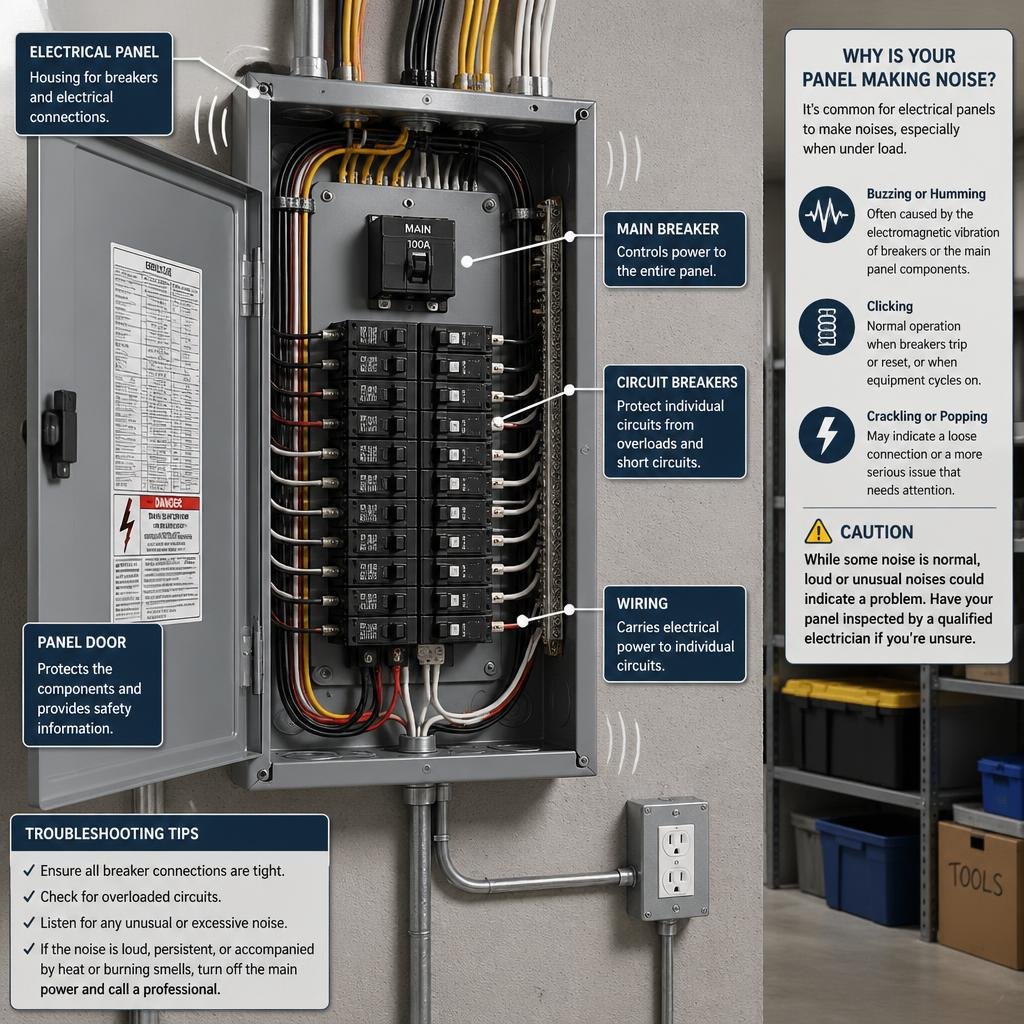
Why does your breaker panel make noise? It’s a question you shouldn’t brush off, even if the sound seems minor. A panel should be quiet—so if you notice a new buzz, hum, crackle, pop, or sizzle, take it seriously.
If your breaker panel is making a sound you can hear, treat it as a clue, not just background noise. Some sounds are harmless, but others hint at loose parts, overloaded circuits, or a repair need that could turn into a safety problem.
A slight hum can happen during normal operation, especially when you’re standing right by the panel. But if the sound is louder or keeps changing, something inside might be vibrating, overheating, or arcing. Notice what kind of sound you hear and whether anything else seems off—like heat, smells, or flickering lights.
What Different Electrical Sounds Can Indicate
Different noises mean different things. The tone and volume both matter. A soft hum? Usually normal. Sharper or unpredictable sounds? That’s often a sign of a loose part, wear, or stress.
Buzzing Versus Humming
A faint, steady hum is usually just electricity doing its thing. You might only notice it if you’re up close.
Buzzing sounds harsher and less steady. If it gets louder when you run certain appliances, you’re probably looking at a load issue or a loose connection inside the panel.
Crackling, Popping, and Sizzling
Crackling, popping, and sizzling shouldn’t happen. These noises can mean electricity is arcing—jumping across a gap instead of following the proper path.
That can damage wiring and other parts nearby. If you hear these sounds, don’t mess with the panel—let a licensed electrician check it.
Clicking During Normal Operation
Clicking happens when a breaker trips or resets. That’s normal during a fault or when a breaker reacts to an overload.
Repeated clicking for no clear reason isn’t normal. If it keeps happening, the breaker might be failing or the circuit could be overloaded.
When Panel Noise Signals a Safety Hazard
Some noises are warnings you really shouldn’t ignore. If the sound is getting worse, comes with heat or a weird smell, or is tied to tripping breakers, the risk just went up.
Warning Signs That Need Immediate Attention
Act quickly if you notice:
- Loud buzzing, crackling, or sizzling
- A burning smell near the panel
- Warm or hot panel cover
- Flickering or dimming lights
- Breakers that trip again and again
- Smoke, scorch marks, or discoloration
These usually mean the panel’s overheating or arcing. At that point, stop using power in the area and call for electrical service right away.
Fire and Shock Risks Behind Abnormal Sounds
Loose or damaged parts create heat in the wrong places. That heat can mess up insulation, melt components, and raise the risk of fire.
A noisy panel might also mean exposed or unstable wiring. That’s a shock risk if anyone opens the panel or touches something they shouldn’t.
Common Mechanical and Electrical Causes
Noisy panels usually come down to a few things. Out in the real world, loose parts, overloaded circuits, and aging breaker components are the usual suspects.
Loose Connections and Arcing
Loose wires are a major cause of buzzing and crackling. If electricity can’t move cleanly through a connection, it vibrates or arcs.
Arcing creates heat and damages breakers, bus bars, or wiring. Even if the sound’s minor, the problem behind it might not be.
Overloaded Circuits
When you put too much demand on a circuit, the breaker has to work harder than it should. That stress can cause humming, buzzing, or repeated trips.
If the noise gets louder when a big appliance kicks on, the circuit probably needs balancing or more capacity.
Failing Breakers and Internal Wear
Breakers wear out, especially after years of heavy use. Internal parts can loosen or weaken, which causes vibration and noise.
A worn breaker might not trip when it should. That’s not just about the noise—it’s about safety.
Simple Checks Property Owners Can Make
You can do a few quick checks to figure out what’s going on and how urgent it is. No need to open the panel—just pay attention.
Noticing Heat, Odors, and Flickering Lights
Place your hand near (not on) the panel door. If it feels warmer than usual, that’s a red flag.
Smell for burning plastic, ozone, or any sharp electrical odor. Flickering or dimming lights—especially when appliances start—can help you spot which circuit’s involved.
Tracking When the Sound Starts
Notice when the noise happens. Is it only when the AC kicks on? When the microwave runs? Or when a bunch of stuff is running at once?
That timing helps an electrician narrow things down. Noise under load usually means a circuit or breaker issue.
Knowing What Not to Touch
Don’t remove the panel cover, move wires, or try to tighten anything inside. Even with breakers off, dangerous voltage can still be there.
If the panel’s hot, loud, or smells weird, leave it alone. Call a pro.
Professional Repair Options and Upgrades
The fix depends on what’s causing the noise. Sometimes it’s just a breaker swap. Other times, the whole panel needs attention.
Breaker Replacement and Panel Repairs
If one breaker’s bad, replacing it might solve the problem. Sometimes, a loose connection or damaged bus bar needs repair.
A licensed electrician can test circuits, inspect the panel, and replace worn parts safely. That way, you get things back to normal without guessing.
When a Full Panel Upgrade Makes Sense
A full upgrade makes sense if the panel’s old, undersized, or showing wear across several circuits. Frequent tripping, repeated noise, or outdated equipment are good reasons.
If your home or business uses more power than the panel was built for, an upgrade boosts safety and reliability. Plus, you’ll have room for new gear.
Related Improvements for Safer Power
Panel work often goes hand-in-hand with other upgrades. You might add surge protection, new wiring, updated lighting, outlet upgrades, EV charging outlets, smart home controls, or generator hookups.
These improvements ease the load on your system and make life more convenient. They also help older setups meet today’s needs.
Choosing Trusted Help in Central Texas
When your panel’s noisy, you want help—fast—from someone who knows both homes and businesses. The right electrician should inspect, explain, and fix the problem without guessing.
Residential and Commercial Service Coverage
Maybe you need a simple breaker replaced, a full panel upgrade, or something bigger like lighting, wiring, or smart home work. Good service covers homes, rentals, offices, retail spaces, and commercial buildings.
A solid electrical team can also handle ceiling fans, light switches, recessed and outdoor lighting, TV installs, portable generator hookups, smoke and CO₂ detectors, troubleshooting, and general repairs. It’s nice to have one go-to for all of it.
Why Licensed Electricians Matter
Licensed electricians know how to work safely inside panels and spot problems others might miss. They also keep up with code requirements, which is huge for repairs, upgrades, and commercial jobs.
Their training protects you, your property, and your equipment. It’s the smart move when a noisy panel might mean something bigger.
Why Magnify Electric Is the Right Call
Magnify Electric serves Spicewood, Austin, Bee Cave, Lakeway, Dripping Springs, Georgetown, Leander, Round Rock, Kyle, Cedar Park, Liberty Hill, Westlake, The Hills, Briarcliff, Horseshoe Bay, Sunset Valley, Hutto, and nearby Central Texas areas. Their licensed electricians handle everything from fixture swaps to full upgrades, emergency support, commercial lighting, safety inspections, and smart home setups.
They’re a strong pick for residential and commercial work—panel upgrades and repairs, automated lighting, Lutron smart home systems, EV charging, outlet services, and broader improvements.
Frequently Asked Questions
What does it mean if I hear a buzzing sound coming from my electrical panel every few minutes?
A buzzing sound every few minutes often means a breaker or connection is reacting to changing electrical load. It could also be a loose part that only vibrates when certain equipment turns on.
Is it dangerous to keep using power when the electrical panel is buzzing or humming?
A faint hum might be fine, but loud buzzing isn’t. If it’s new, getting louder, or comes with heat or odd smells, limit use and get it checked out.
Why does the buzzing get louder when I switch on a specific breaker or appliance?
Usually, that circuit’s under more stress when the appliance runs. It could be an overloaded circuit, weak breaker, or loose connection that struggles under load.
Why might the electrical panel start buzzing at night even when everything seems off?
Some equipment runs at night without you noticing—HVAC, water heaters, fridges. If you hear noise at night, it could still be a circuit issue triggered by those loads.
What should I do if the panel is buzzing and the lights in my home are flickering?
That’s a warning sign. Flickering lights plus panel noise usually means a loose connection or failing breaker. Call a licensed electrician as soon as you can.
Could a loose or failing breaker be a fire risk, and how can I tell?
Yeah, a loose or failing breaker can definitely be a fire risk—especially if it’s heating up, sparking, or just putting too much stress on the wiring. Keep an eye (or nose) out for things like a weird burning smell, the panel feeling warmer than usual, frequent tripping, odd discoloration, or even a louder buzzing or humming when there’s a load. If you notice any of that, it’s probably time to look into it.