
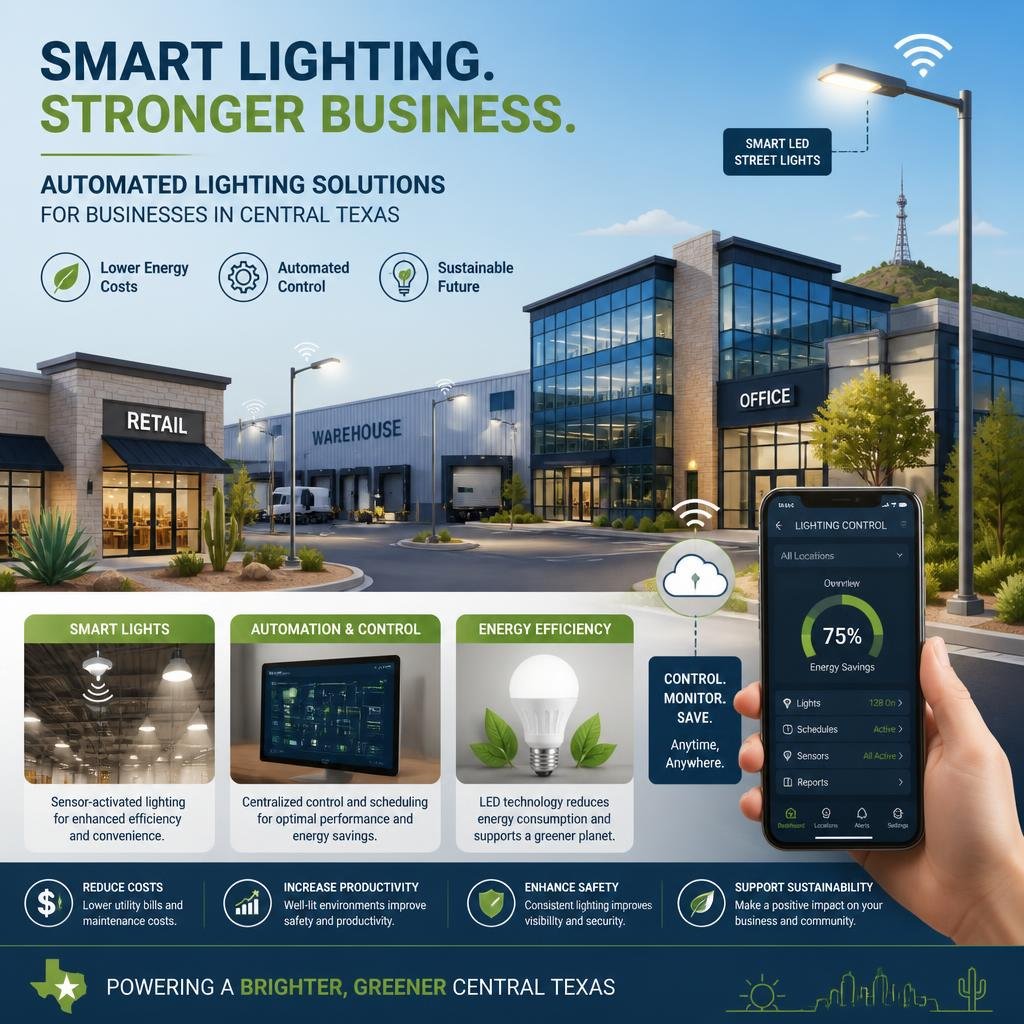
Automated lighting for businesses in Central Texas does a lot more than just flip lights on and off. It helps you cut waste, boost safety, keep daily work moving, and make a better impression on everyone who walks through your doors.
The main benefits of automated lighting for businesses are lower energy use, less manual work, better visibility, and a more comfortable space for staff and customers. If you set things up right, you can also improve security and make future upgrades a breeze.
In Central Texas, this really matters—think offices, retail, warehouses, medical suites, restaurants, and service businesses. Hot afternoons, long hours, and changing occupancy mean good lighting control isn’t just nice to have; it’s practical.
How Smart Lighting Improves Daily Operations
Smart lighting gives you more control without adding hassle. You can set lights by zone, schedule them for business hours, and tweak them on the fly when things change.
It keeps your team focused on their jobs, not on chasing down light switches or double-checking dark corners. That sounds small, but in a busy place, it makes a difference.
Faster Control Across Workspaces
Automated lighting lets you manage multiple areas from one system instead of running around flipping switches. That’s a lifesaver if you’ve got offices, meeting rooms, storage, and customer areas all needing different setups.
You can brighten a space for cleaning, dim it for a meeting, or shut down an unused zone with just a few taps. Over time, that saves energy and cuts down on mistakes.
Consistent Lighting Schedules
When you set a schedule, your lighting stays steady during business hours and there’s less risk of someone leaving the lights blazing all night. This works especially well for businesses with regular shifts or predictable traffic.
It gives staff and visitors a more organized, polished feel. When lighting matches your hours, the whole place feels more put together.
Reduced Manual Oversight
Automated systems take over the routine stuff. Instead of someone remembering every switch, the system just handles it.
That frees up your team for real work—customer service, operations, maintenance. Plus, you cut down on wasted energy from lights left on in empty rooms.
Energy Savings and Lower Overhead
Lighting is one of the easiest places to control waste in a commercial building. When your system reacts to occupancy, daylight, and time of day, you stop paying for light you do not need.
The savings can add up across a large facility or a building with long hours. That makes automated lighting one of the more practical upgrades for reducing overhead.
Occupancy-Based Activation
Occupancy sensors turn lights on when someone walks in and off when a room empties out. This is perfect for restrooms, break rooms, conference rooms, storage, and back offices.
You won’t have lights burning all day in rooms that see only occasional use. In practice, that can shave a noticeable chunk off your electric bill.
Daylight Harvesting Opportunities
If your building gets a lot of sunlight through windows or skylights, automated controls can dim electric lights when it’s bright out. That’s daylight harvesting.
You get enough light for the job—no more, no less. In Central Texas, with all those sunny days, this is a no-brainer for cutting waste.
Long-Term Utility Cost Reduction
Automated lighting can really cut down on energy use over time, especially if you pair it with LED fixtures. Less run time also means bulbs and controls last longer.
You’ll probably spend less on both electricity and maintenance. For a lot of businesses, those long-term savings are the main reason to make the switch.
Safety, Security, and Visibility
Good lighting helps people move around your building confidently. It also makes your property look active and cared for after hours.
Automated controls let you boost visibility wherever and whenever it’s needed. That’s good for both daily safety and nighttime security.
Better Illumination for Staff and Customers
Bright, even lighting helps everyone see steps, aisles, signs, and work areas more clearly. That cuts down on trips, slips, and other avoidable headaches.
Customers find it easier to use your business when areas are well lit. The space just feels more open and inviting.
After-Hours Deterrence
Exterior lighting that comes on at dusk and shuts off at dawn makes your property look lived-in and watched over. Timers, photocells, and sensors can handle all that automatically.
That kind of visibility can discourage trouble around doors, loading zones, and parking lots. It’s a simple way to boost security without extra work.
Support for Emergency Readiness
In emergencies, clear lighting helps people find exits and gather in the right spots. Automated systems can be set up to light safe paths and important areas.
That’s handy during power outages, storms, or any urgent situation. A well-planned system adds another layer of readiness.
Employee Comfort and Customer Experience
Lighting shapes how people feel the second they walk in. Too much glare causes strain, but dim or patchy lighting makes a place feel dull or awkward.
Automated lighting lets you tune each area. That means you control comfort, focus, and the first impression your business gives.
Improved Ambience by Area
Different areas need different light levels. A lobby might need a warm, welcoming vibe, while work zones need bright, focused light.
Zoned controls let you dial in each area for its purpose. The space and the task actually match up.
Task Lighting for Productivity
Good task lighting helps employees read, write, sort, assemble, and check things with less eye strain. It’s especially useful in offices, at counters, in stock rooms, and service areas.
When lighting fits the job, people spend less time fiddling with lamps or fighting glare. The workday just runs smoother.
Welcoming Environments for Visitors
Customers notice lighting before they see decor or equipment. A clean, bright, balanced space feels more professional and more trustworthy.
Automated lighting helps keep that look steady all day long. Your place feels ready for business from the first knock on the door.
Scalability, Controls, and System Integration
A good lighting system should work for your building now and still make sense later. Automation stands out here—it can grow with your space and connect to other building controls.
If you expect renovations, expansions, or changing work patterns, flexibility matters. Automation gives you room to adapt without starting over.
Centralized Management
Centralized controls let you run lighting from one dashboard or control point. That’s a big help if you manage multiple rooms, floors, or zones.
You can make changes fast and keep settings consistent across the building. It’s also handy for holidays, schedule tweaks, or special events.
Compatibility With Lutron Smart Home Systems
If you want lighting that plays nice with modern controls, compatibility is key. Systems that work with Lutron Smart Home let you set scenes, dim, schedule, and tie in other building features.
It’s just easier to match your lighting to how your business actually runs. Plus, upgrades down the road are simpler.
Expansion During Electrical Upgrades
You can add lighting automation during panel work, rewiring, or other electrical improvements. That’s the best time to plan for new controls since the work is already underway.
If you’re planning for growth, you can build in extra zones and controls from the start. That saves time (and headaches) later.
Choosing the Right Electrical Partner
Your lighting system is only as good as the team that installs it. The setup should fit your building, goals, and daily needs.
Look for someone who can do the electrical work safely and actually explain your options. That’s even more important if you’re adding sensors, smart controls, or multiple zones.
Why Licensed Electricians Matter
Licensed electricians know how to install automated lighting safely and to code. That’s critical for commercial spaces, which may have heavier use and more complex layouts.
They’ll catch wiring or panel issues before they become bigger problems. Experience like that protects your investment.
When to Bundle Lighting With Other Improvements
It usually makes sense to tackle lighting alongside other electrical upgrades. If you’re already working on your panel, outlets, wiring, or outdoor lighting, bundling saves time and avoids repeat disruptions.
It’s also a good time to add ceiling fans, recessed lighting, EV charging outlets, wall chargers, smoke and CO₂ detectors, or generator hookups. You can handle troubleshooting and repairs while you’re at it.
Why Businesses Across Central Texas Choose Magnify Electric
If you want one team for both residential and commercial electrical work, Magnify Electric is a solid pick. You get licensed electricians who handle everything from automated lighting and Lutron smart home systems to panel upgrades, lighting installs, outlet and wiring services, and emergency support.
They’ll also help with ceiling fans, light switches, outdoor lighting, recessed fixtures, TV installation, whole-home surge protectors, EV charging, smoke and CO₂ detectors, and general improvements. That’s a relief if you want one reliable partner for everything from simple fixture swaps to full upgrades, safety checks, and smart home integration—serving Spicewood, Austin, Bee Cave, Lakeway, Dripping Springs, Georgetown, Leander, Round Rock, Kyle, Cedar Park, Liberty Hill, Westlake, The Hills, Briarcliff, Horseshoe Bay, Sunset Valley, Hutto, and the whole Central Texas area.
Frequently Asked Questions
How can smart lighting reduce energy costs in a commercial building?
Smart lighting cuts energy costs by shutting off lights in empty spaces, dimming them when there’s plenty of daylight, and only running them when you actually need light. It also trims wasted run time, which adds up across offices, storage, hallways, and outside areas.
What types of sensors and controls are used in automated lighting systems?
You’ll usually see occupancy sensors, motion sensors, photocells, timers, dimmers, and centralized panels. Some systems tie into apps or building management so you can tweak zones and schedules from anywhere.
How does automated lighting improve employee comfort and productivity at work?
Automated lighting lets you set just the right brightness for each area, cutting down on glare and eye strain. It keeps light levels steady and matches the space to the task, which helps everyone stay focused.
Can automated lighting help businesses meet sustainability goals or green building standards?
Absolutely. Automated lighting supports sustainability by reducing energy use and limiting waste. It’s often part of a bigger efficiency plan with LED fixtures, better controls, and smarter building management.
What is the 5’7″ lighting rule, and how is it applied in workplace lighting design?
The 5’7″ lighting rule is a simple guideline for placing fixtures at a workable spacing and height to get good coverage. In workplace design, it helps reduce dark spots and keeps light even across work areas.
How do the 4 C’s of lighting influence choices for office and retail lighting setups?
When people talk about the 4 C’s of lighting—color, control, comfort, and cost—they’re really getting at the heart of what makes a space feel just right. In offices and retail spots, these factors shape decisions in pretty practical ways. You end up weighing how the light actually looks, whether you can tweak it easily, if folks feel good working or shopping under it, and, of course, what it’s going to do to your bottom line.